WORMS SAFETY - Communiqué de presse

Catégories
Actualités

WORMS SAFETY - Communiqué de presse

Official Communication


7th of April, 2020 

WORMS SAFETY is now involved in the global fight against COVID-19 with Voisin Consulting Life Sciences (VCLS), the health specialist member of the alliance. In particular, we are supporting, through regulatory guidance, numerous initiatives for the resolution of this sanitary crisis. Some are already at the advanced stage of submission to health regulatory authorities, bringing us closer to a cure. Among them are the repurposing of two existing drugs as candidates for therapeutic treatments, and the development of a new type of life-saving ventilator in the medical devices’ field.

At the same time, WORMS SAFETY specialist members, SgT, Qualspec, API, AQF, Worms Safety Laboratories, Axis, Albhades, IAS, and Challenge Optimum, are addressing operational issues, consequences of the crisis: securing stocks with mold and corrosion prevention measures; redrawing traditional on-site product controls with ‘no-physical-human-contact techno-guided inspections’; etc.

It is also our responsibility to prepare for the day after and beyond with humanity, lucidity, determination, commitment, and even disruption. Agile boots-on-the-ground practices will be instrumental in restarting and minimizing risks, missteps, and delays.

“We wholeheartedly believe that if we want to be protected, we must first protect each other. Selflessness, is the key to get through these unprecedented times and build a safer future for everyone. Please be safe and continue to take good care.”


With best regards,  

Thierry LENOIR
CEO

Catégories
Blogs

Anticipating Toy Risks at the Early Stages of Development

The toy and children-related industries are responsible for guaranteeing the safety of their product categories to make ‘play safe’ for the little ones of the house. This presents the challenge of meeting stringent regulations while ensuring the timely delivery of finished goods that meet consumer expectations. A deeper focus on safety and compliance is already in place within most industry players, including manufacturers, importers and retailers. 

Despite global authorities and consumer associations putting the safety of vulnerable young consumers first, many risks and non-compliances are still uncovered. In Europe alone, toys were among the most notified products in 2018, representing 31% of the RAPEX alerts.
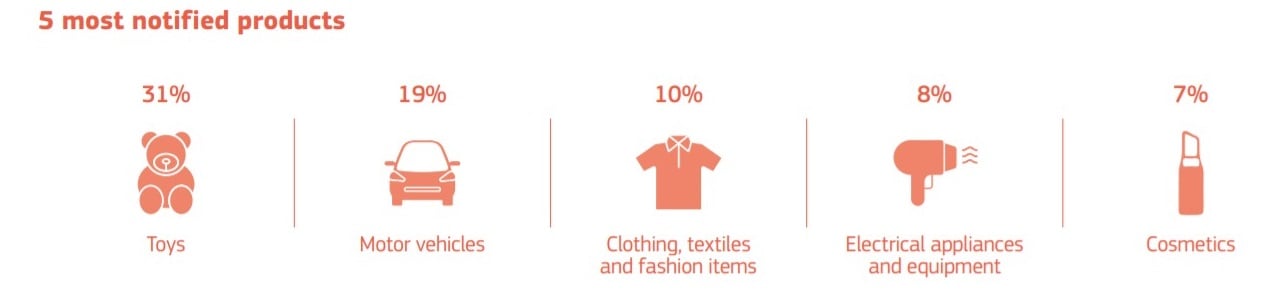
RAPEX_2018_categories
Source: RAPEX 2018 Annual Report

Many precautions can be taken to secure the supply chain and help reduce risks throughout the production process such as factory audits, in-line inspections or in-production assessments. But there are some measures that can be adopted even before production starts, allowing brands to anticipate risks, including:  

Toy / non-toy classification 

Although toy regulations in different countries give clear guidance on the classification of a product as a toy, there are some borderline products that are occasionally difficult to classify. In some specific cases it is necessary to evaluate additional criteria in order to classify a product as a toy. For example, in Europe, the Toy Safety Directive provides the following criteria: ‘Any product designed or intended whether or not exclusively for use in play by children under 14 years of age’. A similar definition is used in the USA in the standard ASTM F963: ‘toy- any object designed, manufactured, or marketed as a plaything for children under 14 years of age’.

The main difficulty here relates to the concept of ‘use in play’ or ‘plaything’. Most objects have a play value for children, but this does not mean they fall within the toy category. The ‘play value’ must be intended by the manufacturer and not as a result of the child’s preference for an object. If the manufacturer labels the product as a ‘non-toy’ it needs to be able to support this claim.

Adequate age recommendation and corresponding marking

This indicates the safety of a toy based on following capabilities:

  • Physical ability of the child to play with the toy
  • Mental ability of the child to know how to use the toy
  • Play needs and interests present at various levels of the child development
  • Safety aspects of a particular toy

Consumers rely on the age recommendation provided by the manufacturer on the toy’s packaging when choosing a product that will match the interests and the skills of the child. The age recommendation also plays an essential role in guaranteeing the child’s safety, ensuring they are not exposed to toys that are too small and that can present a choking hazard.

One frequent issue in the industry comes from an inadequate age recommendation that is usually found prior to shipment during a Pre-Shipment Test. Identifying this issue at the end of the production once all the packaging has been printed will require either the reproduction of all packaging or a ‘re-sticking’ of the adequate marking on all existing packaging. This results in additional cost as well as a delay in shipping.

Risk management on design or prototype

Identification of the possible risks regarding:

  • Choking
  • Falling or drowning
  • Suffocation and strangulation
  • Other injuries


Additional added value: Performance and fit-for-play

When bringing a toy to the market, it is not only important to consider its expected use but also to simulate the actual and potential use by the child. While regulatory requirements ensure safety standards are met, there is still a risk that young children will misuse the toy. Identifying such risks is possible when evaluating the product from a performance perspective using adapted, tested protocols that take safety one step further.

For example, a product not adapted to the size of the child can bring some additional risks despite the item being compliant. In the case of a mask for instance, if the product is too large for the child it will most likely obscure its vision when wearing it, thus resulting in an increased risk of accidents occurring.

Mask


How to anticipate these risks?

Relying on third-party expertise can help you anticipate these risks through support from the early stages of development. An adequate risk evaluation from the stages of product design and prototype can help you avoid ‘fail’ results in pre-production tests, or even worse, in pre-shipment tests. This early intervention will save you time and money.  

At API, our product and manufacturing expertise – acquired daily on-the-ground – allows us to identify and anticipate risks before they reach the production line. Our toy experts can guide and assess your teams from the design and prototype stages, helping you manage risks and make your products safer. We work closely with toy committees, staying abreast of changes in standards and regulations and receiving the latest news on the current areas of concern and hot industry topics.

Some of our preventive solutions for toys include:

  • Product Validation Report: Exhaustive report highlighting the specifications of the golden sample and flagging critical points that could represent a safety or quality risk. It includes an evaluation of the functionality and performance from an end-user perspective and in-depth evaluation of the toy marking.
  • Collection Review: Product review in showroom, allowing identification of risks and non-conformity of mechanical issues, and advice from our experts and recommendations on product amelioration.
  • Risk Assessment on design or prototype: Risk evaluation at the initial stages of development. It allows to identify critical points for improvement and to receive recommendations from our experts for increased product safety.
  • Marking verification: Review of regulatory marking and instruction manual adapted to the adequate age grade.
  • Recommendations on performance and fit-for-play: Adapted tailor-made protocols that simulate the toy utilization by a child.
  • Pre-production test

Talk to our experts to find the right solution for your needs in anticipating the risks in your toy production.

Catégories
Actualités

Aller au-delà de la qualité du produit fini

A preventive approach: moving the focus to the earlier stages of production

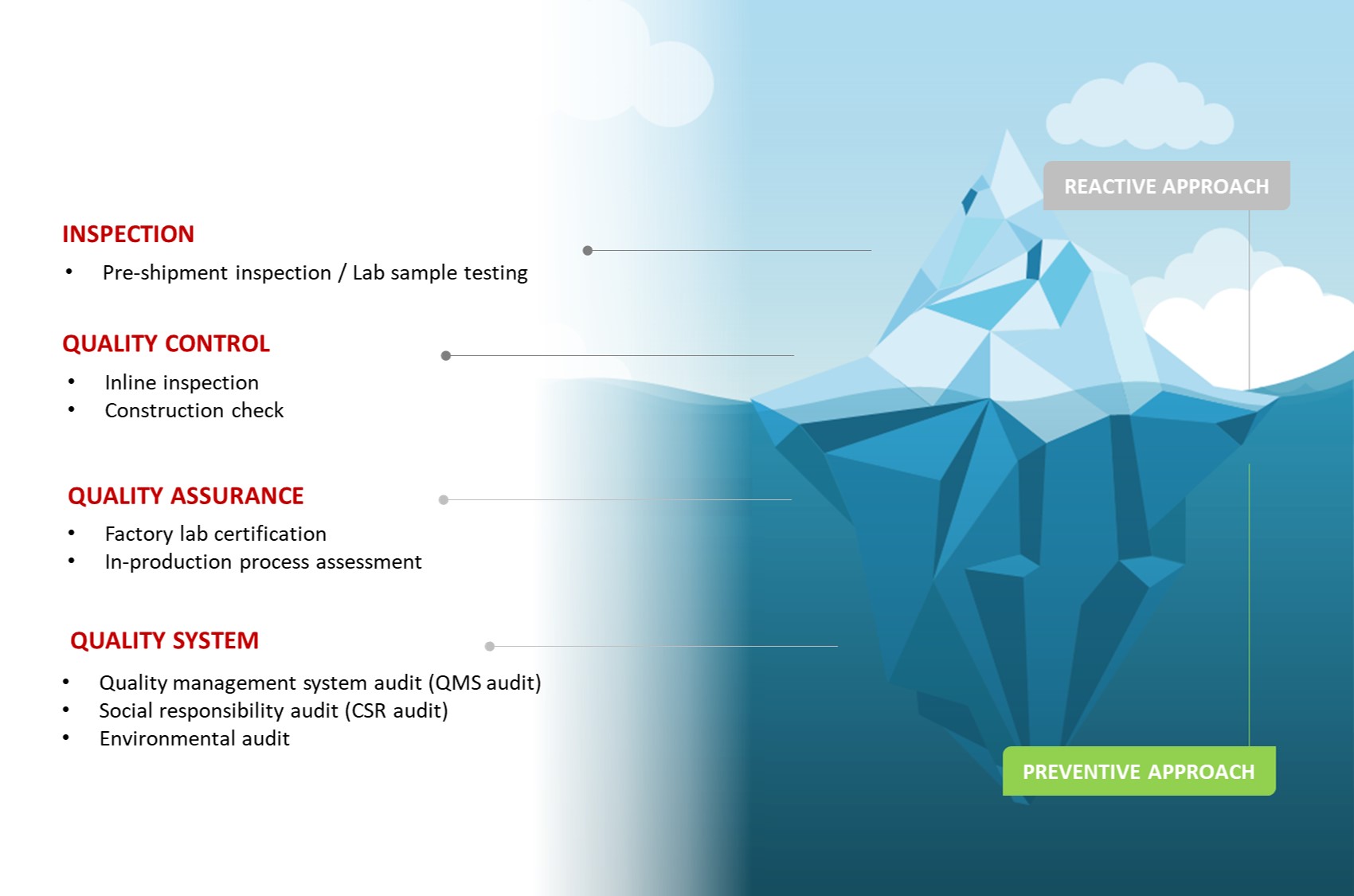
Quality has traditionally been approached from a reactive perspective, where costs are predominantly allocated to the control of the finished product. With this approach, the final random inspection and sample testing are still by far some of the most popular services in many manufacturing areas. They allow for the detection of quality issues at the end of production and evaluate the suitability of the goods for shipment. But the chances are high that some defects will occur during the mass production process. What if these defective products represent a significant part of your final production?

Reallocating the quality budget is possible; thinking about the finished product’s quality but moving the focus to the earlier stages of production. A more in-depth look into the factories and their processes will allow you to anticipate negative risks. From the selection of the most suitable manufacturers to the identification of the right raw materials and right practices, this preventive approach also has beneficial effects on suppliers, offering opportunities for improvement and giving them the potential for empowerment.


Moving from final inspections to a deeper look of the manufacturing process

Going beyond finished product quality. API's preventive model

The earlier the risks are identified, the earlier the solutions can be adopted, thus resulting in the faster implementation of corrective actions, and higher product reliability. By the end, the risk of product reworking or replacement must be significantly reduced, enabling your brand to avoid market delays and extra ‘non-quality’ costs. 

API can provide multiple solutions to help brands, retailers and their suppliers to better manage their manufacturing processes.

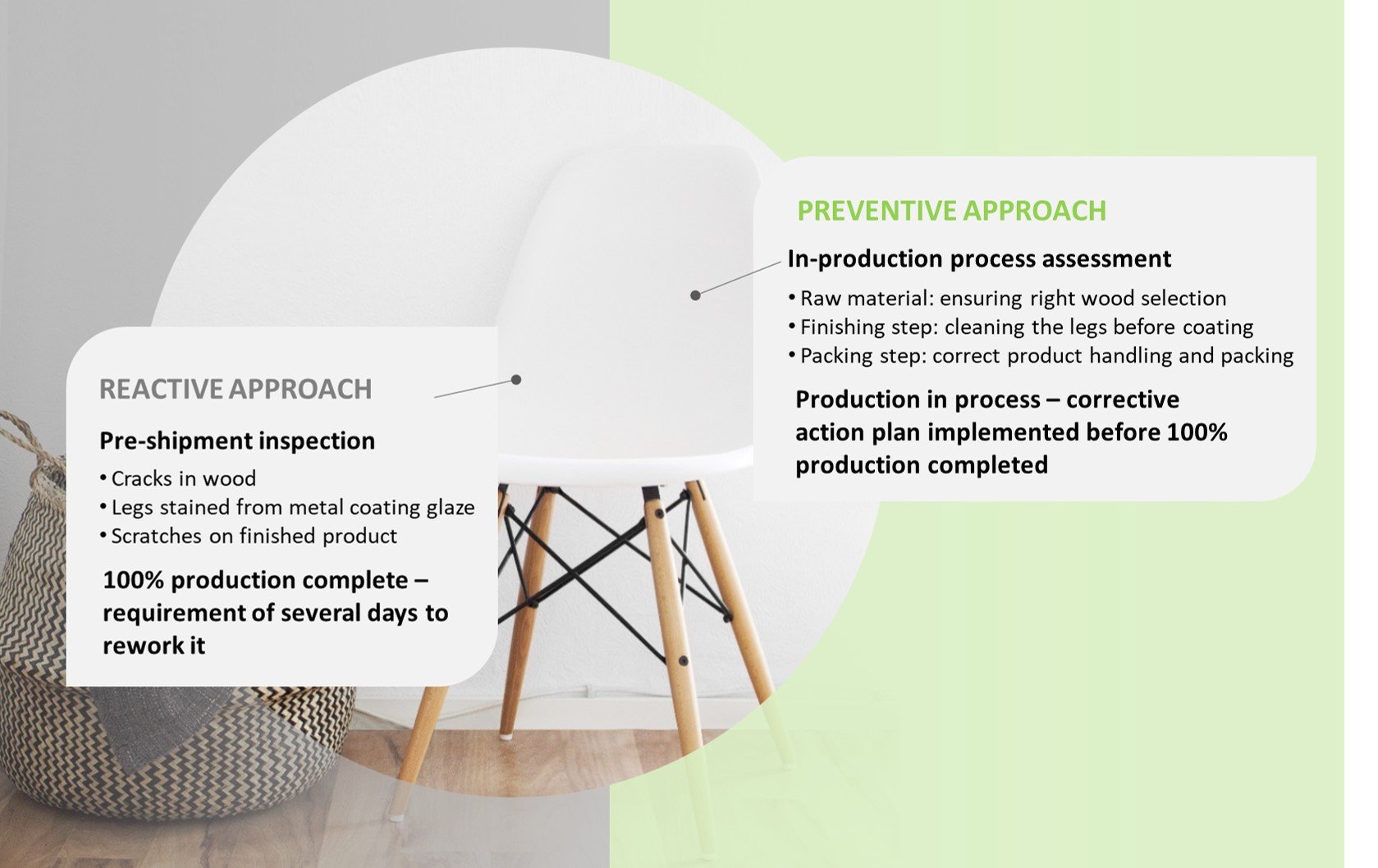
Example of reactive vs. preventive approach on a chair 

Going beyond finished product quality. Reactive Approach and Preventive Approach

Interested in learning more about API’s preventive solutions?

Catégories
Blogs

Technical Compliance – API’s I-TCF solution

An end to spending hours gathering technical compliance documents, thanks to API’s I-TCF solution

Brands around the globe have an obligation to ensure their product’s compliance with its market destination standards and regulations. But guaranteeing the accuracy and validity of all documents proving your product’s conformity is an arduous task. Many factors weigh in the complex job of ensuring compliance:

  • Stricter regulation and increased picking in stores
  • Need for improved traceability and records
  • Large number of product references requiring time and technical staff…

Authorities scrutinize the non-compliance and associated risks of the products entering their markets, where stricter penalties have been imposed on products with incomplete and invalid documentation. In Europe alone, 2,257 alerts were sent in 2018 through the Rapid Alert System, with 4,050 follow-up actions.

The 5 most notified products were:

Rapid Alert System - Technical Compliance - API's I-TCF solution

The 5 most notified risks:

Raid Alert System Technical Compliance - API's I-TCF solution

Source: EU Rapid Alert System for dangerous non-food products 2018 results

API can help your company comply with strict requirements and gather documentation demonstrating that compliance with our +15 years’ experience developing Product Integrity Technical Compliance File (I-TCF) solutions that:

  • Define the relevant scope of compliance
  • Collect and quickly validate high volume of documents
  • Have a proven track record of starting a program of 1,500 items in 8 weeks – average close time of 36 days

The I-TCF is a digital ID of your product and its proven compliance with the latest applicable standards and regulations, showing:

  • Protocoles applicables
  • Validation / rejet des documents
  • Suivi de la validité dans le temps

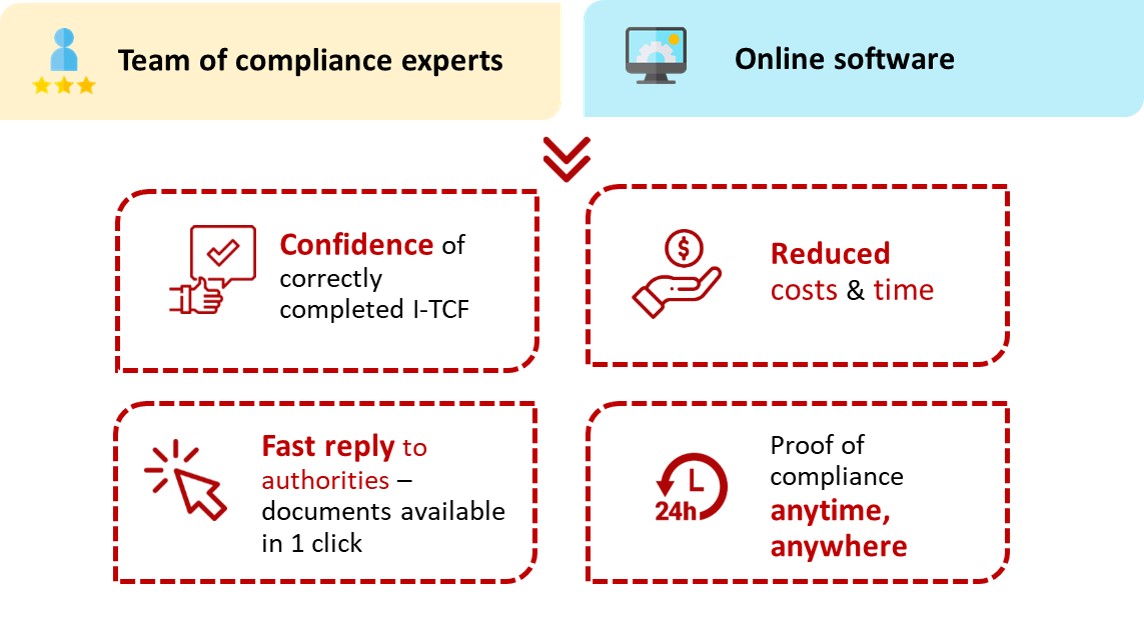
The benefits for your brand of API’s I-TCF solution?

Technical Compliance - API's I-TCF solution

Interested in finding our more about how our I-TCF solutions can help your brand?

Catégories
Blogs

Share your Quality Challenges With Us at ICPHSO Dublin

We’ll be exhibiting at ICPHSO’s International Symposium 2019 in Dublin on 24-25 October, a two-day symposium for product safety stakeholders to learn, network and share information.

Are you also attending the event? Come and discuss your unsolved quality challenges with our team and gain insights from our customers’ technical success stories!

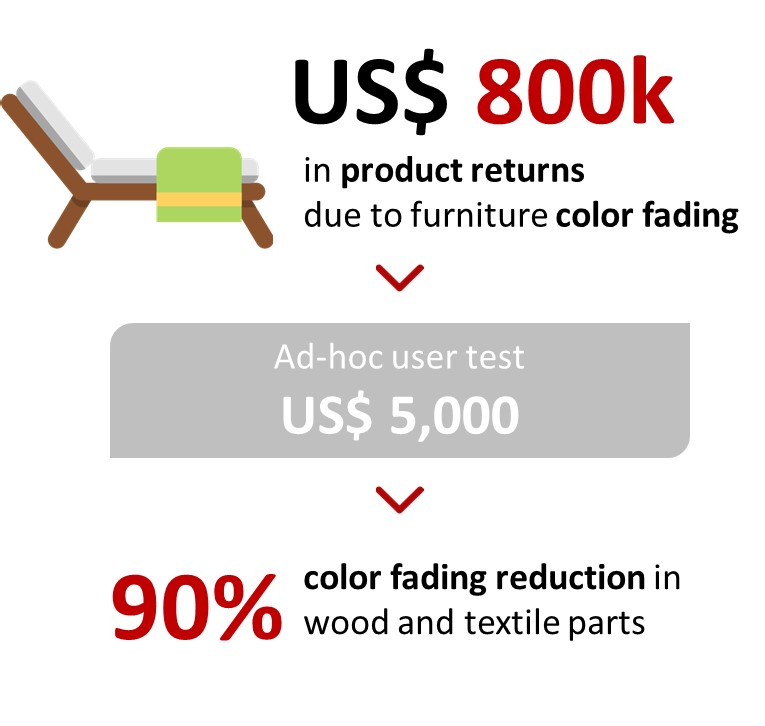
A client’s example:

Icphso 2019 Share your Unsolved Quality Challenges With Our Team

Book your appointment to talk to our team!

Catégories
Blogs

DIY & Home Improvement: Our 20+ Years’ Expertise

While the DIY and home improvement segment is growing at a considerable speed, brands and retailers face an increasing number of challenges. In addition to greater competition, diversification and the rise of e-commerce, market players must deal with the risks associated with production for a very large product range that still lacks harmonized and mandatory global standards. On the other side, consumers are expecting higher levels of product functionality and performance while maintaining the durability and safety of the products purchased.

With these factors in mind, at API we put at your disposal our 20+ years’ experience working with some of the industry’s top players. We can help you minimize risks and meet your consumers’ expectations with our in-depth quality solutions for DIY and tools covering all the stages of your supply chain.

Our solutions include:

https://campaign-image.com/zohocampaigns/180659000003544031_zc_v34_diy_solutions_api_aug.png

Interested in discussing your challenges with our experts?

Catégories
Blogs

Audits for Supply Chain Sustainability and Transparency

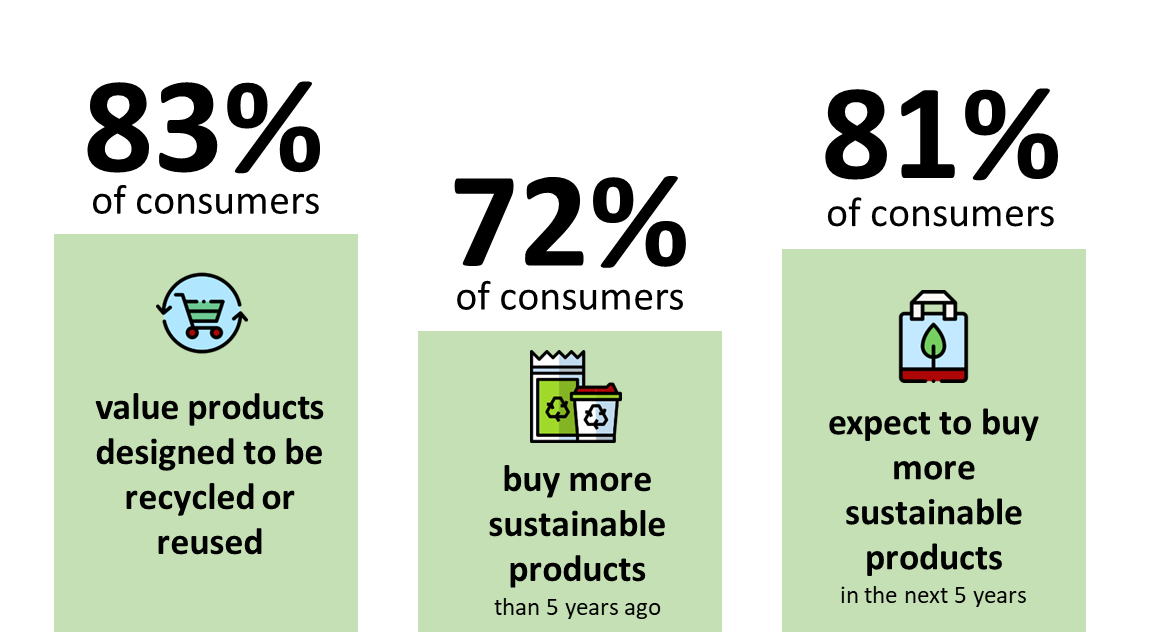
The supply chain is changing, with increasing consumer demand for sustainable products. Many large and small brands are struggling to adapt to this new demand for transparency at every stage of the product’s lifecycle: from the raw materials to the disposal or recycling at the end of the product’s life.

Sustainability is a key consideration influencing buying decisions together with quality, price, and health and safety:

Source: Accenture Survey April 2019 on 6,000 consumers in 11 countriesacross North America, Europe and AsiaSource: Accenture Survey April 2019 on 6,000 consumers in 11 countries across North America, Europe and Asia

Source: Accenture Survey April 2019 on 6,000 consumers in 11 countries
across North America, Europe and Asia

At API we can help you truly evaluate, verify and improve the environmental impact of your factories and processes to allow you to provide additional transparency to your consumers. Our team has more than a decade of experience in supply chain environmental sustainability across various products categories and a deep understanding of the different industry initiatives. We are, for example, one of the companies able to refer to the Higg Index* to provide verification and training solutions. We are uniquely positioned to understand the manufacturing process and its challenges thanks to our specialists being on the ground at the factories in real time.

We can support you from scratch in evaluating your supply chain with globally accredited assessment audit checklists or API’s tailor-made environmental audits checklists. Our personalized service, which follows API’s comprehensive environmental checklist and adapted corrective action plans, includes wide-ranging areas of assessment:

  • Environmental Management Systems (EMS)
  • Energy & Green House Gas Emissions (GHG)
  • Water consumption
  • Waste Water / Effluent Treatment
  • Emissions to air
  • Hazardous waste management
  • Hazardous chemical management

Interested in learning more about our environmental audit solutions?

Catégories
Blogs

API Audit: Accredited to perform ICS audits

L’engagement constant d’API, API’s division responsible for auditing operations, is accredited by ICS to perform social and environmental audits that comply with the ICS Code of Conduct. ICS – Initiative for Compliance and Sustainability – is an international sectorial initiative that aims to enhance working conditions among the global supply chains of its member retailers and brands. ICS is composed of 43 multinational retailers and brands in the sectors of textile, retail, footwear, electronics, and furniture. ICS members collaborate with common tools to mutualize audits, contributing to the reduction of ‘audit fatigue’ while sharing knowledge and best practices*.

https://campaign-image.com/zohocampaigns/180659000003436046_zc_v52_ics_logo.png

As specialists in our field, drawing from our vast hands-on industry experience, we are ready to accompany ICS members and factories in the process of improvement. Our solutions adhering to ICS methodology include:

  • ICS social and environmental audits
  • Follow up and solutions

Interested in our ICS audit solutions?

*ICS logo and description are property of ICS

Catégories
Blogs

Improve Your Social Compliance

Corporate Social Responsibility (CSR) has evolved in recent years from being a ‘beneficial asset’ to a compliance requirement that’s also gaining influence in the buyers’ decision-making process. In 2018, 69% of consumers said they were influenced by brands’ ethical values and authenticity*. An adequate social compliance plan can support your brand in going one step beyond with associated benefits such an increased productivity. These benefits include, for example, an end to duplicated work processes or the implementation of better time management within your workforce.

At API, we offer tailor-made social audit assessments utilizing our experts’ knowledge in developing programs adapted to your needs, and implement ad-hoc plans based on the specific requirements that matter the most to you. We can help you meet your social compliance objectives and challenges that follow:

  • Global industry initiatives & local labor laws: Our experience, expertise and specialization ensure fast and comprehensive results
  • Your own code(s) of conduct: Our industry knowledge and on-the-ground know-how will evaluate and reinforce your objectives – because CSR could be a key asset for brand reputation and differentiation
  • API’s standard: We help you from scratch through personalized service specific to these areas

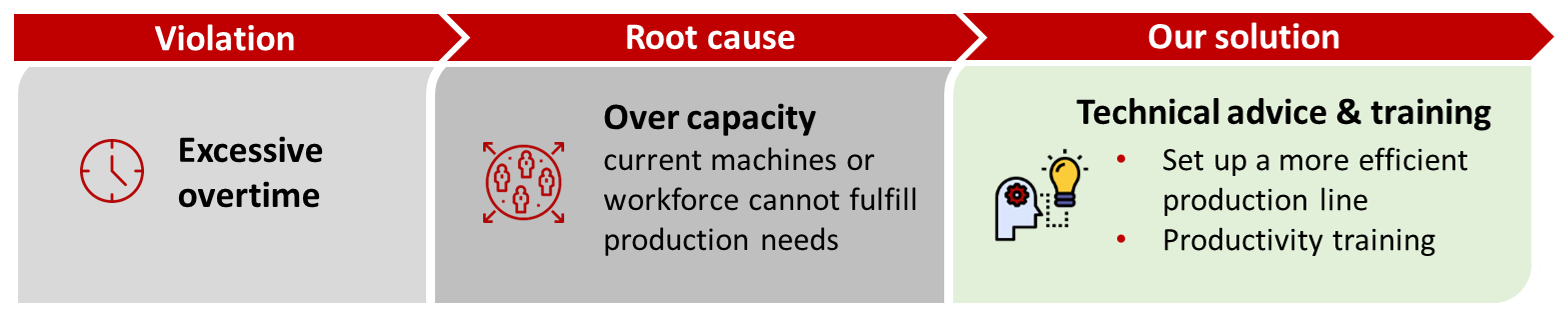
Looking to implement an effective corrective action plan after completion of a social compliance audit? You can benefit from API’s manufacturing experience and deep industry expertise that enables us to suggest informed and productive technical improvements. API’s technical experts will help you identify main factory issues and their root causes with a professional follow-up. You can increase your factory’s productivity with its available resources thanks to our experts’ recommendations on optimum corrective strategies.

Example: Increased supplier’s productivity based on its resources

Improved Social Compliance: Enhanced Brand Reputation and Supplier Productivity

Interested in our social audit solutions?

*Survey of 30,000 consumers in 35 countries, 2018 (Accenture)

Catégories
Blogs

Fit for Use & Performance Testing

Fit for Use & Performance Testing: Meeting Consumer Expectations by Going Beyond Simple Standardized and Regulatory Tests


In the increasingly competitive global marketplace, retailers face numerous issues when sourcing products. Their greatest challenge is to live up to — and even exceed — growing consumer expectations in a market saturated with products.

Since consumers have a wealth of options to choose from, they are no longer satisfied with products that merely meet their basic needs. They consider the minutest of details in regards to quality, construction, features, and price of products.

In considering knives, for example, consumers are no longer satisfied with a product that can simply slice their vegetables and meat. They look for knives with ergonomic handles that retain their edge for an extended period and meet a dozen other additional expectations.

In this competitive and demanding landscape, the necessity of Fit for Use and Performance Testing should not be underestimated.

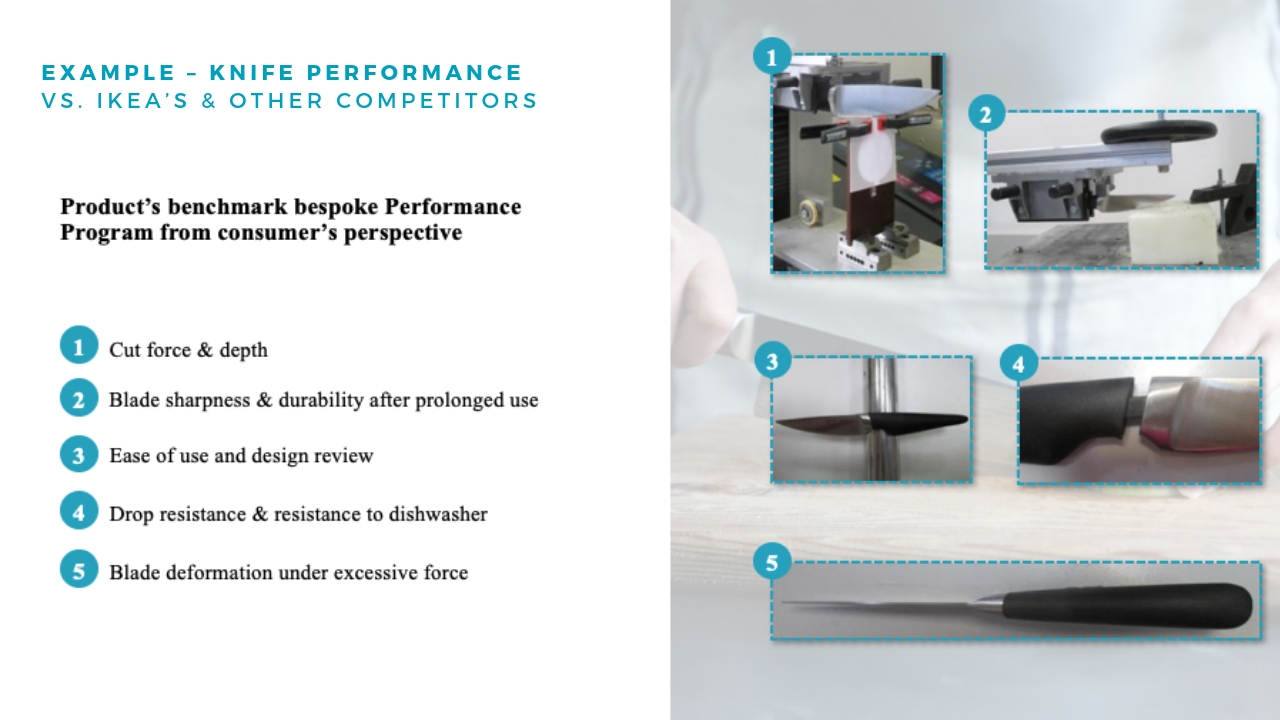
Knives Sourcing Case Study

The following is a case study on sourcing knives. The purpose of this case study is to give a brief example of the various tests that will be conducted during a Fit for Use & Performance and about how a knife’s performance can be compared to that of IKEA knives and other competitors.

Add a heading


Benefits to the Client

  • Help you  source knives that can pass a wide range of advanced performance tests. This can establish a benchmark for the product based on your brand current products and other similar products on the market. This standard can be used as a basis on which to make future products and improvements.
  • Come up with technical ad-hoc solutions for product performance.
  • Get an edge on the competitors by sourcing the most advanced knives possible.
  • Weeding out products that miss the mark on quality in terms of performance.

As you can see, in this global consumer-driven age, the necessity of Fit for Use & Performance Testing is absolutely crucial.

At API, we offer our clients a host of tailored solutions powered by our sister company AXIS to help your products stand out and go beyond the regulatory requirements of your destination markets. Our common objective? Your products fit their purpose and provide outstanding technical grounds to be chosen by your customers.

With 300+ product categories covered, 3,000+ tests performed, and +1,800 ad-hoc tests developed, AXIS – technological resource center of WORMS SAFETY – is able to provide tailor-made fit-for-use performance assessments of all household goods. AXIS has 20+ years’ experience in mechanical properties and performance, climatic aging, colorimetry and dimensional measurement.

Interested in learning more about how performance testing can bring competitive advantages to your products? Contact us today to receive a professional consultation and find out more about our Fit for Use and Performance solutions.