API at the ICPHSO 2025 Annual Meeting and Training Symposium

Catégories
Blogs

API at the ICPHSO 2025 Annual Meeting and Training Symposium

Ensuring Product Safety: A Collective Responsibility

Product safety is crucial for providing necessary protections to consumers, and it is the responsibility of all stakeholders to uphold these standards. Evaluating product safety thoroughly involves assessing both its negative and positive risks, which is vital for maintaining the highest level of consumer protection. There is zero tolerance for compromising on this.

To build connections within the product safety community, API will be participating in ICPHSO’s 2025 Annual Meeting and Training Symposium, taking place from February 17th to 20th, 2025, in Orlando, Florida.

Join us in discussing how we can collaborate to bridge gaps in compliance, product safety, toxic substance control, data transparency and more.

Name: ICPHSO’s 2025 Annual Meeting and Training Symposium
Date : February 17-20, 2025
Stand : 29 & 30
Lieu : Hyatt Regency Grand Cypress
Adresse : One Grand Cypress Blvd
Orlando, FL 32836

About ICPHSO’s 2025 Annual Meeting and Training Symposium
L’International Consumer Product Health and Safety Organization (ICPHSO) est un forum international neutre réunissant les acteurs de la sécurité des produits afin d’apprendre, de réseauter et de partager des informations pour améliorer la sécurité des produits de consommation à l’échelle mondiale.

The 2025 Annual Meeting and Training Symposium’s theme is “Fostering Bridges Within the Product Safety Community” is to show how within ICPHSO we bring together the stakeholders representing different categories of the product safety community, often competitors, to provide a neutral and safe forum for all to hear and understand different perspectives as it relates to product safety. Product safety is a non-partisan issue and our goal and mission is to unite the global product safety community to further safety and reduce risks.

Pour en savoir plus sur le symposium, veuillez consulter le site de l’ICPHSO : https://icphso.org/page/2025_Annual_Symposium

Catégories
Blogs

A complete guide to supply chain mapping

The international supply chain is presently grappling with regular disruptions and uncertainties due to a variety of factors such as shifts in the geopolitical environment, disruptions in key global trade routes, and policies related to climate change. These issues present substantial risks and strains on companies, necessitating them to enhance their supply chain visibility, traceability, and transparency to effectively tackle these challenges.

A crucial element of ethical sourcing is supply chain mapping. Ethical sourcing requires companies to consciously and actively source and procure goods and services in a manner that is ethical, sustainable, and socially responsible. This implies that a firm will ensure that its business operations, both internally and throughout its supply chain, do not negatively impact people and the environment.

The initial stage in supply chain due diligence and traceability is Supply Chain Mapping. This is crucial when providing compliance reports regarding regulations on forced labour, the German Supply Chain Act, the Corporate Sustainability Due Diligence Directive, EUDR (European Union Regulation on Deforestation-free products), the California Transparency in Supply Chain Act, the UK Modern Slavery Act, among other regulations.

A complete guide to supply chain mapping_1

Understanding Supply Chain Mapping

Supply chain mapping is the process of creating a full picture of the network of activities and entities involved in producing and delivering a product.

Supply chains can be extremely complex, often involving multiple tiers with numerous suppliers in each tier. While most companies know who their Tier 1 suppliers (main manufacturers) are, the visibility often ends there. Taking the example of a wooden chair, the supply chain starts with harvesting trees from forests, then continues with timber processing, transporting and distributing, and ends with manufacturing and delivering the finished goods to end-users and consumers.

It is important to map the entire supply chain to gain a thorough understanding of the business and the entities it works with. This process involves more than just recognizing the top tiers; it necessitates comprehending the flow of materials and products within the chain, the relationships among various stakeholders, and the external factors that affect these interactions.

A complete guide to supply chain mapping_2

Why is supply chain mapping important for businesses?

The benefits of Supply Chain Mapping:

  1. To manage risks
    Supply chain mapping is an essential tool for businesses to identify potential risks and opportunities for improvement within their supply chain. By pinpointing risks and areas for improvement, companies can take measures to mitigate risks, such as diversifying their supplier base and improving the resilience of their supply chains.
  2. To Improve efficiency and reduce costs
    With a better understanding of the supply chain, businesses can take measures to streamline processes, minimise waste, and enhance communication and coordination with suppliers and customers.
  3. To ensure regulatory compliance
    In addition, understanding your multi-tier supply chain is critical for compliance with regulations on supply chain due diligence and to meet ESG reporting requirements.
  4. To become more transparent and sustainable
    Today’s consumers are more conscious about product origin, sustainability, and safety. According to a McKinsey survey, 66% of all respondents and 75% of millennials consider sustainability when making a luxury purchase. An environmentally sustainable supply chain can help improve a brand’s reputation and market position.

A complete guide to supply chain mapping_3

Challenges with Supply Chain Mapping

In today’s globalized sourcing environment, companies, regardless of their size, have suppliers located in various parts of the world. As a result, organizations must oversee supply chains that cross boundaries and continents. This presents numerous difficulties stemming from communication, logistics, cultural distinctions, language obstacles, and regulatory compliance.

Businesses encounter multiple challenges in supply chain visibility. These include intricate supply chain networks, absence of standardized systems and clarity, inadequate understanding of supply chain mapping, reluctance in information sharing, and unauthorized subcontracting and raw material sourcing.

A complete guide to supply chain mapping_4

API can help you map your supply chain

Mapping your supply chain is not an easy task. API’s household goods and toy experts can assist your company in the identification and end-to-end mapping of all suppliers. We have experience mapping supply chains for companies around the world.

API’s added value:

  • Cross expertise: CSR + Sustainability + Technical departments working closely together. Combining knowledge and expertise.
  • Field Experience: Thanks to our teams being on the ground at the factories in real time, API’s household goods specialists are uniquely positioned to understand the manufacturing process and its challenges. This allows us to provide bespoke services to address issues at each and every one of the manufacturing stages to help our customers achieve their sustainability goals.
  • Sustainability training / seminars: We offer sustainability training for your internal teams, suppliers and factories in English or in your local language.

API creates programs that are tailored to meet the specific requirements of each customer. To find out more about supply chain mapping services, Nous contacter.

Catégories
Blogs

An empowered supplier is a competitive ace card

Brands and retailers can have relationships with a great number of suppliers, which can reach in the thousands for the bigger players. When the volume is that high, it can be difficult to think of individual suppliers as anything more than a transactional necessity for the manufacturing of hardline goods. But brands and retailers that see their suppliers this way may miss out on what their more reliable and advanced suppliers can offer them.

Increasing numbers of brands and retailers are looking for ways to empower their suppliers, but this is easier said than done. Effective buyer and supplier collaboration is not only about open communication across the entire supply chain, it’s about enabling the suppliers to feel they can share ideas and make recommendations as the true owners of hardline product quality.

While working with empowered suppliers is the ultimate goal, the path to getting there isn’t always straightforward and should be broken down into smaller goals. Some of the most common challenges brands and retailers face when looking to empower their suppliers include:

  • Easy to say, but not to do
  • Time-consuming
  • Empowerment is based on trust but needs a system for monitoring
  • Reluctance from some factories
  • Unclear quality liability

Supplier empowerment: Where to begin
It’s important to keep in mind that empowering your suppliers means being in direct contact with them. Using intermediaries that muddy the waters can complicate the task and make it more difficult. Another question to ask is whether all your suppliers can be empowered. To answer this, you need to have a clear understanding of your supply chain. The factories most likely to align with your expectations will be the more strategic and trusted ones with a long-term approach. These are usually factories with a solid QMS and with whom there’s already fluid communication, a solid investment, and projects demonstrating growth to make this commercial relationship last.

You can start by asking some simple questions:

  • Are you working directly with factories or through vendors?
  • Do you have top factories that you work with?
  • Do you have long-term partners?
  • Do you have a stable sourcing strategy? Or do you shift countries frequently?
  • Do you create partnerships with your manufacturers?
  • What incentives will you bring to the factory? Will you bring more orders?

As essential as it is to understand where you stand before launching an empowerment program, it’s equally important to make factories understand the benefits for them. Among other elements, advantages for empowered suppliers include:

  • Less external control
  • Réduction des coûts et gain de temps
  • Improved quality processes and production output
  • Improved partnerships with customers that can result in more orders

Supplier empowerment: Implementing an effective program

Empowering suppliers also offers significant benefits to brands and retailers of hardline goods. It allows for better resource optimization, going further upstream, and doing more quality assurance, ultimately reducing costs and allocating budget to areas of risk. The final objective would be to replace third-party inspections by shifting quality ownership to the suppliers. This would increase efficiency and ensure continuity, even during disruptions like those we saw in the last couple of years.

Brands and retailers with a solid quality management team can put all this in place through their internal teams, allocating time and resources to train and monitor their selected suppliers. That said, this sort of program, while worthwhile, isn’t easy to implement. It’s a time-consuming process that requires constant follow-up and a strong and comprehensive setup. Continuous monitoring is also necessary to ensure that factories are qualified and maintain expected quality standards.

Brands and retailers have the option to bring in additional resources and use a qualified third party to take charge of the program instead of allocating it to an internal team.

A 7-step program: The ‘Factory Certified Auditor Program’

At API, we support our clients’ supplier empowerment strategies as part of our global risk-based approach. We’ve implemented a 7-step program, the ‘Factory Certified Auditor Program,’ designed to empower the best-performing suppliers to perform their own inspections. The 7-step program covers:

  1. Program introduction to vendors
  2. On-site assessment
  3. Validation and training
  4. Examination
  5. Correlation & probation
  6. Certification
  7. Monitoring

Why should brands and retailers follow this program?

  • Expert guidance: Industry experts introduce additional resources and external inputs when developing and implementing the program.
  • Flexible and reliable: Training is prepared by industry experts according to customer needs and what’s already in place with multinational brands.
  • Continuous monitoring: Regular monitoring ensures that factories are well qualified and maintain good quality standards.
  • Increased quality, lower costs: Externalization of training and alignment with vendors aim to shift quality ownership in harmony with brand requirements.
  • Neutral partner: An external, neutral agent can intervene as needed with no conflict of interest.
  • Complete or partial manager participation: Managers can partake in 100% of the program or only the stages requiring reinforcement.

Interested in learning how API can help your supplier empowerment strategy?

Catégories
Blogs

Ensure your recycled polyester claims are genuine

According to Precedence Research, the recycled polyester (rPET) market is expected to hit US$14.23 billion by 2030, driven by soaring demand for sustainable products from consumers, governments, and NGOs. The use of rPET in consumer goods is no longer a trend but a reality in many categories, including toys and furniture. What started with soft toys containing stuffing made from rPET is fast-evolving into other uses. Danish toy giant Lego has announced its first prototype bricks made of rPET from discarded bottles, and IKEA has launched a range of kitchen furniture with plastic films made out of recycled bottles. Many other furniture brands are producing products made from rPET, including chairs and stools, storage boxes, bathroom accessories, and more.


Amid this rise in environmentally conscious consumerism, sustainability has become a powerful marketing tool in a crowded marketplace. But as green consumers become more informed and critical, brands and retailers must be able to back up the use of rPET in their products with proof to avoid risks of reputational damage and noncompliance. Until now, the primary way to verify the inclusion of rPET in products was to rely on declarations and documents from suppliers and third parties. By betting solely on someone else’s information, however, brands risk greenwashing (claiming something as sustainable when it isn’t) and breaching regulations (the EU and GRS-V3 impose a minimum recycled polyester content of 20%).

What is recycled polyester, and why is it so popular?

To create virgin polyester (PET) –the world’s most common plastic—crude oil and natural gas are extracted from the earth and heated to form a molten liquid. The liquid is spun into fibers to create polyester fabric or molded into plastic containers. These products aren’t biodegradable and will persist in the environment, even as they eventually break down. Recycled polyester (rPET) originates mostly from post-consumer PET bottles that are melted down and re-spun into new polyester fibers. One tonne of rPET saves 11,100kWh of energy—the equivalent of two years of energy consumption for an average household. Each kilogram of mechanically recycled polyester also represents a reduction in greenhouse gas emissions by more than 70% compared with virgin polyester.

A scientific solution to verify recycled polyester

The only way to be 100% sure that the amount of rPET in your products matches what your brand claims is through reliable scientific testing. As part of a continuing commitment to helping brands achieve growth through sustainability innovations, API and Worms Safety Laboratories have pioneered an innovative solution that detects and quantifies rPET in products and materials to prove its existence and avoid greenwashing. The accurate testing method is based on nuclear magnetic resonance (NMR) technology, which is highly sensitive, robust, precise, auto-calibrated, and not affected by additional chemical substances such as dyes, viscose, or others. In simple terms, the process targets the presence of isophthalic acid (IPA), which is added to PET to give specific properties to the raw material. This superior testing method uses NMR technology to compare the IPA content in each sample to the average IPA content derived from a reference database of bottles collected in Europe, China, and India. More information about the rPET testing can be found ici.

More accurate than any other method

Other methods are available to measure IPA content, including Fourier Transform Infrared Spectroscopy, Raman, Liquid Chromatography, and Gas Chromatography. However, common disadvantages of these processes include the generally higher uncertainty of the testing equipment and the sensitivity to other substances present in the sample. The solution developed by API and Worms Safety Laboratories is highly sensitive and specific, with low detection limits and greater certainty. The PET bottle reference library is continually monitored and updated, and any changes in PET quality on the market is reflected in the test results.

Interested in learning more about how this solution can benefit your brand?

Catégories
Blogs

The drive toward sustainable packaging

We live in an era in which sustainability has never been more important in every step of the supply chain. Today’s consumers increasingly demand products that have a reduced impact on the environment, which includes eco-friendly packaging. In the toy industry, this has driven major manufacturers like Hasbro, Mattel, Lego, and MGA Entertainment to make pledges to reduce their packaging and make the switch to recycled or eco-friendly materials.

We’re seeing the same pattern in other industries, such as furniture. Swedish giant IKEA is aiming to eliminate plastic packaging from most of its products by 2025. Players such as Amazon have also joined the movement, with its ‘Frustration-Free Packaging’ that helps brands produce less waste than traditional packaging by redesigning their packaging, eliminating waste throughout the supply chain, and ensuring that products arrive undamaged on customers’ doorsteps.

The goal of these initiatives is to tackle the harmful impacts of plastic packaging on the environment in favor of alternative solutions with less impact.

The problem with plastic

Each year, around eight million tons of plastic waste end up in the world’s oceans. Forbes has reported that plastic trash is found in the guts of more than 90% of the world’s sea birds, in the stomachs of more than half of the world’s sea turtles, and is contributing to the deaths of whales. It’s predicted that, by 2050, the mass of plastic in the world’s oceans will exceed the mass of all the fish that live there. Plastic packaging can take thousands of years to decompose in the environment and also takes a great deal of energy, water, and other natural resources to produce.

These sobering figures have made many consumers deeply concerned about plastic packaging finding its way into the environment, and eco-conscious consumers will choose brands that are working to address this impact over those that aren’t.

The role of legislation

Alongside pressure from consumers and NGOs, multiple laws and regulations are being introduced to find a solution to the plastic problem.

Many governments have formulated systems that support a circular economy and reduce their national waste. The extent of these requirements varies among countries, but overall, we’re seeing increasing numbers of regulations aimed at reducing the use of packaging and promoting more sustainable packaging materials.

In Europe, the Waste Framework Directive establishes measures for dealing with waste, while the Packaging and Packaging Waste Directive intends to harmonize the management of packaging waste and prevent or reduce the impacts of packaging and packaging waste, including by setting recovery and recycling targets.

There are also regulations specific to certain nations, such as the UK’s plastic packaging tax that came into force on April 1, 2022. The UK Plastic Packaging Tax (PPT) affects businesses that manufacture or import plastic packaging, including packaging that already contains goods (such as plastic bottles containing beverages). The tax aims to encourage the use of recycled rather than virgin plastic in packaging (when permitted) and stimulate the increase in recycling and collection of plastic waste. You can learn more about it ici.

In March 2020, France adopted Law No. 2020-105 Regarding a Circular Economy and the Fight Against Waste. This law aims at minimizing waste and promoting resources to be reused as much as possible. The economic model targets low consumption of nonrenewable resources, the reuse of waste as a resource, products that have a longer useful life, the recycling of 100% of plastics, and less wastefulness. The law also sets the goal of recycling 100% of plastics by 2025 and the end of single-use plastic packaging by 2040.

In the US, there are also initiatives to reduce plastic consumption and packaging, such as the California plastic waste and labeling bills. These propose several laws that make labeling less misleading and shine a light on the responsibility of packaging producers to find alternatives to single-use, non-recyclable plastics.

The packaging landscape is complex, with growing numbers of regulations and standards to keep in mind that collectively aim to achieve a more sustainable future. With adequate guidance and clear visibility of targets and requirements, brands can prepare to adjust their processes as appropriate and ensure a smooth transition.

At API, we can help you comply with these and other packaging requirements while supporting you in bringing better products to the market. Interested in finding out more?


Catégories
Blogs

How Do Professional Importers Ensure Product Compliance?

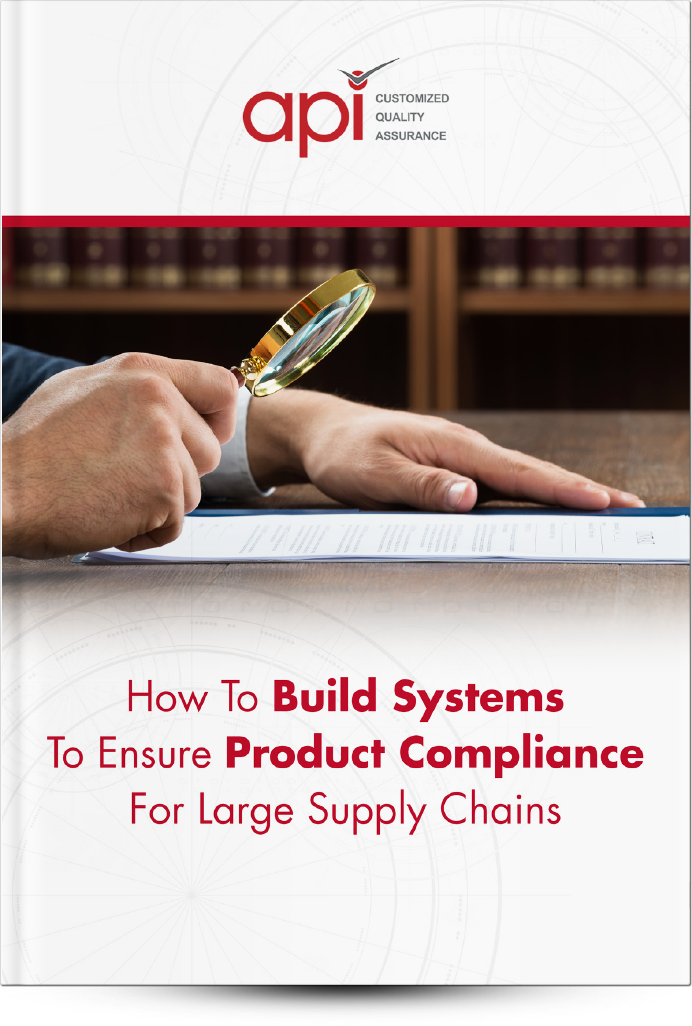
Your brand is only as reliable and trustworthy as the quality of products you put out into the market. Without a robust product compliance program in place, the integrity of your brand is bound to be compromised sooner or later. Our complimentary eBook ‘How to Build Systems to Ensure Product Compliance in Large Supply Chains’ lays the foundation for building a robust compliance program to help you avoid costly mishaps and begin overcoming compliance issues today.

Product Compliance is Key To Your Success

Product compliance starts with a compliance program Effectively managing growing supply chain complexities is something that most purchasing managers/importers deal with on a day to day basis. As your brand grows compliance issues you never knew were there (nor were prepared for) may rear their ugly head, and it’s up to you to begin pinpointing issues and plugging the holes your profits will fall through, before the consumers of today tear them open even wider. Ensuring product compliance starts and ends with one thing: A robust compliance program. 
Building a compliance program

A working compliance program addresses the rules, standards, regulations and requirements that your company or brand sets for its suppliers. These standards will create the accountability within the supply chain that consumers today are looking for. At this stage if you are pondering on the necessity and importance of compliance, take a look at this: In 2007, Mattel had to recall 1.5 million lead covered toys due to negligence. The company ended up having to pay a $12.3 million settlement with another $2.3 million in civil penalties for violating a lead paint ban.

“Can your company afford a mistake like this?”

‘How to Build Systems to Ensure Product Compliance in Large Supply Chains’

‘How to Build Systems to Ensure Product Compliance in Large Supply Chains’

Learn how to avoid costly mishaps so you can begin overcoming compliance issues through understanding:
  • Why compliance is necessary now more than ever
  • How to turn your compliance challenges into opportunities for growth
  • The specific audits that are needed for compliance in your supply chain
  • How to go about creating a compliance culture for your brand
Our complimentary eBook will provide you with in-depth insights into the systems that go into building a compliant supply chain that can sustain your company going forward. The key to your success will be how well you are able to integrate these systems into every tier of your brand and supply chain, creating opportunities that will give you a competitive advantage over your competitors.

ARE YOU FACING COMPLIANCE ISSUE CHALLENGES?

START BUILDING YOUR COMPLIANCE PROGRAM TODAY – CLICK HERE TO GET YOUR FREE COPY!

Catégories
Blogs

What you should know about Christmas tree testing

Christmas, a very special holiday celebrated all around the world, a sacred time spent with family and friends, houses adorned with traditional decorations and illuminated in a splendor of colors, all leading up to the childlike anticipation of Christmas day, the gifts, the food and the wine!

While it may still be quite a few months off for most people, it is now that time of year when suppliers and retailers the world over begin their arduous preparations for the very busy festive season ahead, starting with none other than the hallowed Christmas tree.

In 2015, 12.5 million artificial Christmas trees were purchased in the US alone at a Christmas tree testingpurchase price of $69.38 each, resulting in revenues totaling $854 million for manufacturers in that short period. As a holiday that approximately 2 billion people around the world celebrate, the market for Christmas and these trees is undeniably massive, not to mention the powerful potential for profits it promises.

But, what happens when things go wrong on the production line?

Between 2010 and 2014 fire fighters responded to an annual average of 200 homes that were reported to be on fire or burnt down in the US alone due to fires started by Christmas trees with a total damage of $16.2 million. Fires started by malfunctions in artificial trees highlight the critical importance of strict quality control measures needed in place during and after production, from the lighting within the tree, the temperatures they produce to the types of plastic that is used to manufacture the tree.

Can your company stand to lose millions because of negligence in the QC process? What about the implications brought about from families that lose their homes or worse?

Preventing unnecessary damages and losses before they happen should be at the top your Christmas wish list. In this blog post we talk to Francois Deudon, CEO of Asia Pacific Inspection, as we seek to understand the technicalities that go into the making of Christmas trees and the essential QC procedures/tests involved in the production of these products, helping to ensure a safer, happier and more ‘festive’ festive season for us all…

Q: What are some of the challenges involved in the manufacturing of Christmas trees in terms of quality?

Christmas tree branch bending procedureA: One of greatest challenges is ensuring that each branch is able to comply with the NFS 54200 / Décret 2003-1123 without any accessible sharp points. In order to comply with this requirement, an industrial practice of bending the end wire of each branch to prevent any accessible sharp points. Many Christmas trees contain hundreds of branches, so the quality control of suppliers plays a significant role so as to manage the potential risks.

Q: One of the biggest concerns that consumers have is the PVC content of an artificial tree – How do quality procedures overcome this kind of challenge?

A: The quality control involved from the design stage to the mass production stage is needed to manage this concern. In the design stage, a client will instruct the supplier that only qualified raw materials should be used to create this product. In the pre-production stage, raw materials or products should be submitted for testing to ensure that these qualified materials are used. Suppliers should not only use these qualified materials; but they should also be able to avoid contamination during the production process. The clients should then assess the chemical management system of the factory, when they choose a supplier. After the production is completed, the client could then appoint a third party company to pick a sample from the mass production for chemical testing to ensure only qualified materials are being used for production and that there is no chemical contamination.

Q: Are suppliers more aware of the raw material and construction of trees that need to comply to strict Christmas tree testing processinternational regulation?

A: The more experienced a supplier is the better he will understand the regulations of any given country. Here it will be the retailer or the importer’s responsibility to choose an appropriate supplier. This can be done through a technical audit, which could help measure the capability and capacity of suppliers, providing valuable information when choosing suppliers.

Q: Do you think stricter quality control or inspection measures can help reduce the amount of fires that are started each year due to artificial Christmas trees? How so?

A: Yes, the testing on mass production products will assess the flammability of artificial Christmas trees. It could also avoid unauthorized change of the materials during this mass production process.

Q: What quality tests are absolutely essential before shipping Christmas trees off to various distributors?

A: The flammability test, the sharp point sharp edge test and the REACH test are absolutely essential before shipping to any distributors.

Conclusion

While retailers and importers across the globe are preparing for all the holiday joys, what we have learnt is that it will be important to select the correct supplier, based on previous testing records or it may even be important to consider an audit that will help identify any procedural risks early on, as the scope of the festive season is too big to cut any corners as any faults of failure will have the potential to lose you millions. The various Christmas tree testing procedures will be important to ensuring that the festive season will be a safe and happy one all round.

Are YOUR QUALITY ASSURANCE SYSTEMS LETTING YOU DOWN?

FIX YOUR ISSUES TODAY WITH OUR FREE GUIDE BY CLICKING HERE!


Catégories
Blogs

2 Ways To Ensure Supply Chain Compliance

Supply chain compliance is becoming one of the biggest challenges faced by all retail professionals. Among small, medium enterprises’s it likely hits a little harder, with limited resources and where costs are always a make or break factor. Often-times you can only afford a supplier lacking certain levels compliance documentation, which in turn requires you to monitor them even more stringently, but can you afford the resources to do so properly? Your supply chain is dotted with complexities that can expose your organization to risk. This risk as you know needs to be avoided and planned for with actionable steps in place to mitigate any kind of exposure or threat to your supply chains operations. So let’s do just that…  In this blog post, I endeavor to highlight only two of the most common supply chain challenges that many regional retailers currently face, but also what you can do to begin achieving that desired supply chain compliance for your brand so that you may begin safeguarding against avoidable areas of risk. So let’s dive in;

First Identify your challenges

Identifying the challenges that you face within your retail supply chain is always the best place to begin, here I list two of the most common challenges that are experienced among many a local retailer; 1. Supplier relationships –  Your suppliers are the key to your entire operation. Take a moment consider that… Supplier collaboration can foster growth, if allowed they can also help you to create operational efficiencies which enables you to get your product to market a lot faster. This relationship will act as an incubator for out of the box, innovative thinking as your supplier begins to take real ownership of the end products and their quality. The way in which you engage with your suppliers from the very beginning, will set the tone for your operations going forward. Careful assessment is needed when signing on new suppliers, this is often the point at which compliance problems begin to seep in. You need to ensure that all the appropriate factory technical documentation is in order when selecting a supplier. A bit of due diligence in this area will guard you in the long-run. This will ensure that you have a defined and agreed upon set of operating principles where everything is done in compliance with these operating principles and standards. 2. CSR and environmental impact – Through adequate evaluation and a good a supplier relationship you will be able to determine CSR and environmental impacts. This is either done through a social compliance audit and an environmental audit which is either done in-house or through a third-party quality provider, such as API. An environmental audit will provide insight into things like by-product waste of the factory, how they dispose their waste, who disposes their waste and what levels of CO2 are being emitted and whether or not any of this can be reduced or are even being addressed. The results will help you to determine their impact on the environment and whether or not they are compliant with local and/or international environmental laws. A social compliance audit provides insight into things like child and forced labour, overtime and possible wage related disputes. This things are not only unethical, but should your brand be aligned with these practices, you will be destroying your brands reputation and image. The results of the above audits will enable you to make an informed decision about the type of supplier you wish to align your brand with. Supply chain compliance and environmental auditing Let’s take a look at what Walmart did; They created what they call the Sustainability Index, which is essentially a scorecard for suppliers to be reported on from various social and environmental production factors. Walmart has said that by the end of 2017 that 70% of its products will come from suppliers who participate through this Index, and as a benefits they will be endorsed as a sustainable partner and proud Walmart supplier. Solutions Supply chain compliance is an important issue to address, with many local retail brands realising that compliance needs to be a top priority to be achieved in order to achieve a globally competitive advantage in the market. So how do we go about achieving just that? Good supplier relationships for supply chain compliance 1. Supply chain visibility –  This refers to the data visibility made available within your supply chain; from where your raw materials come from, to your factory’s technical operations right through to your inventory management strategies. All of this data needs to be made available and visible to your consumers to create a sesnse of openness and trust within your supply chain operations. **When bringing on new suppliers be sure to ask for access to all of their compliance documentation from health and safety, to environmental and technical information. 2. Supply chain transparency – This is where your organisation begins to analyse current quality and compliance procedures. Transparency and visibility need to work hand-in-hand the data provides insight into the operations and the operations provide the data to be analysed. Supply chain transparency endeavours to take a deeper look into your systems and processes, understanding what makes them work and also not work. This approach to your supply chain operations allows you to mitigate risk early on, but also identify any areas that may need improvement, therefor adopting a continuous quality improvement cycle. As mentioned earlier, consumers actively research any retail brand’s supply chain and its processes from raw material to the moment a product reaches the floor to right before they make that purchase decision. It is crucial for your brand to ensure clean and compliant operational procedures if you are to achieve a globally competitive brand. Supply chain compliance need not be another complexity that your retail brand needs to face, through actively engaging and applying the above suggestions to your operations they will indeed help you on your way to a successful and compliant supply chain that puts your brand in a position of growth and also mitigates against any unnecessary risks.


YOUR QUALITY ASSURANCE SYSTEMS letting you down?

Catégories
Blogs

10 things you will learn from a third party quality provider

Do you feel that no matter how much you plan, the maze of complex logistics is always catching up with you? Successfully running your quality systems is key to the success of your entire operation. As you try to stay on top of your logistics, resources, planning and strategies within your supply chain, you may have never considered the hiring of a third party quality provider. In this blog post, we endeavor to look at how you can benefit from hiring a third party quality provider:

1. Expertise – A third party quality provider has a wide array of clients creating an extensive network and a wealth of knowledge that will all be put into providing you Third party quality provider - expertise.jpgwith efficient quality procedures. They are also up to date with the latest developments in the industry along with the best practices to follow. As a result, you have all the expertise and knowledge about your quality procedures at your disposal; this can be invaluable to your quality and logistics procedures.

2. Efficiency – A third party quality provider has the infrastructure to manage all the logistics you require from all the certifications and documentation to the technology that is needed to ensure you receive a delivery on time as well as a product of a high quality. Apart from just managing the logistics, they also come with all the technical experience from having local product inspectors and an extensive network to create that efficiency in the logistics that you require.

3. Technology –  The use of appropriate technology and software to optimize your supply chain may be too expensive to have in-house, therefore leveraging the technology that a third party quality company can provide may be the way to go. They can save you time and minimize your risks through inventory tracking, warehouse management and can furnish you with quality compliance certification according to your specification.

4. Accountability – Upon meeting with your provider, it will be important for you to agree upon a set of expectations that will need to be achieved, a document like this will help to hold you both accountable to the operating procedures and their successes. It will also be important for your quality provider to show whether or not they can deliver on these set expectations.

5. Innovation – With their expertise, they are able to meet and fit your needs in the way they see best fitting allowing them room to innovate to achieve the best possible results for you and your operating procedures.

6. Optimization – Along with the technology and software that they use, they are able to identify potential risks before they happen and are able to continuously make improvements along the way. Continuous optimization is key to the success of any quality and supply chain procedures.

7. Network – The network an outsourced organization has can be extensive, providing your company with the best value for your money as well as a tried and tested networks to conduct your operation effectively and efficiently.

8. Risk reduction – Through the resources and technology they have, they are able to minimize the risks you would normally experience. They will have the ability to identify potential risks early on, allowing enough room to mitigate if needs be.

9. Flexibility – Outsourcing has the flexibility to adjust to the rapid changes, movements, and complexities that are experienced within the supply chain. To manage those kinds of changes internally may even be the cause of risks within the supply chain.

10 things you will learn from a third party quality provider - International Logistics

10. International Logistics – International export and import require a fair amount of logistics and management to make sure your product gets to you safely and in good condition. An outsourced company is capable of managing all of your international logistics from factory inspections and compliances to the testing of your product internationally.

Outsourcing your quality and logistics procedures will have effects for your bottom line but can also create the opportunity to enhance your brand’s quality, credibility and efficiency helping you to maintain a competitive advantage within the market. As you consider your current logistics and quality processes you may look at the benefits of outsourcing this next time round.

Ready to begin optimizing your quality procedures today?

Catégories
Blogs

A Supply Chain Management System To Optimize Supply Chain

Global retailers have large complex supply chains, to efficiently manage these they have to adopt a variety of tools and software to ensure an effective supply management system. In this blog post, we take a look at a few of the tools global brands use to manage this supply chain complexity. 1. Technology Using technology as part of your supply chain management is becoming essential to remaining globally competitive. It can be used to for real-time tracking of your orders, to real-time inventory updates. The analytics that you receive enable visibility, early forecasting of potential risks and early identification of systems that may not be working. Technology is used to simplify your supply chain, thus reducing operational expenses and overall timing.
  • Dako, a UK Furniture retailer uses Transportation Management Software (TMS), such as STREAM which is a particular technology that can be used to track shipments, map routes and also keeps track of inventory in real-time, minimizing supply chain challenges.

Supply chain complexity - supplier partnerships .jpg2. Strategic partnerships

By creating an emphasis on supplier relationships, it becomes possible to establish collaboration with the moving parts of the supply chain. This is done through clear communication of goals and expectations, through stakeholder buy-in which creates a vested interested in the outcome of the quality of the product. This, in turn, fosters a relationship which results in system innovation and supply chain transparency.

  • Supplier Relationship Management (SRM) is driven by consistent, clear interactions between the supplier and buyer, SRM programs build new capabilities that enable strategic sourcing and procurement. Effectively applying SRM as a part of your strategy can help achieve greater quality in your product and a faster time to market.
Supply chain complexity - warehousing.jpg 3. Inventory management tactics Managing inventory is all about balance. Making sure that you don’t have too much inventory thus face the risk of increased storage costs and a longer time to market having an effect on your return. You also need to make sure you don’t have too little inventory forcing people to shop elsewhere for a similar product. Both sides of the equation can have detrimental effects for your brand. Here we look at two inventory management tactics that are applied by two of the biggest global retailers:

Check out our comprehensive guide on optimizing your quality assurance systems.

  • Cost per touch:  This strategy is employed by IKEA, and is centered around the idea that each time a product is touched within the supply chain process, it is charged accordingly. This tactic empowers the customer and also brings them into inventory management. This system has encouraged customers to go as far as collecting their product from the nearest IKEA warehouse as well as building their item at home, therefore reducing the number of times the product was touched and reducing the end costs.

`supply chain complexity quality control .jpg4. Quality Control

Often times the quality department or team is over-looked when trying to optimize the supply chain for procedural efficiency. As a good quality control manager can help to minimise human errors within the production processes. The aspect of quality affects nearly every step in the supply chain process from raw material inspection to the final product. You may want to take into consideration the value of these departments working together as they can provide overall supply chain process efficiency, saving you time and procedural expenses.

5. Focus On Core Competencies Your brand may not have the expertise to effectively manage quality systems. Therefore it may be of benefit to outsource the management of your quality procedures to a trusted quality provider. There are many benefits to this approach from the time it takes to testing a product as they have the right technical skills which has a faster turnaround time to also having great cost benefits. The above tactics help reduce the amount of moving parts that encompass the supply chain, with fewer moving parts, one can reduce potential risks and costs over time. This creates an efficiency and a level of quality in the supply chain that was never there before. A supply chain management system consists of complex procedures; the above tools seek to simplify these through greater visibility and transparency creating a level of quality and efficiency that is globally competitive. Which of these tools have you adopted? What is the greatest efficiency that you have experienced through adopting any of these tactics?

Would your Company stand to benefit from

optimised QA systems?

Simply click below for more on doing just that!