Tips to alleviate disruption when shifting sourcing location

Kategorien
Blog

Tips to alleviate disruption when shifting sourcing location

Reshoring, offshoring, and nearshoring: these were some of the most used terms in 2020 in numerous industries, including furniture. China continues to reign as the world’s manufacturing superpower and primary supplier of all varieties of goods, but companies have begun diversifying their supply chains in recent years and pursuing alternative manufacturing hubs. COVID-19 disruptions and the US–China trade war have acted as an accelerator in many cases, urging brands to look for manufacturing sources outside China.

China is the world’s manufacturing superpower

 Source: Statista ‘Top 10 Countries by share of global manufacturing output 2018’

The global furniture industry has been seeking sourcing alternatives to China for several years already, with some manufacturing countries outside China reinforcing their position and becoming a bigger part of manufacturing production volume for some brands. Some of the countries preferred by brands and retailers include Vietnam, Cambodia, Malaysia, India, and Indonesia in Asia, Poland in Central Europe, and Mexico in Latin America. New countries mean new opportunities, but they also come with new risks. When relocating parts of production out of China, the risks include:
  • Unzureichende Produktionsplanung und -status: When working with new suppliers, some factories may not operate at their full capacity or might have inadequate planning, making it difficult to meet production targets. It is important to check your factory records to see how many actual people are in the production line, as well as daily output and quality control reports.
  • Rushing production: With relation to the above and to ensure correct timing, some suppliers may rush to make up for lost time, tempting them to cut corners and speed up processes. This can lead to mistakes and skipping quality control measures that put the entire production at risk.
  • Mangel an Rohstoffen: New manufacturing countries do not always benefit from the same access to raw materials as China. This may result in a shortage of some materials such as specific types of wood, stone, or components, or longer delivery times.
  • Lack of quality control to ensure safety and quality: A lack of local teams onsite or experienced factory employees may decrease the level of quality control, putting product safety and production quality at risk.

How can these risks be mitigated?

The concept of shifting production to areas outside China was already on the table before the US–China trade war and COVID-19-related pressures. However, these recent issues have broadened and escalated the topic’s relevance, with many companies now considering moving ‘out of China.’ Diversifying production areas and pursuing alternative locations can help secure additional inventory and capacity. However, launching production in a new area can be challenging without the right experience or teams in that specific area. A third-party company can support brands and retailers with adapted solutions that facilitate a smooth transition that protects production quality. The crises and disruptions experienced by supply chains in recent months may be the catalyst for revisiting a more global supply chain strategy and accelerating the adoption of new models and capabilities. However, in the meantime, short-term actions are needed to respond to these challenges.

3 tips to alleviate disruption when shifting sourcing locations

Tips from a manufacturing perspective include:
  1. Increasing workforce visibility and labor planning: Having stronger visibility over actual factories and suppliers is vital to ensure production is completed on time and with the expected quality of goods.
  2. Understanding the key suppliers: Whether the orders only represent a small portion of one factory’s production lines or are flooding the lines with goods makes a significant difference in how to best interact with that factory.
  3. Increasing supply chain transparency and carefully selecting the right suppliers: It is essential that you work only with the most suitable suppliers for your production needs.

Supporting our customers with our manufacturing expertise

At API, we are putting our manufacturing experience and product expertise at the disposal of our clients to help them adjust during this challenging time. Thanks to the agility and flexibility of our teams and our local infrastructure, we speedily implement onsite solutions that respond to each clients’ particular needs. Our dedicated technician program will act as an extension of your teams onsite to ensure your products meet your safety and quality requirements. We provide support through all stages of the supply chain, from initial development and supplier selection, through the manufacturing phases, and across production safety and quality control. For example: Interested in learning more about how we can support you in new sourcing locations?
Kategorien
Blog

Toy compliance: best practices to save time and stress

In the current landscape, uncertainty is still impacting many companies worldwide and the toy industry is no different. While some brands are thriving, many are facing unprecedented disruption levels, suffering from the effects of a reduced qualified workforce, delayed shipments, unsteady demand, and increased pressure to accelerate their time to market. One of the primary concerns these companies share is ensuring their products’ compliance, with chemical risks remaining one of the most problematic areas.

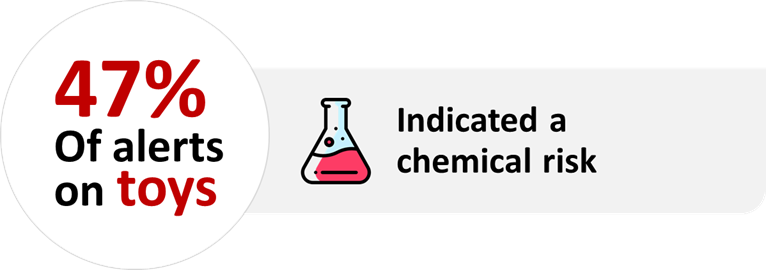
Chemical risk alerts on toys continue to be prominent each year, with the identification of many banned chemicals that pose serious risks to children’s health. Similar to previous years, in 2019, 47% of alerts about toys in Europe (RAPEX) indicated a chemical risk. One of the more common risks observed for the past few years has been the presence of phthalates in the plastics used to make dolls.

image-png-Mar-30-2021-04-11-17-08-AM

Source: RAPEX 2019

In this challenging context, where compliance challenges meet time to market pressures, anticipating and preventing these risks is crucial.

How can we ensure compliance while improving time to market?
Travel restrictions and numerous logistical and production uncertainties are adding additional pressure to supply chains and slowing down some of their processes. Validating samples has become a lengthier process in many cases. With many brands’ in-house teams unable to be onsite due to travel restrictions, a great deal of time is being spent in back-and-forth exchanges between factories and brands.

One of the most feared – and too-common – moments is being surprised with a ‘FAIL’ result in a pre-shipment test at the last minute, when timelines are tight.

Continuing the plastic dolls example, how can a brand anticipate risks and avoid this significant issue right before the shipment? The answer is simple: to anticipate risks as early as possible.

Instead of testing the PVC doll, brands and retailers can move upstream to, for example, track and test the PVC input and ensure it’s coming from an approved source. Where do the pellets originate? Who is the plastic supplier? This means taking a step back to evaluate the supplier’s performance based on the finished product and their processes and materials.

At API, we can help brands and retailers shorten their time to market with our onsite support and remote solutions, acting on behalf of brands onsite and guiding in-house teams remotely with our technical expertise. Our experts in Asia and Europe act as bridges between brand teams and factories, connecting your unique requirements with technical teams in the local language.

Einige unserer fachkundigen Lösungen für Spielwaren entlang der gesamten Lieferkette umfassen:

Interested in learning more about our toy solutions?

Kategorien
Aktuelles

API teilte bewährte Praktiken vor Ort bei der ICPHSO

API-IPCHSO FARBE

API nahm als Redner an der ICPHSO (Internationale Organisation für Gesundheit und Sicherheit von Konsumgütern) 2021 Annual Virtual Meeting and Symposium letzten Monat. Wir hatten die Gelegenheit, während der COVID-19 einige der besten Praktiken von Haushaltswaren- und Spielzeugmarken zur Risikominderung vorzustellen.

Bei der Anpassung an die neue Normalität und der Minderung von Sicherheits- und Qualitätsrisiken haben sich bei den führenden Haushaltswaren- und Spielzeugmarken und -einzelhändlern bewährte Verfahren entwickelt. Obwohl sich die Notfallpläne und -strategien von Unternehmen zu Unternehmen unterscheiden, wurden einige von vielen wiederholt in die Praxis umgesetzt. Wir haben die 10 wichtigsten Praktiken ermittelt, die vor Ort beobachtet wurden, um die Kontinuität des Geschäftsbetriebs und die kontinuierliche Sicherheit und Qualität in der neuen Normalität zu gewährleisten, darunter:

  1. Probleme im Vorfeld angehen: Konzentrieren Sie sich auf die früheren Entwicklungsphasen und lassen Sie sich von technischen Teams Dritter vor Ort unterstützen, wenn Ihre eigenen Teams nicht anreisen können.
  2. Verlassen auf lokale Experten: Die Einbeziehung von Partnern, die vor Ort handeln und sich anpassen können, um das Risiko zu minimieren, ist von entscheidender Bedeutung, wenn Ihre eigenen Teams nicht vor Ort sein können.
  3. Einsatz technischer Hilfsmittel zur Verbesserung der Transparenz Ihrer Lieferkette: Erfassen und nutzen Sie die richtigen Daten, um Ihre Abläufe aus der Ferne zu verfolgen und von ähnlichen Vorteilen zu profitieren. Maximieren Sie Ihre Daten durch spezielle Plattformen, die Sie bei der Erfassung, Verbindung und Analyse der Informationen unterstützen und so schnellere, einfachere und fundiertere Entscheidungen ermöglichen.

Möchten Sie mehr über diese und einige andere Beispiele aus der Praxis erfahren?

Kategorien
Aktuelles

APIs neue Plattform für Integrität und Produktkonformität: I-TCF

Marken und Einzelhändler auf der ganzen Welt sind verpflichtet, dafür zu sorgen, dass ihre Produkte den Normen und Vorschriften für den Markt entsprechen. Viele Faktoren machen die Einhaltung der Vorschriften jedoch zu einer schwierigen Aufgabe. Dazu gehören strengere Vorschriften und zunehmende Stichproben durch die lokalen Behörden, die Notwendigkeit einer verbesserten Rückverfolgbarkeit und Aufzeichnungen sowie die große Anzahl von Referenzen, die Zeit und technisches Personal erfordern.

Die Festlegung des Geltungsbereichs für die verschiedenen Produktkategorien erfordert Fachwissen, und das Zusammentragen aller erforderlichen Unterlagen von den verschiedenen Akteuren der Lieferkette ist eine zeitraubende Aufgabe. Dieser Verwaltungsaufwand birgt auch Risiken und macht eine technische Überprüfung erforderlich, denn fast jedes dritte von unseren Experten überprüfte Dokument ist nicht konform. In vielen Fällen ist es nicht einfach, dies intern zu regeln, z. B. aus folgenden Gründen:

  • Komplexität der Aktualisierung der Aufzeichnungen
  • Eine Vielzahl von Lieferanten mit unterschiedlichen Reifegraden und Ansprechpartnern (um wettbewerbsfähig zu bleiben und eine gute Preisgestaltung zu gewährleisten, neigen Marken dazu, zu diversifizieren).
  • Zahlreiche Dokumente und Dateien, die das richtige Fachwissen erfordern, um die richtigen Dokumente zu sammeln; Kenntnis der für das Produkt geltenden Vorschriften, um die richtigen Dokumente anzufordern
  • Kein eigenes Team für diese Aufgabe: Langweilige Aufgabe für die Ingenieure der Marke, sehr administrativ. Kann aber nicht von jemandem ohne technische Kenntnisse erledigt werden.
  • Zu langsamer Prozess vs. zu schnelle Rotation der Sammlungen
  • Erheblicher Zeitaufwand
  • Keine geeignete Schnittstelle zur Koordinierung der Dokumentensammlung und -prüfung


Einführung in die I-TCF-Plattform von API

Um diese Herausforderung zu meistern, hat API seine neue I-TCF-Plattform eingeführt. Auf der Grundlage unserer 15-jährigen Erfahrung in diesem Bereich und des wertvollen Feedbacks unserer Kunden haben wir eine neue benutzerfreundliche Plattform entwickelt, die unsere I-TCF-Lösungenund ermöglicht Ihnen Damit haben Sie alles Wichtige im Blick: die abgeschlossenen, die in Bearbeitung befindlichen und die bald ablaufenden Dateien.

Das I-TCF (Integrity and Technical Compliance File) ist ein digitaler Ausweis für Ihr Produkt und dessen nachweisliche Übereinstimmung mit den neuesten geltenden Normen und Vorschriften:

  • Anwendbare Protokolle
  • Validierung/Ablehnung von Dokumenten
  • Gültigkeit im Laufe der Zeit

Die Plattform bietet eine neue Art der Dokumentationsverwaltung, die die Einhaltung der Vorschriften mit einer besseren Sichtbarkeit der Produkte und des Status belegt, z. B:

  • Qualitätsübersicht über Ihre Produkte
  • Dokumentenstatus und -verfolgung
  • Verwaltung von Warnmeldungen
  • Regulatorische Überwachung

Lieferanten können jetzt von dem benutzerfreundlichen System profitieren, indem sie die für die Vervollständigung ihres I-TCF erforderlichen Dokumente hochladen, regelmäßige Updates über ihren I-TCF-Status erhalten und von unseren Experten über die nächsten Schritte bei abgelehnten Dokumenten beraten werden.

Wie die I-TCF-Plattform von API Ihrer Marke nützen kann

  • Vertrauen in einen korrekt ausgefüllten I-TCF
  • Schnelle Antwort an Behörden - Dokumente mit einem Klick verfügbar
  • Zeit- und Kostenersparnis, so dass sich die internen Teams auf ihre Kernaufgaben mit Mehrwert konzentrieren können:
    APIs Expertenteam, das Ihre Teams in bestimmten Produktkategorien ergänzt
  • Durchführung der Sammlung und Überprüfung von Dokumenten

Sind Sie daran interessiert, mehr über die I-TCF-Plattform von API zu erfahren?

Kategorien
Blog

Safer toys: Managing risks from the early stages

2020 was a challenging year for most industries, driving companies to adapt and disrupt their habits and ways of doing business. Despite this, the global toy industry maintained stronger-than-expected performance, with parents and grandparents looking for new ways to keep children entertained at home.

This extraordinary context, however, brought unexpected pressures to supply chains – including shortages of qualified workers, limited access to materials, difficulties in performing quality checks, and more – adding to the existing challenge of meeting stringent regulations while ensuring the timely delivery of finished goods that meet consumer expectations. Regardless of changing circumstances, the responsibilities of toy- and children-related industries remain the same: guaranteeing the safety of products to ensure that little ones always ‘play safe’.

Despite global authorities and consumer associations putting vulnerable young consumers’ safety first, many risks and non-compliances are being uncovered. In Europe alone, toys were again the most notified product in 2019, representing 29% of RAPEX alerts.
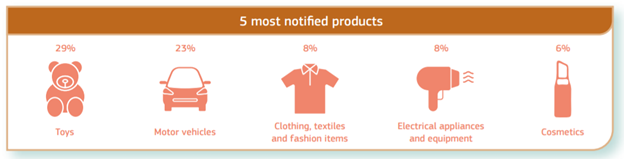
Source: RAPEX 2019 Annual Report

Today, the importance of adopting measures at the earliest stages of production is more crucial than ever, enabling brands to anticipate risks before production even begins to avoid ‘fail’ results in pre-production tests – or even worse – in pre-shipment tests. This can not only help brands save time and money but also prevent the feared product recall and consequent negative impacts.

Many precautions can be taken to secure the supply chain and reduce risks throughout the production process, such as factory audits, in-line inspections, and in-production assessments. However, some measures that can be adopted before production even starts, allowing brands to anticipate risks at the earliest stages.

Leveraging product and manufacturing expertise

Dank unserer Produkt- und Fertigungsexpertise, die wir uns täglich vor Ort aneignen, können wir bei API Risiken erkennen und vorhersehen, bevor sie die Produktionslinie erreichen. Unsere Spielzeugexperten können Ihre Teams bereits in der Entwurfs- und Prototypenphase anleiten und bewerten und Ihnen dabei helfen, Risiken zu bewältigen und Ihre Produkte sicherer zu machen. Wir arbeiten eng mit Spielzeugausschüssen zusammen, halten uns über Änderungen von Normen und Vorschriften auf dem Laufenden und erhalten die neuesten Informationen über aktuelle Problembereiche und heiße Branchenthemen.

Example
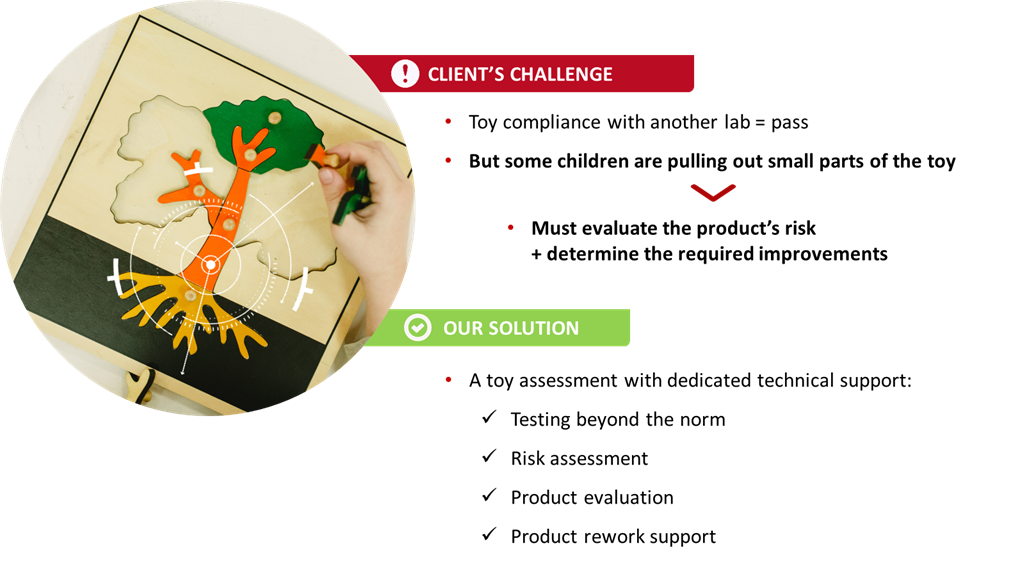

Some of our preventive solutions for toys in our laboratories in Asia and Europe include:

  • Product Validation Report: An exhaustive report highlighting golden sample specifications and flagging critical points that could represent a safety or quality risk. Also assesses the functionality and performance from an end-user’s perspective and provides in-depth evaluation of the toy marking.
  • Collection Review: A product review in the showroom that includes identifying risks and non-conformity of mechanical issues and advice from our experts and recommendations on product amelioration.
  • Risk Assessment on design or prototype: A risk evaluation at the initial stages of development, which identifies any critical areas for improvement and provides expert recommendations for increased product safety.
  • Marking verification: A review of regulatory markings and instruction manuals adapted to the appropriate age grade.
  • Empfehlungen zu Leistung und Spielfähigkeit: Adapted, tailor-made protocols that simulate the child’s use of and interest in the toy.
  • Vorproduktionsprüfung

Our experts can help you find the right solution for your needs in anticipating toy production risks.

Kategorien
Aktuelles

API teilt sein Fachwissen auf der ICPHSO 2021

API wird sich auf der ICPHSO (International Consumer Product Health and Safety Organization) 2021 Annual Virtual Meeting and Symposium mit der "neuen Normalität" befassen und technische Erkenntnisse und Fachwissen austauschen.

Während einer Plenarsitzung zum Thema "Praktische Strategien für Geschäftskontinuität, kontinuierliche Produktsicherheit und erhöhte Sichtbarkeit" wird Jennifer Miller, Senior Director of Business Development, North America, für SgT (APIs Schwestergesellschaft), die Auswirkungen von COVID-19 auf die Lieferketten erörtern und darlegen, wie Unternehmen sich anpassen sollten, um Geschäftskontinuität und kontinuierliche Sicherheit und Qualität durch einen präventiven Ansatz "vor Ort" sicherzustellen.

Über die Sitzung

Plenarsitzung 3: "Praktische Strategien für Geschäftskontinuität, fortlaufende Produktsicherheit und erhöhte Sichtbarkeit"

Donnerstag, 25. Februar, von 8:15 Uhr bis 9:00 Uhr ET

Die Gewährleistung der Kontinuität der Lieferkette bei gleichzeitiger Bewältigung von Risiken und Unterbrechungen ist weltweit zu einer der wichtigsten Prioritäten geworden. Praktiken, die vor COVID-19 reibungslos funktionierten, müssen nun neu bewertet werden. Anbieter und Lieferanten müssen sorgfältiger evaluiert und Prozesse entwickelt werden, die die Widerstandsfähigkeit schützen. Traditionelle Produktkontrollen vor Ort werden durch anhaltende Reisebeschränkungen, Budgetbeschränkungen, mangelnde Transparenz und vieles mehr in Frage gestellt, so dass Unternehmen gezwungen sind, sich anzupassen und neue Wege zur Sicherung der Kontinuität zu finden.

Die Gewährleistung der Produktsicherheit und -qualität in dieser "neuen Normalität" erfordert einen Einblick in die gesamte Lieferkette, um deren Zusammensetzung und Prozesse besser zu verstehen und die Rückverfolgbarkeit zu verbessern. Mit Hilfe fortschrittlicher Technologien und anpassungsfähiger Tools können Teams diese verbesserte Transparenz auch aus der Ferne überwachen, um die Produktsicherheit und -qualität in einer noch nie dagewesenen Ära zu gewährleisten.

Möchten Sie mehr über dieses oder andere Themen erfahren?

Kategorien
Blog

Collect the right data for product compliance with our I-TCF

Data has undoubtedly been one of this year’s most repeated words when discussing how to make supply chains more resilient. Collecting, sharing and analyzing the right data can enable the entire supply chain to run more efficiently thanks to more informed decisions. In the context of quality control, data remains one of the basics.

COVID-19 has brought unprecedented challenges to supply chains and highlighted the importance of increased visibility and agility to maintain product safety and quality. Ensuring product compliance with each market’s standards and regulations remains a key obligation of brands and retailers, but guaranteeing every document’s validity and accuracy is a tedious task.

Collecting the right information about a product to prove compliance with the latest applicable standards and regulations is time-consuming at best. On top of this already arduous task, brands and retailers must remain aware of changes in standards and regulations for numerous product references in their portfolio, which can be labor-intensive and prone to errors.

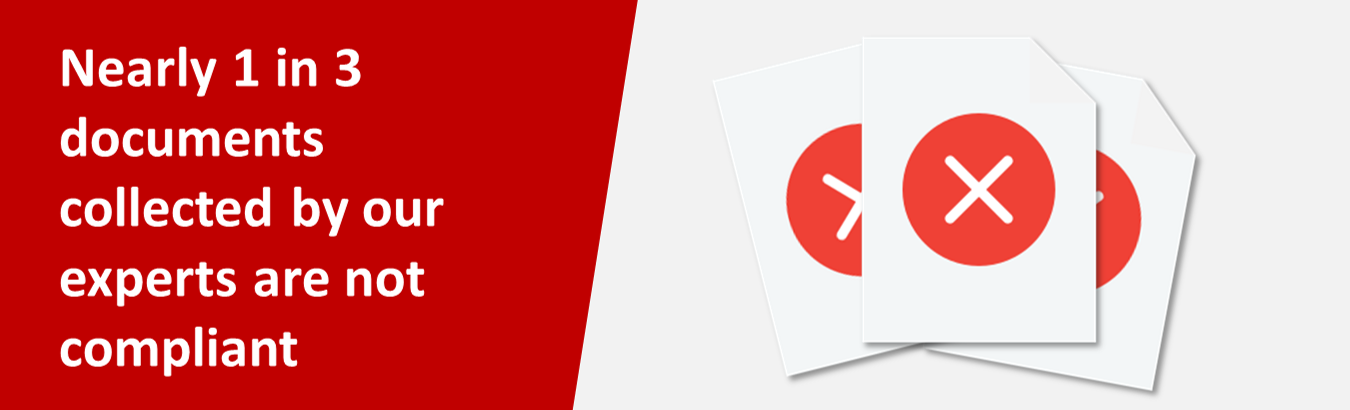
The I-TCF teams at API experienced that nearly one in three documents collected are not compliant and need additional follow-up steps to complete the TCF file according to requirements and establish the product’s conformity.

Documents_TCF_W

API’s team of experts can support companies in preparing a ‘digital ID’ of each product with our I-TCF solutions (Product Integrity and Technical Compliance File). This digital ID helps verify product compliance and includes key information such as applicable protocols, document validation or rejection, and validity over time. In addition to our experts’ regulatory guidance, brands appreciate the minimal investment required, enjoy a higher degree of control with our clear digital platform, and are ultimately ready to provide the valid required documentation in cases of custom verification. 

With more than 15 years’ experience developing I-TCF solutions, we can help brands and retailers save time and money on this task. We offer support with:

  • Festlegung des relevanten Geltungsbereichs (Scope Definition)
  • Collecting and quickly validating a high volume of documents

Interested in finding out more about how our I-TCF solutions can help your brand?

Kategorien
Aktuelles

SCIP-Datenbank für SVHC-Erklärungen - ab 5. Januar

Ab dem 5. Januar 2021 wird die neue SCIP-Datenbank - die Datenbank für besorgniserregende Stoffe in Erzeugnissen als solche oder in komplexen Gegenständen (Produkte) - in Kraft treten. Die im Rahmen der Abfallrahmenrichtlinie (WRRL) eingerichtete Datenbank verpflichtet Unternehmen, die Erzeugnisse mit besonders besorgniserregenden Stoffen (SVHC) der Kandidatenliste in einer Konzentration von mehr als 0,1% Gewichtsprozent (w/w) auf dem EU-Markt anbieten, Informationen über diese Erzeugnisse an die Europäische Chemikalienagentur (ECHA) zu übermitteln.

Auch Unternehmen in den Bereichen Haushaltswaren und Spielzeug müssen auf diese neue Richtlinie reagieren, wenn ihre Artikel oder Verpackungen eine höhere als die zulässige Konzentration enthalten. Bei Produkten, bei denen das Risiko einer solchen Konzentration geringer ist, handelt es sich höchstwahrscheinlich um solche aus anorganischen Materialien wie Metall oder Glas. Bei Konsumgütern aus Kunststoff, Gummi oder mit einem hohen Anteil an Tinte, Farbe oder Klebstoff besteht dagegen ein höheres Risiko. Das Spektrum der Produkte, die betroffen sein können, ist breit gefächert und reicht von Spielzeug oder aufblasbaren Artikeln bis hin zu Gepäckstücken, Gartenmöbeln und anderen Haushaltswaren. 

In dieser Datenbank werden Informationen über besorgniserregende Stoffe gesammelt, um die Entstehung von Abfällen, die gefährliche Stoffe enthalten, zu verringern und die Substitution zu fördern. Sie wird auch zu einer sichereren Kreislaufwirtschaft beitragen, indem sie den Abfallentsorgern mehr Informationen über die gefährlichen Stoffe in den von ihnen verarbeiteten Abfällen zur Verfügung stellt, die Abfallsortierung erleichtert und die Qualität der recycelten Materialien durch eine bessere Sichtbarkeit der Chemikalien verbessert. Auch die Verbraucher werden dadurch in die Lage versetzt, fundiertere Kaufentscheidungen zu treffen und sicherere Produkte zu wählen.


Was muss eingereicht werden?

  • Informationen, die für die Identifizierung des Artikels relevant sind;
  • Name, Konzentrationsbereich und Ort des SVHC; und
  • Sonstige Informationen über die sichere Verwendung des Erzeugnisses, insbesondere wenn die oben genannten Informationen nicht ausreichen, um die ordnungsgemäße Entsorgung des Erzeugnisses als Abfall zu gewährleisten.

Wer muss die Informationen einreichen?

Unternehmen, die Erzeugnisse liefern, die besonders besorgniserregende Stoffe (SVHC) aus der Kandidatenliste enthalten, müssen in einem Erzeugnis in einer Konzentration von mehr als 0,1 % Gewichtsprozent enthalten sein, einschließlich:

  • EU-Hersteller und -Montagebetriebe;
  • EU-Importeure; und
  • EU-Händler von Erzeugnissen und andere Akteure, die Erzeugnisse in Verkehr bringen.

Einzelhändler und andere Akteure, die Artikel direkt an Verbraucher liefern, sind nicht verpflichtet, der ECHA Informationen zu übermitteln.


Haben Sie Fragen dazu, wie sich die neuen SCIP-Datenbankanforderungen auf Ihr Unternehmen auswirken könnten?

Kategorien
Aktuelles

Änderung: Europäische Verordnung über Kunststoffe mit Lebensmittelkontakt

As per the updates on the Regulation (EU) 2020/1245 in September 2020, the European Union introduced amendments in Regulation (EU) No. 10.2011 on plastic materials and articles intended to come into contact with food. The new regulation came into force on September 23, 2020.

The most significant changes are:

Union list of authorized substances (Annex I)

  1. Some amendments on the following substances:
  • 1-3-phenylenediamine (CAS 108-45-2)
  • Antimony trioxide (1309-64-4).
  1. Three entries are newly added.

Specific migration (Annex II)

  1. Heavy metals – Newly added 9 heavy metals on top of the existing 9 heavy metals (total 18 heavy metals) are required:
  • Arsenic, Cadmium, Chromium, Europium, Gadolinium, Lanthanum, Lead, Mercury & Terbium. 
  1. Primary aromatic amines (PAA) – the detection limits for PAA are amended:
    • ≤ 0.002 mg/kg for each PAA listed in entry 43 Annex XVII to REACH Regulation No 1907/2006, and no migration limit is specified in Table 1 of Annex 1.
    • ≤ 0.01 mg/kg for the sum of PAAs not listed in entry 43 of Annex XVII to REACH Regulation, and no migration limit is specified in Annex I.


Declaration of Compliance (Annex IV)

  • Identification and quantity of substances in the intermediate materials are included.


Compliance Testing (Annex V)

  1. For repeated use materials and articles:
    1. The specific migration between subsequent tests does not increase (i.e. SM1 > SM2 > SM3). 
    2. Stability of the material and articles also need to be verified. In cases of insufficient stability, compliance of the material shall NOT be established, even in cases where the specific limit is not exceeded in any of the three tests.

  2. For overall migration testing conditions:
    • OM0 (new) – 30 minutes at 40°C for materials used only at cold or ambient temperatures for 30 minutes or less.
    • OM4 – reflux condition is available as one of the options.


Transitional Arrangements

  • Plastic materials and articles complying with Regulation 10/2011 as applicable before September 23, 2020, and which were first placed on the market before March 23, 2021, may continue to be placed on the market until September 23, 2022, and remain on the market until all stock has been sold
  • New materials and articles that were manufactured after September 23, 2020, need to comply with the new regulation starting March 23, 2021.

Do you have questions about this or other regulatory changes?

Kategorien
Aktuelles

API auf dem 2020 ICPHSO INTERNATIONAL VIRTUAL SYMPOSIUM

API freut sich, als Sponsor am Internationalen Virtuellen Symposium 2020 der ICPHSO teilzunehmen. Die Veranstaltung findet vom 27. bis 28. Oktober 2020 statt, in Verbindung mit der Internationalen Woche der Produktsicherheit der Europäischen Kommission.

Das diesjährige internationale Symposium steht unter dem Motto "Sicher nachhaltig: Untersuchung, wie sich das Konzept der Nachhaltigkeit auf die Sicherheit von Verbraucherprodukten auswirkt und diese gestaltet".