DIY & Home Improvement: Our 20+ Years’ Expertise

Categorías
Blogs

DIY & Home Improvement: Our 20+ Years’ Expertise

While the DIY and home improvement segment is growing at a considerable speed, brands and retailers face an increasing number of challenges. In addition to greater competition, diversification and the rise of e-commerce, market players must deal with the risks associated with production for a very large product range that still lacks harmonized and mandatory global standards. On the other side, consumers are expecting higher levels of product functionality and performance while maintaining the durability and safety of the products purchased.

With these factors in mind, at API we put at your disposal our 20+ years’ experience working with some of the industry’s top players. We can help you minimize risks and meet your consumers’ expectations with our in-depth quality solutions for DIY and tools covering all the stages of your supply chain.

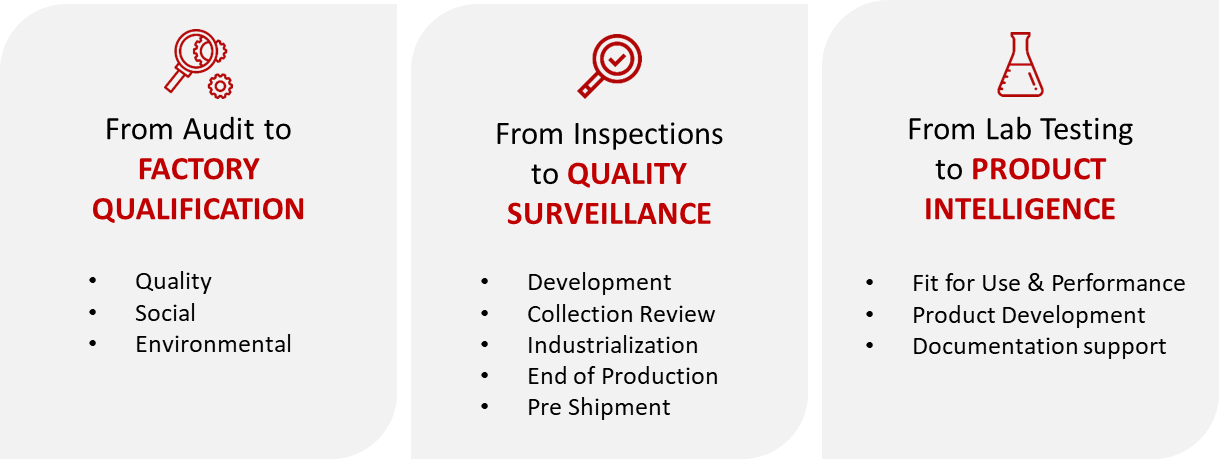
Our solutions include:

https://campaign-image.com/zohocampaigns/180659000003544031_zc_v34_diy_solutions_api_aug.png

Interested in discussing your challenges with our experts?

Categorías
Blogs

Audits for Supply Chain Sustainability and Transparency

The supply chain is changing, with increasing consumer demand for sustainable products. Many large and small brands are struggling to adapt to this new demand for transparency at every stage of the product’s lifecycle: from the raw materials to the disposal or recycling at the end of the product’s life.

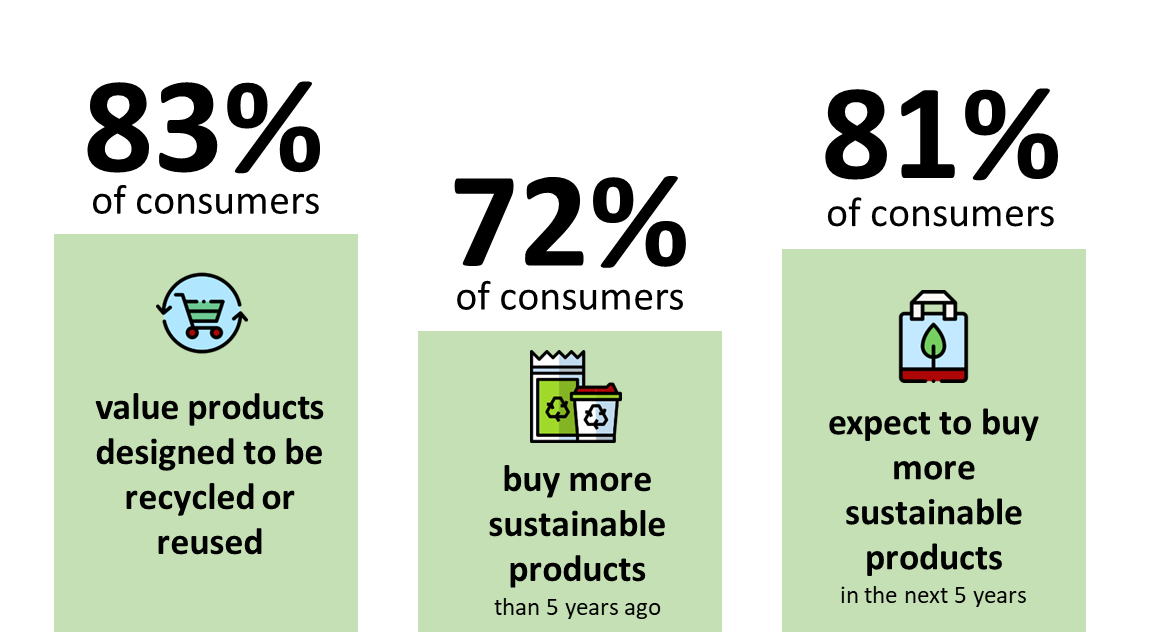
Sustainability is a key consideration influencing buying decisions together with quality, price, and health and safety:

Source: Accenture Survey April 2019 on 6,000 consumers in 11 countriesacross North America, Europe and AsiaSource: Accenture Survey April 2019 on 6,000 consumers in 11 countries across North America, Europe and Asia

Source: Accenture Survey April 2019 on 6,000 consumers in 11 countries
across North America, Europe and Asia

At API we can help you truly evaluate, verify and improve the environmental impact of your factories and processes to allow you to provide additional transparency to your consumers. Our team has more than a decade of experience in supply chain environmental sustainability across various products categories and a deep understanding of the different industry initiatives. We are, for example, one of the companies able to refer to the Higg Index* to provide verification and training solutions. We are uniquely positioned to understand the manufacturing process and its challenges thanks to our specialists being on the ground at the factories in real time.

We can support you from scratch in evaluating your supply chain with globally accredited assessment audit checklists or API’s tailor-made environmental audits checklists. Our personalized service, which follows API’s comprehensive environmental checklist and adapted corrective action plans, includes wide-ranging areas of assessment:

  • Environmental Management Systems (EMS)
  • Energy & Green House Gas Emissions (GHG)
  • Water consumption
  • Waste Water / Effluent Treatment
  • Emissions to air
  • Hazardous waste management
  • Hazardous chemical management

Interested in learning more about our environmental audit solutions?

Categorías
Blogs

API Audit: Accredited to perform ICS audits

Auditoría API, API’s division responsible for auditing operations, is accredited by ICS to perform social and environmental audits that comply with the ICS Code of Conduct. ICS – Initiative for Compliance and Sustainability – is an international sectorial initiative that aims to enhance working conditions among the global supply chains of its member retailers and brands. ICS is composed of 43 multinational retailers and brands in the sectors of textile, retail, footwear, electronics, and furniture. ICS members collaborate with common tools to mutualize audits, contributing to the reduction of ‘audit fatigue’ while sharing knowledge and best practices*.

https://campaign-image.com/zohocampaigns/180659000003436046_zc_v52_ics_logo.png

As specialists in our field, drawing from our vast hands-on industry experience, we are ready to accompany ICS members and factories in the process of improvement. Our solutions adhering to ICS methodology include:

  • ICS social and environmental audits
  • Follow up and solutions

Interested in our ICS audit solutions?

*ICS logo and description are property of ICS

Categorías
Blogs

Improve Your Social Compliance

Corporate Social Responsibility (CSR) has evolved in recent years from being a ‘beneficial asset’ to a compliance requirement that’s also gaining influence in the buyers’ decision-making process. In 2018, 69% of consumers said they were influenced by brands’ ethical values and authenticity*. An adequate social compliance plan can support your brand in going one step beyond with associated benefits such an increased productivity. These benefits include, for example, an end to duplicated work processes or the implementation of better time management within your workforce.

At API, we offer tailor-made social audit assessments utilizing our experts’ knowledge in developing programs adapted to your needs, and implement ad-hoc plans based on the specific requirements that matter the most to you. We can help you meet your social compliance objectives and challenges that follow:

  • Global industry initiatives & local labor laws: Our experience, expertise and specialization ensure fast and comprehensive results
  • Your own code(s) of conduct: Our industry knowledge and on-the-ground know-how will evaluate and reinforce your objectives – because CSR could be a key asset for brand reputation and differentiation
  • API’s standard: We help you from scratch through personalized service specific to these areas

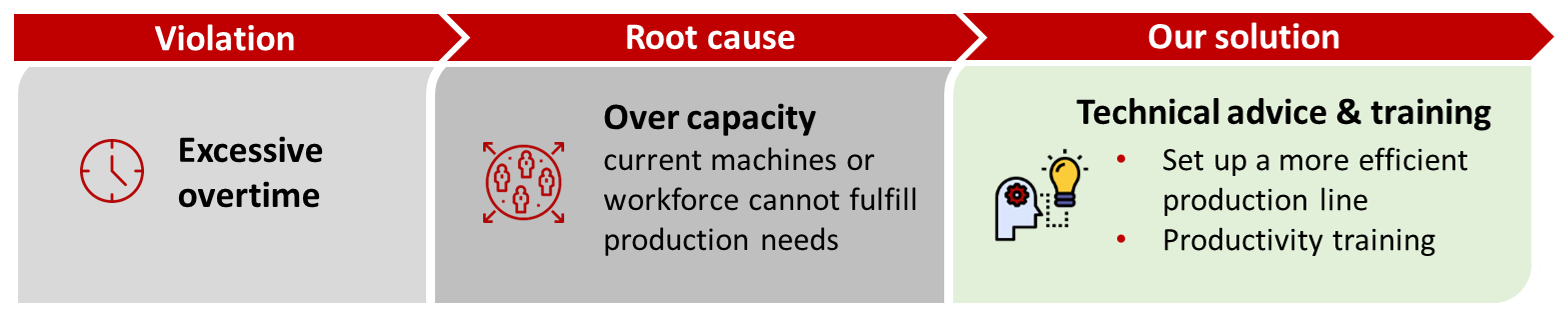
Looking to implement an effective corrective action plan after completion of a social compliance audit? You can benefit from API’s manufacturing experience and deep industry expertise that enables us to suggest informed and productive technical improvements. API’s technical experts will help you identify main factory issues and their root causes with a professional follow-up. You can increase your factory’s productivity with its available resources thanks to our experts’ recommendations on optimum corrective strategies.

Example: Increased supplier’s productivity based on its resources

Improved Social Compliance: Enhanced Brand Reputation and Supplier Productivity

Interested in our social audit solutions?

*Survey of 30,000 consumers in 35 countries, 2018 (Accenture)

Categorías
Blogs

Fit for Use & Performance Testing

Fit for Use & Performance Testing: Meeting Consumer Expectations by Going Beyond Simple Standardized and Regulatory Tests


In the increasingly competitive global marketplace, retailers face numerous issues when sourcing products. Their greatest challenge is to live up to — and even exceed — growing consumer expectations in a market saturated with products.

Since consumers have a wealth of options to choose from, they are no longer satisfied with products that merely meet their basic needs. They consider the minutest of details in regards to quality, construction, features, and price of products.

In considering knives, for example, consumers are no longer satisfied with a product that can simply slice their vegetables and meat. They look for knives with ergonomic handles that retain their edge for an extended period and meet a dozen other additional expectations.

In this competitive and demanding landscape, the necessity of Fit for Use and Performance Testing should not be underestimated.

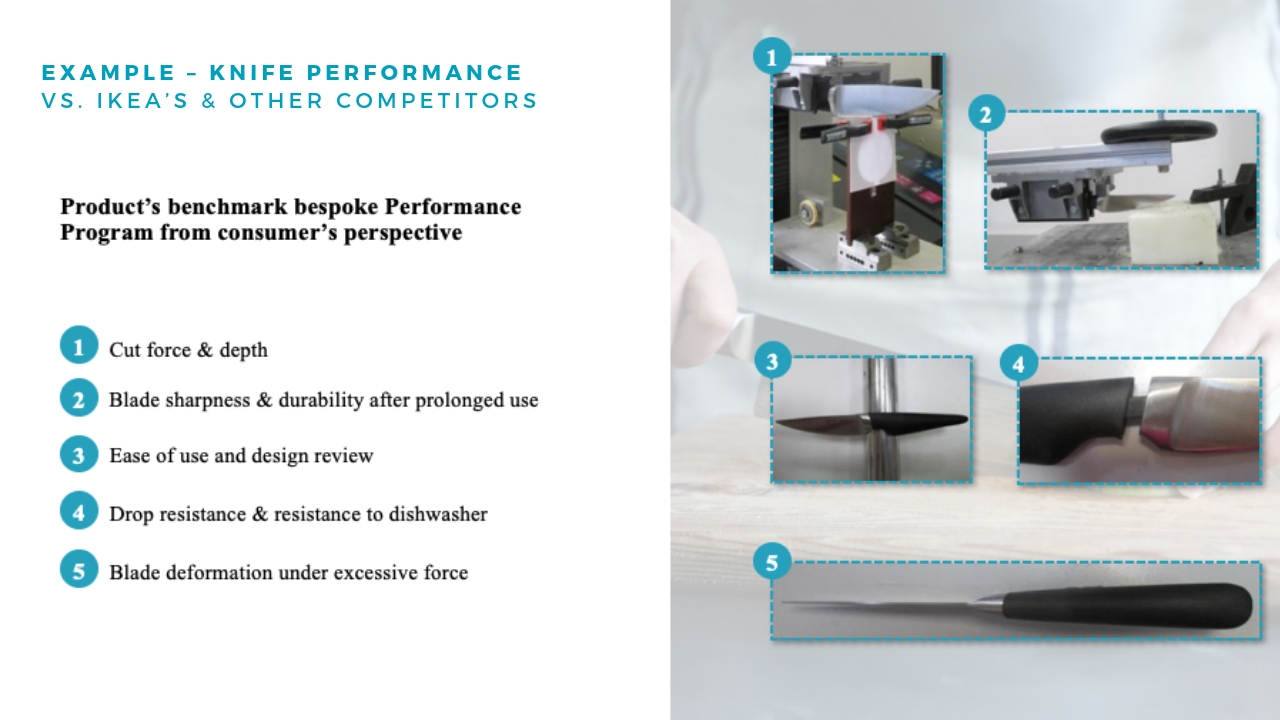
Knives Sourcing Case Study

The following is a case study on sourcing knives. The purpose of this case study is to give a brief example of the various tests that will be conducted during a Fit for Use & Performance and about how a knife’s performance can be compared to that of IKEA knives and other competitors.

Add a heading


Benefits to the Client

  • Help you  source knives that can pass a wide range of advanced performance tests. This can establish a benchmark for the product based on your brand current products and other similar products on the market. This standard can be used as a basis on which to make future products and improvements.
  • Come up with technical ad-hoc solutions for product performance.
  • Get an edge on the competitors by sourcing the most advanced knives possible.
  • Weeding out products that miss the mark on quality in terms of performance.

As you can see, in this global consumer-driven age, the necessity of Fit for Use & Performance Testing is absolutely crucial.

At API, we offer our clients a host of tailored solutions powered by our sister company AXIS to help your products stand out and go beyond the regulatory requirements of your destination markets. Our common objective? Your products fit their purpose and provide outstanding technical grounds to be chosen by your customers.

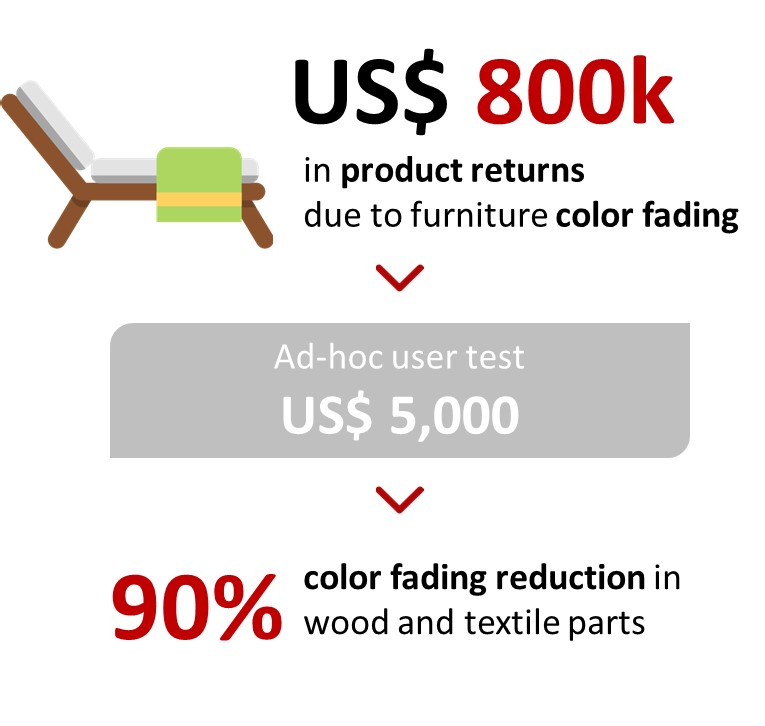
With 300+ product categories covered, 3,000+ tests performed, and +1,800 ad-hoc tests developed, AXIS – technological resource center of WORMS SAFETY – is able to provide tailor-made fit-for-use performance assessments of all household goods. AXIS has 20+ years’ experience in mechanical properties and performance, climatic aging, colorimetry and dimensional measurement.

Interested in learning more about how performance testing can bring competitive advantages to your products? Contact us today to receive a professional consultation and find out more about our Fit for Use and Performance solutions.

Categorías
Blogs

Sustainable Practices For Manufacturing Hard Goods

Implementing sustainable business strategies is getting increasingly popular in the manufacturing industry as more prominent international and local industry players of all sizes acknowledge the long-term value of sustainable management for business growth and resilience.

Sustainable manufacturing starts with building a sustainability team for effective collaboration between managers, material experts, process engineers, product designers, production, procurement specialists, and environmental, health, and safety officers.

Engaging representatives from every department helps organizations to evaluate all the key sustainability aspects of the manufacturing process and understand how to work more effectively to save resources, time, and money.

Sustainable manufacturing has a lot to offer:

  • Integrating sustainability across business functions improves production processes and profitability
  • Using innovation, scenario planning, and strategic analysis reduces environmental, health, and safety risks and associated financial losses
  • Improving environmental performance helps ensure compliance with increasingly stringent regulatory constraints
  • Optimizing operational efficiencies reduces resource costs and industrial waste from production
  • Introducing stakeholder engagement policies helps train and retain qualified employees, builds long-term business viability and resilience
  • Strengthening brand reputation and public trust with a visible commitment to sustainability enhances sales and competitiveness on the market attracting new customers, partners, and investors.

Sustainable/Recycled Raw Materials

Choosing sustainable raw or recycled materials improves the resource efficiency and safety of the manufacturing, prevents eco-toxicity, extends the lifespan of many instruments and equipment, minimizing the risks and need for repairs.

Recycling materials preserves their embodied energy, so the amount of energy required for the recycling process is usually far less than the energy used for the primary production. The largest energy savings can be achieved by recycling metals and thus avoiding the energy-intensive mining and processing of ore. For example, recycling aluminium from scrap uses 88-95% less energy than primary aluminium production, secondary copper results in 15-65% energy savings. Lead can be effectively recycled multiple times without losing its properties with 60-75% energy savings compared to the primary lead production. Energy savings from recycling iron and steel can be up to 72%, beryllium recycling saves 80%, and 50% for recycling cadmium. An estimated 40% of the nickel used in the production of stainless steel comes from post-consumer stainless steel scrap resulting in 90% energy savings for the secondary nickel production. However, when it comes to recycling paper, although the secondary production requires 40% less energy than the primary production, more fossil fuels can actually be required for paper recycling.

Smart solutions like using antimicrobial copper alloys to protect solid surfaces from microbial contamination instead of using enhanced chemical cleaning protocols can prevent the spread of bacterial infections and reduce human exposure to toxic substances from the cleaning products. The EPA has registered 500 copper alloys including brass and bronze as capable of killing 99.9% of disease-causing, potentially deadly bacteria within two hours even after recontamination.

ECO Design

Sustainable product design strategies allow manufacturers to evaluate and address the environmental impacts throughout the entire life cycle of the product, optimize resource consumption, minimize energy use and waste during production and transportation of the products.

Incorporating sustainability considerations into product development ensures the long-term availability of materials and resources, helps achieve compliance with product quality and safety regulations, and avoid using harmful materials that can be restricted in some countries or highly likely to be banned in the future. Material choices and product design should incorporate the recycling capability and publish the specifications in their product declarations.

Sustainable Packaging 

Sustainable packaging logistics help develop integrated packaging, product, and supply chain systems to ensure safe, efficient, and effective handling, transportation, distribution, storage, retail, use, reuse, recovery, and disposal of goods, minimizing the negative environmental impacts and risks, while maximizing the social and consumer value, sales, and profits. For example, replacing wasteful single-use containers, plastic, Styrofoam, cardboard, and pallets with reusable, recycled, and recyclable packaging like collapsible bulk boxes helps optimize the shipping, storage, and handling of hard goods.

The Sustainable Packaging Coalition defines the following criteria for sustainable packaging:

  • Designed to optimize the material and energy use
  • Sourced, manufactured, transported, and recycled using clean production technologies and best practices, renewable energy sources
  • Maximum use of renewable and recycled materials
  • Satisfying the market demand for performance and cost.
  • Healthy, safe, and beneficial for individuals and communities throughout the entire life cycle and in all probable end of life scenarios
  • Effectively recovered and utilized in biological and/or industrial cradle to cradle cycles.

Analysis of sustainable packaging logistics strategies shows that an upfront investment in sustainability actually accelerates the economic growth and profitability due to significant savings from multiple reuses, easier handling, less labor for assembling boxes and crates, smaller floor space use during storage and shipping, and reduced packaging costs per piece. Sustainable packaging gives a strategic competitive advantage to manufacturers, as it shows their commitment to implement the best industry practices, improves public trust, and strengthens their brand reputation.

Recycling Programs

Manufacturers are the primary consumers of recycled materials obtained from end-of-life products and industrial scrap, and they can also contribute to closed-loop material recycling. Incorporating waste recovery and recycling in-house as part of the manufacturing process or supplying scrap materials from production to other companies for recycling can reduce your company’s waste and associated costs. Utilizing scrap processing solutions and including post-consumer recycled materials like metal, plastic, paper, glass, rubber, electronics, or textiles as part of your manufacturing process can bring significant savings of energy, raw materials, and reduction in emissions from production.   

It is important to remember that recycling is not the ultimate sustainable solution as it also consumes energy and water contributing to resource depletion and pollution. An efficient recycling program for manufacturing requires a detailed analysis of the environmental footprint including energy use at each phase of the recycling processes to determine the most sustainable recycling routes. To optimize the recycling processes, manufacturers must carefully develop their sustainable recycling strategies and the supporting structures, systems, performance goals, key performance indicators, measurements, and performance monitoring protocols.

Sustainable Factories

Incorporating diverse business intelligence tools, specialized sustainability software, artificial intelligence, and the Internet of Things (IoT) into your factory operations can help you predict, model, plan, monitor, and evaluate the efficiency of factory operations, adapt manufacturing workflows, conduct preventative maintenance, coordinate, and implement robust environmental, health, safety, and quality control systems to ensure continual performance improvement. The International Organization for Standardization has just released a new voluntary standard ISO/IEC 30141, Internet of Things (IoT)Reference architecture that provides a framework with reusable designs and industry best practices that can help establish reliable, safe, secure systems for smart, sustainable manufacturing by gathering the key performance data, protecting the privacy, and preventing disruptions from cyber attacks and natural disasters

Sustainable Energy

The carbon footprint from manufacturing operations can be reduced through various energy-efficient solutions, and not all of them require much capital investment. The International Renewable Energy Agency (IRENA) estimates that renewables could reach up to 27% of the total manufacturing energy consumption by 2030 with the availability of affordable sustainable, biomass sources, and can further grow up to 34% due to carbon emissions trading. IRENA’s analysis shows that energy efficiency and renewable energy production are the most cost-effective methods for reducing the energy-related industrial CO2 emissions, but to achieve the climate objectives of the Paris Agreement renewables deployment must accelerate six times faster than today.

Investing in green energy production systems to support the manufacturing process like using biomethane obtained from renewable resources instead of the natural gas can make manufacturing self-sufficient and carbon-neutral. Rethinking the lighting positions, schedule, and intensity of lights to target work areas more effectively helps avoid wasting energy, reduce electricity bills, and improve the working conditions for employees.

Hazardous Waste

Manufacturing waste often contains elements classified as hazardous, which may accumulate in production areas that are difficult to access, posing health and safety risks to employees. Using non-toxic materials for production, finding sustainable alternatives to traditional chemical solutions, and extending the life cycle of the chemistry, can significantly reduce the quantity of waste production, prevent employee exposure to toxic solvents and fumes, reduce costs for hazardous material disposal, and ease the environmental regulatory burden on the company.

API Sustainability Services

Our team unites experts in sustainable manufacturing practices with extensive experience in environmental management, material assessment, and recycling.

API Recycling Verification Services will help verify and validate the authenticity of your recycled products, processes, and raw material sources.

Supply chain traceability and verification

  • Tracking your products back to the source and authenticating the raw material sources.
  • Assessment and validation of the percentage of post-consumer recycled content, post-industrial recycled content or total recycled content contained in a product

Recycled product footprint – calculating the sustainability impacts of your recycled products

Preparación y validación del contenido reciclado – consulting service to help you ensure a recycled product has the right percentage of recycled content

Contact us today to receive a professional consultation on introducing effective sustainability strategies, incorporating recycling programs into your manufacturing process, developing supporting protocols, systems, performance goals, indicators, measurements, and more.

For more information about sustainability in manufacturing, click here.

All data is quoted from and belongs to published literature. API does not hold any responsibility for the accuracy, timeliness or validity of any data or information.

Categorías
Blogs

Juguetes más seguros: Gestionar los riesgos desde las primeras fases

2020 fue un año difícil para la mayoría de las industrias, lo que llevó a las empresas a adaptarse y alterar sus hábitos y formas de hacer negocios. A pesar de ello, la industria mundial del juguete mantuvo unos resultados mejores de lo esperado, con padres y abuelos buscando nuevas formas de entretener a los niños en casa.

Este contexto extraordinario, sin embargo, trajo consigo presiones inesperadas para las cadenas de suministro -como la escasez de trabajadores cualificados, el acceso limitado a los materiales, las dificultades para realizar controles de calidad, etc.- que se sumaron al reto ya existente de cumplir las estrictas normativas y, al mismo tiempo, garantizar la entrega puntual de productos acabados que cumplan las expectativas de los consumidores. Independientemente de las circunstancias cambiantes, las responsabilidades de las industrias relacionadas con los juguetes y los niños siguen siendo las mismas: garantizar la seguridad de los productos para que los pequeños siempre "jueguen seguros".

A pesar de que las autoridades mundiales y las asociaciones de consumidores dan prioridad a la seguridad de los jóvenes consumidores vulnerables, se están descubriendo muchos riesgos e incumplimientos. Solo en Europa, los juguetes volvieron a ser el producto más notificado en 2019, representando 29% de las alertas RAPEX.

Fuente: Informe anual RAPEX 2019

Hoy en día, la importancia de adoptar medidas en las fases más tempranas de la producción es más crucial que nunca, lo que permite a las marcas anticiparse a los riesgos antes incluso de que empiece la producción para evitar resultados de "suspenso" en las pruebas de preproducción -o incluso peor- en las pruebas previas al envío. Esto no solo puede ayudar a las marcas a ahorrar tiempo y dinero, sino también a evitar la temida retirada de productos y las consiguientes repercusiones negativas.

Se pueden tomar muchas precauciones para asegurar la cadena de suministro y reducir los riesgos a lo largo del proceso de producción, como auditorías de fábrica, inspecciones en línea y evaluaciones durante la producción. Sin embargo, algunas medidas que pueden adoptarse incluso antes de iniciar la producciónque permite a las marcas anticiparse a los riesgos en las primeras fases.

Aprovechar la experiencia en productos y fabricación

En API, nuestra experiencia en productos y fabricación -adquirida a diario, sobre el terreno- nos permite identificar y anticipar riesgos antes de que lleguen a la línea de producción. Nuestros expertos en juguetes pueden orientar y evaluar a sus equipos desde las fases de diseño y prototipo, ayudándole a gestionar los riesgos y a hacer que sus productos sean más seguros. Trabajamos en estrecha colaboración con los comités de juguetes, manteniéndonos al día de los cambios en las normas y reglamentos y recibiendo las últimas noticias sobre las áreas de preocupación actuales y los temas candentes de la industria.

Ejemplo


Algunas de nuestras soluciones preventivas para juguetes en nuestros laboratorios de Asia y Europa incluyen:

  • Informe de validación del producto: Un informe exhaustivo que destaca las especificaciones de la muestra dorada y señala los puntos críticos que podrían representar un riesgo para la seguridad o la calidad. También evalúa la funcionalidad y el rendimiento desde la perspectiva del usuario final y ofrece una evaluación en profundidad del marcado de juguetes.
  • Revisión de la colección: Una revisión del producto en la sala de exposición que incluye la identificación de los riesgos y la no conformidad de los problemas mecánicos y el asesoramiento de nuestros expertos y recomendaciones sobre la mejora del producto.
  • Evaluación de riesgos en el diseño o prototipo: Una evaluación de riesgos en las fases iniciales de desarrollo, que identifica cualquier área crítica susceptible de mejora y proporciona recomendaciones de expertos para aumentar la seguridad del producto.
  • Verificación del marcado: Una revisión de las marcas reglamentarias y los manuales de instrucciones adaptados al grado de edad apropiado.
  • Recomendaciones sobre el rendimiento y la aptitud para el juego:: Protocolos adaptados y a medida que simulan el uso y el interés del niño por el juguete.
  • Prueba de preproducción.

Nuestros expertos pueden ayudarle a encontrar la solución adecuada a sus necesidades para anticiparse a los riesgos de la producción de juguetes.

Categorías
Noticias

API comparte su experiencia en el sector en ICPHSO 2021

API will address the ‘new normal’ and share technical insights and expertise at the ICPHSO (International Consumer Product Health and Safety Organization) 2021 Annual Virtual Meeting and Symposium.

During a plenary session on ‘Practical Strategies for Business Continuity, Ongoing Product Safety, and Increased Visibility,’ Jennifer Miller, the senior director of business development, North America, for SgT (API’s sister company), will discuss the impacts of COVID-19 on supply chains and how companies should adapt to ensure business continuity and ongoing safety and quality through a ‘boots on the ground’, preventative approach.

About the Session

Plenary 3: “Practical Strategies for Business Continuity, Ongoing Product Safety, and Increased Visibility”

Thursday February 25, from 8:15AM to 9:00AM ET

Ensuring supply chain continuity while managing risk and disruption has become a key priority globally. Practices that ran smoothly before COVID-19 must now be reassessed, with the need to evaluate vendors and suppliers more carefully and develop processes that protect resilience. Traditional onsite product controls have been challenged by ongoing travel restrictions, budget constraints, lack of transparency, and more, compelling businesses to adapt and find new ways to safeguard continuity.

Securing product safety and quality in this ‘new normal’ requires visibility over the entire supply chain to better understand its composition and processes for greater traceability. With the help of advanced technologies and adaptable tools, teams can also remotely monitor this improved transparency to ensure product safety and quality in an unprecedented era.

Interested in learning more about this or other topics?

Categorías
Blogs

Recopila los datos correctos para que el producto cumpla con nuestro I-TCF

Sin duda, «datos» ha sido una de las palabras más repetidas este año a la hora de debatir cómo hacer que las cadenas de suministro sean más resilientes. Recopilar, compartir y analizar los datos adecuados puede permitir que toda la cadena de suministro funcione de manera más eficiente gracias a decisiones más fundamentadas. En el contexto del control de calidad, los datos siguen siendo uno de los pilares fundamentales.

La COVID-19 ha planteado retos sin precedentes a las cadenas de suministro y ha puesto de relieve la importancia de una mayor visibilidad y agilidad para mantener la seguridad y la calidad de los productos. Garantizar el cumplimiento de las normas y regulaciones de cada mercado sigue siendo una obligación fundamental para las marcas y los minoristas, pero asegurar la validez y la exactitud de cada documento es una tarea tediosa.

Recopilar la información adecuada sobre un producto para demostrar el cumplimiento de las normas y reglamentos vigentes más recientes es, como mínimo, una tarea que requiere mucho tiempo. Además de esta tarea ya de por sí ardua, las marcas y los minoristas deben mantenerse al tanto de los cambios en las normas y reglamentos que afectan a las numerosas referencias de productos de su catálogo, lo que puede suponer un gran esfuerzo y dar lugar a errores.

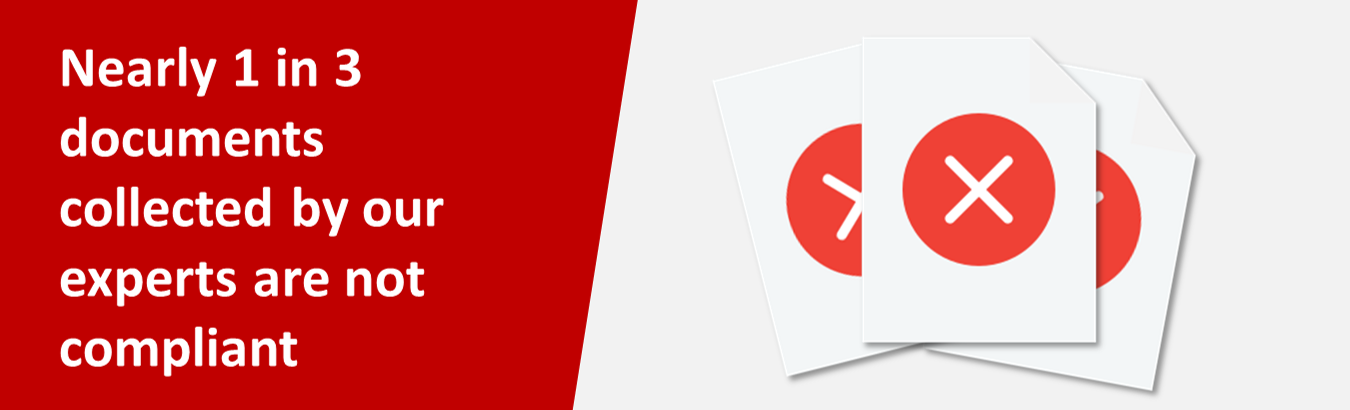
Los equipos de I-TCF de API han constatado que casi uno de cada tres documentos recopilados no cumple con los requisitos y requiere medidas de seguimiento adicionales para completar el expediente TCF de acuerdo con los requisitos y demostrar la conformidad del producto.

Documentos-TCF_W

El equipo de expertos de API puede ayudar a las empresas a crear una «identidad digital» para cada producto mediante nuestras soluciones I-TCF (Expediente de Integridad del Producto y Cumplimiento Técnico). Esta identidad digital permite verificar el cumplimiento normativo del producto e incluye información clave, como los protocolos aplicables, la validación o el rechazo de documentos y la validez a lo largo del tiempo. Además del asesoramiento normativo de nuestros expertos, las marcas valoran la mínima inversión requerida, disfrutan de un mayor grado de control gracias a nuestra plataforma digital intuitiva y, en última instancia, están preparadas para proporcionar la documentación válida requerida en caso de una verificación aduanera. 

Con más de 15 años de experiencia en el desarrollo de soluciones I-TCF, podemos ayudar a las marcas y a los minoristas a ahorrar tiempo y dinero en esta tarea. Ofrecemos asistencia en:

  • Definición del alcance relevante de cumplimiento
  • Recopilar y validar rápidamente un gran volumen de documentos

¿Le interesa saber más sobre cómo nuestras soluciones I-TCF pueden ayudar a su marca?

Categorías
Noticias

Base de datos SCIP para las declaraciones de SEP - a partir del 5 de enero

A partir del 5 de enero de 2021, entrará en vigor la nueva base de datos SCIP - Sustancias preocupantes en artículos como tales o en objetos complejos (Productos). Establecida en virtud de la Directiva marco sobre residuos (DMR), la base de datos exige a las empresas que suministran artículos que contienen sustancias extremadamente preocupantes (SEP) de la lista de sustancias candidatas en una concentración superior a 0,1% peso por peso (p/p) en el mercado de la UE que presenten información sobre estos artículos a la Agencia Europea de Sustancias y Preparados Químicos (ECHA).

Las empresas de los segmentos de artículos domésticos y juguetes también tienen que responder a esta nueva directiva cuando sus artículos o envases contengan una concentración superior a la permitida. Lo más probable es que los productos con menor riesgo de presentar tales niveles de concentración sean los fabricados con materiales inorgánicos como el metal o el vidrio. Por otro lado, los bienes de consumo fabricados con plástico, caucho o con altos niveles de tinta, pintura o pegamento tienen más posibilidades de estar en riesgo. El espectro de productos que pueden verse afectados es amplio, y abarca desde artículos como juguetes o artículos hinchables, hasta maletas, muebles de exterior y otros enseres domésticos. 

Esta base de datos recoge información sobre sustancias preocupantes, con el objetivo de disminuir la generación de residuos que contienen sustancias peligrosas y promover su sustitución. También contribuirá a una economía circular más segura, proporcionando a los operadores de residuos más información sobre las sustancias peligrosas presentes en los residuos que procesan, facilitando la clasificación de los residuos y mejorando la calidad de los materiales reciclados gracias a una mayor visibilidad sobre las sustancias químicas. También permitirá a los consumidores tomar decisiones de compra más informadas y elegir productos más seguros.


¿Qué hay que presentar?

  • Información pertinente para la identificación del artículo;
  • Nombre, rango de concentración y localización de la SVHC; y
  • Otra información sobre el uso seguro del artículo, especialmente si la información anterior no es suficiente para garantizar la correcta gestión del artículo como residuo.

¿Quién debe presentar la información?

Las empresas que suministran artículos que contienen sustancias extremadamente preocupantes (SVHC) de la lista de sustancias candidatas deben estar presentes en un artículo en una concentración superior a 0,1 % peso por peso, incluidas:

  • Productores y ensambladores de la UE;
  • Importadores de la UE
  • Distribuidores de artículos de la UE y otros agentes que comercializan artículos.

Los minoristas y otros agentes que suministran artículos directamente a los consumidores no están obligados a presentar información a la ECHA.


¿Tiene alguna pregunta sobre cómo pueden afectar a su empresa los nuevos requisitos de la base de datos SCIP?