
Back from ICPHSO 2026 and These Are What We Learned

Categorías
Blogs

Back from ICPHSO 2026 and These Are What We Learned

API at the ICPHSO 2026 Annual Meeting and Training Symposium

Beyond the Symposium: 
Transforming ICPHSO Insights into 2026 Supply Chain Resilience

The ICPHSO 2026 Annual Symposium has concluded, leaving the consumer product safety community with a clear mandate: Adapt or be left behind. For the household goods and toy industries, the dialogue has shifted. It is no longer enough to manage quality through reactive measures; the future belongs to brands that can synthesize technical expertise with digital agility.

At API, we empower household goods and toys brands to lead the market. By combining our Manucaturing Expertise, Scientific Cross-Pollination, and Data Analytics, we are helping our partners turn these conference insights into tangible operational advantages.

The Elevation of eFiling: A Strategic Imperative

A major takeaway from this year’s symposium was the industry-wide shift toward eFiling. As global regulatory landscapes become more data-driven, the move toward electronic filing isn’t just a technical update—it is a fundamental change in how products reach the market.

eFiling represents the final step in the digitalization journey. It is where your quality data meets the regulatory gatekeeper. In an environment where speed-to-market is everything, having “filing-ready” documentation ensures that your compliance data moves as fast as your physical goods, eliminating the administrative bottlenecks that often lead to costly port delays and market entry friction.

Bridging the Gap: From Data to Results

The core challenge for many brands is the “Data Paradox”: having immense amounts of information but no clear path to execution. We help you bridge the gap from data to results through:

1. Risk-based Management
We don’t just identify hazards; we anticipate them. By analyzing historical performance and factory-floor trends, we help you protect your brand reputation. This includes uncovering positive risks — identifying areas where your supply chain is over-performing, allowing you to reallocate resources for maximum efficiency.

2. Focus on Science & Prevention
True safety is engineered, not audited. Our approach leverages scientific technical expertise to solve problems at the source. Whether it’s through Manufacturing Excellence in hardline goods or Scientific Cross-Pollination across industries, we ensure that safety is a foundational element of the production process, not an afterthought.

3. Quality Assurance Digitalization
Efficiency is driven through centralized quality data. By moving away from fragmented spreadsheets and manual reports, we provide a “single source of truth.” This digitalization is what enables expert TCF documentation and provides the transparency required for successful, delay-free eFiling in today’s demanding global market.

On-the-Ground Interventions

Insight without action is empty. To support these digital strategies, API continues to provide high-impact, physical solutions:

  • Dynamic & Flash Audits: Providing the control and transparency needed to pivot in a volatile market.
  • SWAT for SWAP: A specialized, expert-led intervention service designed to secure quality and safety during supplier relocation—minimizing the risks associated with supply chain shifts.

Your Roadmap Forward

As a key specialist within the Worms Safety alliance, API is dedicated to pushing the boundaries of what quality assurance can achieve. ICPHSO 2026 reminded us that while the challenges are evolving, the tools to meet them—eFiling, Quality Assurance Digitalization, and Science-Based Prevention—are already here.

Are you ready to digitalize your compliance? Don’t let the momentum from Orlando fade. Contact the API team today to see how we can help you lead the market through precision, proactive energy, and technical strength.

Categorías
Blogs

Case Study: Moving Beyond “Pass/Fail” to Achieve True Production Transparency

Auditors walking inside a factory for flash audit, holding check sheets and a tablet.

A global home improvement retailer  faced a persistent “visibility gap”: while factory audit scores often looked acceptable on paper, actual quality output remained inconsistent. To drive improvement, the retailer needed to move beyond static data and understand what was actually happening on the production floor every day .

The Challenge: The Limitations of Standard Inspections

The retailer suffered from several hurdles that prevented them from gaining a clear picture of factory operations: 

  •  The “Pass/Fail” Information Silo: Many suppliers relied on standard third-party inspections that only provided a binary “Pass” or “Fail” result. This offered no transparency into what was going wrong during production, making it impossible to identify root causes or implement the sustainable changes essential for quality improvement.
  • Erosion of Internal Ownership: Some factories lacked dedicated, independent QC staff and robust in-house QC processes, or they bypassed these controls during peak periods. This led to a lack of objective internal oversight
  • “Audit-Day” Performance: Audit results often reflected peak, closely monitored conditions; once auditors left, some factories cut corners during routine production, causing performance to deteriorate quickly.

Workers operating inside factory

The Solution: Flash Audit

To bridge the gap between documentation and  actual production execution, API implemented a  Flash Audit program. These are short, focused, on-site follow-ups designed to “ground-truth” shop-floor execution .

Unlike traditional audits or simple inspections, Flash Audits focused on:

  • Going Beyond Documentation: Verifying real practices against SOPs—moving beyond simple pass/fail results to provide actionable insights into the manufacturing process.
  • Targeted Visibility: Using 20–30 specific checkpoints tailored to high-risk areas to identify exactly where production was deviating from the quality plan. 
  • Continuous Accountability: Frequent, often unannounced, “light” audits ensured that performance was maintained consistently, not just during scheduled events.

Identifying Hidden Gaps: Strategic Furniture Supplier

The Flash Audit methodology was applied at a strategic furniture supplier in Asia, uncovering critical transparency gaps that standard inspections had missed:

  • Missing Process Controls: Semi-products from external factories were arriving with no inspection at reception, meaning defects were only caught at the final stage .
  • Incomplete Traceability: The audit revealed a lack of factory ID labels and data, making it impossible to track material batches through the production flow.
  • Technical Ambiguity: Engineering drawings were found to lack detailed size tolerance requirements, leaving workers without a clear standard for daily production.

The Results: Transformation Through Transparency

By implementing Flash Audits, the retailer achieved significant supply chain transformation within six months:

  •   20x Reduction in Rejection Rates: Enhanced visibility led to stabilized quality and a dramatic decrease in defects .
  • Faster Corrective Action: Suppliers improved their on-time Corrective Action Plan (CAP) closure by 70%, with the time taken to close issues dropping by 30–50% .
  • Reliable Performance Scorecards: The retailer could finally rely on a comprehensive and accurate scorecard that reflected real-world performance, not just “audit-day” preparation.
  • Strategic Cost Savings (CoNQ): Through earlier detection and faster corrective actions, Flash audits helped avoid an estimated $40 million in non-quality costs (rework, scrap, concessions, and returns/claims).

Categorías
Blogs

API at the ICPHSO 2026 Annual Meeting and Training Symposium

API at the ICPHSO 2026 Annual Meeting and Training Symposium
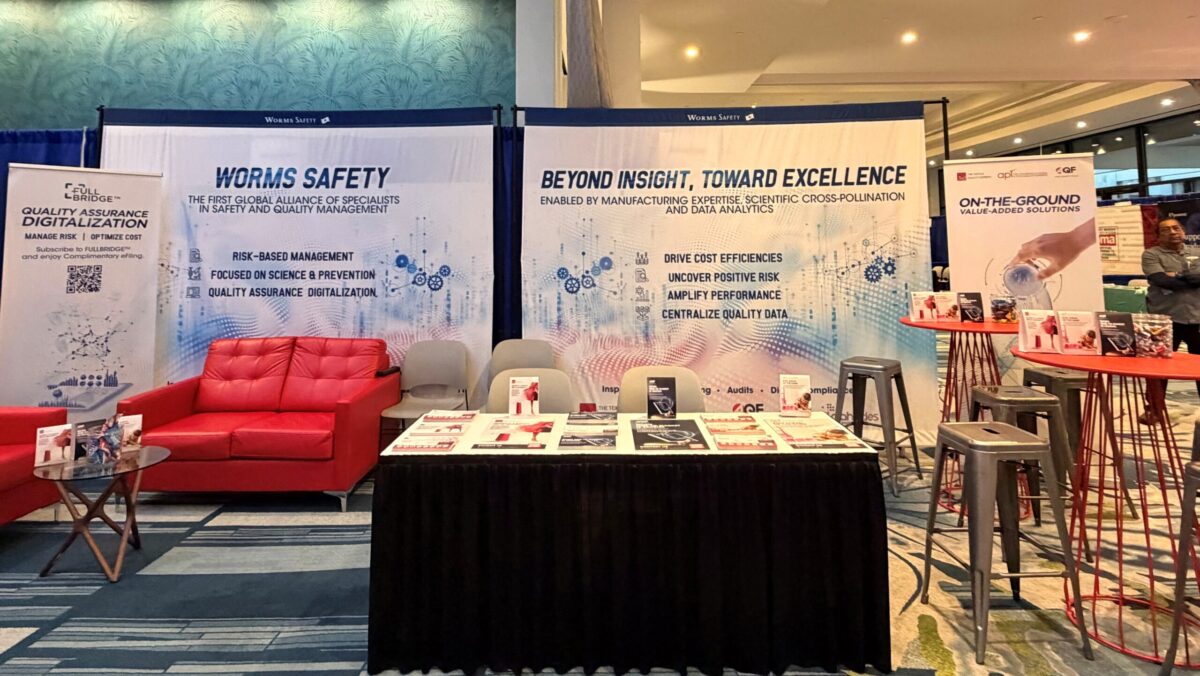
As a trusted partner in furniture and household goods quality, API is proud to join the WORMS SAFETY alliance at the ICPHSO 2026 Annual Meeting and Training Symposium. We invite you to meet our team in Orlando, Florida, from February 23-26, 2026, to discover how our specialized approach transforms household, furniture, and toy supply chains.
 
With over 900 million references inspected worldwide, API’s expertise spans furniture, home essentials, toys, and kitchenware. Our local teams are committed to safeguarding quality and building consumer trust. As part of the WORMS SAFETY alliance, we are enhancing our ability to deliver excellence through three core pillars:
  • Risk-Based Management: We help you anticipate risks, uncover positive risk, and prevent disruptions to protect your brand’s reputation.
  • Focused on Science & Prevention: We apply technical rigor and deep industry expertise to ensure excellence from the kitchen to the playroom, stopping quality issues before they start.
  • Quality Assurance Digitalization: We drive efficiency and transparency through data centralization, digital compliance, and real-time collaboration, empowering your supply chain.
ICPHSO’s 2026 Annual Meeting and Training Symposium
Date: February 23-26, 2026
Booth 29 & 30
Venue: Hyatt Regency Grand Cypress
One Grand Cypress Blvd
Orlando, FL 32836

Partner with Us for Excellence

Visit our team at Booth #29 & 30 to discover how we can partner together to make excellence the global household standard. Learn how API and the WORMS SAFETY alliance are building a safer, more agile, and high-performing global supply chain for the household goods industry.
 
We look forward to connecting with you in Orlando!

About ICPHSO’s 2026 Annual Meeting and Training Symposium
The International Consumer Product Health and Safety Organization (ICPHSO) is an international, neutral forum for product safety stakeholders to learn, network, and share information to advance safer consumer products around the globe.

ICPHSO is pleased to announce its 33rd Annual Meeting and Training Symposium , taking place in Orlando, Florida. This flagship event brings together global product safety professionals for four days of collaboration, learning, and networking. The Annual Symposium provides valuable content for a wide range of stakeholders, including industry professionals (product designers, manufacturers, importers, and retailers), standards developers, NGOs, consumer and parent advocates, test laboratories, academia, product safety experts, consultants, legal professionals, media representatives, trade associations, and regulators from around the world.

To learn more about the symposium, please ICPHSO’s website: https://icphso.org/general/custom.asp?page=2026_annual_symposium

Categorías
Blogs

Your Supply Chain Health Check: Identifying the top 8 common non-compliances with SMETA

In today’s globalized marketplace, ethical and responsible business practices are no longer a niche concern but a core expectation. For companies operating within complex supply chains, ensuring compliance with social and ethical standards is paramount. The Sedex Members Ethical Trade Audit (SMETA) has emerged as one of the world’s most widely used social audit methodologies, providing a framework for assessing working conditions, health and safety, environmental performance, and business ethics.

A SMETA audit is not merely a pass/fail exercise. It is a collaborative process designed to identify areas for improvement and drive positive change. When non-compliances are identified, a Corrective Action Plan Report (CAPR) is created, outlining the steps required to address the issues within a specified timeframe.

From Regulation to Practice:
How SMETA Supports Supply Chain Due Diligence

Across multiple jurisdictions, companies are now subject to mandatory human rights and environmental due diligence requirements. These regulations require organisations to demonstrate that effective, risk-based systems are in place to identify, prevent, mitigate, and address adverse impacts within their supply chains. In this context, SMETA (Sedex Members Ethical Trade Audit) is commonly used as a voluntary due diligence tool to support supplier risk identification and monitoring.

  • EU Corporate Sustainability Due Diligence Directive (CSDDD) – Requires large companies to identify and address human rights and environmental impacts across their value chains
  • UK Modern Slavery Act 2015 – Requires transparency on actions taken to prevent forced labour and human trafficking
  • German Supply Chain Due Diligence Act (LkSG) – Requires structured human rights and environmental risk management systems
  • France’s Duty of Vigilance Law – Requires companies to implement vigilance plans covering human rights and environmental risks
  • California Garment Worker Protection Act (SB-62) – Strengthens accountability for labour practices and enforcement of supplier codes of conduct

SMETA—particularly 2-pillar audits (Labour Standards and Health & Safety) and 4-pillar audits (including Environment and Business Ethics) can support both social and environmental due diligence, when findings are integrated into governance, remediation, and monitoring processes.

Common SMETA Non-Compliances

Based on audit data and industry reports, a number of recurring non-compliances are frequently identified during SMETA audits. Understanding these common pitfalls is the first step toward proactive compliance.

Non-Compliance Category

Common Issues

Working Hours & Rest Days

Excessive overtime, failure to provide mandated rest days, exceeding legal weekly hour limits (48 hrs/week standard, 60 hrs/week maximum).

Wages & Benefits

Incorrect calculation of overtime pay, unauthorized deductions, failure to pay minimum wage.

Time Records

Incomplete, inaccurate, or falsified time records.

Health & Safety

Missing risk assessments, inadequate PPE, insufficient training. Chemical safety issues are the second most common non-compliance type.

Fire Safety

Blocked exits, faulty alarms, inadequate drills, expired extinguishers.

Chemical Management

Improper storage, missing or outdated Safety Data Sheets (SDS), lack of worker training.

Grievance & Disciplinary Procedures

Weak documentation, lack of formal processes, fear of retaliation.

Contractor & Subcontractor Control

Failure to ensure contractors meet ethical standards.

Proactive Compliance: Best Practices for Success

Organizations can take several proactive steps to embed ethical practices into their operations:

  • Conduct a thorough self-assessment before the official audit to identify and address potential issues
  • Develop a robust management system with clear policies and documentation for all SMETA areas
  • Engage and train your team so all employees understand SMETA requirements and their roles
  • Address previous audit findings to demonstrate continuous improvement
  • Foster a culture of continuous improvement by viewing audits as opportunities, not just compliance exercises

Conclusion

SMETA compliance is an ongoing journey, not a destination. By proactively addressing common non-compliances, organizations can build resilient, ethical, and sustainable supply chains, ensuring long-term business success while benefiting workers and the environment. 

Categorías
Blogs

Wooden Furniture Quality Assurance: Key Challenges and Solutions

Nice wooden furniture placed in a beautiful living room

The global demand for wooden furniture continues to grow. In 2024, the global wooden furniture market was valued at approximately USD $593 billion, and it’s projected to surpass USD $989 billion by 2034, growing at a CAGR of 5.4%. Today’s buyers expect more than just style—they demand durability, product safety, and environmentally responsible choices. For manufacturers and brands, meeting these expectations requires more than excellent design; it calls for rigorous quality assurance at every stage of production— it isn’t just best practice but essential for regulatory compliance and preserving brand reputation in a competitive market.

What are the most common challenges in wooden furniture manufacturing, and what quality assurance solutions can help brands and manufacturers overcome those challenges? Keep reading to find out!

Key Quality Challenges in Wooden Furniture Manufacturing

Raw Material Quality

The quality of raw materials is the cornerstone of wooden furniture quality. Different wood species vary widely in grain, density, and strength, which directly affects the durability and appearance of wooden furniture. Natural materials like maple and oak might suffer from Insect damage, hidden knots, or internal cracks, and these defects may compromise structural integrity. Moreover, synthetic materials like plywood or particleboard may pose health risks to users due to the chemical additives incorporated during their manufacturing process.

Moisture and Climate Sensitivity

As is well known, wooden furniture is relatively sensitive to environmental conditions and humidity. High humidity may cause wood to swell, while low humidity may cause wood to shrink. Such inappropriate moisture level can lead to structural issues like warping, cracking, open joints, and bowing, affecting the overall quality of the wooden furniture. This makes maintaining relative humidity a major concern for wooden furniture brands and manufacturers, particularly in raw material warehouses and finished goods storage.

Manufacturing Defects Caused in Production 

Even with high-quality raw materials, wooden furniture can suffer from manufacturing defects if production processes are not carefully controlled. Common issues include weak or inconsistent joinery that leads to structural instability, uneven or poorly applied finishes such as stains, varnishes, or paints, and misaligned hardware like hinges, handles, or drawer tracks. In mass production, small errors can quickly multiply across entire batches, compromising both durability and aesthetics. Such defects not only increase rejection rates and rework costs but also pose risks to product safety and brand reputation.

Safety and Durability Standards

Meeting safety and durability standards is a critical challenge for wooden furniture manufacturers. Products must withstand daily use without tipping, breaking, or collapsing, especially for items like chairs, beds, and storage units. Meeting international standards for load, impact, and tipping resistance is vital for market access. Meanwhile, compliance with chemical limits, such as formaldehyde emissions, directly affects consumer safety. Any failure in these areas risks costly recalls, regulatory penalties, and serious damage to brand reputation.

Sustainability Risks and Requirements

Sustainability has become a defining challenge in wooden furniture manufacturing, with increasing pressure from both regulators and consumers. Brands must ensure that timber is legally sourced, traceable, and harvested in ways that do not contribute to deforestation. For example, the upcoming EU Deforestation Regulation (EUDR) requires detailed documentation of supply chains and proof of sustainable sourcing for market entry in Europe. Non-compliance may risk costly fines and reputational damage.

Quality Assurance Approaches to Overcome Those Challenges

On-Site Audits and Inspections

In the first quarter of 2025, a British cast iron cookware brand issued an urgent recall for various cast iron cookware items sold since 2023. Testing by the UK’s Office for Product Safety and Standards revealed that the cookware could release heavy metals during use, posing a serious health risk. The recall affected multiple products, including skillets and griddles, and customers were advised to stop using the items immediately.

On-site inspections and audits are essential for identifying potential quality pitfalls in wooden furniture before they reach end consumers. Audits can verify if the supplier or manufacturer a brand works with is authentic and legally qualified to provide the requested limber or carry out the production. Inspectors on-site can check on the real production progress and finished products to compare with the requested requirements and catch any discrepancies early on. Common solutions include:

  • Warehouse Audit: Verify the warehouse condition is proper to store raw material or finished products, such as humidity and pest infestations
  • Prototype Sample Review: to review prototype samples at the factory to evaluate a prototype to assess risks and potential modification before mass production.
  • Pre-Production Inspection: Inspect the raw material to make sure they are qualified for use in production
  • Pre-Shipment Inspection: Inspect the finished products to see if they comply with the order requirements, and will also conduct some simple on-site tests to ensure real-life usage

Laboratory testing

Laboratory testing plays a vital role in uncovering hidden quality risks in wooden furniture. Unlike visual checks, lab tests evaluate performance under controlled conditions, such as load-bearing capacity, impact resistance, stability, and more. Chemical analysis can detect excessive formaldehyde emissions or harmful substances in coatings and adhesives, ensuring compliance with safety regulations. Moisture and durability tests further assess resistance to warping, cracking, or premature wear.

Sustainability and Traceability Supports

To adjust the sustainability and traceability challenges, risk-based and data-driven approaches can serve as great helpers. A risk-based approach helps wooden furniture makers prioritize high-impact sustainability and traceability issues. Additionally, data-driven solutions can leverage digital tools and supply chain analytics to ensure accurate sourcing records, compliance with regulations like EUDR, and greater transparency, ultimately reducing risks and strengthening consumer trust.

Choose API As Your Wooden Furniture Quality Assurance Partner

Wooden furniture is highly popular, but maintaining product quality in a rapidly changing market is no easy task. That’s where API comes to help.

API is the trusted partner in furniture and household goods quality. Our expertise spans furniture, home essentials, toys, and kitchenware—backed by local teams committed to safeguarding quality and building consumer trust.​ We have rich field experiences and is trusted by brands worldwide:

  • 29+ years in the quality assurance industry, building a global network of quality experts
  • 900M+ product references controlled since creation
  • 5,000+ factories visited per year

Ensuring quality in wooden furniture goes beyond craftsmanship—it requires rigorous laboratory testing, frequent product inspections, and continuous efforts in sustainability. By addressing challenges early, brands can safeguard product safety, meet global compliance standards, and build lasting trust with consumers. Strong quality assurance is not just protection—it’s a competitive advantage in today’s market. Contact Us Today.

Categorías
Blogs

5 Notable Cookware Recalls—Insights for Better Quality Assurance

5 Notable Cookware Recalls—Insights for Better Quality Assurance

In the world of cookware manufacturing, safety is non-negotiable. From coatings to heat resistance and handle design, every detail must meet strict standards. When these standards aren’t met, the consequences can be devastating—financially and reputationally. Here are five notable cookware recall cases that serve as cautionary tales for manufacturers and underline the vital importance of quality assurance.

1. Global Leading Lifestyle Brand’s Pressure Cooker Recall (2025)

Estimated cost: Potentially over $50 million

In 2025, a global leading lifestyle brand recalled approximately 1.85 million multi-function pressure cookers. The recall was prompted by reports that the cookers’ lids could be opened while still pressurized, leading to hot contents escaping and causing burns. The U.S. Consumer Product Safety Commission (CPSC) received 106 reports of burn injuries, including over 50 cases of second- and third-degree burns. According to estimation, this recall could cost the brand over $50 million.

How Product Inspection Might Have Prevented the Pressure Cooker Recall

On-site inspections of pressure cookers often include critical on-site tests to ensure safe usage. Real-life function testing—such as full function test leaking test—can help detect issues early, like the risk of faulty components, and prevent any potential market incident or product recalls.

Key Takeaways:

  • Test real-life usage to verify safety
  • Detect critical risks before market release
  • Prevent costly recalls through early intervention

2. A Popular U.S. Drinkware Brand’s Trigger- Action Mugs Recall (2025)

Estimated cost: Not disclosed

In early 2025, A popular U.S. drinkware brand recalled over 2.6 million trigger-action stainless steel travel mugs worldwide. The recall was due to the mugs’ lids detaching when exposed to heat and torque, leading to 38 reported burn injuries. The affected mugs were available in various sizes and colors through retailers like Amazon and Walmart. The brand is offering a free replacement lid that will work with the recalled products as remedies.

How Inspection Could Have Prevented the Travel Mug Recall

A thorough product inspection—particularly focusing on-site functional testing—could have helped identify such quality issues. On-site function testing—like heat exposure test and physical stress test—could help to reveal the lid detachment issue early. Detecting this defect during inspection would have allowed timely correction before reaching the end consumers.

Key Takeaways:

  • Test for heat and stress durability
  • Simulate daily use to catch functional flaws
  • Prevent safety hazards through early detection

3. A British Brand’s Cast Iron Cookware Recall (2025)

Estimated cost: Not disclosed

In the first quarter of 2025, a British cast iron cookware brand issued an urgent recall for various cast iron cookware items sold since 2023. Testing by the UK’s Office for Product Safety and Standards revealed that the cookware could release heavy metals during use, posing a serious health risk. The recall affected multiple products, including skillets and griddles, and customers were advised to stop using the items immediately.

How Laboratory Testing Catches Toxic Content Risks in Cookware

Lab testing plays a vital role in detecting harmful substances like heavy metals before products reach consumers. Professional testing helps identify chemical migration risks early, ensuring safety and compliance. A thorough food contact migration test on production samples can be an effective solution for detecting the existence of toxic content in cookware and kitchenware products.

Key Takeaways:

  • Detect toxic materials before market release
  • Simulate real-use to assess chemical safety
  • Ensure compliance with health regulations through routine lab testing

4. A Well-Known Cookware Brand’s Dutch Ovens Recall (2020)

Estimated cost: Not disclosed

In mid 2020, a leading ceramic-coated cookware company recalled approximately 11,160 Dutch ovens. The recall was issued because the lids could explode while the oven was in use, posing a significant risk of injury and burns. The firm has received four consumer reports of incidents, including one report of property damage, and no injuries have been reported.

How Product Inspection Could Have Helped Identify Vulnerabilities

Comprehensive inspections—including key steps like leaking test, sealing test, and fatigue test—could have identified potential issues like leaking and lid vulnerabilities before shipment. Catching these risks early helps prevent safety issues and costly recalls.

Key Takeaways:

  • Simulate cooking conditions to test durability
  • Identify design flaws before full production
  • Prevent product failure through early-stage checks

5. A Multifunctional Kitchen Appliance Maker Cooker Recall (2018)

Estimated cost: Estimated low millions

In 2018, this cookware manufacturer recalled a batch of its multicookers due to overheating, which could cause the unit to melt and pose fire hazards. The problem was linked to a manufacturing defect affecting certain batch codes. Given about 100,000 units were impacted, the brand had to act quickly to maintain consumer trust in an intensely competitive market. This case underscores the importance of batch-level inspection and early problem detection in smart kitchen appliances.

How Inspection Can Prevent Overheating Issue in Cookware

Daily-use appliances like multicookers must be fail-safe. During-Production Inspection (DUPRO) helps catch issues—like faulty sensors, poor insulation, or unstable materials—early in the manufacturing process. This enables brands to take corrective actions while products are still on production lines and prevent costly re-dos before full assembly.

Key Takeaways:

  • Inspect components during production stage
  • Catch defects in semi-finished products early
  • Detect electrical hazard and protect consumers and brand reputation

Safety is Fundamental to Cookware, Quality assurance is Key to Safety

Each cookware recall case above reinforces a clear message: safety must be at the heart of every cookware product. From sealing malfunction to material safety, even minor flaws can pose serious risks. That’s why robust quality assurance is essential to ensure compliance.

Key aspects of cookware compliance include:

  • Material Safety: Cookware materials should not leach harmful chemicals or heavy metals into food, especially when exposed to heat.
  • Food Contact Compliance: Regulations like those from the US FDA and EU regulations (e.g., EN 12983) govern materials that come into contact with food, ensuring they are safe and don’t contaminate food.
  • Performance Standards: Cookware should meet performance standards related to heat distribution, heat conduction, and durability, as defined by standards like EN 12983.
  • Chemical Safety: Testing for substances like PFAS (including PTFE) and other chemicals is crucial to ensure they don’t pose health risks.

How to ensure compliant to protect your brand and end consumers? Here’s how a robust quality assurance strategy can help avoid these costly mistakes:

  • Product Inspection: Ensuring that finished products meet your provided product specifications and required safety standards
  • On-Site Testing: Simulating real-world usage helps identify durability issues and safety issues that can happen during day-to-day usage.
  • Supplier Factory Audits: Many cookware products are manufactured by overseas suppliers. Regular audits and tighter oversight can ensure that the suppliers fully understand your quality standards and product requirements.
  • Laboratory Testing: Laboratory testing plays a vital role in verifying a product’s safety, quality, and regulatory compliance, especially for food-contact products like cookware. It evaluates key factors such as the composition of materials, durability of the coatings, heat tolerance, and risks of harmful substances leaking into food during usage.

Quality assurance isn’t just about ticking boxes—it’s about protecting your customers and your brand. A small investment in quality assurance can prevent massive losses, both financial and reputational.
Stay ahead of costly recalls. Protect your brand with expert cookware quality assurance—from supplier audits to lab testing and product inspections.

Contact Us Today.

Categorías
Blogs

EU – 5 new chemicals added to the SVHC Candidate List

EU – 5 new chemicals added to the SVHC Candidate List

On January 23, 2024, the European Chemicals Agency (ECHA) published an update of the Candidate List of substances of very high concern (SVHC). With the addition of five new chemicals, the current Candidate list of SVHC now contains 240 substances.

Additionally, the ECHA has updated the existing Candidate List entry for dibutyl phthalate to include its endocrine-disrupting properties for the environment.

5 new substances added to the Candidate List on 23 January 2024 (ECHA/NR/24/01)

Substance name

EC number

CAS number

Reason for inclusion   

Examples of uses

2,4,6-tri-tert-butylphenol

211-89-5

732-26-3

· Toxic for reproduction

· Persistent, bioaccumulative and toxic (PBT)

· Manufacture of another substance

· Formulation of mixtures

· Fuel products

2-(2H-benzotriazol-2-yl)-4-(1,1,3,3-tetramethylbutyl)phenol

221-573-5

3147-75-9

Very persistent and very bioaccumulative (vPvB)

· Air care products

· Coating products

· Adhesives and sealants

· Lubricants and greases

· Polishes and waxes

· Washing and cleaning products

2-(dimethylamino)-2-[(4-methylphenyl)methyl]-1-[4-(morpholin-4-yl)phenyl]butan-1-one

438-340-0

119344-86-4

Toxic for reproduction

· Inks and toners

· Coating products

Bumetrizole

223-445-4

3896-11-5

vPvB

· Coating products

· Adhesives and sealants

· Washing and cleaning products

Oligomerisation and alkylation reaction products of 2-phenylpropene and phenol

700-960-7

vPvB

· Adhesives and sealants

· Coating products

· Fillers

· Putties

· Plasters

· Modelling clay

· Inks and toners

· Polymers

Consequences of the Candidate List


  • Under the EU REACH Regulation, the inclusion in the Candidate List brings immediate legal obligations for suppliers of the substance – either on its own, in mixtures or in articles. The obligations include:
    • Communicating on safe use: EU or EEA suppliers of articles which contain substances on the Candidate List in a concentration above 0.1% weight by weight have to provide sufficient information to allow safe use of the article to their customers. If a consumer requests such information, EU or EEA suppliers must provide the necessary details within 45 days of receiving the request.
    • Notifying ECHA: EU and EEA importers and producers of articles have to notify ECHA if their article contains a Candidate List substance within six months after it has been included in the list. 
    • supplying a safety data sheet: EU and EEA suppliers of substances on the Candidate List must provide their customers with an up-to-date safety data sheet.

  • Under the EU Waste Framework Directive, companies must also notify ECHA if the articles they produce contain SVHC in a concentration above 0.1 % (weight by weight). This notification will be recorded in ECHA’s database of substances of concern in products (SCIP).


Our technical experts at API can also help support your transition to this or any other regulatory changes.

Categorías
Blogs

Update on the Proposed New Toy Regulation

The European Commission has adopted a proposal for a Toy Safety Regulation – to replace the TSD – that would apply directly to all Member States. This will better ensure Member States do not impose national technical requirements that go beyond the requirements and/or contradict those requirements.

Two objectives of the Toy Safety Regulation:

  1. Increase protection from harmful chemicals: the proposal extends the current ban on substances classified as carcinogenic, mutagenic, and toxic for reproduction to include endocrine disruptors (these are chemicals that affect the endocrine system) as well as chemicals that are toxic to a specific organ or affect the immune, neurological, or respiratory system. It also proposes a wider definition of children’s health to include mental health, wellbeing and cognitive development.
  2. Strengthen enforcement: checks along the value chain will be strengthened. All toys, including those sold online, should have a Digital Product Passport with all information concerning compliance with the regulation.

API’s specialised solutions for the Proposed EU Toy Safety Regulation

As a member of the CEN/TC52/WG3 Technical Committee Working Group, the French AFNOR/S51C Standards Commission and the EUROLAB France, API are the toy safety experts that can help support you in navigating these changes.
 
API can help support you in navigating these changes. Our specialised services for the Proposed EU Toy Safety Regulation cover all your needs, from product design and development through to shipping:

Categorías
Blogs

The Cookware Laboratory Tests That You Should Know

The Cookware Laboratory Tests That You Should Know

Because of their close contact with food, cookware products carry a higher risk of safety issues than many other consumer products. If an object poses a potential safety hazard to users, product recalls may occur.

Product recalls can be expensive and harmful to a brand’s reputation. They can also have long-term effects on how the company is viewed by the public. To ensure cookware complies with international standards, additional tests may be necessary beyond what can be done during a regular product inspection.

In this blog post, we will explore the international regulations in the EU and U.S. that cookware manufacturers need to be aware of. We will also list the most important cookware safety tests that can help prevent product recalls.

Why do cookware safety regulations exist?

The food contact segment is heavily governed, with strict regulations/standards in place to ensure the health and safety of consumers.

These regulations differ from country to country and depend on the material used. For example, items marketed in the EU and the US are required to comply with rules like EC No. 1935/2004 (for the EU) and the FDA 21 CFR (for the US). Moreover, various EU nations have extra regulations, like Germany’s LFGB Law and France’s DGCCRF suggestions.

Product safety tests on cookware provide brands and retailers with assurance that the product is of good quality and safe for consumers to use if the manufacturer complies with safety regulations in the country.

The Cookware Laboratory Tests That You Should Know - Regulations

The importance of cookware testing / food contact testing

Product safety tests are typically conducted on prototypes before the manufacturing process begins. These tests are crucial for both the manufacturing companies and customers for many reasons:

  1. Implementing quality control measures can help prevent products from being recalled from the market.
  2. Meeting quality requirements is important for satisfying customers.
  3. Ensuring the safety of materials used in the manufacturing process is crucial for producing safe products.
  4. Quality control measures can prevent product failures during use.
  5. By implementing proper quality control measures, accidents to the user can be prevented.
  6. Quality control measures safeguard the brand reputation of the company.

Cookware Testing / Food Contact Testing

The Cookware Laboratory Tests That You Should Know

Regulations vary depending on where the product is distributed.

However, there are some common cookware laboratory tests that brands and retailers should know:

  1. Burning resistance test ensures handles remain unaffected by heat.
    The bottom part of the handle, including any embedded or inlaid parts made of organic material, should not melt or continue to burn.
  2. Heat resistance tests ensure that products are free of cracks or splits, and determine the maximum temperature at which the item can be used.
    Any furniture designed to be affixed to the primary structure of a product should exhibit no cracks or blisters following a test at a temperature of (150 ± 5) °C for one hour. This requirement does not apply to purely ornamental elements, such as thermoplastic inserts or covers.
  3. Bending strength test is used to ensure that the handle can withstand a bending force of 100N.
    None of the components of the handle or its attachment system should break or come loose when subjected to a bending force of 100 N for 30 seconds.
  4. Resistance to fatigue involves subjecting cookware products to loads greater than their capacity to ensure they don’t fail after multiple uses.
    The handle assembly must endure 15,000 cycles without any permanent deformation or loosening of the handle or its attachment system. If any loosening of the handle is observed, it is permissible to tighten it as instructed in the user and maintenance guide. Any deformation less than 5% of the handle’s length, measured from the handle’s end, is disregarded unless it affects product safety or functionality.
  5. Resistance to torque is the measure of the cookware handle’s ability to resist rotational forces on the screw axis, avoiding handle rotation beyond the set angle.
    After the test, the movement of the handle shall be no more than 10° in either direction. This test should not cause any harm that impacts the functionality of the handle, ferrule, or fixing system.
  6. Resistance to pull off handle assembly
    The handle assembly should be able to endure a dynamic impact of 1.5 Nm without experiencing any fractures or decrease in the stability of the handle or the fixing system.
  7. Specific migration of metals release – EDQM 23 HV metal test Metals and alloys used in food contact materials and articles shall not transfer their constituents to foods in quantities exceeding the specific release limits (SRLs). This is to ensure that, under normal and foreseeable conditions of use, they do not pose a risk to human health, cause an unacceptable change in the food composition or lead to a deterioration in its organoleptic properties.

API’s specialized solutions for kitchenware

The Cookware Laboratory Tests That You Should Know

API offers personalized solutions to ensure the safety, quality, and performance of kitchenware for brands and retailers. We assist in several key areas such as:

  • Lab Testing: We conduct tests in compliance with EU/US or national guidelines to uphold chemical and physical safety. Additionally, we offer testing with specific protocols to guarantee performance and fit for use.
  • Support in product development by pinpointing crucial aspects and proposing modifications during the design or purchase stage.
  • Technical Compliance File: This involves reviewing documentation to ensure that a product complies with protocol definitions, from document collection and verification to report issuance.
  • Factory Inspections: Assessments of factory abilities to meet production standards and ensure timely delivery of safe products.
  • Dedicated programs: customized programs that provide support at every stage of the supply chain, based on each client’s specific needs.

Interested in learning more about API’s kitchenware solutions?

Categorías
News

API At 2024 ICPHSO Annual Meeting and Training Symposium

API At 2024 ICPHSO Symposium

API is excited to be participating at 2024 ICPHSO Annual Meeting and Training Symposium. The symposium will take place on February 19-22, 2024 in Orlando. The 4-day Symposium provides opportunities for global product safety professionals to learn about and discuss relevant product safety issues, and further enhance the safety of consumer products throughout the world.

Visit ICPHSO’s website for more details about the event: https://icphso.org/

Please feel free to contact your regular customer representative for more information.

es_ESSpanish