How purchasing departments benefit from better QMS

Kategorien
Blogs

How purchasing departments benefit from better QMS

The harshest judge of the quality of a product is your customers. As a households goods quality manager, it is your responsibility to ensure the systems and procedures you have in place, run as smoothly and effectively as possible. In this blog post, we look at the role of a quality manager and the benefits of adopting quality management systems as a part of your supply chain strategy. It may be necessary, to begin with, an appropriate definition of the role of a quality manager to help put perspective on how they can assist purchasing departments with their quality systems;

A quality manager’s role is “concerned with monitoring and advising on the performance of the quality management system, producing data and reporting on performance, measuring against set standards.”

Understanding the role of a quality manager leads into understanding what a quality management system (QMS) is:

“A QMS is a set of policies, processes and procedures required for planning and execution of a product or service.”

Quality management systems - Management-1.jpg The purchasing department of any organization has many functions from procurement of raw materials all the way through to the load testing of various household goods through to policy compliance. Each of these components requires the leadership and technical skill and know-how of a quality manager to ensure the entire procedure is run effectively and according to set quality standards. Quality managers can improve the quality systems within purchasing departments by ensuring there is a set of quality standards and metrics that need to be achieved, these standards can be anything from load testing results, to the delivery times of material or of the end product. It is essential to work closely with purchasing departments to develop relationships and collaborate with suppliers. This will have results for the quality of your systems and your end product.

Check out our comprehensive guide on optimizing your quality assurance systems.

ISO 9001: 2015 ISO 9001: 2015 is an example of a QMS, which is a set of requirements a supplier needs to comply with to consistently meet specific requirements and that they also meet a specified set of regulations. Applying this ISO standard can have significant benefits for your brand, let’s take a look at some of the key benefits it can have: 1. Improvement of your credibility and image Quality management systems .jpg Every brand strives to increase their credibility within the global market, this standard can help you maintain that competitive advantage, as suppliers who have this standard are often selected over and above those who do not. 2. Improvement of customer satisfaction – At its very core this standard is about the improvement of customer satisfaction, through thorough planning and efficient implementation where the end user is satisfied with the functionality, quality of the product to the way in which it was delivered. 3. Better process integration – By understanding and analyzing your processes you will clearly be able to find improvements that need to be made. These are based on hard that is collected to make these improvements to your procedures. 4. Improve your evidence for decision making – Evidence-based decision-making is based on hard data. Decisions can then be made based on data which can allow for proper allocation of resources and in turn having cost benefits for your brand. 5. Create a continual improvement culture – By instilling a continuous improvement cycle within your buying office, you will not only increase your outputs, but also the quality and standard of your procedures and end product, and also creating that customer satisfaction. A Quality Management system is essential to ensuring quality household good products and the processes that come from your purchasing departments. This will provide accountability and sustainable relationships with your suppliers as they strive to meet a set of global standards. This can have far-reaching implications for your brand. What is your experience in adopting a QMS within your purchasing departments?

Are you ready to begin optimizing your quality procedures?

Just click here to request your FREE Quality Assurance Optimization guide!

Kategorien
Blogs

A Supply Chain Management System To Optimize Supply Chain

Global retailers have large complex supply chains, to efficiently manage these they have to adopt a variety of tools and software to ensure an effective supply management system. In this blog post, we take a look at a few of the tools global brands use to manage this supply chain complexity. 1. Technology Using technology as part of your supply chain management is becoming essential to remaining globally competitive. It can be used to for real-time tracking of your orders, to real-time inventory updates. The analytics that you receive enable visibility, early forecasting of potential risks and early identification of systems that may not be working. Technology is used to simplify your supply chain, thus reducing operational expenses and overall timing.
  • Dako, a UK Furniture retailer uses Transportation Management Software (TMS), such as STREAM which is a particular technology that can be used to track shipments, map routes and also keeps track of inventory in real-time, minimizing supply chain challenges.

Supply chain complexity - supplier partnerships .jpg2. Strategic partnerships

By creating an emphasis on supplier relationships, it becomes possible to establish collaboration with the moving parts of the supply chain. This is done through clear communication of goals and expectations, through stakeholder buy-in which creates a vested interested in the outcome of the quality of the product. This, in turn, fosters a relationship which results in system innovation and supply chain transparency.

  • Supplier Relationship Management (SRM) is driven by consistent, clear interactions between the supplier and buyer, SRM programs build new capabilities that enable strategic sourcing and procurement. Effectively applying SRM as a part of your strategy can help achieve greater quality in your product and a faster time to market.
Supply chain complexity - warehousing.jpg 3. Inventory management tactics Managing inventory is all about balance. Making sure that you don’t have too much inventory thus face the risk of increased storage costs and a longer time to market having an effect on your return. You also need to make sure you don’t have too little inventory forcing people to shop elsewhere for a similar product. Both sides of the equation can have detrimental effects for your brand. Here we look at two inventory management tactics that are applied by two of the biggest global retailers:

Check out our comprehensive guide on optimizing your quality assurance systems.

  • Cost per touch:  This strategy is employed by IKEA, and is centered around the idea that each time a product is touched within the supply chain process, it is charged accordingly. This tactic empowers the customer and also brings them into inventory management. This system has encouraged customers to go as far as collecting their product from the nearest IKEA warehouse as well as building their item at home, therefore reducing the number of times the product was touched and reducing the end costs.

`supply chain complexity quality control .jpg4. Quality Control

Often times the quality department or team is over-looked when trying to optimize the supply chain for procedural efficiency. As a good quality control manager can help to minimise human errors within the production processes. The aspect of quality affects nearly every step in the supply chain process from raw material inspection to the final product. You may want to take into consideration the value of these departments working together as they can provide overall supply chain process efficiency, saving you time and procedural expenses.

5. Focus On Core Competencies Your brand may not have the expertise to effectively manage quality systems. Therefore it may be of benefit to outsource the management of your quality procedures to a trusted quality provider. There are many benefits to this approach from the time it takes to testing a product as they have the right technical skills which has a faster turnaround time to also having great cost benefits. The above tactics help reduce the amount of moving parts that encompass the supply chain, with fewer moving parts, one can reduce potential risks and costs over time. This creates an efficiency and a level of quality in the supply chain that was never there before. A supply chain management system consists of complex procedures; the above tools seek to simplify these through greater visibility and transparency creating a level of quality and efficiency that is globally competitive. Which of these tools have you adopted? What is the greatest efficiency that you have experienced through adopting any of these tactics?

Would your Company stand to benefit from

optimised QA systems?

Simply click below for more on doing just that!

Kategorien
Blogs

Kennen Sie die Ziele Ihres Qualitätsaudits im Unternehmen?

Der Zustand des Einzelhandels hat in letzter Zeit eine Zunahme des Drucks in der Lieferkette von Einzelhandelsriesen wie Amazon, die das Tempo, mit dem die Lieferketten arbeiten müssen, erhöhen. Diese Zunahme des Drucks und des Tempos bedeutet, dass Ihr Produkt schneller in den Regalen sein muss, was Ihre Qualitätsverfahren stark belastet, was dazu führen kann, dass Produkte von geringerer Qualität auf den Markt kommen. Das ist riskant. Qualität ist in den besten Zeiten ein komplexes Thema, und während Sie mit dem erhöhten Tempo jonglieren, kann es schwierig sein, den Überblick über die kleineren Rädchen der Qualitätsmaschine zu behalten. Was tun die Einzelhändler also, um potenziell minderwertige Produkte zu vermeiden? Sie haben begonnen Auslagerung ihrer Qualitätssysteme auf qualifizierte Drittanbieter zurückgreifen, um den Druck in der Lieferkette zu mindern. Eine der wichtigsten Lösungen, für die sich Einzelhändler entscheiden, ist ein Qualitätsaudit - um die Schwachstellen in Ihrer Lieferkette aufzuzeigen und einen Aktionsplan zu erstellen, wie Sie diese beheben können. In diesem Blogbeitrag werfen wir einen Blick auf den Zweck von ein Qualitätsaudit für Ihre HaushaltswarenmarkeIm Folgenden werden die Vorteile des Outsourcings Ihrer Qualitätsverfahren kurz erläutert und was diese Vorteile für Ihr Unternehmen bedeuten können.

Drei Wege zur Durchführung eines Audits

Audits sind zu einem wichtigen Instrument für die Verwaltung und Überwachung der Umsetzung von Qualitätssystemen in vielen Betrieben geworden. Werfen wir einen Blick auf die drei Arten, wie diese Audits durchgeführt werden können;
  • Interne Prüfung - Dies wird intern von einem internen Team durchgeführt. Sie messen die Stärken und Schwächen von Qualitäts- und Produktionssystemen anhand internationaler/externer Normen und Vorschriften. Diese Form des Audits kann Ihrem Unternehmen keine Zertifizierung verschaffen.
  • Prüfung durch eine zweite Partei - Dabei führt ein Unternehmen ein Audit bei seinem potenziellen Lieferanten durch, um sicherzustellen, dass dieser Ihre Produktionsanforderungen erfüllen kann. Häufig können diese Audits vor Ort durchgeführt werden, um die internen technischen Prozesse des Lieferanten zu überprüfen, aber dieses Audit kann auch außerhalb des Unternehmens in Form von Dokumentationsprüfungen durchgeführt werden. Es hängt von Ihrem Unternehmen ab, was genau Sie prüfen wollen, um eine fundierte Entscheidung über Ihren Lieferanten zu treffen. Diese Art von Audit hat nichts mit einer QMS-Zertifizierung zu tun, da diese nur von einer registrierten, unabhängigen Prüforganisation durchgeführt werden kann.
  • Prüfung durch Dritte - Dies wird von einer qualifizierten Prüforganisation durchgeführt, die in keiner Weise mit dem Lieferanten oder der Marke verbunden ist. MQualitätsaudit durch Dritte.jpgOrganisationen ziehen Audits durch Dritte aus vielen Gründen in Betracht, vor allem aber, weil sie beschlossen haben, ein Qualitätsmanagementsystem (QMS) wie ISO 9001 einzuführen. Ein unabhängiger Prüfer kommt und bewertet, ob die Organisation die Anforderungen des oben genannten QMS erfüllt oder nicht. Ein unabhängiger Prüfer wird Ihrer Organisation dann eine Zertifizierung ausstellen, die besagt, dass Sie die festgelegten Anforderungen erfüllen. Dies ist häufig eine bevorzugte Auditoption, da die Ergebnisse unvoreingenommen sind und die Zertifizierung zu einem Unterscheidungsmerkmal im Wettbewerb geworden ist.

Wenn wir Sie bei der Definition der oben genannten Begriffe nicht ins Grübeln gebracht haben, welcher davon besser ist, dann haben wir unsere Aufgabe nicht erfüllt... Die große alte Debatte "Intern" gegen "Dritte". Debatte über Dritte; Sie denken vielleicht, dass Sie in der Lage sind, mit Ihren internen Qualitätsteams ein hohes Maß an Produktqualität aufrechtzuerhalten, und das mag im Moment auch noch stimmen, aber Sie müssen sich fragen, ob Sie die Anforderungen der immer stärker werdenden Verbraucher aufrechterhalten und erfüllen können oder nicht. Ich denke, es lohnt sich, die Debatte mit Blick auf Ihr Endergebnis, Ihre Ressourcen und Ihre Zeit neu zu betrachten...

Die Ziele eines Qualitätsaudits für Ihre Marke

Bei der Definition der Zweck einer Prüfung für Ihre Marke, können Sie verstehen, wer Ihr Audit durchführen sollte. Die wichtigsten Ziele sind die folgenden;
  • Zertifizierung - Viele Haushaltswarenhändler, die Produkte mit hohem Risikopotenzial herstellen, wie z. B. Spielzeug und Elektrogeräte, und die in Europa tätig werden wollen, müssen die CE-Richtlinie der Europäischen Kommission einhalten. Das Managementsystem Ihres Lieferanten muss nach einer der ISO-Normen bewertet und entsprechend zertifiziert werden. Bedenken Sie, dass das von Ihnen gewählte Prüfungsunternehmen von einer Aufsichtsbehörde zertifiziert sein muss, um Sie zu zertifizieren.
  • Wirtschaftlichkeitsprüfungen im Gegensatz zu Konformitäts- und Regelmäßigkeitsprüfungen - Viele Audits haben unterschiedliche Ziele. Wenn Sie ein internes Audit durchführen, sollten Sie darauf achten, dass Sie es so ganzheitlich wie möglich gestalten. Bei Ihrem Audit müssen Sie die Einhaltung der Vorschriften und die Leistung bewerten. Im Auditbericht müssen die Lieferanten nach diesen beiden Kategorien eingestuft werden.
  • Follow-up-Audit - Bei einer Prüfung werden häufig Feststellungen gemacht, die erst nach einer gewissen Zeit behoben werden können. In diesem Fall ist ein Follow-up erforderlich, um sicherzustellen, dass Abhilfemaßnahmen ergriffen wurden.
Sind Sie in der Lage, mit Blick auf Ihr Ziel herauszufinden, wer Ihr Projekt durchführen sollte? Qualitätsaudits im Werk?

Die fünf Vorteile des Einsatzes eines externen Qualitätsprüfers

Wenn Sie sich nicht sicher sind, welche Vorteile Ihnen ein externer Qualitätsanbieter bieten kann, werfen Sie einen kurzen Blick auf diese Seite;
  • Fachwissen - Die externen Prüfer haben eine formale Prüfungsausbildung und Erfahrung, um Verstöße und unethische Situationen zu erkennen. Dieser Wissens- und Erfahrungsschatz wird Ihrer Organisation von Nutzen sein. Innovation - Qualitätsaudit durch Dritte.jpg
  • Effizienz -  Ein externer Prüfer verfügt über die nötige Infrastruktur, um die Prüfungsanforderungen Ihres Unternehmens zu erfüllen.
  • Technik - Sie verfügen über die geeigneten Instrumente und Technologien, um ein erfolgreiches Audit bei Ihrem Lieferanten zu gewährleisten.
  • Rechenschaftspflicht - Ein externer Prüfer hat sich verpflichtet, einen bestimmten ethischen Verhaltenskodex einzuhalten, und ist für die Einhaltung der übergeordneten Unternehmensrichtlinien, Regeln und Vorschriften verantwortlich.
  • Risikominderung - Ein unabhängiger Prüfer ist darin geschult, Missstände in den Qualitätssystemen eines potenziellen Lieferanten zu erkennen. Dieser Einblick ermöglicht es Ihnen, Risiken frühzeitig zu steuern.

Wichtigste Erkenntnisse

Die Herstellung hochwertiger Produkte ohne Mängel, die zu Rückrufen führen könnten, hat für Sie und Ihre Marke wahrscheinlich höchste Priorität. Sind Sie in der Lage, Ihre Zeit und mehr Ressourcen zu investieren, um sicherzustellen, dass Ihre internen Audits von höchster Qualität, unvoreingenommen und gemäß den Anforderungen eines QMS wie ISO 9001 sind? Vielleicht sollten Sie Folgendes in Betracht ziehen Auslagerung Ihrer Audits an zertifizierte Drittprüfer. Sie sind in der Lage, Ihnen eine QMS-Zertifizierung, eine Leistungs- und Konformitätsbewertung zu bieten, sie können Folgeaudits anbieten und auch Einblicke in Verbesserungsstrategien geben, die für eine erfolgreiche Lieferantenbeziehung von Nutzen wären. All dies sind Dinge, die Ihre Kunden sehr schätzen, die sich positiv auf Ihr Endergebnis auswirken und Ihre Marke auf dem Markt strategisch positionieren.

WÜRDE IHR UNTERNEHMEN PROFITIEREN VON

PRÄVENTIVES QUALITÄTSMANAGEMENT?

Kategorien
Blogs

Comparing the old and the new in compliance software

Maintaining supply chain compliance is an issue retailers/importers have found more difficult to navigate in recent years with an increase in pressure from consumers for more ethical products, and the digitization of retail supply chains.

Dealing with compliance issues have long been managed by manual compliance document filing procedures, which may have provided one a greater level of control in some respects in the past, but also made it that much more difficult to stay on top of one’s supply chain with all the heavy paperwork.

The need for an update in the way that compliance was documented, implemented and achieved was evident.

This brought about the advent and introduction of an online compliance solution. Web-based filing presented an all-in-one platform that promised greater transparency, and control over one’s supply chain in real time.

However, even with this tool there are still retailers/importers today who rely on more traditional means by which to tackle ever evolving issues that can be more readily addressed with more the accurate reporting data, flexibility and speed of an online solution.

In this blog post we will take a look at the benefits of the online compliance software known as the TCF solution over traditional compliance filing procedures, in the hope of showcasing why bringing supply chain compliance into the online age is a must for your household goods business.

tcf_software_vs_traditional_compliance (2).jpg

Often times retailers locally and globally are unaware of the options that are available to them, and also what benefits they can have for their organization. This often leads to sticking with what you know, sticking to a solution that may not always have the best ROI for your organization.

Why is this TCF solution right for you?

TCF is an online compliance software solution that:

  • streamlines your compliance and regulatory operations
  • provides actionable insights into the performance of your suppliers
  • allows insight into areas of risk that you may not have seen before
  • is extremely cost effective and efficient

The kind of visibility that a solution like this promises goes very far to help increase your productivity, therefore having a positive impact on your ROI.  

Learn more about the TCF solution API provides for household goods here!

Achieving compliance traditionally is a challenge right from the start. The constant back and forth communication with your suppliers, with a flood of emails to your inbox to constantly keep track of, to the unreliable manual entry spreadsheets. There is too much room for human error here to remain as productive as what consumers today are demanding.  

The digital landscape we find ourselves in is all about keeping up with the constant demand of the retail supply chain. If your current compliance systems are holding you back with errors that can be avoided easily, then your supply chain may not be as competitive or as productive as it likely should be.

TAKE A DIVE INTO LEARNING ABOUT HOW RETAILERS WERE ABLE TO OVERCOME THEIR BIGGEST QA CHALLENGES TODAY! SIMPLY CLICK HERE TO GET YOUR CASE STUDY NOW

Kategorien
Blogs

Compliance issues? You need this online software

Completing a Technical Compliance File as we know is a requirement by regulation. Consolidating compliance documents is an immense challenge and is a web of complexities that often creates confusion and uncertainty. The many rules and regulations that are needed for a specific product to attain a certain level of compliance are so complex that it can be unclear on how to begin addressing them let-alone having the in-house capabilities to begin addressing them.

“Is there a solution to this web of complexity?”

Eine in-house developed, web-based platform with 24/7 availability and safe storage of your documents has been created. A platform like this can create immense value for retailers, importers and quality directors, helping to alleviate some of the compliance pressures and complexities by keeping everything in one place.

In this post, I interview Aurelien Dalle, Chief Operating Officer for API, where we endeavor to uncover some of the frequently asked questions surrounding this new compliance software, and the benefits that it can provide for brands that struggle with compliance issues brought on by missing, incomplete or incorrect documentation.  

Q: What are some of the common challenges that organizations face with TCF and compliance in general?

  • There is often difficulty in having and keeping all the product, standards and regulation expertise and regulatory watch internally as more often than not it needs technical experts in many different fields to assist.
  • There is difficulty in keeping track of the documentation with no proper IT system for support and often relying on many emails and excel files for documents.compliance issues.jpg
  • In many organizations, the quality team is small. In some instances the only teams big enough to support such task are within the purchasing team and even then they are often in need of assistance from the laboratories for advice and judgement regarding compliance and quality in general.
  • That it is a huge and tedious task to map out the requirements for each product and to contact the suppliers to collect the all the documents. It can also be a wearisome task to review 50 page documents all in one day.

Q: What is the follow-up action after applying the TCF service?

  • If the client is unaware of the standards and regulations that are applicable to complete a TCF, the API TCF team can define and give recommendations on the scope of compliance (mandatory standards and technical documentation as well as recommended performance requirements) of the product for its destination market.
  • The API TCF team start contacting the suppliers by providing them access to the database and inform them, through the TCF tool about the exact requirements applying to the products so that suppliers can begin uploading the documents, should they already have the documentation on hand, otherwise the supplier will start arranging the necessary testing in laboratories.

Q: How can an organization benefit from this compliance software?

  • The TCF tool provides centralized information, that is available 24/7. We offer technical expertise from the API lab and automatic statistics to monitor specific supplier performance. There are also organized reminders embed in the system, tracking all sort of activity and dates within the tool.
  • Tracking of standards/documents validity and expiry dates and versioning, so the same file does not need to be re-checked for the following orders.

Q: What is the turn around time of a completed TCF?

The turnaround time is dependent on the supplier’s performance, so generally it can be from 1-2 weeks all the way up to 2-3 months. It can sometimes be more as some specific endurance tests span over several months.

Q: What are the benefits of using a web-based platform?

This software and its information is centralized and can be accessed from different countries. It minimizes the amount of emails sent and received while also reducing the number of collections of large documents. These documents are also then automatically and properly archived for each item.

Q: How do you ensure document security and confidentiality?

There is password protected access and secure encrypted pages that guarantee confidentiality. Therecompliance software - safe storage is also a dedicated IT team to ensuring the safety of the software and only API employees are allowed to make modifications to the platform.

There are many benefits to this TCF compliance software, an all inclusive solution that is able to streamline all of your compliance issues creating operational efficiency for your brand, increased visibility into your supplier and their performance as well as being able to mitigate against any unnecessary risks. 

An informative interview that has been able to clearly define the benefits of this solution do you have thoughts or questions regarding this? Contact Us!


IST DIE EINHALTUNG DER VORSCHRIFTEN EINE HERAUSFORDERUNG FÜR SIE?
KLICKEN SIE HIER, UM EIN COMPLIANCE-PROGRAMM ZU ERSTELLEN
UNIQUE TO YOUR NEEDS TODAY! 


Kategorien
Blogs

[VIDEO] What is a Technical Compliance File (TCF)

Compliance and regulation has changed so much over the years with far more stricter regulations required for retail products today than ever before.The changing landscape has meant the very nature of compliance has become rather complex and difficult to achieve without adequate knowledge and expertise.

Compliance solution documentsMany of the compliance complexities that arise are in the collection and gathering of all the necessary documentation. Many manufacturers, importers and retailers today are still operating on outdated systems like spreadsheets, creating unreliable data and documentation, which creates an almost insurmountable task trying to maintain the information for each product reference.  
Often times professionals find themselves in a position of begging and pleading for documentation with nowhere to turn but to wait on the slow turning wheels of doing everything manually. Data, technology and cloud-based systems and solutions are where supply chains are headed.

Today’s consumers dictate the level of safety and performance they need to make a purchase of your product; this can either be seen as a challenge for your supply chain or as a golden opportunity.

What if there was an all inclusive compliance software that could streamline all your supplier and compliance operations in one place… accurately and reliably?

In this post, we seek to uncover the Technical Compliance File (TCF) solution – A compliance solution that will help relieve many of the compliance pressures that your supply chain currently faces.

What is a TCF?

Why a TCF?

At this point you may be wondering about the exact operating of this system, and what kind of benefits a compliance solution like this can have for your current operating systems. So let me tell you;

There are a number of reasons why retailers are in preference for this solution;

  • Technical expertise – There are dedicated teams to review what exact documents are required for the products and that the documents received are exactly what you are in need of, including all follow up with any supplier or factory that may be delaying you. These experts are also able to give technical advice where necessary, ensuring you don’t find yourself in a sticky supplier situation that can easily be avoided.
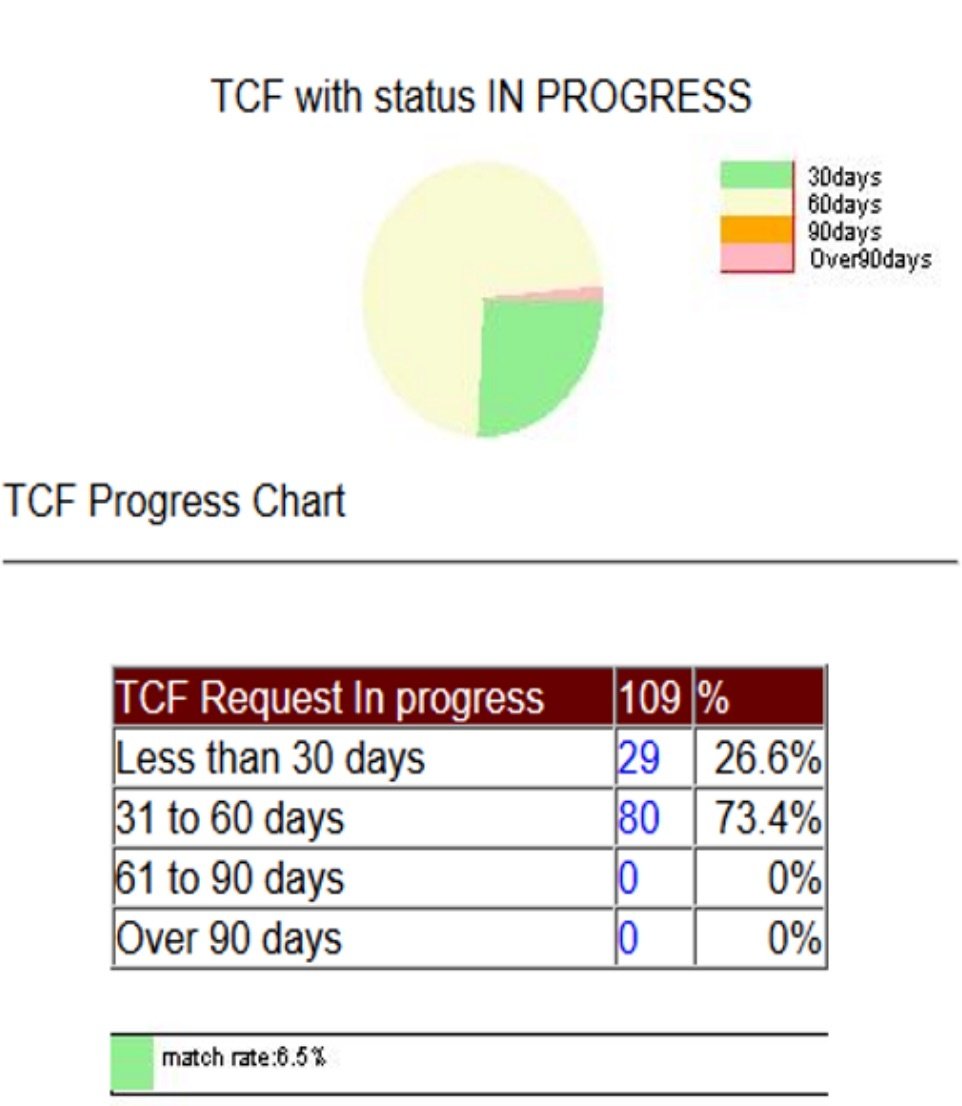
  • Online 24/7 access – The TCF solution has a 24/7 online dashboard with real-time updates allowingTCF compliance software you insight into your compliance status whenever you need it. There are also progress charts allowing you actionable insight into timelines and your supplier progress. This solution is also able to store all your documents for up to 10 years, ensuring your documents are safely stored for any future reference.  

  • Transparency – A solution like this can provide you with a real look into your supplier and/or manufacturer’s status in the workplace. It provides invaluable insights into the kind of supplier you have chosen to work with as you can track their compliance and regulatory progress online. 
  • Visibility – This allows you insight into what tests are being done and achieved in the lab, placing you in a better position of understanding the level of compliance your products are achieving.
  • Additional custom services – In having the expertise to analyze and determine the exact compliance and regulatory documents you are in need of, there are other custom services that can be offered if you find yourself short of an audit or specific product test that you need done to form a part of your TCF.
  • Separate supplier reporting – You are able to access reports on your organizational progress, but also your supplier’s progress. Your supplier is given access to a separate dashboard, so your information remains confidential.
  • Cost reduction – Streamlining the incredibly complex compliance process into one solution will be cost effective for your brand. Let me break this down for you; As mentioned earlier, a TCF is required as part of regulation, you already know what the process is in collecting documents from your factory, and all the follow-up communication that is required to get your documents. It’s often difficult and complex with little or slow results.

Regarding product compliance, let’s say for a furniture retailer, each item may need up to 30 documents (without counting all the submitted and rejected docs, which can be even more) to demonstrate compliance just for that product. As a retailer, you likely have more than 1 item that needs to achieve compliance, and with every document that is needed, each could take up to 30 minutes to evaluate properly, which equates to about 15 hours for just one product! If you have a whole range of products, you can begin to see how costly this whole process can become.

Risk Mitigation – The insight that this solution can provide into the most vulnerable areas of your supply chain can be invaluable information. The information that you will have access to should alert you to potential risks early on, allowing you the time to mitigate those potential risks. 

Enhancing your current quality management systems to include a web-based solution like this can set your brand at a benchmark above the rest.Compliance software web-based solution

As supply chains are increasingly becoming more digitally adaptive with cloud-based operating systems, it will be necessary for you to analyze your current solutions to be more adaptive to the current supply chain climate.

A comprehensive solution like this can create an operational efficiency for your supply chain that may have never even crossed your path. The benefits and increased visibility into your supply chain will be invaluable to optimizing your current quality systems.

In a better place of understanding this web-based solution, do you have thoughts or questions regarding the TCF? Leave your questions in the comments section; I would love to engage with you on this.

GET STARTED WITH YOUR VERY OWN COMPLIANCE PROGRAM TODAY!
CLICK HERE TO BEGIN 


Kategorien
Blogs

Quality Vs Compliance – The Case For Supply Chain Synergy

The age old debate of quality vs compliance or compliance over quality is something that we still wrestle with today. By defining what these concepts mean, we can start to paint a picture of why one may take precedence over the other in your eyes: Quality – This specifically refers to the ability of a product or service to consistently meet and exceed customer expectation from its design to its functionality. Einhaltung der Vorschriften – This specifically refers to whether or not your product meets specific product compliance regulations so as to be responsibly bought or consumed by a customer. Now, depending on your brand’s positioning and goals, you will likely be placing value on one over the other, putting your brand at unnecessarily high risks that can result in avoidable costs for you. “Does it really have to be one over the other?”  When quality and compliance are able to strike a harmonious balance within your supply chain, you create operational efficiencies that are able to create opportunities for growth in the marketplace, something your brand can benefit from by setting you at a bench mark above the rest In this blog post, we seek to uncover the importance of both quality and compliance and the benefits they have to manufacturers, suppliers and retailers all over the world, ultimately taking a closer look at what the perfect union of these two concepts can mean for you.

The case for quality

When one speaks of the quality of a product from a manufacturing perspective, it refers to the external review of a product. It seeks to satisfy consumers through its quality with regards to design, functionality, durability and aesthetic appeal. Quality vs compliance - aesthetic furnitureThe quality of a product can be defined in many ways and is almost always dependent on your specific consumer and their definition of quality for your specific item. So in that light, you will need to know exactly what your consumer is looking for to create the quality your brand is looking to achieve. When a consumer sets out to look for a quality product, they want to feel as though they have paid less than what the actual product is worth, the quality of the product far surpassing the amount they ended up paying. Fulfilling the need to exceed the consumer’s expectations, this is what true quality is all about. If fulfilling the need to meet your consumer’s expectations is at the top of your company’s agenda, is it not essential for your brand’s products to meet a level of quality that does just that? Let me leave you pondering that for a bit. In attempting to understand your customer’s definition of quality, it will be important to note that fulfilling consumer expectation and experience forms a part of that definition. Let me give you an example; If a consumer orders a product that has met and passed all quality tests it needed to meet, that product for all intents and purposes is a quality item. But, if the order arrives later than promised or arrives with a missing screw or the incorrect color, the consumer may not define this product as an item of value and quality. Striving for product quality is a stems right from the raw materials used, to the way in which it arrives to your customer, therefore every step needs to be taken into consideration.

The case for compliance

When a brand takes on compliance, it seeks to meet the minimum regulatory requirements specific to a product or item sold to a retailer. This may mean that although the product is not of the highest quality, it at least meets the minimum mandatory regulation requirements specific to it. Depending on your product’s destination market, it will likely need to comply with one or more of the following; * Product safety regulations * Substance regulations * Document requirements * Labeling requirements * Testing requirements You do not have to comply with all of these; as it will depend very much on your product and the market that it needs to enter. The importance of compliance is highlighted none the better than with the recent global Quality vs Compliance - Fidget Spinnerscraze of fidget spinners and, where 200, 000 of these spinners have been recalled due to it massive non-compliance failures. Many of these items that are being imported have been found to be non-compliant with the regulatory requirements specific to its markets. This is becoming a big problem as they have also proven to be a danger to children as the small parts they are made out of can and are causing serious harm. Where the confusion sets in, is that a product is capable of being compliant, but also not be the best quality product. The opposite is also true; you can have a quality item that does not meet all the regulatory requirements either. An issue like this can often arise within your supply chain whether it be in the design process, or even within the manufacturing process. This can create a high level of risk for your brand, and could land you in a position you do not want to be in.
The case for supply chain synergy

So as the debate goes, we seek to uncover the myth that quality supersedes compliance and vice versa. They need to work together, hand-in-hand, where they can create true value for your brand through optimized quality procedures from your factory to the consumers. Striving for compliance means to create operational efficiency for your supply chain. This means continuous improvements for your brand and its systems. These improvements can take the form of a compliance program which will begin to address the quality procedures (operationally and product quality) of your entire supply chain. The improvement of these systems will mean that you reduce your exposure to risk and also create a more visible and transparent supply chain, which consumers today base their buying decisions on. Always keep this in mind. A compliance program will also extend into the manner in which you select your supplier and evaluate the factory that your product will ultimately be made in. Ensuring that your supply chain is compliant will mean that you are essentially creating quality operating systems. Quality operating systems will mean that the product you produce is being made in the most optimal environment. A well-functioning environment where quality and compliance is a part of every operating system will flow into the very essence of your product, making consumers want to purchase your product at a price that they feel is undervalued for an item of such great quality Today’s consumer is empowered with access and knowledge into your product and your supply chain;Quality vs Compliance they want to know where its raw materials were sourced, how it was made, who made it and what its level of quality is. They ask themselves whether or not your product will be an investment in their lives. The key here will be to know your target market, know your consumer. If you do not know what they want, you will struggle to be their go-to brand; you will lose out on their brand evangelism and praise affecting your bottom line “Is this the type of brand and product you wish to create?” Retailers today are under so much pressure with the current supply and demand of products, that quality and/or compliance is not always a priority. “But, it should be!” Bad quality and non-compliance both mean that your brand is at an unnecessarily high risk with regards to meeting regulations and your reputation. It will be worth all the hard yards that you put in from the creation and design to the manufacturing and distribution of your products. This will help mitigate unnecessary risk, saving you money and precious time.

Schlussfolgerung

These two concepts can be integrated into your supply chain through a Quality Management System – “QMS is a set of policies, processes and procedures required for planning and execution of a product or service.” This should help you create a structured system for continuous improvements that can be made to all areas of your supply chain and its operations. Today’s empowered consumers show us just how important both quality and compliance are for your products and brand. It will be important to make these a priority in order to maintain that globally competitive advantage. If you are interested in learning how to build a compliance program that also addresses product compliance within your supply chain take a look at the eBook we wrote on how to go about doing just that.

Get started with your very own compliance program today!

Click here to begin

Kategorien
Blogs

Fallstudie: CQI-Strategie (kontinuierliche Qualitätsverbesserung)

Eine CQI-Strategie sollte Ihnen einen Fahrplan zur Verbesserung Ihrer Lieferkettenaktivitäten an die Hand geben. Sie sollte so konzipiert sein, dass sie Ihre Einzelhandelsmarke durch den Prozess der Datenerfassung, der Datenanalyse und eines kontinuierlichen Zyklus der Überwachung von Aktivitäten zur Effizienzsteigerung führt.1 In diesem Blogbeitrag werfen wir einen Blick auf einen unserer eigenen Einzelhändler, der mit verschiedenen Komplikationen in der Lieferkette konfrontiert war und was wir getan haben, um ihm zu helfen eine wirksame CQI umzusetzen einen Plan, mit dem sie ihre Kosten senken und ihre Qualitätssysteme optimieren können.

Eine Fallstudie zur kontinuierlichen Qualitätsverbesserung

Ein bekanntes europäisches Beschaffungsunternehmen musste immer wieder feststellen, dass 60% oder mehr seiner Inspektionsberichte nicht bestanden oder als ausstehend erklärt wurden. Als Qualitätsbeauftragter wissen Sie, dass eine hohe Anzahl von ausstehenden Berichten den Entscheidungsprozess verlangsamt und sich direkt auf die Produktivität auswirkt. An diesem Punkt beschloss das Einzelhandelsunternehmen, das Problem genauer zu untersuchen, indem es die Dienste eines externen Qualitätsanbieters - API - in Anspruch nahm.

Was war also der Ansatz von API?

  • Wir mussten die Schwierigkeiten, die sie hatten, quantifizieren. Wir haben alle Produktmängel und die Gründe für das Scheitern oder die noch nicht abgeschlossenen Verfahren für ihre Produkte erfasst. Unsere Inspektoren erfassen alle verfügbaren Daten, die dann direkt in das Datenerfassungssystem von API eingegeben werden. Dieser Prozess ermöglicht eine Datenanalyse für alle Inspektionen oder pro Kategorie/Lieferant.CQI

Was war das Problem?

Einer der Hauptgründe für ausstehende Produkte war eine Diskrepanz zwischen den Angaben auf der Versandmarke und den Produktspezifikationen.

Aber warum sind diese Probleme aufgetreten?

Der Einzelhändler hatte drei verschiedene Kodierungssysteme, was es für den Lieferanten schwierig machte, und er verwechselte diese Nummern oft.

API war in der Lage, dieses Problem durch verschiedene Stufen der Datenerfassung und -analyse zu finden. API präsentierte ihre Ergebnisse dann dem Managementteam, wo besprochen wurde, wie mit diesen unterschiedlichen Kodierungssystemen umzugehen sei und welche Dinge auf der Versandmarke vorhanden sein sollten, um die derzeitige Verwirrung der Lieferanten zu minimieren.

Welche Lösung wurde umgesetzt?

API war in der Lage, eine Möglichkeit zur Verbesserung der Regeln und Richtlinien des Einzelhändlers zu identifizieren, und die Dokumente wurden geändert, um die Verwirrung der Lieferanten zu minimieren. Es wurde auch eine Möglichkeit identifiziert, das Lieferantenhandbuch zu aktualisieren, um diese neuen Änderungen einzubeziehen, die dann an alle bestehenden Lieferanten neu verteilt werden mussten.

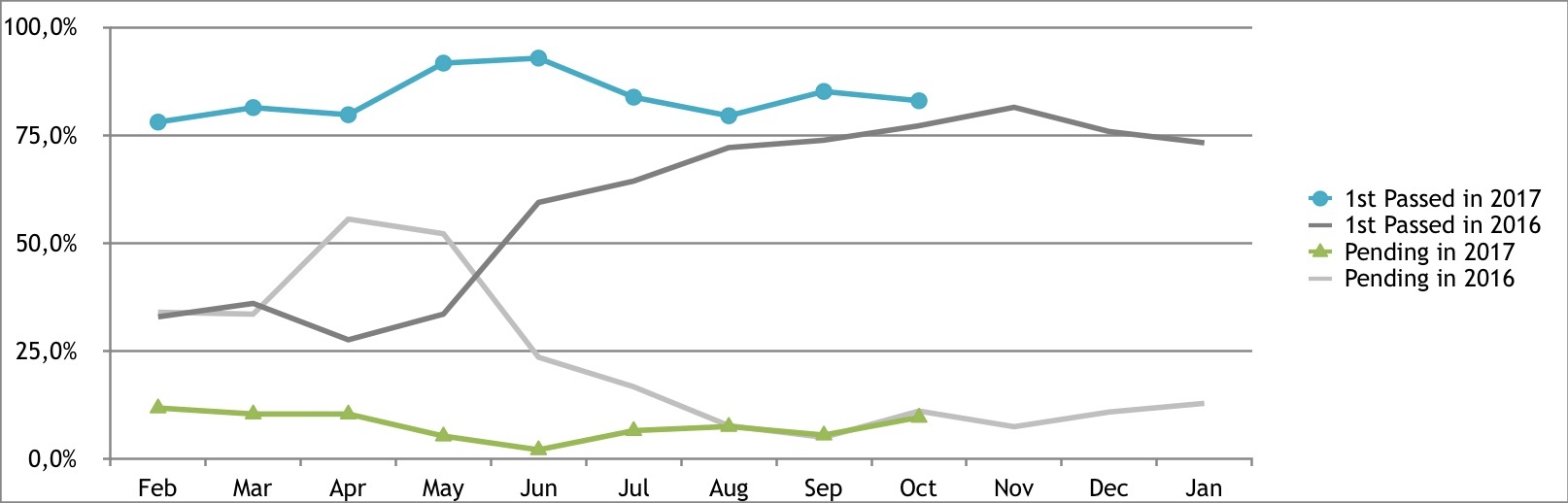
Als Teil des Plans zur kontinuierlichen Qualitätsverbesserung wurde nachdrücklich empfohlen, die Bestehens-, Durchfall- und Pendenzenquoten des Unternehmens konsequent zu überwachen, um den Grad der Verbesserung als direktes Ergebnis der Umsetzung des von API vorgeschlagenen Plans effektiv zu bewerten.

Was waren die Ergebnisse der Umsetzung dieses CQI-Plans?

Das Einzelhandelsunternehmen war mit der Einführung dieser Lösung sehr erfolgreich. Selbst in der Hochsaison blieb die Durchlaufquote meist über 80%. 


CQI-Grafik

Nachdem die Verbesserungsvorschläge umgesetzt worden waren, konnte der Einzelhändler seine Fehler- und Ausfallraten erheblich reduzieren. In einer Situation wie dieser ist es wichtig zu beachten, dass, obwohl das Problem nicht direkt mit der Produktion zusammenhing, sowohl das Qualitäts- als auch das Merchandising-Team die von API vorgeschlagenen Änderungen umsetzen mussten.


Wichtigste Erkenntnisse

Die Umsetzung einer Strategie zur kontinuierlichen Qualitätsverbesserung für Ihre Einzelhandelsmarke ist für die Effektivität von Produktion, Qualität und Management unerlässlich - ohne sie werden Sie auf dem ganzen Weg Probleme bekämpfen. Als Teil Ihrer Strategie müssen Sie diese fünf Fragen beantworten - wenn Sie das nicht tun, gehen Sie zurück und stellen Sie sicher, dass Sie es tun:

Wie hat sich Ihre CQI-Strategie verbessert?

       1. Ihre organisatorische Effizienz?
       2. Ihr Grad an Kundenzufriedenheit?
       3. Ihr Grad der Einhaltung der Vorschriften?
       4. Ihre Organisationskultur?
       5. Die Dokumentation Ihrer Organisation?

Wenn Sie diese Fragen nicht abschließend beantworten können, müssen Sie Ihre Strategie möglicherweise neu bewerten, um diese Fragen besser zu berücksichtigen.

Teilen Sie uns in den Kommentaren unten mit, wie Sie Ihre eigenen Qualitätssysteme verbessert haben

Sind Sie bereit, das präventive Qualitätsmanagement in Angriff zu nehmen?

Lesen Sie unseren Leitfaden für präventives Qualitätsmanagement, der Ihnen den Einstieg erleichtert

Kategorien
Blogs

Put In Place A CQI Strategy For The Festive Season

The festive season is fast approaching and retail stores the world over are seeing an influx of people coming through their doors to purchase essential and luxury items. This time of the year is a very busy (and lucrative) time for most retail businesses, but it also presents an increase in supply chain pressure and demand that can lead to unsatisfied customers if quality becomes an issue.

Quality should most certainly nicht be a seasonal prerequisite for your brand.

It’s of vital importance that you have a continuous quality improvement (CQI) strategy in place to ensure you have a road map for success to ensure that you deliver, even more so when your supply chain pressure is on.

In this blog post, we look at why you need an improvement strategy, and we will also touch on the seven quality management principles and how they serve as the path to better quality for you, all year round!

Why You Need A CQI Plan For Your Retail Brand;

A CQI plan is meant to form a road map to improving your production activities, which will positively impact your production outputs. It should be designed to take your retail brand through the process of monitoring, data collection and analysis as a part of your daily activities.  

So what Tools Are Commonly Used for improved quality processes?

These tools are not used in isolation of one another, and a lot of the time the tool you choose to select will be situation specific, so you may use a combination of the below mentioned tools;

  • Check Lists – This will need to be prepared ahead of time, and you should look at creating a template and update it regularly. It should be used to collect and analyse all kinds of data relating to your production procedures and operating systems.
  • Brainstorming – This enables a creative environment where ideas are shared in a large group. The key here is to ensure there is no judgment as this will hinder the creative process. The point is to uncover any hindrances to your production process, aCQI strategy and the quality management principles nd this tool should be inclusive of all levels of employees for creative and productive inputs.


  • Benchmarking – Oftentimes benchmarking against industry standards such as ISO 9001 is used in order to compare how your quality systems are lining up accordingly. You need not only benchmark against an industry standard, but if you wanted to you may also benchmark against your competitors.  
  • Root-Cause Analysis –  This is a continuous improvement strategy that is often adopted to get to the root cause of a problem and seeks to permanently eliminate that problem from ever recurring again. There are a number of techniques that can be used as a part of your RCA strategy, and it will be up to your unique situation as to what tool you select.

These tools are only a few of what’s in the arsenal of techniques that can be used to implement a sound improvement plan. You need not only select one tool, you can mix and match to ensure that you find what works best for you.

The 7 quality management principles integral to your CQI plan;

If you are successfully adopting a quality management system, which I shall be bold enough to say that you should be, then you will know that an improvement approach is integrated into each principle of the most popularly used Quality Management System – ISO 9001. So let’s dive into what these principles are;

QMP 1 – Customer focus; How well are you meeting and exceeding your customer’s expectations? Your brand will need to work towards sustained confidence from your customer base

QMP 2 –  Leadership; The creation of unity and purpose with the engagement of employees at all levels will be crucial to how well you are able to align your strategy, quality policies, and production processes to achieve quality objectives.

QMP 3 – Engagement of people; By involving all people at all levels of your organisation you will create opportunities to effectively and efficiently achieve your quality and production objectives.

A CQI strategy for Improved product quality

QMP 4 – Process approach; A consistent approach to your organisation’s interconnected systems and operations produces a set of production results; in understanding how your production results are achieved you are then able to optimise your systems accordingly, ultimately improving your production performance.

QMP 5 – Improvement; Continuous improvement is essential for your organisation to maintain exceptional levels of performance. An improvement focus and strategy allows you to react to changes more efficiently.

QMP 6 – Evidence-based decision making; Decision-making should always be based on evidence and data analysis, this approach is more likely to produce your desired results and outcomes.  

QMP 7 – Relationship management; Successful production of your household goods can often come down to the way in which you manage your relationship with your supplier. Let it be open, communicative and collaborative. This approach has had more success when it comes to that increase in retail supply chain pressures.

These principles are the underpinning guidelines of the ISO quality management systems. When applied correctly they are able to take you towards that continuous performance improvement approach for your entire supply chain.  

The Benefits of Adopting A CQI for your Retail Brand

There are a number of benefits of adopting a continuous quality improvement strategy for your retail brand, ones that should not be ignored if you are to remain a competitor in the retail marketplace.

  • Reducing the number of quality errors – It will help you analyse available data, identify any areas for improvement, or any already existing production problems which will in turn reduce the number of quality errors that arise in your supply chain.
  • You increase your supply chain adaptability – It will ensure that when problems are identified your supply chain knows and understands the changes it needs to make in order to optimise for supply chain efficiencies.
  • Increased productivity – It will enable you to identify existing or potential problem areas within your supply chain, and once identified, you will be able to implement the solution which will increase your productivity outputs.

Wichtigste Erkenntnisse

As the festive season has arrived and retail pressures are beginning to surmount to what seems like you will never get through it, rest on knowing that everything you have implemented up until now will work in your favour.

Your own continuous quality improvement strategy should include;

  • A variety of tools and techniques; such as brainstorming and checklists
  • You will also need to intimately understand the 7 quality management principles if you are to implement a successful strategy
  • If you are questioning why, don’t; there are production and quality benefits as well as those much needed bottom line benefits.

If you have not implemented a continuous quality improvement strategy before enlist the above knowledge in order to implement the appropriate quality management steps needed to ensure that only quality products reach your consumer; product defects and recalls are every retailers nightmare, with over 2000 children’s toys declared unsafe in the EU in 2016, but a successful strategy will make sure that Santa pays you a visit too.

What continuous quality improvement strategies have you implemented in the past that have proved full proof especially as we enter into the festive season?

WÜRDE IHR UNTERNEHMEN PROFITIEREN VON

OPTIMISED QA SYSTEMS?

SIMPLY CLICK BELOW FOR MORE ON DOING JUST THAT!

Kategorien
Blogs

Warum jedes Unternehmen ein Umweltaudit durchführen sollte

Die Herstellung im 21. Jahrhundert hat einige unangenehme Wahrheiten über die Art und Weise zutage gefördert, in der viele Einzelhandelsmarken ihre Produkte herstellen, angefangen bei der Menge der freigesetzten CO2-Emissionen bis hin zu der Art und Weise, in der Hersteller entsorgen Abfälle. Heutzutage ist die Umweltprüfung für Einzelhandelsmarken nicht obligatorisch, ist sie also überhaupt notwendig? 

Wir bei API sind der Meinung, dass ethische Marken am besten positioniert sind, um die steigenden Anforderungen der bewussten Verbraucher von heute zu erfüllen.

Das soziale und ökologische Ansehen Ihrer Marke spielt in den Herzen der Verbraucher auf der ganzen Welt eine größere Rolle als je zuvor. Wir haben einen visuellen Leitfaden erstellt, der Sie dabei unterstützt:

  • Was eine Umweltprüfung ist
  • Warum Sie ein UMS einführen sollten
  • Einhaltung der ISO 14001-Norm
  • Arten und Umfang von Umweltbetriebsprüfungen
  • Wesentliche Aktivitäten vor und nach der Prüfung 
  • Die wichtigsten Vorteile für Ihre Marke 

 Sehen Sie, warum eine Umwelt Qualitätsprüfung ist für Ihre Marke im Folgenden unerlässlich:

Umweltauditierung

Warum braucht Ihre Marke also ein Umweltaudit?

  • Sie gewährleistet die Einhaltung der Rechtsvorschriften
  • Es reduziert Ihre Umweltbelastung.
  • Es reduziert Ihren Wasser- und Energieverbrauch
  • Es hat positive Auswirkungen auf das Image Ihrer Marke und Ihr Endergebnis

Eine Prüfung wie diese hat folgende Auswirkungen Langfristige Vorteile für Ihre Einzelhandelsmarke sowie die Sicherung eines wettbewerbsfähigen Platzes auf dem Markt.

 Klicken Sie unten um mehr darüber zu erfahren, wie Sie noch heute mit Ihrer Prüfung beginnen können! 

de_DEGerman