


Herstellung und Lieferkettenbetrieb von Haushaltswaren sind oft anfällig für Verstöße gegen Vorschriften und Gesetze.
Angesichts der Geschwindigkeit, mit der sich die vielen komplexen Teile einer Lieferkette bewegen können, ist es kein Wunder, dass Einzelhändler, die ihren Lieferanten zu leicht vertrauen, in Schwierigkeiten geraten, wenn die Dinge nicht nach Plan laufen.
Der einzige Weg, diese Herausforderungen direkt anzugehen, ist die Durchführung einer Qualitätsprüfung.
Entdecken Sie hier unsere Checkliste für Qualitätsprüfungen in Fabriken, die sich mit Qualitätsmanagement sowie sozialer und ökologischer Compliance befasst.
Eine Prüfung der Fabrik Ihres Lieferanten wird durchgeführt, um sicherzustellen, dass Ihr Lieferant und die Betriebsabläufe seiner Fabrik in der Lage sind produzieren Sie Ihr Produkt zu Ihren erwarteten Qualitätsniveaussowie die Einhaltung der Vorschriften in Ihrem Zielmarkt gewährleisten.
Das ist aber nicht der einzige Grund…
Die Durchführung von Audits hilft auch dabei, die Risiken zu bewerten, die bei einem bestimmten Lieferanten bestehen können, und gibt Anhaltspunkte für wie Sie dieses Risiko managen könnenLetztendlich liegt die Entscheidung, mit einem bestimmten Lieferanten zusammenzuarbeiten, bei Ihnen, aber Ihre Entscheidung wird zumindest auf einer vertrauenswürdigen Risikobewertung mit einer vorgestellten Verbesserungsstrategie basieren.
Unsere Checkliste führt Sie durch eine kurze Bewertung, wie die Qualitätssysteme Ihres Lieferanten aussehen würden/sollten.
Wir werden 3 Hauptabschnitte in dieser Checkliste behandeln:
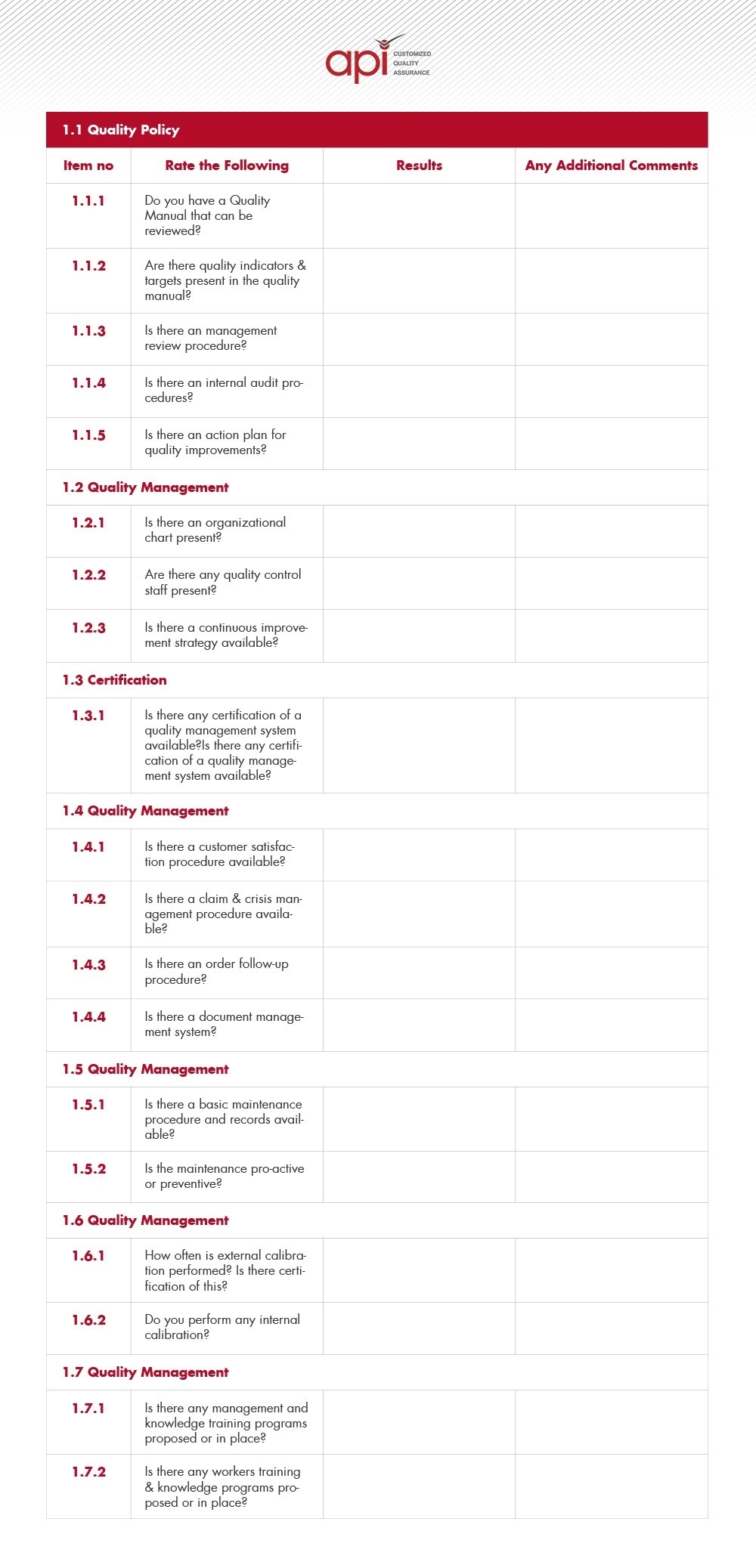 WORAUF SIE ACHTEN SOLLTEN:
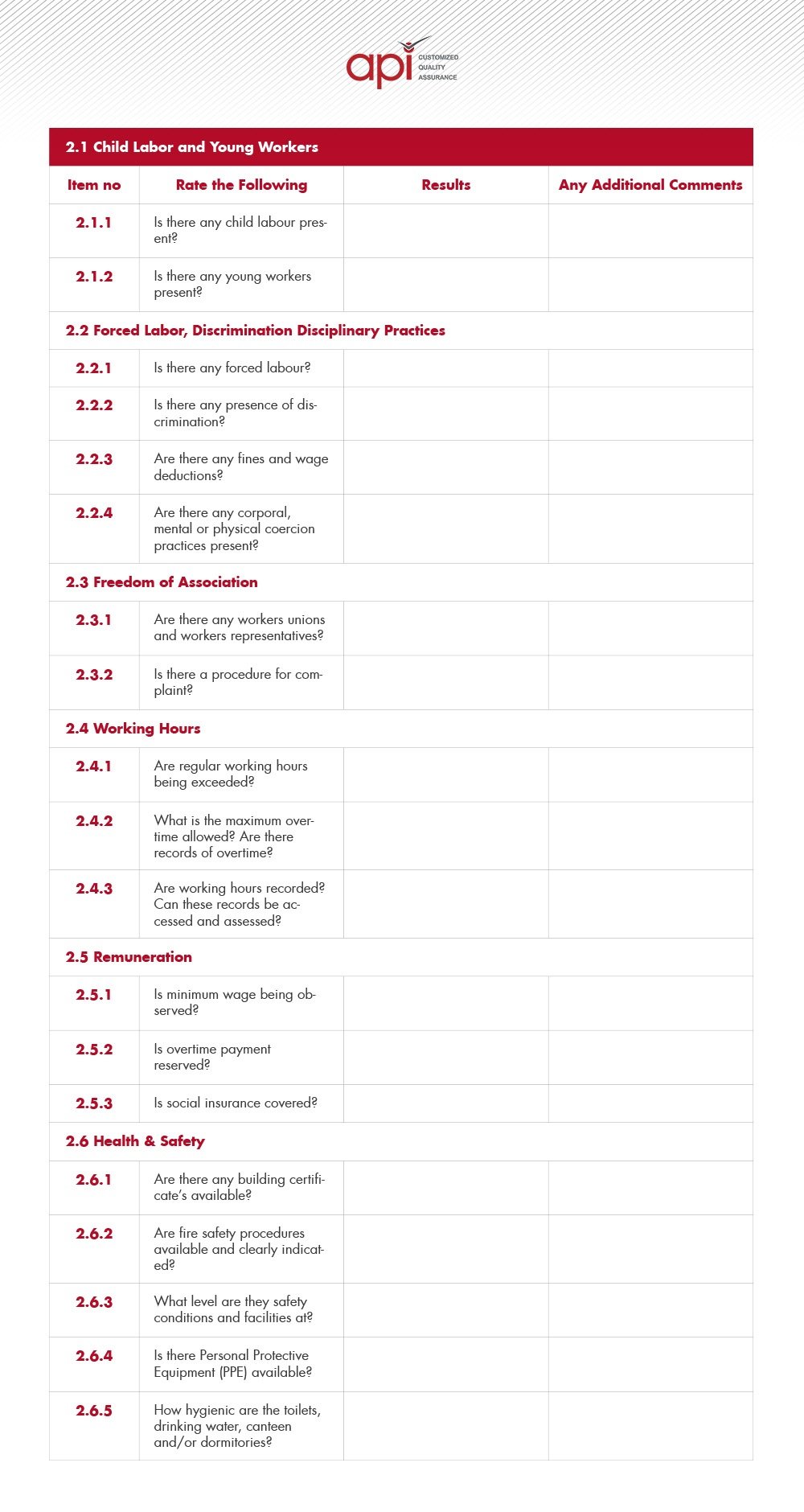
- Qualitätssicherung und technische Fragen
- Sozial- / Gesundheits- und Sicherheitsfragen
- Umweltprüfungsfragen
Wie funktioniert ein Qualitätsauditsystem mit Noten?
Für jeden Kontrollpunkt sollte die folgende Richtlinie verwendet werden; N/A – Checkpoint nicht verfügbar oder nicht ausgewertet. 0 – Schwerwiegende Nichteinhaltung – Fehlen von Verfahren oder Nachweis großer Abweichungen bei der Umsetzung – für diesen Kontrollpunkt wird eine Korrekturmaßnahme entworfen. 1 – Geringfügige Nichtkonformität – unvollständiges Verfahren oder Nachweis von Unstimmigkeiten in der Umsetzung – für diesen Kontrollpunkt wird eine Korrekturmaßnahme erarbeitet. 2 – Akzeptabel – Verfahren sind vorhanden und die Umsetzung ist akzeptabel, jedoch bestehen Verbesserungsmöglichkeiten – für diesen Kontrollpunkt kann eine Verbesserungsmöglichkeit konzipiert werden. 3 – Gut – Verfahren und Implementierung akzeptabel, keine Verbesserungsmöglichkeiten identifiziert. 4 – Bewährte Vorgehensweise – Das Werk hat Industriestandards (Best Practices) entwickelt und implementiert.Qualitätssicherung und technische Fragen
WORAUF SIE ACHTEN SOLLTEN:
- Qualitätsmanagementhandbuch und alle Verfahren weisen Revisionskontrolle (Genehmigungen und Daten), Änderungshistorie auf
- Produktsqualitätsertragsdaten, Probleme und entsprechende Verbesserungsmaßnahmen, Status von präventiven/korrigierenden/Audit-Ergebnissen
- Strategische und taktische Ziele, Vorgaben, Aktionspläne usw.
- Analyse von Feldfehlern, Inspektionsergebnissen, Ressourcenbedarf, internen Prüfungsergebnissen, Status von Korrekturmaßnahmen usw.
- Management-Review-Meetings, Zielsetzung, Leistungsmessung, interne Audits, Aktionspläne, Kundenbefragungen
- Mitarbeiterbeteiligungs-/Anerkennungsprogramm, Lean, Six Sigma, Kaizen, SPC, 5S, Kostensenkungsprogramm
- Korrekturmaßnahmen, Trenddiagramme, Besprechungsprotokolle, Analyse der Häufigkeit und Kosten von Nichtkonformitäten
- Management-Review-Meetings und Korrekturmaßnahmen
- Suchen Sie nach der Verwendung von Trainingshilfen und Arbeitsanleitungen an Arbeitsplätzen
- Qualifikationsnachweise, Zertifizierungsverlauf
- Aufzeichnungen von Tests, Aufzeichnungen zur Produktionsqualität, Audit-Aufzeichnungen, Befragung von Mitarbeitern zur Validierung von Schulungsaufzeichnungen
- Stellenbeschreibungen, Kompetenzbewertung, Schulungsaufzeichnungen, Schulungshandbücher
Was, wenn meine Qualitätsbewertung unter dem Standard liegt?
API ist in der Lage seine QA-Lösungen anpassen Basierend auf Ihren spezifischen Bedürfnissen und Anforderungen. Die API liefert dem Lieferanten Informationen darüber, wie er verschiedene Dinge in einer Fabrik verbessern kann. Diese Informationen werden an Sie, den Einzelhändler, zurückgemeldet, wo Sie Einblick in Ihren potenziellen Lieferanten und dessen Fabrikabläufe erhalten, um die Einhaltung aller Vorschriften sicherzustellen.SOZIALE FRAGEN / GESUNDHEIT UND SICHERHEIT
Worauf Sie achten sollten:
- Verfahren für Schulung und Kommunikation und Beteiligung
- Notfallvorsorge- und Reaktionsplan, Überwachung und Leistungsmessung
- Richtlinien und Verfahren, Trenddiagramme für Gesundheit und Sicherheit, Historie der Verbesserungen der Unfallrate
- Sitzungsprotokolle des Sicherheitsausschusses oder der Sicherheitsgruppe, Unfalluntersuchungsberichte, Sicherheitsauditberichte
Umweltprüfungsfragen
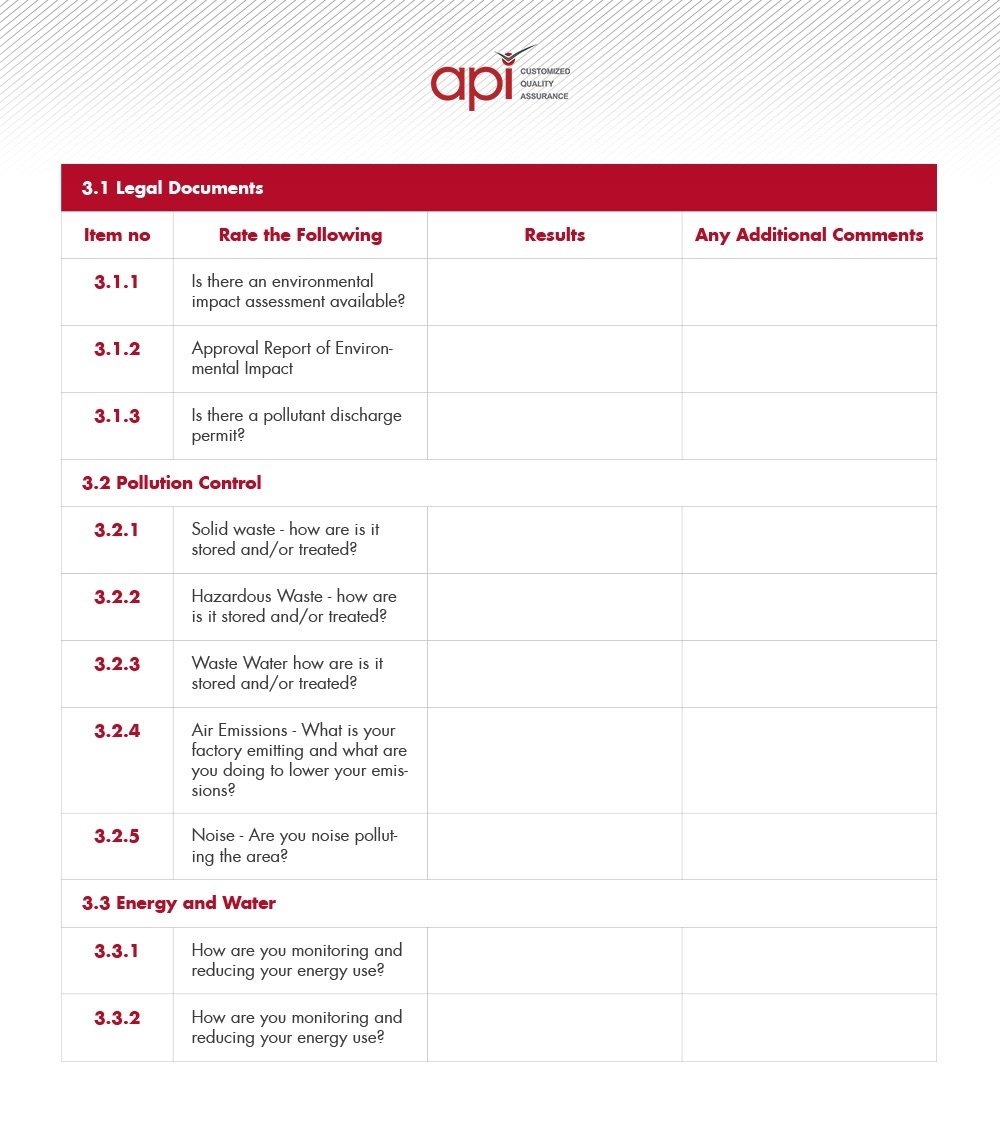
Worauf Sie achten sollten:
- Umweltpolitik-Erklärung Dokument
- Aufzeichnungen über behördliche/staatliche Inspektionen, Verfahren zur Messung und Überwachung umweltsensibler Tätigkeiten
- Aufzeichnungen über Einkäufe, Abfallströme und Verbrauch; Bestandsverwaltungsprozeduren
- Materialien, die keine Gefahrstoffe enthalten (RoHS/WEEE-konform) in der Produktion, biologisch abbaubare Materialien, Mehrwegbehälter oder -verpackungen, Recyclingprogramm, Verpackungsmaterialien aus recycelten Materialien
Wichtigste Erkenntnisse
Eine Checkliste für Qualitätsaudits in der Fertigung ermöglicht Ihnen Einblicke in die Qualitätskontrollprozesse und Fertigungskapazitäten Ihrer Lieferanten, deren Stärken und Schwächen. Dies befähigt Sie, schwächere Prozesse bei Bedarf zu stärken. Eine Checkliste für Qualitätsaudits hilft sicherzustellen:- Ihre Qualitätssysteme sind auf dem neuesten Stand, organisiert und gut dokumentiert.
- Vertrauen in die Auswahl Ihres Lieferanten auf Basis von Checklisten-Erkenntnissen.
- Vertrauen in die Qualität des hergestellten Produkts.
- Bestätigung, dass die Compliance-Standards von Ihrem Lieferanten aktiv erfüllt werden.
 Gemäß den Richtlinien der ISO 9001:2015 sind sie grob in acht Abschnitte unterteilt, von denen fünf für das QMS Ihres Unternehmens verpflichtend sind;
 Das
Das  Eine Situation wie die oben beschriebene wirft kritische Fragen auf: Erstens hätten die verwendeten Chemikalien vermutlich nicht den internationalen Vorschriften entsprochen. Zweitens fördert das Verschweigen von Verstößen gegenüber Prüfern illegale Produktionsprozesse. Drittens stellt sich die Frage: Wie wirken sich diese Stoffe auf die Arbeiter aus und wie werden sie gelagert oder entsorgt?
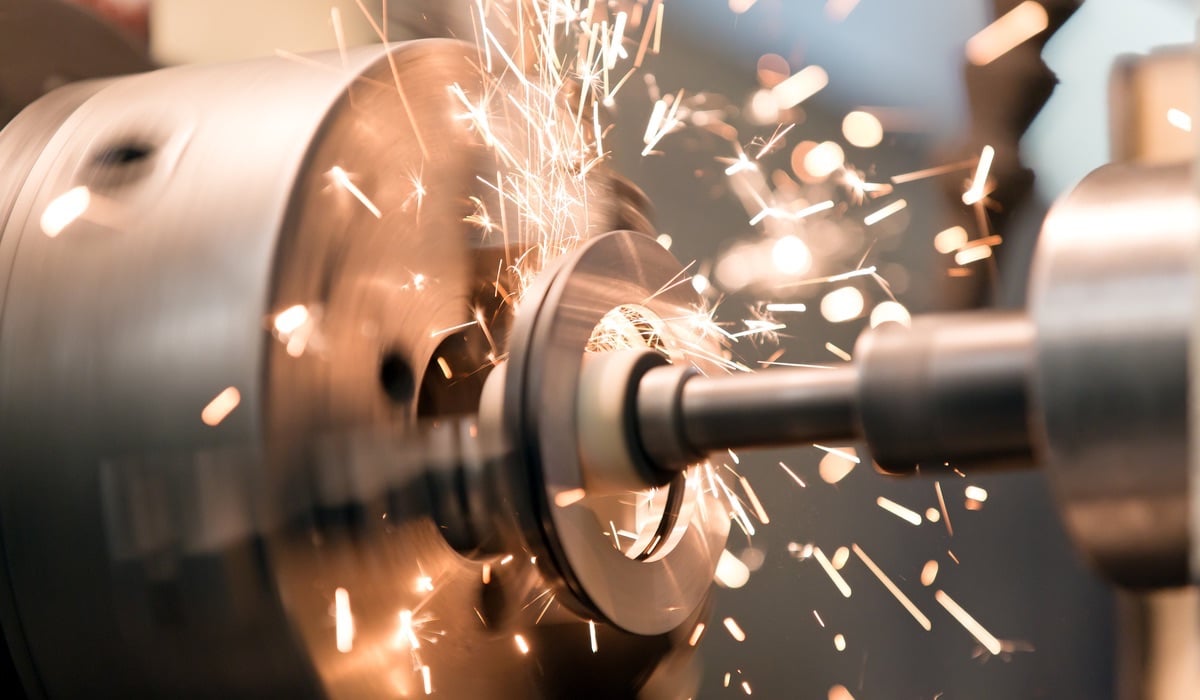 Viele Fabriken haben mit Ressourcenengpässen und finanziellen Herausforderungen zu kämpfen. Das führt oft dazu, dass verfügbare Mittel vorrangig in die Beschaffung von Rohstoffen für die nächste Produktion fließen, anstatt in die notwendige Wartung und Instandhaltung ihrer Maschinen und Anlagen investiert zu werden. Dies hat zur Folge, dass Maschinen bei einer Inspektion durch einen Auditor oft nicht korrekt kalibriert oder beispielsweise mit zu viel Öl geschmiert sind. Letzteres kann zu Produktkontaminationen führen und Ihre Marke in eine riskante Lage bringen. Alles andere als ideal.
 Falls dies während Ihres Audit-Prozesses entdeckt wird, wird empfohlen, sich stattdessen einen anderen Lieferanten zu suchen. Es gibt keinerlei Grundlage, auf der dies akzeptabel wäre.
Gefährliche Arbeitsbedingungen – Gefährliche und unsichere Arbeitsbedingungen sind in vielen Fabriken in Drittweltländern weltweit keine Seltenheit und führen oft zum Scheitern technischer Fabrikaudits. Dinge wie fehlerhafte persönliche Schutzausrüstung (PSA), abgelaufene Feuerlöscher, fehlende deutlich gekennzeichnete Notausgangsschilder, nicht funktionstüchtige Ausgänge, kalibrierungsbedürftige Maschinen oder fehlende Sicherheitsvorrichtungen an schweren Maschinen können zum Scheitern des Audits führen. Diese Sicherheitsverstöße sind für Ihren Lieferanten leicht zu beheben und zu lösen. Bitte bedenken Sie dies beim Erhalt der Auditergebnisse, da Sie oft Zeit für Korrekturmaßnahmen seitens Ihres Lieferanten einplanen müssen.
Falls dies während Ihres Audit-Prozesses entdeckt wird, wird empfohlen, sich stattdessen einen anderen Lieferanten zu suchen. Es gibt keinerlei Grundlage, auf der dies akzeptabel wäre.
Gefährliche Arbeitsbedingungen – Gefährliche und unsichere Arbeitsbedingungen sind in vielen Fabriken in Drittweltländern weltweit keine Seltenheit und führen oft zum Scheitern technischer Fabrikaudits. Dinge wie fehlerhafte persönliche Schutzausrüstung (PSA), abgelaufene Feuerlöscher, fehlende deutlich gekennzeichnete Notausgangsschilder, nicht funktionstüchtige Ausgänge, kalibrierungsbedürftige Maschinen oder fehlende Sicherheitsvorrichtungen an schweren Maschinen können zum Scheitern des Audits führen. Diese Sicherheitsverstöße sind für Ihren Lieferanten leicht zu beheben und zu lösen. Bitte bedenken Sie dies beim Erhalt der Auditergebnisse, da Sie oft Zeit für Korrekturmaßnahmen seitens Ihres Lieferanten einplanen müssen.


