8 Steps To Limit Risk in Your Toy Testing Procedures

Kategorien
Blogs

8 Steps To Limit Risk in Your Toy Testing Procedures

Production competitiveness has become so high in countries like China that suppliers often find ways to cut corners in order to save costs, often putting the quality and safety of your toys, and their extremely vulnerable user base, in jeopardy. When it comes to upholding product safety and compliance, no other consumer goods product is more highly regulated than toys. However, despite stringent requirements and mandatory safety toy testing around the world, unsafe children’s products continue to reach the market today.

As recent as 2017, many importers of the popular ‘fidget spinners’ were found to be selling products in the US that contained alarmingly high levels of mercury and lead leading to mass product recalls and damaged brand reputations.

Non-compliance in the toy industry present a myriad of dangers for brands that can lead to heavy financial losses, unnecessary recalls, and a damaged reputation. It’s reasons like these that quality managers constantly live in fear of quality issues with toys, but it doesn’t have to be this way with strict compliance regulations and proper toy testing procedures.

Improving Your Existing Toy Quality Assurance Processes
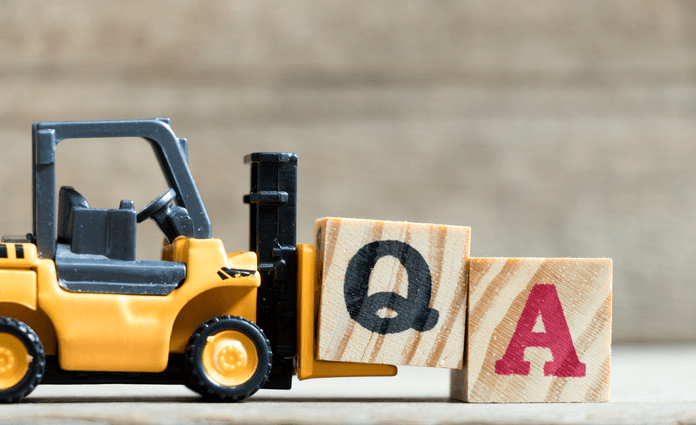
Toy quality assurance and toy testing As a quality manager who is responsible for producing toys you know that where quality is concerned the stakes are sky-high. You need to know that toys adhere to the demands of every test they might face when being exported globally to markets with different demands. At API, our quality inspectors and laboratories follow a comprehensive set of 8 toy quality testing steps (built through decades of experience) that helps quality managers effectively manage quality right from the outset. This article will take a brief look at the global toy testing standards themselves, and the step by step procedures API follows to help minimise the risk of quality issues sneaking through and danger of recalls happening, as well as protecting your supply chain and ensuring customer safety and satisfaction.

API’s 8 Step Toy Quality Assurance Process

Click here to watch our comprehensive toy testing process video

1. Preventing Mechanical Risks In The Design Stage

Product Design Specification (PDS) serves as the guideline for understanding the various problems identified early on in the design stage. Possibilities need to be investigated and filtered through various criteria laid out in the PDS to be set forth as practical, viable solutions that require further evaluation.

Through comprehensive design evaluation and hazard assessments, API help you identify potentially dangerous design features and mechanical risks from the outset, helping you save on costly redesign and engineering resources related to product modification, and more serious quality and safety issues later down the line. Furthermore, the evaluation also helps to identify all of the necessary tests that you would need to submit your product to.

2. Preventing Toxic Risks With Raw Materials Testing

Raw material toy testing to ensure toy quality Raw material quality control is paramount in helping to prevent product failure and ensuring a consistent level of quality that you and your customers expect. Making sure that players in your supply chain are continuously subjected to testing of raw materials being used in your toy production, or when they decide to switch suppliers, verifies that the materials are at the level of quality you’re paying for and that no toxic elements such as lead and cadmium finding their way into your finished product. Complying with chemical restrictions in raw materials laid out by the EU and US chemical content regulations such as REACH, EN71 and CPSIA starts with chemical testing. API’s laboratories help to identify toxic elements that can aid you in defining a list of approved materials to be used in the toy production process early on, ensuring your products comply with the limits set for safe use now and into the future.

3. Evaluating Toy Safety Before Mass-Production Through Prototype Testing

The practical solutions and tests identified in the design evaluation stage are embodied in the form of a prototype. The aesthetics, functionality, mechanical aspects, as well as the potential manufacturing issues are all considered, and these aspects need to be thoroughly tested. API’s technical experts are part of technical committees that discuss and write standards for toys, and can ensure you are up to date on the latest developments and discussions on regulation before new regulations are officially published. API’s Hong Kong Laboratory is accredited by HOKLAS to perform laboratory testing for the European, American and Australasian markets. The three main areas of testing are:

1) ‘Mechanical and Physical Properties’

  • Drop Test
  • Compression Test
  • Torque Test
  • Tension Test
  • Flexure Test
  • Bite Test

2) ‘Flammability’

  • Conducted on  toys to examine their flammability characteristics

3) ‘Restricted Substances – Chemical Testing’

  • Lead content test
  • Cadmium content test
  • Phthalate content test
  • Other applicable chemical tests

Prototype testing helps to identify the shortcomings of initial toy design and how they will hold up in real use case scenarios.
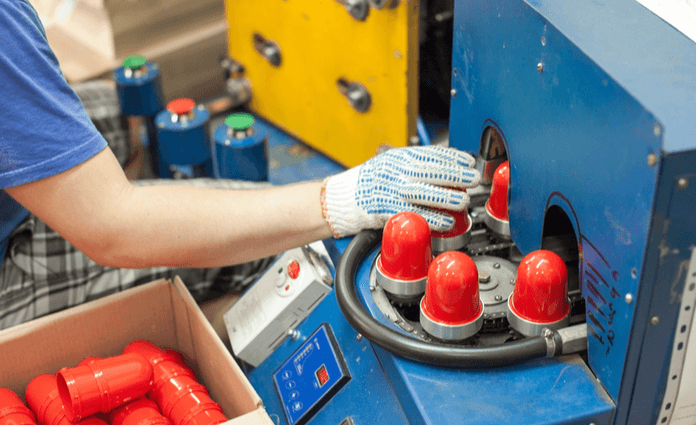
Toy testing at a factory

Evaluate your Factory

Perform a quality management audit with specific points related to toys, such as ensuring that sharp tool equipment and a broken needle policy has been used and properly calibrated. It is also important to ensure that your factory has also established traceability system for identification and tracking materials through production. Through this testing process, API helps you to further refine the product design and remove any obstacles that may detract from the original concept by making it safer for use, and ultimately, preventing the need for costly recalls well before the products hit the production line. On top of this testing process, API are also entitled to issue certificates of conformity as a ‘Notified Body’.

4. Ensuring Compliance Through All Inclusive Compliance Software

Whether your brand is directly or indirectly affected by Directive 2009/48/EC, it is of vital importance to ensure the collection and gathering of all the necessary technical documentation needed from your manufacturer to demonstrate the conformity of the product to the applicable requirements of the TSD.

It is up to your product manufacturer to draw up this technical documentation, or request it from relevant parties, and keep it and the EC declaration of conformity for a period of 10 years after the toy has been placed on the market. It is up to you as the importer to ensure that the manufacturer fulfills this duty, that the toy bears the required conformity marking, and is accompanied by the required technical documents. These documents must be made available to national surveillance authorities upon request for the same period of time to demonstrate conformity of the toy. Technical documentation to be drawn up and collected must be presented in one of the official languages in the EU and shall include: 1. Description of the design and manufacture 2. List of components and materials 3. Safety data sheets 4. Safety assessments 5. Conformity assessment procedure 6. EC declaration of conformity 7. Addresses of manufacture and storage 8. Documents submitted to a Notified Body 9. Test reports 10. Conformity of series production details 11. EC-type examination details 12. Conformity of series production details Today, many manufacturers, importers and retailers are still operating on outdated systems like collecting multiple spreadsheets and files, leading to unreliable data and outdated documentation, which creates an almost insurmountable task of trying to accurately trace and maintain the information for each product reference. API’s Technical Compliance File (TCF) solution is a one process procedure that consists of 5 steps to ensure total product compliance: 1. Expert intervention to define the scope of compliance 2. Document collection 3. Document review 4. TCF report issuance 5. Record keeping and database integration (all available online 24/7)
A solution like this promises increased visibility and transparency into your supply chain that will prove invaluable to optimizing your current quality systems, allowing you the time to mitigate any potential quality risks as and when they become apparent.

5. Monitoring Production Consistency With DUPRO/Inline Inspection

The production line is inspected when at least 25% of the order has been completed. The DUPRO verifies that initial discrepancies found out during an Initial Production Check (IPC) have been rectified.

Each stage of the assembly process will be analysed and samples of the goods in progress will be collected and checked. This means that any impending problem can be identified on-site and addressed at the very stage where it is occurring. By checking unfinished products during production and assessing if AQL standards are being met, API assures that corrective actions can be taken in order to assure the quality of your toys moving forward.

6. Checking and Classifying Non-Conformities Right Before Shipping

API conduct both Final Random Inspections and Loading Check inspections to ensure your products conform and that they are being shipped in a safe and secure manner.

Letzte Stichprobenkontrolle

A FRI (Final Random Inspection) is basically an acceptance sampling inspection performed prior to shipment. The Sampling is derived from the inspection level requested in accordance with MIL-STD-105E (ISO2859-1). API is also certified HKIAS which endorses third-party inspection based on an in-house procedure. The sampled goods are then checked piece by piece and the non-conformities found, if any, will be classified into three categories (critical, major and minor). The selection of an AQL (Acceptable Quality Level) per type of non-conformities will determine the acceptance or rejection of the goods.

Sample Collection For Lab Testing

Products randomly picked from mass production for pre-shipment testing which can occur in DuPro or FRI. The test checks the alignment of product quality from mass production and pre-production.

Pre-shipment Testing

The aim of pre-shipment testing is to verify the consistency of the production quality with a focus on critical aspects of the toys, without having to perform the full test again. API provides tailor-made testing solutions based on client requirements to ensure quality is maintained at this stage of the process. Loading check inspections to ensure toy quality
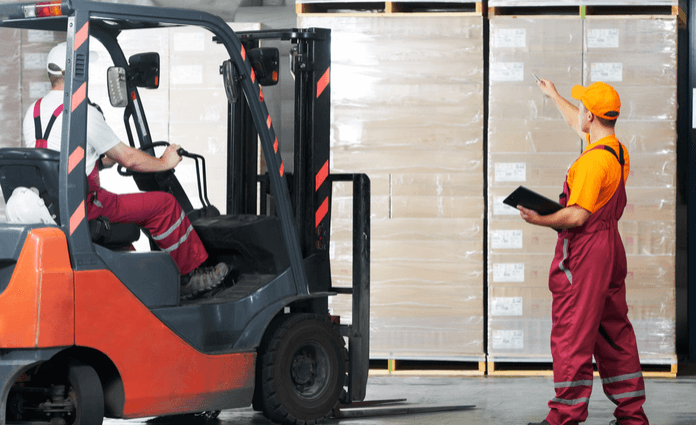
Loading Check Inspections

The loading check serves as a way to control container quantity and to adequately manage stuffing arrangement. API performs inspections of packed goods as they are being loaded into the shipping container to ensure the correct products are loaded, in a secure and safe manner.

7. Taking Quality Assurance Full Cycle With Reorders and Random Sampling

Sample collection for testing during the reorder process is a concept of a highly effective continuous quality improvement monitoring program, helping you determine the frequency of testing per supplier performance. This policy sends a clear message to suppliers that you’re watching their product quality closely, and that any unauthorized product/material change is strictly prohibited, and at the same time encourages them to improve.

8. Business Intelligence Tools

In order to the determine the frequency of sampling per factory, you’ll need a comprehensive vendor scorecard. API have developed its own platform for you that records quality data of each factory’s test and defect levels during inspection.

It also provides you with a comprehensive data analysis on factory performance across your own suppliers and across others in our database that you may not currently be working with. The database record does not simply include just the pass or failure of the product test/ inspection, but also a record and classification of each defect. Through this database we’re able to point out top defects recorded per factory and compare your own suppliers against others in the industry.


Kategorien
Blogs

5 Global Sourcing Challenges for Hardlines in 2018

Procurement used to manage vendors and negotiate costs. In today’s global sourcing landscape, it’s about so much more; it’s about effectively managing risk, ensuring sustainability, all to the ends of creating a strategic competitive advantage for your brand.

The key to this progression?

Technology.

Technology has been a lead disruptor in many industries. It has enabled a more visible supply chains calling for more effective ways of managing areas of risk and sustainability.

Advancement in this industry comes with its own unique set of challenges, ones that can only be met with innovative strategies, preparation and the adoption of technology to enhance your capabilities.   

As we move into 2018, we move into a new year with new possibilities and new heights to be achieved. But before then, what does the state of retail look like today?

The Current State Of Retail

Over the last couple of years we have seen the shift towards omnichannel retailing, where there is a demand for product to get to the end-user faster than ever before.

Amazon has been leading the charge in this area with their online purchasing systems and same day delivery options. This increase in pace has lead to an increase in pressure on retail supply chains, and that is of course not without its own challenges.

Die state of retail research report states that the top three experienced retail supply chain challenges for 2017 are: handling promotions, better collaboration with suppliers and availability without increasing stockholding.

This can be achieved through the automation of your demand forecasting and accurate centralised data tracking will be key as you look to overcoming this year’s challenges.

Successfully addressing your current challenges, lays the foundation for a competitive position in the marketplace with systems already in place to handle the challenges that the new year has to offer.

The future of global sourcing holds as many opportunities as it does new, more complex challenges, a few of which we will take a look at it below.

What global sourcing and procurement challenges can your hardlines retail supply chain expect to face in the future?

Risk management for global sourcing

I list but five of the predicted challenges to arise over the next 10 years:

  • Risk – Over the next 10 years we will see a shift in the way that risk is approached. Currently the risk management approach taken by most quality and procurement professionals has to do mainly with product and regulation compliance. It is predicted that a more holistic approach to handling risk will be adopted.This is predicted to be accomplished through defining new metrics and data points for a fuller, more defined picture, enabling the ability to plan and address risk in a way that has not successfully been accomplished before.  
  • Nachhaltigkeit – The cost of sustainable supply chains has always been a primary factor for not adopting sustainable approaches to business. The future sees that the role of procurement will move beyond that, and look to creating and sustaining social value. This point cannot go without mention that within the next 10 years we will see the largest sector of our workforce being filled with millenials, who care about sustainable and economic growth. It is predicted that there will be less exploitation of resources with a stronger use and reuse cyclical economy.
  • Collaboration – Collaborative outsourcing will be key to managing the array of everyday supply chain complexities. This will be based on mutual interest and trust leading to a mutually beneficial outcome. In 10 years time, the complexities you are currently experiencing will need to increase as you endeavour to manage multiple vendors at one time. If you are collaborating and building successful relationships with your suppliers, then this will be an easier transition for you.
  • Transparency – Much of the supply chain has nothing to do with the end-user of your product, but with the dawn of social media your role as a quality or procurement professional may need to. The era of social media has brought about transparency like no other, increasing the spotlight on retail brands and their supply chain operations. You will need to ensure that your entire supply chain adopts a “social” mindset which will create a business model that has the brands image at the fore.
  • Information – We are in the age of big data, the success of your supply chain relies on it. You will need to embrace big data through advanced data mining and analysis. We are increasingly finding ourselves in a world driven by data, and this will only increase over time with more access to real-time data tracking and updates. The key is to begin planning for this. Start asking yourself what your data capacity currently is, look at your own data and begin mapping how you will embrace the coming of a bigger data age.  

So, how will these challenges impact you?

So while you are still in the process of building systems to deal with your 2017 challenges as you move into a busy 2018 season, the quality systems you put in place today will form the foundation, the very building blocks of how you are to manage the above mentioned challenges as we journey towards to the future.

Think of it as a road map allowing you to effectively plan for the future.  

The above global sourcing challenges increase your level of supply chain transparency, a holistic approach to managing your risk, but each one of these challenges requires technology to optimise the current and predicted supply chain pace.

The adoption of new technology will mean that more data will be available for analysis, allowing a lot more insight, visibility and transparency into your operations. The more data you have the more effectively you can produce products of the highest quality, and the better you can identify risk early on.

Wichtigste Erkenntnisse

After delving into some of the top challenges that retailers came up against in 2017 and as you seek to efficiently plan for 2018, the key will be to improve your current operating systems through clever, more advanced technologies and strategic planning.

So let’s look at some ways that you can begin this process;

  • Automate your forecasting processes – There are technologies and systems that you can adopt to ease this process for your brand. You can use the well reviewed SAS demand forecasting software to help you solve your forecasting troubles; “the combined power of automation, analytics and workflow, you can generate the most unbiased and accurate large-scale demand forecasts.” Resistance to this will only set you back, as your competitors will be doing everything to embrace growth. In adopting technology to automate your forecasting process you will be saving yourself time, a resource that can be used elsewhere.Data tracking for better global sourcing.jpg
  • Data tracking – For store stock levels, online stocks, current distribution centre stocks, predicted future stock levels in distribution centres, finished goods in transit, inventory being shipped from freight forwarders etc. Accuracy in this regard is key and technology can provide that, and do away with human controlled data entries.
  •  
  • Supplier collaboration – Fostering a culture of supplier collaboration will have long term benefits for your brand. While we have all sorts of technology that can be used to aid communication with your supplier, it is often the tried and tested face to face experience that truly allows for an effective and mutually beneficial relationship that is collaborative in nature.

Adopting new technologies and strategies, while you may be resistant at first, will only be if benefit to the optimisation of your supply chain operations, resulting in bottom line benefits for your brand.  

Facing supply chain challenges head on is not easy, but it will require your leadership to embrace the challenge that lies ahead and grasp the opportunity for learning, in order to create a well run and competitive supply chain for your brand.

Let us know in the comments section if you are currently facing these challenges and what you have done to address them?

Kategorien
Blogs

Humans, Robots & Supply Chain Automation

The rise of things like Blockchain, IoT (internet of things), cryptocurrencies and robots and automation have all been defining disruptors for the retail supply chain over the last few years.

How are supply chains across the globe currently being impacted by the rise of these disruptors?

Are human jobs at risk?

How can your business adapt to utilise these new technologies? 

Answers to all of these questions and more as we take a look into the ‘Four Industrial Revolution’ of modern-day commerce.

The State Of Automation And Its Role In The Retail Supply Chain

The Fourth Industrial Revolution and the emergence of big data, automation, robots and AI have created disruption in the supply chain for many retailers today.

While many retailers have been slow to adapt to the age of digitisation, they have adopted advanced software that has been able to provide them with operational efficiencies and increased data visibility. What I mean by this is that many retail brands have slowly shifted from the age-old manual entry excel spreadsheets to software that can provide accurate, real-time data that is visible to all of their supply chain stakeholders.

So this is where the majority of SME’s (Small, Medium Enterprises) find themselves. 

But…

A rapidly changing, technologically driven retail landscape means that each day an increasing number of robots and AI are integrating themselves into the global retail supply chain operations.

What Supply Chain Operations Are Integrating Robotics?

In understanding what supply chain operations global supply chains are currently integrating with robotics, you can start to imagine how you could begin to digitize your supply chain operations. So let’s dive in;

Warehousing Management – The introduction of robots and wearable technology has been introduced into warehouse management activities allowing for greater efficiencies, minimizing the likelihood of human error.

So what does this look like? 

Amazon is a prime example of automating some of their warehouse activities. They adopted the Kiva system which cost $775 million to put in place. This Kiva system is made of robots that place and stack products all over the warehouse, creating system efficiencies for Amazon as well as reducing overhead expenses. Warehouse management and the retail supply chain

Whilst this is a ghastly amount and likely very unaffordable if you are an SME (Small, Medium Enterprises), there are entry-level robots that are cheaper and can be used to create this kind of efficiency for your operations. The cheaper Baxter robot has an approximated lifespan of about three years and, costs approximately $25,000 is able to work over 2000 hours straight in a plastic factory.

This, as you know, is not a possibility within the human workforce as it is in violation with the social compliance standards as laid out by the SA8000. The level of production efficiencies that can be achieved through automated process are definitely worth your time in research.      

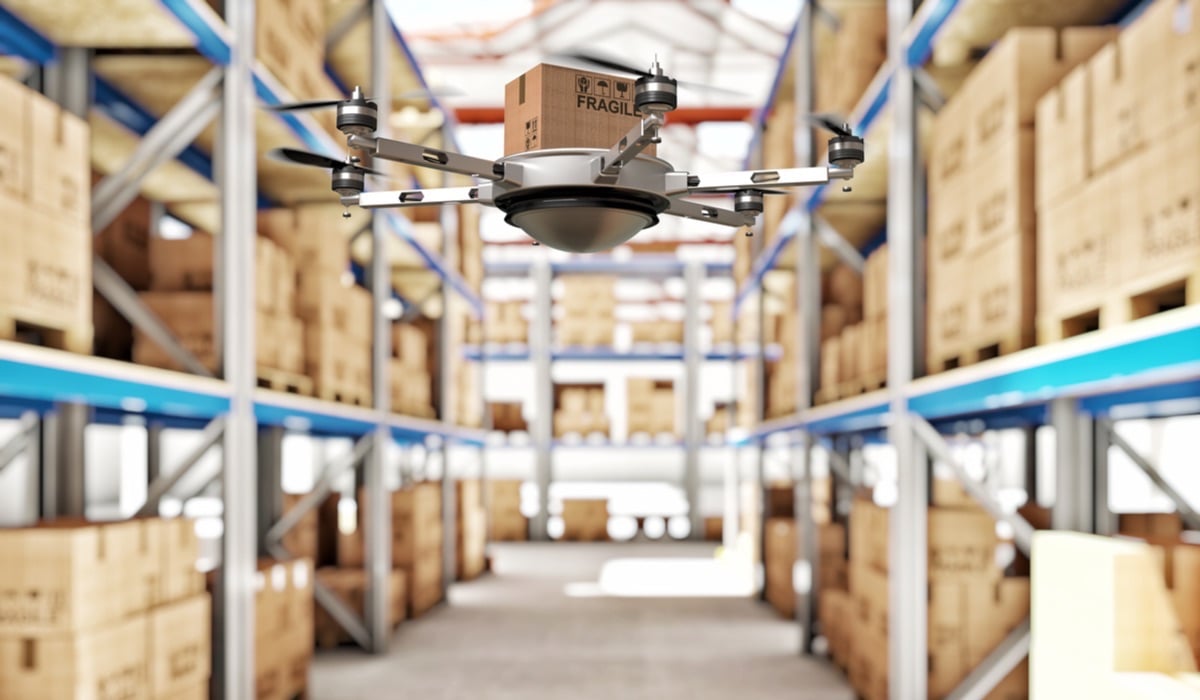
Inventory Management – In June 2016, Walmart began testing the use of drones for better inventory management. Walmart said that it could take up to a month for its inventory to be checked manually, but takes only 24 hours with the use of a drone. The drone flies around the warehouse, scans every items’ barcode, allows for real time data insight and is also able to quickly locate any misplaced items. This not only makes for an efficient inventory management system, but also a well managed warehouse.

The automation of the simpler routine warehouse and inventory systems such as stacking/moving stock around and labeling boxes as per specifications should free up your labour force to spend more time and resources into optimizing your supply chain and its operations for further enhancements and innovation. Robotics and automation should be seen as collaborative for more enhanced and optimised operating systems.   

 These are only two of the examples of where automated robots and technological advancements are currently being applied to supply chain activities, but they are certainly not the only areas that are being technologically transformed. 

Last year the world saw Amazon make the very first drone delivery, an exciting technological advancement in the area of delivery and transportation. This, however also indicates the rapid pace at which retail is moving and transforming.

In order for you to keep up with the likes of a global retailer like Amazon or Walmart, you will need to begin planning for the digitisation of your supply chain. 

So the big question then…

Are Robots And Automation Taking Human Jobs Away?

The number one question much of the retail labour force is asking “Will robots be taking away our human jobs?”

There is absolutely no doubt that with the rise of automated robots and AI that there will be a reduction in the number of labour needed in your retail supply chain;

The production line – Robots can work through the night, doing away with overtime, overworked and underpaid working conditions that often result in social compliance violations.

Automated robots improve the efficiency of the production line, they are able to produce products at a much faster rate than is ever achieved automation and bots in the retail supply chainthrough human labour.

Warehouse and inventory management – Stock can be moved around and stacked up accordingly, inventory can be managed through the flight of a drone with real-time data updates and the ability to trace misplaced inventory. This all helps to create an optimised warehouse and provides near perfect insight into inventory enabling, better stock control and demand forecasting.  

While at this point you may think that I have painted the picture of a robotic, automated retail supply chain, this is not true.

Human labour is still very much needed.

Let me tell you why.

1. Production and supply chain automation is expensive. The initial start up costs may be too much for many smaller retail brands.

2. Robots will need maintenance and calibration – This may require additional training for your current labour force, but this should also be seen as an opportunity in the market for the employment of a higher skilled labour force.

Humans are necessary for the running of your supply chain. “No matter how well encoded your robots are, technology is not advanced enough for the appropriation of human judgment.”  

According to Brandon White of Kenco, “The best solution to introducing AI innovation into the supply chain is a “hybrid” of humans and AI technology working alongside one another.” Adopt an optimistic perspective – robots and automation should enhance productivity and efficiency.

How?

Collaboration. Collaboration with machinery is absolutely necessary to create an efficient technologically advanced supply chain.  

Wichtigste Erkenntnisse

So, while robots and AI certainly have a place in the supply chain, humans are still essential for every aspect of the supply chain. However, the current jobs of your existing labour force will have to change to accomodate the age of technology and the efficiencies that it presents.

You will essentially need a higher skilled workforce to work in collaboration with the automation technology that you seek to adopt. You will need people who can calibrate and code higher tech machinery, and you will also need more leadership and HR roles.

You may or may not be feeling the pressure to adopt AI automation into your supply chain, but the reality is, it’s on the horizon. Your customer demands more of you and more of your supply chain. The question is, what are you doing to meet their demands? As we move into the future, your comfort zone may need to be left behind.

Let us know in the comments section how automation, robotics or AI have affected your supply chain. 

avoid unnecessary supply chain complexities with our guide to preventive quality management

Kategorien
Blogs

Fallstudie: CQI-Strategie (kontinuierliche Qualitätsverbesserung)

Eine CQI-Strategie sollte Ihnen einen Fahrplan zur Verbesserung Ihrer Lieferkettenaktivitäten an die Hand geben. Sie sollte so konzipiert sein, dass sie Ihre Einzelhandelsmarke durch den Prozess der Datenerfassung, der Datenanalyse und eines kontinuierlichen Zyklus der Überwachung von Aktivitäten zur Effizienzsteigerung führt.1 In diesem Blogbeitrag werfen wir einen Blick auf einen unserer eigenen Einzelhändler, der mit verschiedenen Komplikationen in der Lieferkette konfrontiert war und was wir getan haben, um ihm zu helfen eine wirksame CQI umzusetzen einen Plan, mit dem sie ihre Kosten senken und ihre Qualitätssysteme optimieren können.

Eine Fallstudie zur kontinuierlichen Qualitätsverbesserung

Ein bekanntes europäisches Beschaffungsunternehmen musste immer wieder feststellen, dass 60% oder mehr seiner Inspektionsberichte nicht bestanden oder als ausstehend erklärt wurden. Als Qualitätsbeauftragter wissen Sie, dass eine hohe Anzahl von ausstehenden Berichten den Entscheidungsprozess verlangsamt und sich direkt auf die Produktivität auswirkt. An diesem Punkt beschloss das Einzelhandelsunternehmen, das Problem genauer zu untersuchen, indem es die Dienste eines externen Qualitätsanbieters - API - in Anspruch nahm.

Was war also der Ansatz von API?

  • Wir mussten die Schwierigkeiten, die sie hatten, quantifizieren. Wir haben alle Produktmängel und die Gründe für das Scheitern oder die noch nicht abgeschlossenen Verfahren für ihre Produkte erfasst. Unsere Inspektoren erfassen alle verfügbaren Daten, die dann direkt in das Datenerfassungssystem von API eingegeben werden. Dieser Prozess ermöglicht eine Datenanalyse für alle Inspektionen oder pro Kategorie/Lieferant.CQI

Was war das Problem?

Einer der Hauptgründe für ausstehende Produkte war eine Diskrepanz zwischen den Angaben auf der Versandmarke und den Produktspezifikationen.

Aber warum sind diese Probleme aufgetreten?

Der Einzelhändler hatte drei verschiedene Kodierungssysteme, was es für den Lieferanten schwierig machte, und er verwechselte diese Nummern oft.

API war in der Lage, dieses Problem durch verschiedene Stufen der Datenerfassung und -analyse zu finden. API präsentierte ihre Ergebnisse dann dem Managementteam, wo besprochen wurde, wie mit diesen unterschiedlichen Kodierungssystemen umzugehen sei und welche Dinge auf der Versandmarke vorhanden sein sollten, um die derzeitige Verwirrung der Lieferanten zu minimieren.

Welche Lösung wurde umgesetzt?

API war in der Lage, eine Möglichkeit zur Verbesserung der Regeln und Richtlinien des Einzelhändlers zu identifizieren, und die Dokumente wurden geändert, um die Verwirrung der Lieferanten zu minimieren. Es wurde auch eine Möglichkeit identifiziert, das Lieferantenhandbuch zu aktualisieren, um diese neuen Änderungen einzubeziehen, die dann an alle bestehenden Lieferanten neu verteilt werden mussten.

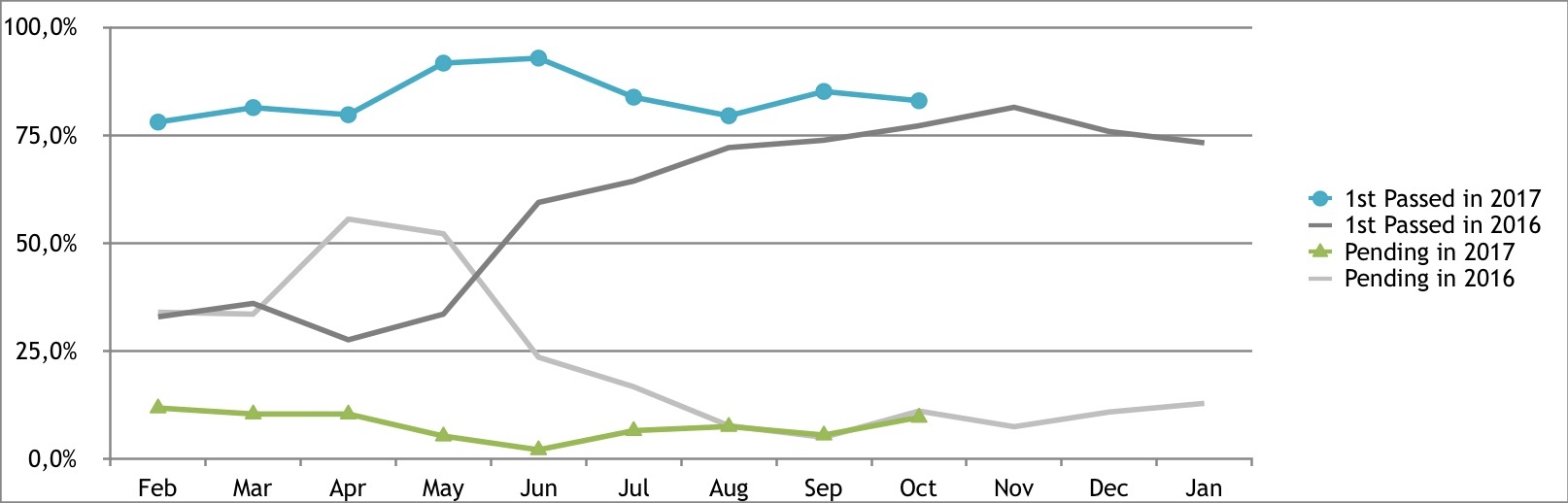
Als Teil des Plans zur kontinuierlichen Qualitätsverbesserung wurde nachdrücklich empfohlen, die Bestehens-, Durchfall- und Pendenzenquoten des Unternehmens konsequent zu überwachen, um den Grad der Verbesserung als direktes Ergebnis der Umsetzung des von API vorgeschlagenen Plans effektiv zu bewerten.

Was waren die Ergebnisse der Umsetzung dieses CQI-Plans?

Das Einzelhandelsunternehmen war mit der Einführung dieser Lösung sehr erfolgreich. Selbst in der Hochsaison blieb die Durchlaufquote meist über 80%. 


CQI-Grafik

Nachdem die Verbesserungsvorschläge umgesetzt worden waren, konnte der Einzelhändler seine Fehler- und Ausfallraten erheblich reduzieren. In einer Situation wie dieser ist es wichtig zu beachten, dass, obwohl das Problem nicht direkt mit der Produktion zusammenhing, sowohl das Qualitäts- als auch das Merchandising-Team die von API vorgeschlagenen Änderungen umsetzen mussten.


Wichtigste Erkenntnisse

Die Umsetzung einer Strategie zur kontinuierlichen Qualitätsverbesserung für Ihre Einzelhandelsmarke ist für die Effektivität von Produktion, Qualität und Management unerlässlich - ohne sie werden Sie auf dem ganzen Weg Probleme bekämpfen. Als Teil Ihrer Strategie müssen Sie diese fünf Fragen beantworten - wenn Sie das nicht tun, gehen Sie zurück und stellen Sie sicher, dass Sie es tun:

Wie hat sich Ihre CQI-Strategie verbessert?

       1. Ihre organisatorische Effizienz?
       2. Ihr Grad an Kundenzufriedenheit?
       3. Ihr Grad der Einhaltung der Vorschriften?
       4. Ihre Organisationskultur?
       5. Die Dokumentation Ihrer Organisation?

Wenn Sie diese Fragen nicht abschließend beantworten können, müssen Sie Ihre Strategie möglicherweise neu bewerten, um diese Fragen besser zu berücksichtigen.

Teilen Sie uns in den Kommentaren unten mit, wie Sie Ihre eigenen Qualitätssysteme verbessert haben

Sind Sie bereit, das präventive Qualitätsmanagement in Angriff zu nehmen?

Lesen Sie unseren Leitfaden für präventives Qualitätsmanagement, der Ihnen den Einstieg erleichtert

Kategorien
Blogs

Put In Place A CQI Strategy For The Festive Season

The festive season is fast approaching and retail stores the world over are seeing an influx of people coming through their doors to purchase essential and luxury items. This time of the year is a very busy (and lucrative) time for most retail businesses, but it also presents an increase in supply chain pressure and demand that can lead to unsatisfied customers if quality becomes an issue.

Quality should most certainly nicht be a seasonal prerequisite for your brand.

It’s of vital importance that you have a continuous quality improvement (CQI) strategy in place to ensure you have a road map for success to ensure that you deliver, even more so when your supply chain pressure is on.

In this blog post, we look at why you need an improvement strategy, and we will also touch on the seven quality management principles and how they serve as the path to better quality for you, all year round!

Why You Need A CQI Plan For Your Retail Brand;

A CQI plan is meant to form a road map to improving your production activities, which will positively impact your production outputs. It should be designed to take your retail brand through the process of monitoring, data collection and analysis as a part of your daily activities.  

So what Tools Are Commonly Used for improved quality processes?

These tools are not used in isolation of one another, and a lot of the time the tool you choose to select will be situation specific, so you may use a combination of the below mentioned tools;

  • Check Lists – This will need to be prepared ahead of time, and you should look at creating a template and update it regularly. It should be used to collect and analyse all kinds of data relating to your production procedures and operating systems.
  • Brainstorming – This enables a creative environment where ideas are shared in a large group. The key here is to ensure there is no judgment as this will hinder the creative process. The point is to uncover any hindrances to your production process, aCQI strategy and the quality management principles nd this tool should be inclusive of all levels of employees for creative and productive inputs.


  • Benchmarking – Oftentimes benchmarking against industry standards such as ISO 9001 is used in order to compare how your quality systems are lining up accordingly. You need not only benchmark against an industry standard, but if you wanted to you may also benchmark against your competitors.  
  • Root-Cause Analysis –  This is a continuous improvement strategy that is often adopted to get to the root cause of a problem and seeks to permanently eliminate that problem from ever recurring again. There are a number of techniques that can be used as a part of your RCA strategy, and it will be up to your unique situation as to what tool you select.

These tools are only a few of what’s in the arsenal of techniques that can be used to implement a sound improvement plan. You need not only select one tool, you can mix and match to ensure that you find what works best for you.

The 7 quality management principles integral to your CQI plan;

If you are successfully adopting a quality management system, which I shall be bold enough to say that you should be, then you will know that an improvement approach is integrated into each principle of the most popularly used Quality Management System – ISO 9001. So let’s dive into what these principles are;

QMP 1 – Customer focus; How well are you meeting and exceeding your customer’s expectations? Your brand will need to work towards sustained confidence from your customer base

QMP 2 –  Leadership; The creation of unity and purpose with the engagement of employees at all levels will be crucial to how well you are able to align your strategy, quality policies, and production processes to achieve quality objectives.

QMP 3 – Engagement of people; By involving all people at all levels of your organisation you will create opportunities to effectively and efficiently achieve your quality and production objectives.

A CQI strategy for Improved product quality

QMP 4 – Process approach; A consistent approach to your organisation’s interconnected systems and operations produces a set of production results; in understanding how your production results are achieved you are then able to optimise your systems accordingly, ultimately improving your production performance.

QMP 5 – Improvement; Continuous improvement is essential for your organisation to maintain exceptional levels of performance. An improvement focus and strategy allows you to react to changes more efficiently.

QMP 6 – Evidence-based decision making; Decision-making should always be based on evidence and data analysis, this approach is more likely to produce your desired results and outcomes.  

QMP 7 – Relationship management; Successful production of your household goods can often come down to the way in which you manage your relationship with your supplier. Let it be open, communicative and collaborative. This approach has had more success when it comes to that increase in retail supply chain pressures.

These principles are the underpinning guidelines of the ISO quality management systems. When applied correctly they are able to take you towards that continuous performance improvement approach for your entire supply chain.  

The Benefits of Adopting A CQI for your Retail Brand

There are a number of benefits of adopting a continuous quality improvement strategy for your retail brand, ones that should not be ignored if you are to remain a competitor in the retail marketplace.

  • Reducing the number of quality errors – It will help you analyse available data, identify any areas for improvement, or any already existing production problems which will in turn reduce the number of quality errors that arise in your supply chain.
  • You increase your supply chain adaptability – It will ensure that when problems are identified your supply chain knows and understands the changes it needs to make in order to optimise for supply chain efficiencies.
  • Increased productivity – It will enable you to identify existing or potential problem areas within your supply chain, and once identified, you will be able to implement the solution which will increase your productivity outputs.

Wichtigste Erkenntnisse

As the festive season has arrived and retail pressures are beginning to surmount to what seems like you will never get through it, rest on knowing that everything you have implemented up until now will work in your favour.

Your own continuous quality improvement strategy should include;

  • A variety of tools and techniques; such as brainstorming and checklists
  • You will also need to intimately understand the 7 quality management principles if you are to implement a successful strategy
  • If you are questioning why, don’t; there are production and quality benefits as well as those much needed bottom line benefits.

If you have not implemented a continuous quality improvement strategy before enlist the above knowledge in order to implement the appropriate quality management steps needed to ensure that only quality products reach your consumer; product defects and recalls are every retailers nightmare, with over 2000 children’s toys declared unsafe in the EU in 2016, but a successful strategy will make sure that Santa pays you a visit too.

What continuous quality improvement strategies have you implemented in the past that have proved full proof especially as we enter into the festive season?

WÜRDE IHR UNTERNEHMEN PROFITIEREN VON

OPTIMISED QA SYSTEMS?

SIMPLY CLICK BELOW FOR MORE ON DOING JUST THAT!

Kategorien
Blogs

Warum jedes Unternehmen ein Umweltaudit durchführen sollte

Die Herstellung im 21. Jahrhundert hat einige unangenehme Wahrheiten über die Art und Weise zutage gefördert, in der viele Einzelhandelsmarken ihre Produkte herstellen, angefangen bei der Menge der freigesetzten CO2-Emissionen bis hin zu der Art und Weise, in der Hersteller entsorgen Abfälle. Heutzutage ist die Umweltprüfung für Einzelhandelsmarken nicht obligatorisch, ist sie also überhaupt notwendig? 

Wir bei API sind der Meinung, dass ethische Marken am besten positioniert sind, um die steigenden Anforderungen der bewussten Verbraucher von heute zu erfüllen.

Das soziale und ökologische Ansehen Ihrer Marke spielt in den Herzen der Verbraucher auf der ganzen Welt eine größere Rolle als je zuvor. Wir haben einen visuellen Leitfaden erstellt, der Sie dabei unterstützt:

  • Was eine Umweltprüfung ist
  • Warum Sie ein UMS einführen sollten
  • Einhaltung der ISO 14001-Norm
  • Arten und Umfang von Umweltbetriebsprüfungen
  • Wesentliche Aktivitäten vor und nach der Prüfung 
  • Die wichtigsten Vorteile für Ihre Marke 

 Sehen Sie, warum eine Umwelt Qualitätsprüfung ist für Ihre Marke im Folgenden unerlässlich:

Umweltauditierung

Warum braucht Ihre Marke also ein Umweltaudit?

  • Sie gewährleistet die Einhaltung der Rechtsvorschriften
  • Es reduziert Ihre Umweltbelastung.
  • Es reduziert Ihren Wasser- und Energieverbrauch
  • Es hat positive Auswirkungen auf das Image Ihrer Marke und Ihr Endergebnis

Eine Prüfung wie diese hat folgende Auswirkungen Langfristige Vorteile für Ihre Einzelhandelsmarke sowie die Sicherung eines wettbewerbsfähigen Platzes auf dem Markt.

 Klicken Sie unten um mehr darüber zu erfahren, wie Sie noch heute mit Ihrer Prüfung beginnen können! 

Kategorien
Blogs

2 Techniken der Ursachenanalyse zur Verbesserung der Qualität

Die Ursachenanalyse (RCA) ist eine Strategie zur kontinuierlichen Verbesserung, die dazu dient, die Ursachen eines Problems zu ermitteln und zu verhindern, dass dieses Problem jemals wieder auftritt. Aber wie wird dies erreicht? Es gibt eine Reihe von RCA-Strategien, die technische Auditoren anwenden können, um das Problem zu erkennen und zu beseitigen. In diesem Blogbeitrag möchte ich Ihnen eine bewährte Technik vorstellen, die von vielen Organisationen angewandt wird. Lassen Sie uns also eintauchen; Das Problem an der "Wurzel" packen Es ist wichtig zu beachten, dass eine Ursachenanalyse keine einmalige Angelegenheit sein sollte, die man bei einem größeren Produktionsfehler durchführt. Sie sollten eine Strategie zur Risikobewertung/zum Risikomanagement haben, die die RCA genau in die Art und Weise integriert, wie Sie Nichtkonformitäten in Ihrem Produktionsprozess diagnostizieren und Ihren Lösungsprozess handhaben. 2 Techniken der Ursachenanalyse für eine verbesserte Qualitätsprüfung Die Prämisse jeder RCA kann wie folgt definiert werden;

  • Problemerkennung und -definition - Sie müssen erkennen und definieren, was Ihr Produktionsproblem im Einzelhandel ist.
  • Identifizieren Sie die Ursachen - Sie müssen den Prozess der Ursachenermittlung durchlaufen. Der Trick dabei ist, nicht zu viel Zeit mit Brainstorming oder Mindmapping zu verbringen; dies muss kein zeitaufwändiger Aspekt der RCA sein.
  • Lösungen identifizieren - Dieser Schritt basiert auf der Ermittlung der Ursache. In diesem Schritt müssen Sie die bestmöglichen Lösungen für das Problem ermitteln, damit es nicht wieder auftritt.
  • Umsetzung der Lösungen -Wenn die Qualität Ihrer Produkte am Fließband beeinträchtigt wurde, müssen Sie mit der Umsetzung der Lösungen beginnen, die Sie im vorherigen Schritt ermittelt haben, um dies in Zukunft zu verhindern. Die von Ihnen gewählte Lösung muss eine sein, die Ihre betrieblichen Abläufe optimiert und verbessert. Wenn die vorgeschlagene Lösung dies nicht leisten kann, müssen Sie die oben genannten Schritte wiederholen, um sicherzustellen, dass Sie eine Lösung finden, die dies tut.
Eine RCA sollte keine zeitraubende Strategie sein. Sie muss jedoch die Probleme aufzeigen und Raum für eine Prozessoptimierung schaffen.

Wer führt also eine Ursachenanalyse durch?

Kurz gesagt, so würde eine RCA durchgeführt werden, aber wer führt sie durch? Das ist eine gute Frage, vor allem wenn Sie Ihre Qualitätsauditlösungen an eine zertifizierte Drittorganisation auslagern. Normalerweise wird Ihre RCA intern durchgeführt. Ihr Betriebsleiter kann eine RCA-Schulung absolvieren oder eine externe Organisation wie API kann einen geschulten Qualitätsprüfer einsetzen die Sie bei der Durchführung des RCA-Verfahrens unterstützen können. Können RCAs die Ergebnisse der Qualitätsleistung verbessern? Ja, sie können Ihre Auditergebnisse verbessern, da Ihre Organisation die Verantwortung übernimmt, ein wiederkehrendes Problem zu identifizieren, es zu analysieren und schließlich zu beseitigen, um so eine Kultur der Verbesserung für Ihre Marke zu schaffen. Zu den wichtigsten Vorteilen, die eine RCA für Ihr Unternehmen haben kann, gehören folgende;
  • Sie bietet einen Lernprozess, um Ursache und Wirkung der verschiedenen Lösungen besser zu verstehen.
  • Es bietet einen logischen Ansatz zur Lösung Ihrer Produktionsprobleme anhand bereits vorhandener Daten.
  • Es kann Ihr Risiko verringern.
  • Dies wird wiederkehrende Probleme verhindern.
  • Sie wird die Gesamtproduktionsleistung verbessern.
  • Dies wird zu robusteren Qualitätsmanagementsystemen führen.
Durch eine RCA-Diagnose sind Sie in der Lage, ein System der kontinuierlichen Verbesserung in Ihrem Unternehmen einzuführen, mit dem Sie die Vorteile einer gut funktionierenden Produktionslinie ernten können. Werfen wir einen Blick auf zwei gängige RCA-Techniken und darauf, wie Sie sie bei Produktionsproblemen einsetzen können, denen Sie möglicherweise gegenüberstehen.

Die 8-Disziplinen-Technik zur Problemlösung

Diese Problemlösungstechnik wird eingesetzt, um die Ursachen für potenzielle Probleme oder Nichtkonformitäten in Ihrem Produktionsprozess zu ermitteln. Entwickelt und eingesetzt wurde sie vor allem von der Ford Motor Company in den 1980er Jahren aus den oben genannten Gründen; um wiederkehrende Produktionsprobleme zu erkennen und zu lösen. Diese Technik ist nicht nur für die Automobilindustrie geeignet, sondern hat sich in einer Vielzahl von Branchen bewährt. Viele Qualitätsprüfer eine Ausbildung absolvieren, die sie in die Lage versetzt, Problemlösungstechniken wie die 8D anzuwenden. Die Die 8D-Technik konzentriert sich hauptsächlich auf Bereiche wie SicherheitsausrüstungDie Arbeitsabläufe in der Fabrik, der Fabrikfluss, Teile, die nicht der Spezifikation entsprechen, die Logistik und alle anderen Probleme, die eine Gefahr für die Arbeitnehmer darstellen könnten. Im Folgenden erfahren Sie, wie Sie diese Technik anwenden können; Definition der 8D-Technik **Szenario - 2700 Stühle wurden letztes Jahr zurückgerufen wegen Sturzgefahr, die auf das Brechen oder Verbiegen des Beins zurückzuführen war. Die CPSC stellte fest, dass dem strukturellen Rahmen der Polsterstühle ein Stützblock für das Bein fehlte, was den ursprünglichen Konstruktionsspezifikationen widersprach. Wie Sie sicher wissen, handelt es sich hier um ein ziemliches Problem, das Ihre Marke sicher nicht wiederholen möchte. Lassen Sie uns also besprechen, wie Sie die 8D-Technik zur Lösung eines Produktionsproblems wie dem oben genannten einsetzen können; Ein Team bilden - Sie müssen ein Team zusammenstellen, das über die entsprechenden Produkt- und Prozesskenntnisse verfügt. Das kann also jeder sein, der in der Fabrik war, oder sogar der QC-Manager, da er die Produktspezifikationen vielleicht nicht korrekt weitergegeben hat? Beschreiben Sie das Problem - Gemeinsam mit Ihrem Team müssen Sie nun das Problem so detailliert wie möglich beschreiben und dabei die Fragen "Wer, was, wo, wann, warum, wie und wie viele? Anhand dieser Fragen kann Ihr Team das potenzielle Problem quantifizieren. Wir wissen, dass 2700 Stühle zurückgerufen wurden, und Sie beginnen nun, die Gründe dafür herauszufinden. Umsetzung und Überprüfung der Eindämmungsmaßnahmen - Sobald Sie das Problem beschrieben und identifiziert haben, müssen Sie die Probleme eindämmen. Wie wird Ihr Unternehmen einen solchen massiven Rückruf in Zukunft verhindern? Identifizieren Sie die Grundursache - Nun müssen Sie alle möglichen Ursachen für das Problem ermitteln und sich fragen, warum es nicht früher erkannt wurde. Dieser Prozess wird mehr als eine Ursache hervorbringen, und jede muss durch gründliches Brainstorming nachgewiesen werden. Formulierung und Überprüfung von Abhilfemaßnahmen - Auf der Grundlage der obigen Feststellungen müssen Sie geeignete Abhilfemaßnahmen festlegen und umsetzen.  2 Techniken der Ursachenanalyse für eine verbesserte Qualitätsprüfung - Risikobewertung für eine verbesserte Qualitätsprüfung Beheben Sie das Problem und bestätigen Sie die Auswirkungen -  Auf der Grundlage der Ergebnisse der oben genannten Schritte müssen Sie sicherstellen, dass die Ursache des Problems beseitigt wird, und Sie müssen dann die Auswirkungen überwachen, die dies auf Ihren zukünftigen Produktionsprozess haben kann. Verhindern, dass das Problem wieder auftritt - Da es sich bei der 8D-Technik um eine Technik der kontinuierlichen Verbesserung handelt, müssen Sie möglicherweise die Managementsysteme und/oder Betriebssysteme, Praktiken und Verfahren überprüfen und ändern, um sicher zu sein, dass die Grundursache beseitigt wurde und das Problem nicht wieder auftritt. Gratulieren Sie dem Team - Dies ist ein wichtiger Schritt, denn Ihr Team hat viel Zeit damit verbracht, über jeden Produktionsschritt nachzudenken und ihn zum Nutzen Ihrer Marke zu analysieren. Erkennen Sie sie für ihre Bemühungen an und danken Sie ihnen individuell.
Die Technik der fünf "Warum"

Diese Problemlösungstechnik ist vom Ansatz her einfacher, und Sie werden vielleicht feststellen, dass Sie für komplexere Situationen eine strukturiertere Technik anwenden müssen. Allerdings gibt es viele Organisationen, die diese Technik aus dem oben genannten Grund anwenden, weil sie einfacher und vielleicht weniger zeitaufwendig ist als andere. Diese Problemlösungstechnik wurde entwickelt in den 1930er Jahre von Sakichi Toyoda, dem Gründer der Toyota Motor Corporation, wo es in den 1970er Jahren seine Popularität erlangte, indem es half, allgemeine Produktionsprobleme zu lösen. Diese Technik wurde entwickelt, um fragen Sie "Warum" fünfmal. Nehmen wir ein Beispiel wie das folgende;  "Wir können dieses Produkt nicht montieren". Dann würde ein geschulter Qualitätsprüfer fragen: Warum? Ein Teil ist zu lang oder zu kurz Warum? Die Maschine, die dieses Teil schneidet, arbeitet uneinheitlich Warum? Eine Einstellung ist lose Warum? Es fehlt eine Kontermutter Warum? Im Wartungshandbuch wird diese Kontermutter nicht erwähnt In der einfachsten Form hätten wir festgestellt, dass das Problem in der Bedienungsanleitung liegt - die Anleitung kann dann aktualisiert werden, um das Problem der Sicherungsmutter einzubeziehen.

Wichtigste Erkenntnisse

Produktionsprobleme sind ein Problem, aber es gibt viele Möglichkeiten, diese Probleme zu vermeiden und potenziell kostspielige Rückrufe für Ihre Marke zu verhindern. In diesem Beitrag haben wir uns gängige Problemlösungstechniken angesehen, die einen reibungsloseren Produktionsprozess für Ihre Einzelhandelsmarke gewährleisten. Diese Techniken zur Ursachenanalyse sind so konzipiert, dass sie einen vollständigen Teamansatz zur Identifizierung der Ursachen eines Produktionsproblems, mit dem Sie möglicherweise konfrontiert sind, beinhalten und diese gemeinsam erfolgreich beseitigen, um einen größeren Produktionserfolg zu erzielen.
Kategorien
Blogs

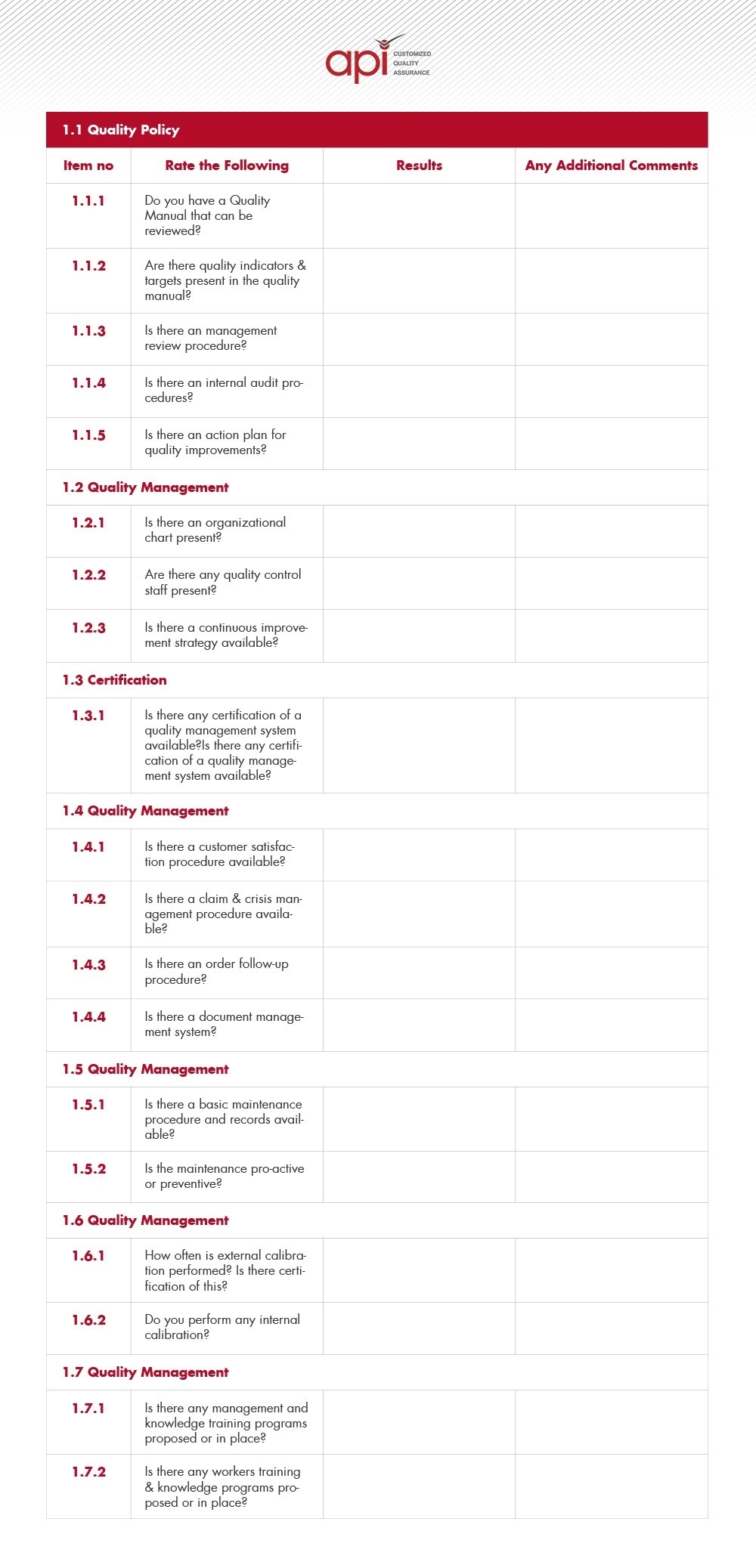
A Factory Quality Audit Checklist To Assess Your Suppliers

Household goods manufacturing and supply chain operations are often vulnerable to compliance and regulation violations. With the pace at which the many complex parts of a supply chain can move, it’s no wonder that retailers who trust too willingly in their suppliers can land up in hot water when things don’t go according to plan. The only way to address these challenges head on is by conducting a quality audit. Discover our factory quality audit checklist that touches on quality management, social and environmental compliance here. An audit of your supplier’s factory is conducted to ensure that your supplier and their factory’s operations are able to produce your product to your expected levels of quality, as well as ensure compliance in your product’s destination market. This is not the only reason though… Carrying out audits also help to assess the risks that may be present with a particular supplier and provide direction on how you can go about managing that risk. Ultimately, the decision to work with a particularly supplier will be up to you, but your decision will at least be based on a trusted risk assessment with a presented improvement strategy. Our checklist takes you through a what a brief assessment of your supplier’s quality systems would/should look like. We will cover 3 main sections in this checklist:
  1. Quality Assurance & Technical Questions
  2. Social / Health & Safety Questions
  3. Environmental Audit Questions

How Does A Quality Audit Grading System work?

For each checkpoint, the following guideline should be used; N/A – Checkpoint not available or not evaluated. 0 – Major non-conformity – absence of procedure or proof of big discrepancies in implementation – a corrective action will be designed for this checkpoint. 1 – Minor non-conformity –  incomplete procedure or proof of discrepancies in implementation – a corrective action will be designed for this checkpoint. 2 – Acceptable –  procedures are available and implementation is acceptable, however opportunities for improvement exist – an opportunity for improvement can be designed for this checkpoint. 3 – Good – procedure and implementation acceptable, no opportunity for improvement identified. 4 – Best Practice – factory has designed and implemented best practice of industry.

Quality Assurance & Technical Questions

a factory quality audit checklist 1WHAT TO LOOK OUT FOR:
  • Quality manual and all procedures show revision control (sign-offs & dates), history of changes
  • Product quality yield data, problems and corresponding improvement actions, status of preventive/ corrective/audit results
  • Strategic and tactical objectives, goals, action plans, etc.
  • Analysis of field failures, inspection yields, resource needs, internal audit results, corrective action status, etc.
  • Management review meetings, goal setting, performance measurement, internal audits, action plans, customer surveys
  • Employee involvement/recognition program, Lean, Six Sigma, kaizen, SPC, 5-S, cost reduction programme
  • Corrective actions, trend charts, meeting minutes, non-conformance frequency & cost analysis
  • Management review meetings and corrective actions
  • Look for use of training aids and work instructions at work stations
  • Qualification records, certification history
  • Records of testing, production quality records, audit records, interview workers to validate training records
  • Job descriptions, job skills assessment, training records, training manuals

What if my quality assurance score is below standard?

API is able to customize its QA solutions based on your specific needs and requirements. API will provide the supplier information on how they can go about improving various things within a factory. This information will be relayed back you, the retailer, where you will gain insight into your potential supplier and their factory operations to ensure compliance across the board.

SOCIAL / HEALTH & SAFETY QUESTIONS

A factory quality audit checklist 2

What to look out for:

  • Procedure for training and communication and participation
  • Emergency preparedness and response plan, monitoring and performance measurements
  • Policies and procedures, health and safety trend charts, accident rate improvement history
  • Safety committee or group meeting minutes, accident investigation reports, safety audit reports
The social audit assesses the social systems and structures that your supplier has in place and is normally based on the standards as laid out by the SA8000. As a professional third party auditing company, API is able to provide their industry expertise and long time experience to aid you in achieving your social compliance certification.

Environmental Audit Questions

a factory quality audit checklist 3

What to look out for:

  • Environmental policy statement document
  • Records of agency/government inspection, procedures for measuring and monitoring environmentally sensitive activities
  • Record of purchases, waste stream and consumption; inventory control procedures
  • Records/use of; non-hazardous (RoHS/WEEE compliant) materials in production, biodegradable materials, returnable containers or packaging, recycling program, packaging materials made of recycled materials

Wichtigste Erkenntnisse

A factory quality audit checklist allows you insight into your suppliers quality control processes and manufacturing capabilities, their strengths and weaknesses. This empowers you to strengthen those weaker processes where needed. A quality audit checklist will help ensure:
  • your factory’s quality systems are up to date, organized and well recorded.
  • confidence in the selection of your supplier based on checklist insights.
  • confidence in the quality of the product that is manufactured.
  • confidence that compliance standards are actively being met by your supplier.
This approach allows you to build a more collaborative relationship with your supplier, where you supplier has a more invested approach to your brand and its product. It helps to ensure top class quality systems and a mutually beneficial relationship between supplier and retailer.
Kategorien
Blogs

3 Arten von Audits der Fabrikqualität, die Ihre Einzelhandelsmarke benötigt

Viele Einzelhandelsmarken sind heute mit Verstößen gegen die Vorschriften, die Menschenrechte und die Umwelt belastet. Diese Organisationen sind ratlos, wie sie mit dieser Art von Komplexitätsrisiko in der Lieferkette umgehen sollen. Wie kann Ihre Marke all dies also verhindern? Qualitätsaudits im Werk. Diese Qualitätsaudits zielen darauf ab, Risiken in der Lieferkette Ihrer Einzelhandelsmarke zu erkennen, zu beseitigen und zu verringern. Außerdem bieten sie Strategien zur kontinuierlichen Verbesserung, die ein konstantes Wachstum, Bewusstsein und eine strategische Wettbewerbsposition auf dem Markt ermöglichen. In diesem Blogbeitrag werden wir die verschiedenen Arten von Qualitätsaudits zu untersuchen Lassen Sie uns also näher darauf eingehen, was jedes Audit Ihnen bieten kann und welche Vorteile es für Ihre Marke hat.

Technische Prüfung

Lassen Sie uns zunächst definieren, was ein technisches Audit in einem Betrieb ist; Es handelt sich dabei um den Prozess der Bewertung und Beurteilung der technischen Fähigkeiten Ihrer Fabrik; ob sie über ein Qualitätshandbuch verfügt, in dem alle Qualitätssysteme definiert sind, von der Organisationsstruktur bis hin zur Beurteilung, ob eine Fabrik über interne Audit- und Inspektionsverfahren verfügt oder nicht. Im Rahmen dieses Audits werden auch der Aufbau der Fabrik und die regelmäßige Wartung und Kalibrierung der Maschinen bewertet. Dieses Audit basiert in der Regel auf den Richtlinien der ISO 9001: 2015, einer international anerkannten Norm zur Gewährleistung eines effizienten Qualitätsmanagementsystems (QMS) in der von Ihnen gewählten Fabrik. Die letzte Aktualisierung hat dazu geführt, dass die Norm stärker leistungsorientiert ist, indem ein prozessorientierter Ansatz mit risikobasiertem Denken verbunden und der Plan-Do-Check-Act-Zyklus übernommen wurde. ISO 9001 - Technisches Qualitätsaudit Gemäß den Richtlinien der ISO 9001:2015 sind sie grob in acht Abschnitte unterteilt, von denen fünf für das QMS Ihres Unternehmens verbindlich sind;

  • Anforderungen an ein Qualitätsmanagementsystem
  • Verantwortung des Managements
  • Ressourcenmanagement
  • Produktrealisierung
  • Messung, Analyse und Verbesserung Ihres QMS
Die Abschnitte eins bis drei sind keine Anforderungen, sondern informieren über den Anwendungsbereich dieser Norm und enthalten Verweise zum besseren Verständnis der Norm sowie Begriffe und Definitionen, die Sie möglicherweise für die Einführung dieses QMS benötigen. Was sind die Ziele eines technischen Audits? Die Beauftragung eines externen Prüfers mit der Bewertung der Qualitätsmanagementsysteme Ihres Unternehmens hat folgende Ziele;
  • Beurteilung, ob ein wirksames und effizientes QMS in der Fabrik vorhanden ist.
  • Um zu beurteilen, ob diese Fabrik in der Lage ist, Ihren Produktionsanforderungen gerecht zu werden oder nicht.
  • Bei dieser Prüfung werden die potenziellen Risiken bewertet, mit denen Sie sich möglicherweise konfrontiert sehen.

Sozialaudit

Der SA8000 wurde 1997 von der Social Accountability International ins Leben gerufen. Im Laufe der Zeit hat sich dieser Standard zu einem zuverlässigen Rahmen entwickelt, den viele Einzelhandelsmarken und -organisationen anwenden, um Menschenrechtsverletzungen in ihren Lieferketten zu vermeiden. Rückblickend auf die Klagen gegen Mattel wegen Ausbeutung von Kindern und Zwangsarbeit im Jahr 2011Ganz zu schweigen von den illegalen Überstunden, die unter der Hand vereinbart wurden, müssen diese schrecklichen Zustände in den heutigen Lieferketten des Einzelhandels immer noch beseitigt werden. Audit der sozialen Qualität Die Der SA8000-Rahmen kann die soziale Leistung messen einer Organisation in acht verschiedenen Bereichen; dies wird durch das Element des Managementsystems begründet, das eine kontinuierliche Verbesserung in allen Bereichen vorantreiben kann. Dieser Standard wird für seinen akribischen Ansatz zur Erreichung eines bestimmten Niveaus an sozialer Konformität geschätzt. Die 9 SA8000-Anforderungen zur Einhaltung sozialer Standards sind:
  • Kinderarbeit - Kinder, die jünger als 15 Jahre sind, dürfen in keiner Fabrik beschäftigt werden, und wie wir im Fall der oben genannten Fabrik feststellen können, war dies nicht der Fall.
  • Zwangsarbeit - Niemand darf in einer Fabrik beschäftigt werden, wenn er sich nicht freiwillig dazu bereit erklärt hat.
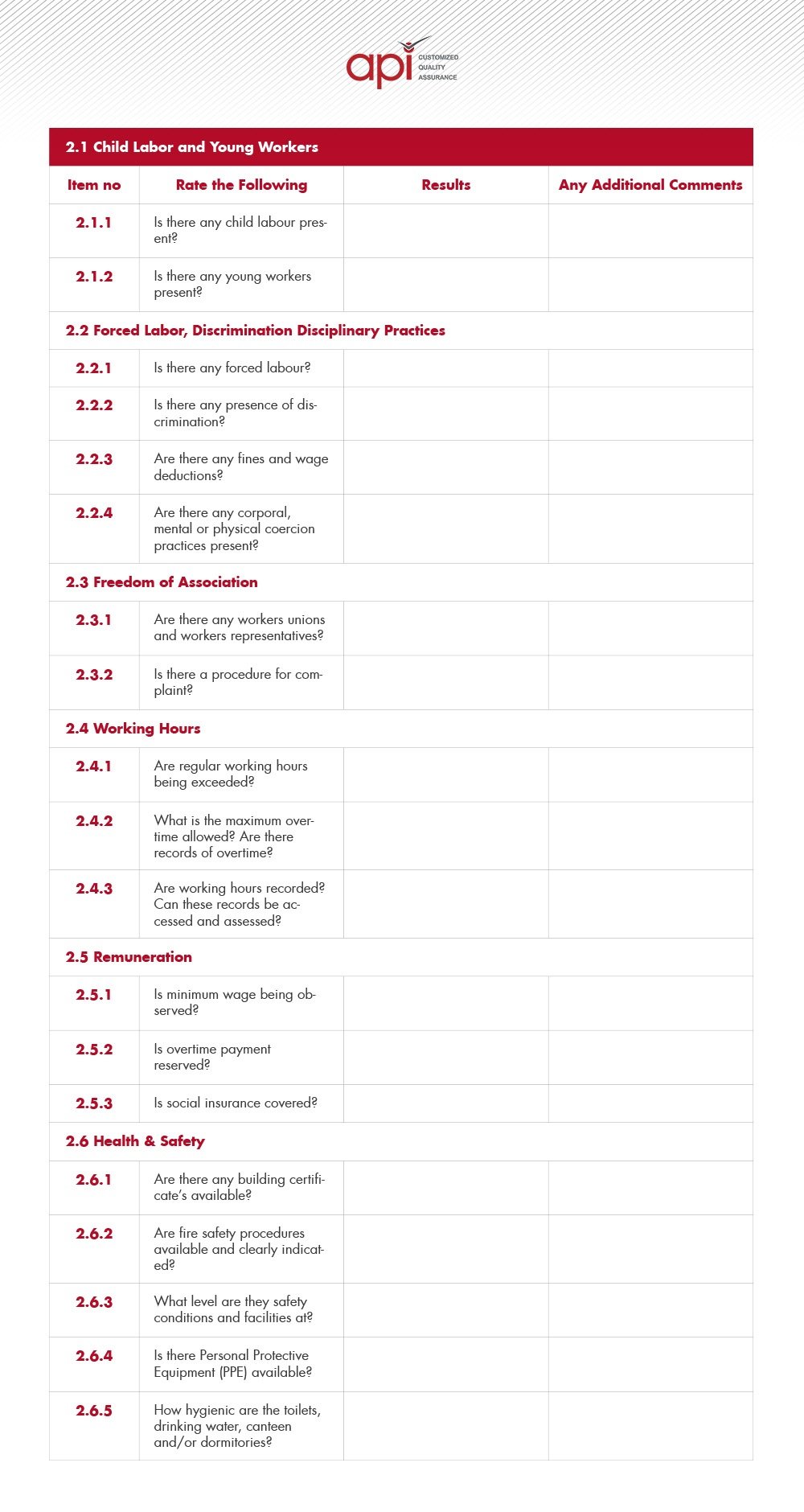
  • Gesundheit und Sicherheit - Der Betrieb muss für ein sicheres und gesundes Arbeitsumfeld sorgen und mögliche Zwischenfälle im Bereich Sicherheit und Gesundheitsschutz sowie arbeitsbedingte Verletzungen oder Krankheiten verhindern. Sie müssen dafür sorgen, dass in den Betrieben, in denen hart gearbeitet wird, eine ausreichende persönliche Schutzausrüstung (PSA) vorhanden ist.
  • Vereinigungsfreiheit und Tarifverhandlungen - Alle Mitarbeiter haben das Recht, Gewerkschaften zu gründen, ihnen beizutreten und sie zu organisieren und in ihrem Namen Tarifverhandlungen zu führen.
  • Diskriminierung - Ein Betrieb darf bei der Einstellung, der Entlohnung, dem Zugang zur Ausbildung, der Beförderung, der Kündigung oder der Pensionierung nicht diskriminieren.
  • Disziplinarverfahren - In einer Fabrik ist es verboten, körperliche Züchtigung, geistigen oder körperlichen Zwang oder verbale Beschimpfungen von Arbeitnehmern zu praktizieren oder zu tolerieren.
  • Arbeitszeiten - Ein Betrieb muss die geltenden Gesetze, Tarifverträge und Industrienormen zu Arbeitszeiten, Pausen und Feiertagen einhalten.
  • Dienstbezüge - Das Recht der Beschäftigten auf einen existenzsichernden Lohn muss von der Fabrik respektiert werden.
  • Verwaltungssysteme - Die Einhaltung der SA8000-Norm muss durch entwickelte Richtlinien und Verfahren überprüft und umgesetzt werden.
Wenn in Ihrer Lieferkette Kinderarbeit festgestellt wird, führt dies zu einem sofortigen Scheitern des Audits! Sie müssen sicherstellen, dass Ihr Lieferant die Anforderungen von SA8000 erfüllt, damit Sie potenzielle Risikobereiche in Ihrer Lieferkette ausschließen können. Sobald Sie Ihren Auditbericht erhalten haben, hat Ihr Lieferant auf der Grundlage der Feststellungen Zeit, etwaige Missstände zu beheben, was dann in der Regel zu unangekündigten Besuchen führt, um zu beurteilen, ob Verbesserungen stattgefunden haben. Die wichtigsten Vorteile einer Prüfung der Einhaltung sozialer Standards für Ihre Einzelhandelsmarke
  • Die Einhaltung des SA8000-Rahmens beweist, dass sich Ihre Marke der sozialen Verantwortung verpflichtet fühlt - von der fairen Behandlung Ihrer Mitarbeiter bis hin zur Einhaltung der Mindestlohnvorschriften.
  • Sie wird die Effizienz Ihrer Lieferkette von Natur aus kontinuierlich verbessern.
  • Wenn Ihr Unternehmen international tätig sein will, wird Ihnen diese Norm bei jeder internationalen Ausschreibung gute Dienste leisten.
  • Mit dieser Norm wird sichergestellt, dass Sie die Vorschriften weltweit einhalten und die Risiken entsprechend verringern und verwalten.
  • Dieser Standard bietet auch Markenschutz für Ihr Unternehmen.

Umweltprüfung

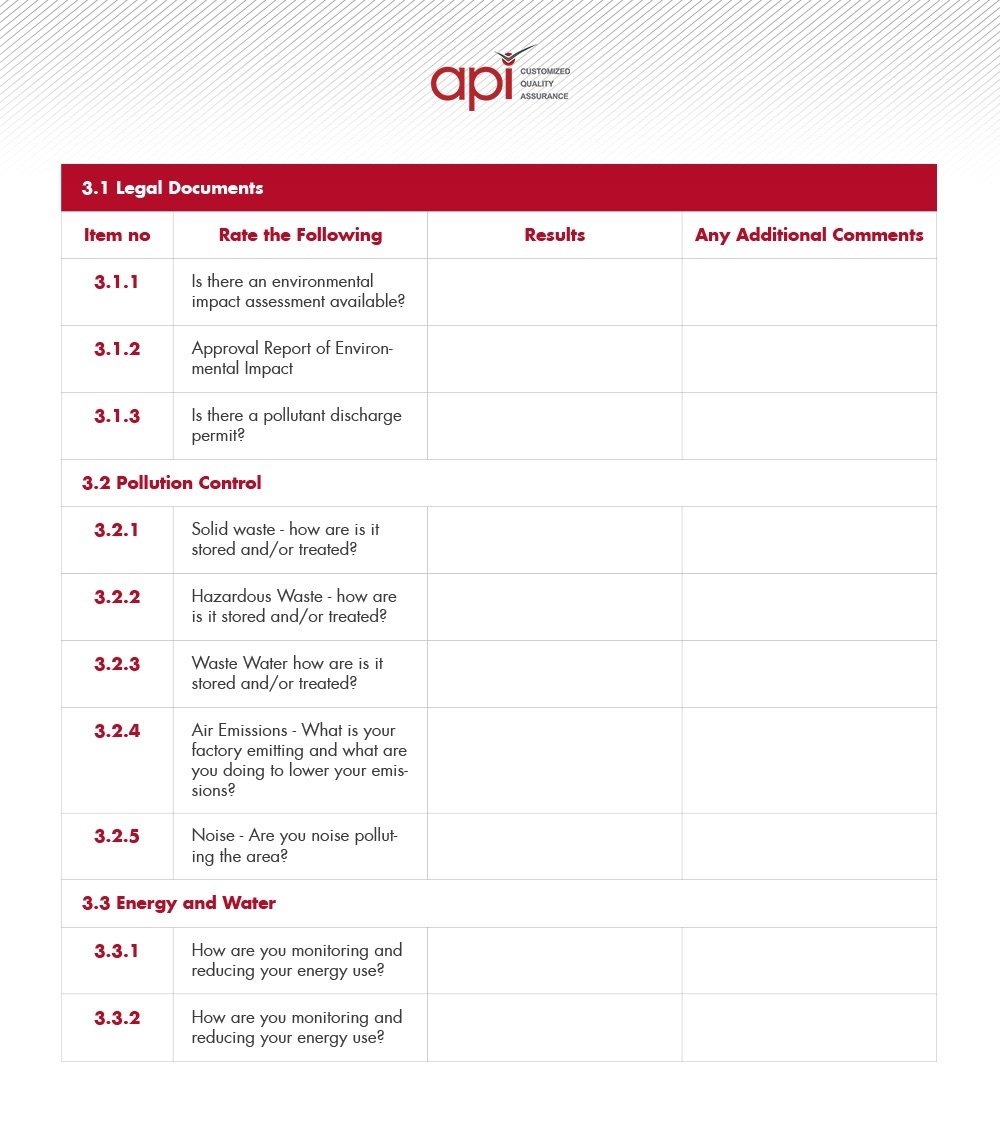
Bei einer Umweltprüfung wird beurteilt, ob Ihr Betrieb die Umweltvorschriften einhält oder nicht; dies geschieht häufig auf der Grundlage der ISO 14001: 2015 Normen, die eine international anerkannte Familie von Normen darstellen. Ich möchte noch einmal auf die oben erwähnte Fabrik zurückkommen, die Spielzeug für Mattel herstellte. Bei der verdeckten Untersuchung wurde festgestellt, dass im Produktionsprozess gefährliche chemische Produkte verwendet wurden, aber die Fabrikarbeiter wurden angewiesen, diese zu verstecken, wenn Prüfer kamen. Prüfung der Umweltqualität Es gibt viele Bedenken in Bezug auf eine Situation wie die oben beschriebene 1. Die in den Spielzeugen verwendeten Chemikalien hätten wahrscheinlich nicht den internationalen Vorschriften entsprochen. 2. Das Verschweigen von Verstößen vor einem Prüfer fördert nur die Nichteinhaltung und illegale Produktionsprozesse. 3. Wie wirken sich diese Chemikalien auf die Fabrikarbeiter aus? Wie werden sie gelagert? Wie werden sie entsorgt? Das Verfahren der Umweltbetriebsprüfung versucht, die oben genannten Probleme aufzudecken, mit dem Ziel, diese Art von Verstößen zu beseitigen und eine saubere und gut geführte Lieferkette zu gewährleisten. Bei einem Umweltaudit wie dem nach ISO 14001:2015 werden folgende Punkte bewertet;
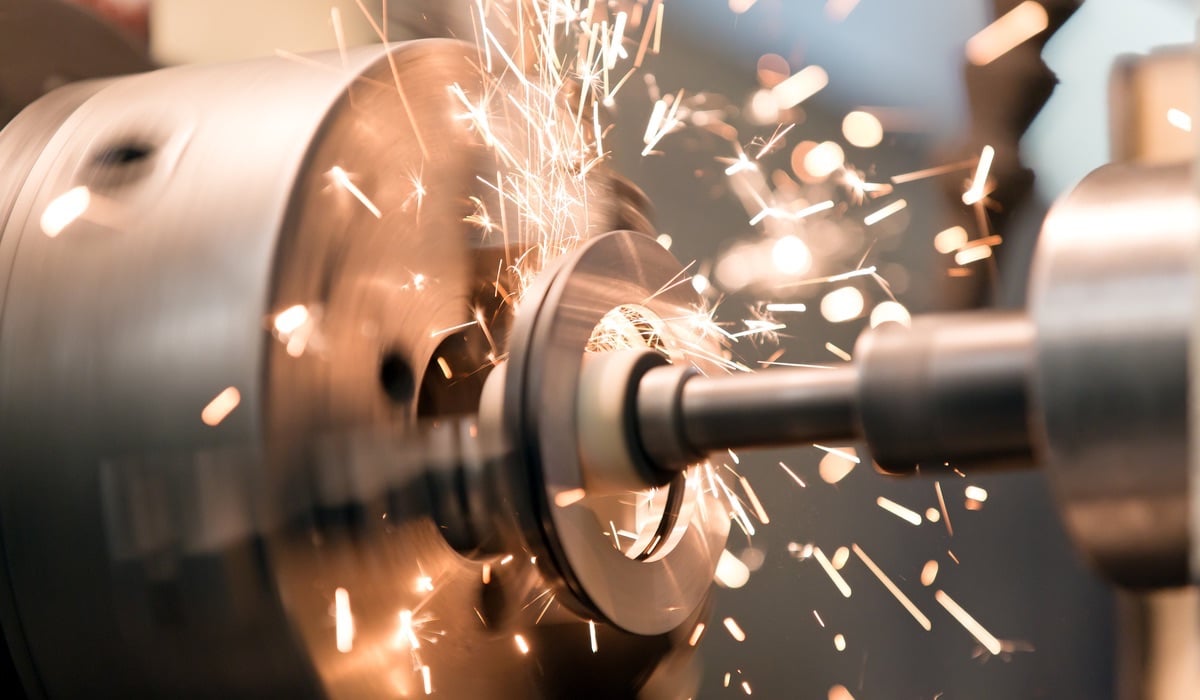
  • Die gesetzlichen Anforderungen für die verwendeten Stoffe, die zusammen mit der Risikobewertung dokumentiert werden.
  • Im Rahmen eines Audits wird geprüft, ob die Fabrik über ein Umweltmanagementsystem (UMS) verfügt.
  • Im Rahmen eines Audits wird die Situation der festen und gefährlichen Abfälle in der Fabrik bewertet und festgestellt, ob ein geeignetes Verfahren für die Abfallentsorgung vorhanden ist oder nicht.
  • Ein Umweltaudit würde die Abwasserentsorgung bewerten, wie und wohin Sie dieses Abwasser entsorgen. Dies wird oft mit einer Abwasseruntersuchung verbunden, um zu erfahren, welche Arten von Chemikalien vorhanden sind, die potenziell schädlich für die nahe gelegenen Wasserkanäle sein könnten.
  • Bei einem Audit werden auch die CO2-Emissionen des Werks Ihres Lieferanten bewertet.
  • Im Rahmen eines Audits wird der Energie- und Wasserverbrauch der Fabrik Ihres Lieferanten ermittelt.
Sehen Sie sich die von uns erstellte Checkliste zu den Arten von Fragen an, die ein Prüfer beim Besuch einer Fabrik stellen kann. Dies würde mit den Beobachtungsfähigkeiten gekoppelt, die ein professioneller Prüfer besitzen würde. **TIP Bei den oben genannten Audits werden die aktuellen Betriebsabläufe in Ihrem Unternehmen bewertet. Es muss gesagt werden, dass es nicht ungewöhnlich ist, eine Fabrik zu finden, die alles erfüllt, was wir bis jetzt erwähnt haben. Wichtig ist, dass Sie verstehen, dass diese Audits darauf abzielen, alle größeren Risiken aufzuzeigen, dass Sie aber nach Erhalt Ihres Auditberichts auch Vorschläge zur kontinuierlichen Verbesserung erhalten, die Ihrem Betrieb helfen, die Vorschriften einzuhalten und eine hervorragende Bewertung im sozialen und ökologischen Bereich zu erreichen.   Vielleicht denken Sie jetzt: Das ist toll, ich weiß, was sie bewerten werden, aber was sind die gefühlten Vorteile einer Umweltprüfung? Gute Frage, lassen Sie mich Ihnen sagen, warum Sie eine Umweltprüfung brauchen;
  1. Sie gewährleistet die Einhaltung der internationalen Vorschriften.
  2. Sie fördert eine bessere Umweltleistung der Lieferanten.
  3. Es reduziert die Umweltbelastung.
  4. Es senkt die Kosten durch eine geringere Umweltbelastung.
  5. Sie bietet einen strategischen Wettbewerbsvorteil für Ihre Marke.
Deshalb stelle ich Ihnen die Frage - Sind Sie bereit für eine Umweltprüfung?

Schlussfolgerung

Heutzutage ziehen Einzelhändler oft nur eines oder zwei der oben genannten Qualitätsaudits in Betracht. Da sich das Verbraucherverhalten jedoch geändert hat, sollten Sie eine Zertifizierung nach allen drei internationalen Normen in Betracht ziehen. Dies würde sicherstellen, dass Ihr Unternehmen eine starke Wettbewerbsposition auf dem Markt einnimmt. Werfen wir also noch einmal einen kurzen Blick auf die Vorteile, die diese für Ihre Marke haben können;
  1. Diese Prüfungen werden die Einhaltung der internationalen Vorschriften sicherstellen.
  2. Diese Audits bieten eine Strategie zur kontinuierlichen Verbesserung für Ihren Lieferanten.
  3. Diese Audits gewährleisten ein gut organisiertes Qualitätsmanagementsystem für Ihren Lieferanten.
  4. Diese Audits werden Ihre Kosten senken.
  5. Diese Audits werden Sie auf dem Markt strategisch positionieren.
Die Erkenntnisse aus den oben genannten Qualitätsaudits sollten Ihnen genügend Informationen liefern, um zu entscheiden, wie Sie mit bestimmten Risiken in der Lieferkette umgehen sollten. Diese Audits zielen darauf ab, viele der häufig festgestellten Verstöße in der Lieferkette zu beseitigen und die Optimierung Ihrer Qualitätssysteme zu gewährleisten.

tauchen in unser visueller Leitfaden um Ihnen zu zeigen, warum Ihre Einzelhandelsmarke noch heute ein Umweltaudit benötigt!

Kategorien
Blogs

What Are The Common Reasons For Quality Audit Failure?

Unethical or morally gray manufacturing practices are not uncommon for many factories across the globe, most commonly situated in third world or developing countries, for their cheaper manufacturing options. The figures, from the UN’s International Labour Organisation (ILO) and the Walk Free Foundation, show 24.9 million people across the world were trapped in forced labour for 2016. These cheaper conditions translate into unregulated conditions with little to no regulation and monitoring of working conditions, most of them horrific. These situations have lead to an increase in monitoring and auditing solutions to try and regulate the some of the terrible working conditions that many retail brands have been susceptible to over the years. Despite this, there are still many that fail to meet certain international standards and regulations put forth, making it absolutely necessary to know just what you need to avoid! In this blog post, we dive into some of the most common reasons that households goods suppliers fail their quality audits and what you can do to make sure your retail brand doesn’t fall into this pool.

Technical Failures

A technical audit is used to evaluate and assess a factory’s existing quality systems from policies and organizational structures, to the defined roles and responsibilities of the factory’s staff. So what are some of those common reasons a supplier may fail their technical audit? Disorganised documentation – As mentioned above, your supplier’s quality policies, records, reports and all documentation will be reviewed. Many factories often run on outdated systems like old excel spreadsheets, which opens your brand up to human error and potential risks that can be avoided. Without adequate reporting procedures or quality policies, the likelihood that your production requirements will be met, according to specification and in compliance with its destination market, will often not be the case if you choose to work with a supplier that has undefined and disorganized systems. Calibration and Upkeep of Machinery and Equipment – Many factories are dotted between third world and developing countries. There is a reason why Europe and U.S.A prefer to source abroad. It is often a lot cheaper than what they can find within their own borders, but that does not come without its own set of challenges.   Calibration of machinery in quality audit Many factories struggle with resources and finances, which means their money will often go into sourcing raw materials for the next production before putting money into the servicing of their machinery and equipment. This will mean that when an auditor comes to inspect the factory and its layout that the machinery is often out of calibration or filled with too much oil, which can contaminate your product and potentially places your brand in a risky position. Not ideal.

Social Failures

A social audit assesses the social systems and structures that your supplier has in place. Social compliance audits are always in line with the standards as laid out by SA8000; Kinderarbeit – Many social audit failures arise from being socially non-compliant with child labour causing an immediate “zero tolerance” failure. This is a serious violSocial Compliance in a quality auditation. If this is discovered during your audit process, it is recommended to rather find a different supplier. There are no grounds where this is acceptable. Hazardous working conditions – Hazardous and unsafe working conditions are not unheard of in many third world factory’s across the globe and are often the cause of factory technical audit failure. Things like faulty Personal Protective Equipment (PPE), expired fire extinguishers, no clearly marked exit signs, exits not in working order, machinery that is in need of calibration or lack of safety gear found on heavy machinery can lead to audit failure. These safety violations are easy enough for your supplier to address and solve, so bear this in mind upon receiving audit results as you will often need to factor in corrective time for your supplier. Panasonic and Sony have been caught in supply chain scandals, which have created immense amounts of bad media coverage for the global electronic brands. They have been accused of unfair labor practices in factories, vastly underpaid staff and electrical components that are said to be sourced from parts of the world known to be inclusive of child slave labour.
Environmental Failures  

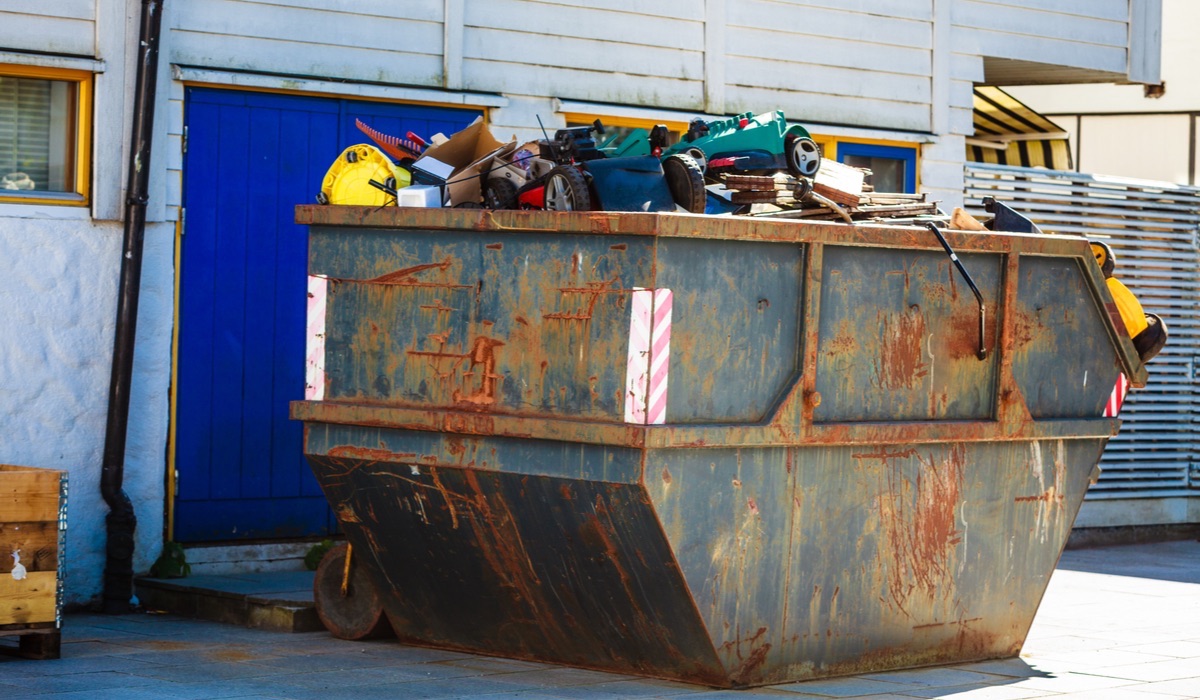
With regards to ISO 14001, while it’s not a mandatory compliance standard, it is a little more complex to navigate because of this. But as the rules of engagement in retail have shifted into the hands of the consumer, retail brands are forced to rethink the application of this standard within their supply chain. Consumers today, are interested in reducing their environmental impact on the planet and your brand should help them do just that. How you ask? By complying with the guidelines of ISO 14001:15 – In saying that what are some of the common reasons many factories fail environmental audits? Incorrect methods of waste storage or disposal – This is often a problem as many factories do not have the capability or facility to dispose of their waste correctly. If your factory disposes fumes into the atmosphere or disposes untreated water into sewerage systems, it is considered to be an environmental risk and grounds for audit failure. Often a certified third-party waste disposal company will need to come and collect your waste to ensure that is disposed of correctly; your supplier can receive certificates, stating correct disposal as well. Environmental Quality Audit Let’s take a look at how this could play out; Wal-Mart paid a criminal fine of $11 million and another $3 million to the Missouri Department of Natural Resources, for violating the Clean Water Act by illegally disposing of hazardous waste materials. This is a serious violation and a costly one at that, environmental violations are not taken lightly so bear that in mind as you proceed.  

Schlussfolgerung

Understanding the most common reasons for quality audit failure allows you insight into the kind of supplier your brand should be aligning itself with. These audits are complex (especially the social and environmental audits), and it is up to the observation skills of your chosen auditor that will determine the level of compliance that a supplier meets. The audit report that your retail brand receives will present you with a full picture of all the risks a third-party auditing company is trained to see. It will be up to you to make a final decision, bearing in mind the authoritative position consumer’s today are in, by putting your customers first and producing products in an ethical manner, you automatically put your brand first.

Let us know in the comments section if this has been helpful information for you.


Ever wondered whether environmental auditing was for you? Check out our visual guide to help you on your way!

de_DEGerman