The harshest judge of the quality of a product is your customers. As a households goods quality manager, it is your responsibility to ensure the systems and procedures you have in place, run as smoothly and effectively as possible.
In this blog post, we look at the role of a quality manager and the benefits of adopting quality management systems as a part of your supply chain strategy.
It may be necessary, to begin with, an appropriate definition of the role of a quality manager to help put perspective on how they can assist purchasing departments with their quality systems;
 The purchasing department of any organization has many functions from procurement of raw materials all the way through to the load testing of various household goods through to policy compliance. Each of these components requires the leadership and technical skill and know-how of a quality manager to ensure the entire procedure is run effectively and according to set quality standards.
Quality managers can improve the quality systems within purchasing departments by ensuring there is a set of quality standards and metrics that need to be achieved, these standards can be anything from load testing results, to the delivery times of material or of the end product. It is essential to work closely with purchasing departments to develop relationships and collaborate with suppliers. This will have results for the quality of your systems and your end product.
The purchasing department of any organization has many functions from procurement of raw materials all the way through to the load testing of various household goods through to policy compliance. Each of these components requires the leadership and technical skill and know-how of a quality manager to ensure the entire procedure is run effectively and according to set quality standards.
Quality managers can improve the quality systems within purchasing departments by ensuring there is a set of quality standards and metrics that need to be achieved, these standards can be anything from load testing results, to the delivery times of material or of the end product. It is essential to work closely with purchasing departments to develop relationships and collaborate with suppliers. This will have results for the quality of your systems and your end product.
 – Every brand strives to increase their credibility within the global market, this standard can help you maintain that competitive advantage, as suppliers who have this standard are often selected over and above those who do not.
2. Improvement of customer satisfaction – At its very core this standard is about the improvement of customer satisfaction, through thorough planning and efficient implementation where the end user is satisfied with the functionality, quality of the product to the way in which it was delivered.
3. Better process integration – By understanding and analyzing your processes you will clearly be able to find improvements that need to be made. These are based on hard that is collected to make these improvements to your procedures.
4. Improve your evidence for decision making – Evidence-based decision-making is based on hard data. Decisions can then be made based on data which can allow for proper allocation of resources and in turn having cost benefits for your brand.
5. Create a continual improvement culture – By instilling a continuous improvement cycle within your buying office, you will not only increase your outputs, but also the quality and standard of your procedures and end product, and also creating that customer satisfaction.
A Quality Management system is essential to ensuring quality household good products and the processes that come from your purchasing departments.
This will provide accountability and sustainable relationships with your suppliers as they strive to meet a set of global standards. This can have far-reaching implications for your brand.
What is your experience in adopting a QMS within your purchasing departments?
– Every brand strives to increase their credibility within the global market, this standard can help you maintain that competitive advantage, as suppliers who have this standard are often selected over and above those who do not.
2. Improvement of customer satisfaction – At its very core this standard is about the improvement of customer satisfaction, through thorough planning and efficient implementation where the end user is satisfied with the functionality, quality of the product to the way in which it was delivered.
3. Better process integration – By understanding and analyzing your processes you will clearly be able to find improvements that need to be made. These are based on hard that is collected to make these improvements to your procedures.
4. Improve your evidence for decision making – Evidence-based decision-making is based on hard data. Decisions can then be made based on data which can allow for proper allocation of resources and in turn having cost benefits for your brand.
5. Create a continual improvement culture – By instilling a continuous improvement cycle within your buying office, you will not only increase your outputs, but also the quality and standard of your procedures and end product, and also creating that customer satisfaction.
A Quality Management system is essential to ensuring quality household good products and the processes that come from your purchasing departments.
This will provide accountability and sustainable relationships with your suppliers as they strive to meet a set of global standards. This can have far-reaching implications for your brand.
What is your experience in adopting a QMS within your purchasing departments?
Ein quality manager’s role is “concerned with monitoring and advising on the performance of the quality management system, producing data and reporting on performance, measuring against set standards.”
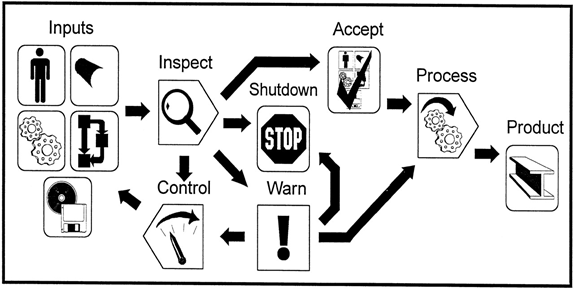
Understanding the role of a quality manager leads into understanding what a quality management system (QMS) is:“A QMS is a set of policies, processes and procedures required for planning and execution of a product or service.”
The purchasing department of any organization has many functions from procurement of raw materials all the way through to the load testing of various household goods through to policy compliance. Each of these components requires the leadership and technical skill and know-how of a quality manager to ensure the entire procedure is run effectively and according to set quality standards.
Quality managers can improve the quality systems within purchasing departments by ensuring there is a set of quality standards and metrics that need to be achieved, these standards can be anything from load testing results, to the delivery times of material or of the end product. It is essential to work closely with purchasing departments to develop relationships and collaborate with suppliers. This will have results for the quality of your systems and your end product.
Check out our comprehensive guide on optimizing your quality assurance systems.
ISO 9001: 2015 ISO 9001: 2015 is an example of a QMS, which is a set of requirements a supplier needs to comply with to consistently meet specific requirements and that they also meet a specified set of regulations. Applying this ISO standard can have significant benefits for your brand, let’s take a look at some of the key benefits it can have: 1. Improvement of your credibility and image– Every brand strives to increase their credibility within the global market, this standard can help you maintain that competitive advantage, as suppliers who have this standard are often selected over and above those who do not.
2. Improvement of customer satisfaction – At its very core this standard is about the improvement of customer satisfaction, through thorough planning and efficient implementation where the end user is satisfied with the functionality, quality of the product to the way in which it was delivered.
3. Better process integration – By understanding and analyzing your processes you will clearly be able to find improvements that need to be made. These are based on hard that is collected to make these improvements to your procedures.
4. Improve your evidence for decision making – Evidence-based decision-making is based on hard data. Decisions can then be made based on data which can allow for proper allocation of resources and in turn having cost benefits for your brand.
5. Create a continual improvement culture – By instilling a continuous improvement cycle within your buying office, you will not only increase your outputs, but also the quality and standard of your procedures and end product, and also creating that customer satisfaction.
A Quality Management system is essential to ensuring quality household good products and the processes that come from your purchasing departments.
This will provide accountability and sustainable relationships with your suppliers as they strive to meet a set of global standards. This can have far-reaching implications for your brand.
What is your experience in adopting a QMS within your purchasing departments?
Are you ready to begin optimizing your quality procedures?
Just click here to request your FREE Quality Assurance Optimization guide!

 they need products. You may find yourself at a loss with a delivery delay. Contingency plans are essential to ensuring your product gets to market. A
  1.Risk Management – Global brands take every procedure into account when understanding possible areas of risk. From sourcing to logistics to inventory management, each of these areas affects one another. If there is a problem with sourcing, it inadvertently affects the logistics of the entire operation. Therefore a brand such as Amazon needs to have a Risk Mitigation strategy that spans the entire operation.
 Miller is seen as instrumental in paving the way with greening the supply chain from using a green design for their products, to ensuring they use less harmful chemicals within the products. The only way they were able to do this was through gaining supplier buy-in. They asked their suppliers to begin complying with the zero-waste policies within their procedures.
 effectively manage their supply chains. Regionally there is the thought that this may be too expensive to apply. When it comes to technology, it is too easy to jump to the first software you find. It is essential to understand what you need technology to do for you, so that you may select the type of technology that is best suited to your needs. By doing this, you are ensuring that this is not overly costly for you and maximizes its efficiency for you.
 If we take a look at Targets mistake of launching the toddler sized Barbie SUV country-wide, the problem they faced was that their distribution centers were receiving inventory faster than they were distributing it to stores across the country. This meant that there were Target stores that had empty shelves with none of the promised items in store. They attributed this to inconsistencies between actual inventory and the computer records. A mistake like this will have cost millions in revenue loss, but also detrimental to both Target and Barbie. As a supply chain manager, it is up to you to ensure you suppliers and distribution centers operate on the same system to mitigate risks like this occurring.
 Let’s take a dive into some of the historical trends with regards to global sourcing. A brief overview will provide us with why we keep up with these trends and what these trends mean for today. They underpin the way in which we currently view and conduct sourcing, so it is important to understand how sourcing has evolved.
In the early 60’s there was a great focus on purchasing although this was still a clerical based position, as we moved through to the 70’s there was an acknowledgement of the enormity of the task so it became its own department, a department solely focused on purchasing and all the procedures that go into that. As history goes, politics, the environment, and government affect every element of the economy and the manner in which it functions, shifts and changes.
The oil embargo in the late 70’s pushed the agenda of purchasing into the hands of businesses, this made purchasing in the 80’s take a more strategic look into quality, quantity, timing, reliability, and strategy. As I am sure you are aware, the 90’s was all about reducing costs, sometimes at the expense of quality. Although there was also a greater emphasis on developing long-term supplier relationships, with long-term contracts.
This era also birthed good supplier relationship management. The
Let’s take a dive into some of the historical trends with regards to global sourcing. A brief overview will provide us with why we keep up with these trends and what these trends mean for today. They underpin the way in which we currently view and conduct sourcing, so it is important to understand how sourcing has evolved.
In the early 60’s there was a great focus on purchasing although this was still a clerical based position, as we moved through to the 70’s there was an acknowledgement of the enormity of the task so it became its own department, a department solely focused on purchasing and all the procedures that go into that. As history goes, politics, the environment, and government affect every element of the economy and the manner in which it functions, shifts and changes.
The oil embargo in the late 70’s pushed the agenda of purchasing into the hands of businesses, this made purchasing in the 80’s take a more strategic look into quality, quantity, timing, reliability, and strategy. As I am sure you are aware, the 90’s was all about reducing costs, sometimes at the expense of quality. Although there was also a greater emphasis on developing long-term supplier relationships, with long-term contracts.
This era also birthed good supplier relationship management. The  Global sourcing as a whole has made it essential for companies to improve their
 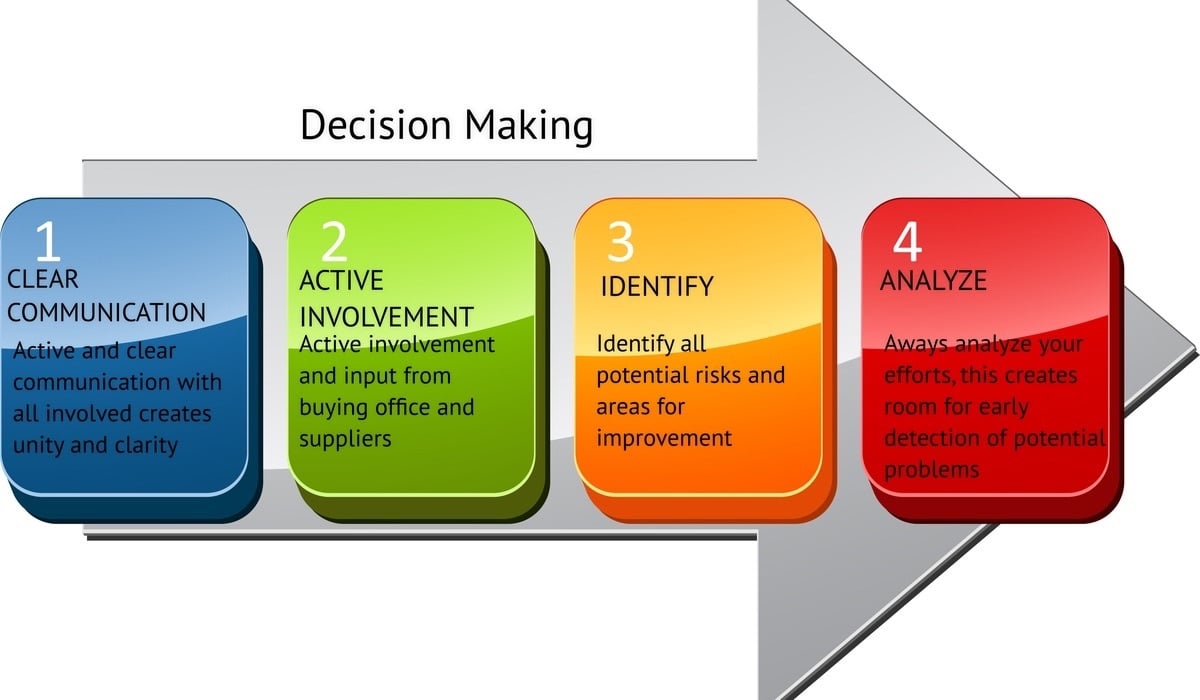 There is evidence that supply chains are often managed functionally with metrics, systems, and behaviors geared to managing the performance of a specific area. Whilst detailed functional knowledge and understanding are essential to delivering a quality product, a narrow view can lead to a potential misalignment of the different elements of the chain towards the end goal. Senior management needs to ensure that decisions which are taken at the top are not sub-optimised in the operational execution. In practical terms, this means a real transformation in how measurement systems are designed and implemented to ensure that there is a full understanding of how the business interlinks. Individual incentives and success need to be aligned for the achievement of overarching goals, not purely functional excellence.
 Be clear – This may sound like an obvious basic principle, but it’s vital to make sure the ‘narrative’ of the information comes across so that it is understood easier and its relevance and context are clear. Use a brief headline, to sum up, the information being communicated and focus on the key aspects of the data as well as why it is important and how it can be used.
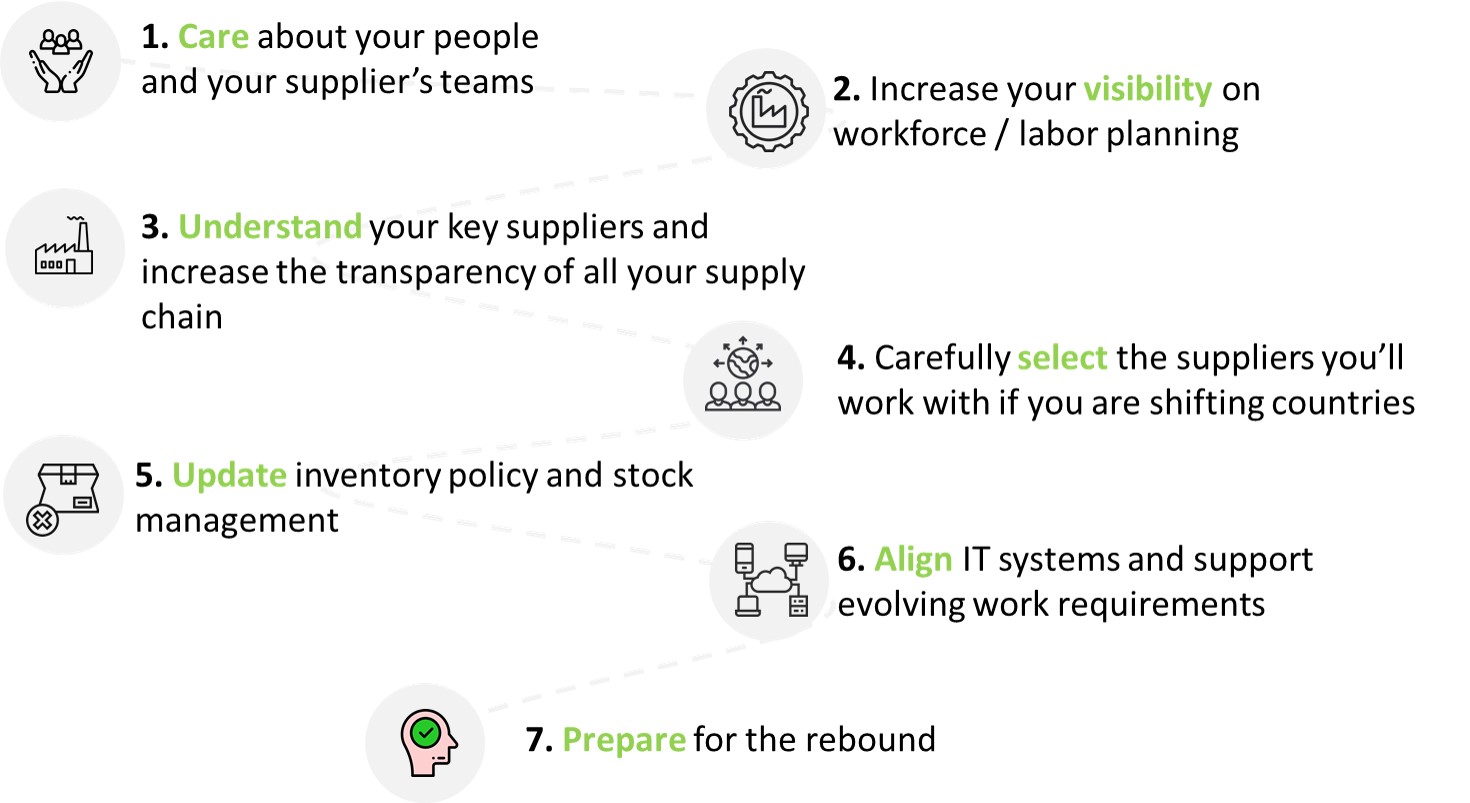
 Retailers can protect themselves from potential supply chain interruptions or delays associated with suppliers’ human rights, labor, environmental, and governance practices by ensuring buying offices have effective compliance programs and robust management systems. Here are steps to manage risk:
 Inaccurate data, existing systems infrastructure, and entrenched business practices are common barriers to the implementation of quality management systems. The importance of getting existing processes in line with
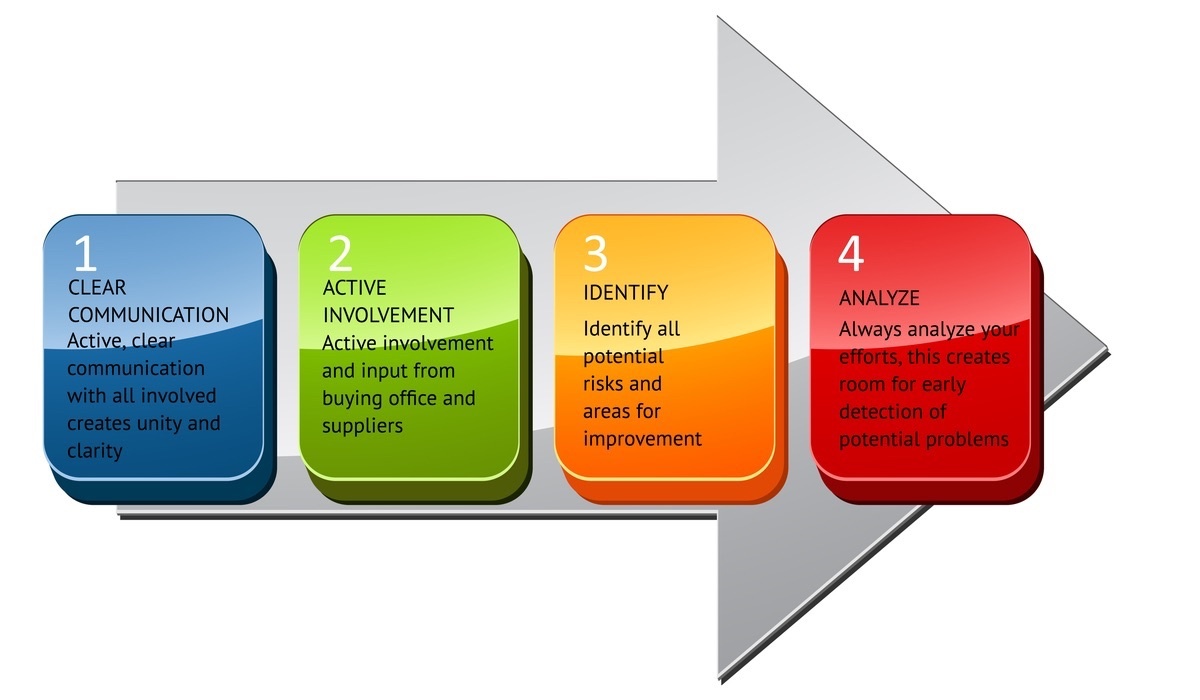
  Once you have done your best to involve all relevant parties in the quality assurance procedures, your next task is to keep your finger on the pulse.
 Even if your quality assurance procedures seem to be working fine, and you have integrated QA and open channels of communication, you may still be falling behind.
Best practices are called that for a reason.
They are tried and tested and shown to improve the success of companies. However, they are always progressing, and so should you.
Do get complacent with what you have, or let hubris stand in the way of taking note of what works for others.
Seeing what works for those in a similar field may greatly improve your business, through incorporating useful ideas, tools, or
Even if your quality assurance procedures seem to be working fine, and you have integrated QA and open channels of communication, you may still be falling behind.
Best practices are called that for a reason.
They are tried and tested and shown to improve the success of companies. However, they are always progressing, and so should you.
Do get complacent with what you have, or let hubris stand in the way of taking note of what works for others.
Seeing what works for those in a similar field may greatly improve your business, through incorporating useful ideas, tools, or  All along I have emphasized that QA procedures are a team effort.
You do not have the time to meet with everyone, answer all emails, and be everywhere at once. You also desire time off.
The good news…
You do not need to do everything on your own!
You can pick your battles to optimize expenditure of time and money.
When you do not have the requisite expertise, hiring a 3rd party company may be the way to go.
This could free up time and some responsibility, allowing you to focus more on what you can manage. This will allow for all-round
All along I have emphasized that QA procedures are a team effort.
You do not have the time to meet with everyone, answer all emails, and be everywhere at once. You also desire time off.
The good news…
You do not need to do everything on your own!
You can pick your battles to optimize expenditure of time and money.
When you do not have the requisite expertise, hiring a 3rd party company may be the way to go.
This could free up time and some responsibility, allowing you to focus more on what you can manage. This will allow for all-round  With these five (