A Look at Your Supply Chain in Times of COVID-19

Categorías
Blogs

A Look at Your Supply Chain in Times of COVID-19

Despite significant efforts to contain the spread and global impact of COVID-19, the situation has worsened, affecting people and companies all around the globe. The full implications of COVID-19 on the supply chain remain difficult to predict, with some areas slowly returning to activity while others are now being adversely affected by the virus. It is, however, possible to see that, at this stage, the crisis is having a direct influence on the supply chain, from raw materials to finished products.

As a company with a strong presence on the ground, visiting factories every day, we at API have seen first-hand some of the challenges that brands and retailers are facing in their supply chain. We are helping our customers and their suppliers brace for the impact this extraordinary crisis has had, and continues to have, on their supply chain, providing them with short-term solutions that will help them maintain high quality in their processes and goods while ensuring that the people on the ground remain safe.


Supply Chain Challenges

We were confronted with the gravity of the crisis during the first peak of the virus in China, where some factories were unreachable, production stopped, goods were unable to be shipped, etc. Now that activity is resuming in this part of the world, the challenges have evolved, resulting in many companies putting the quality of their products at risk. It is important to bear in mind that these challenges will most likely be replicated in other manufacturing areas when activity resumes. Therefore, a sound understanding of those issues now might allow for quicker reactions in some of your other sourcing locations. Among them are:

  • Shortage in labor/workforce: factories are struggling to get 100% of their employees back on site due to health issues or travel restrictions. This might encourage factories to hire new people lacking experience, with no time for adequate training and with the risk of undeclared subcontracting.
  • Inadequate production planning and status: when resuming activities, some factories might not operate at their full capacity which will render it difficult to meet production targets. It is important to check your factory records in order to see actual people in the production line, daily output, and quality control reports.
  • Rush in production: when factories are able to resume activity, some might be in a rush to make up the time they lost and may be tempted to cut corners and speed up processes. Some steps are rushed leading to mistakes, and some steps are directly skipped such in some cases the quality control, which might put your entire production at risk.
  • Excessive stock: goods that were produced before the virus outbreak have likely been held in the warehouse while awaiting shipment. In warehouses where storage and conditions are not satisfactory, complications such as deterioration or the development of mold may have emerged. 
  • Raw materials shortage: resumption of activity leads to an increased demand for raw materials and components, thus resulting in a shortage. Brands and retailers can shift their production to areas that are less impacted, such as other SEA countries, which involves a risk if the new suppliers and factories are not adequate. 
  • Lack of quality control to ensure safety: at the height of the epidemic in China, factories and third-parties reduced the movement of people in and out the premises to avoid putting employees at risk. This meant a decrease in the level of quality control, which put the production quality at risk.

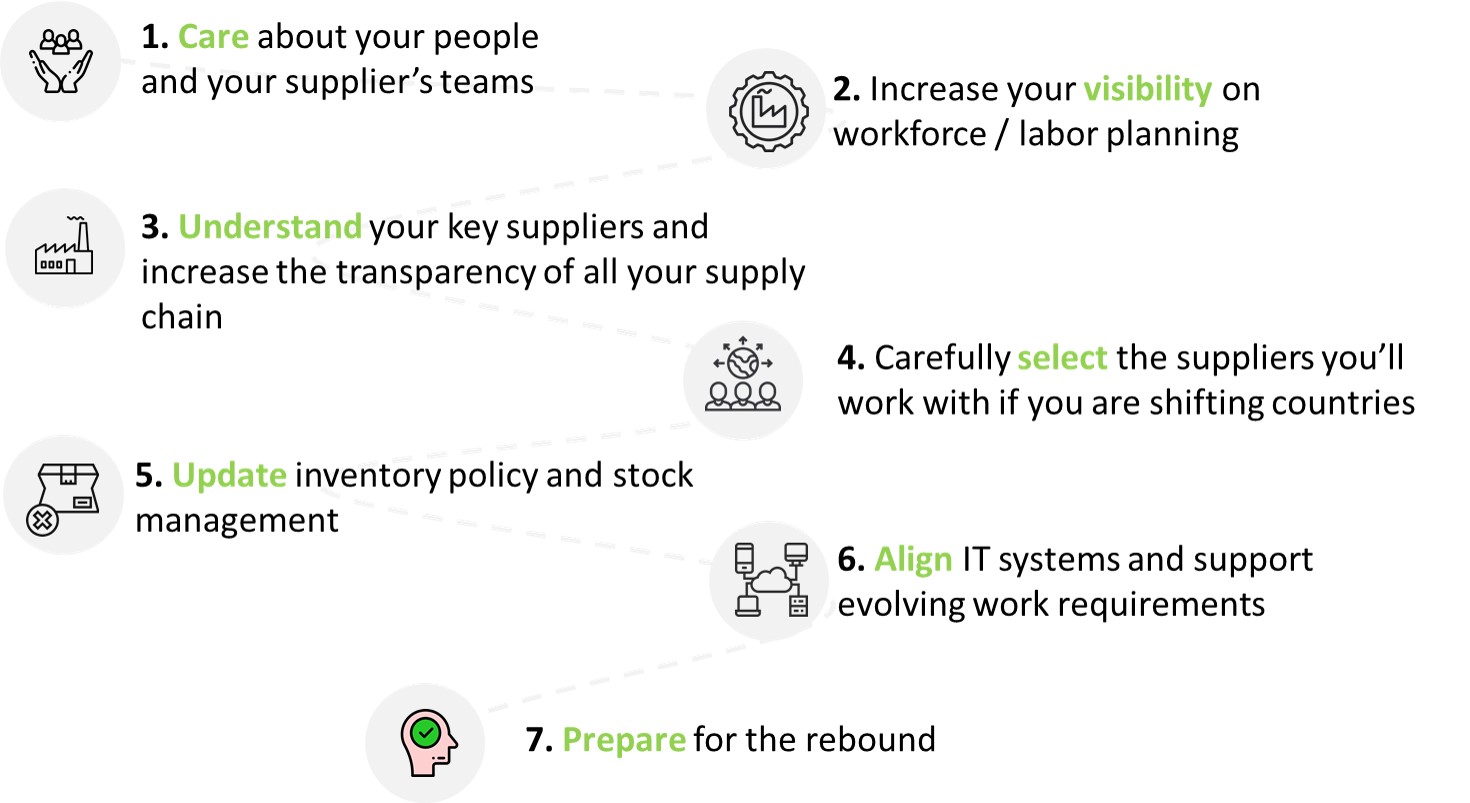
7 Tips to Help Alleviate Disruptions in the Supply Chain
7 tips_pic

This crisis may be the catalyst to revisit the global supply chain strategy and accelerate the adoption of new models and capabilities, but in the meantime short-term actions are needed to respond to the challenge.

Here are some tips from a manufacturing perspective to help with the continuity of your supply chain while maintaining quality products:

  1. Care about your people and your supplier’s teams
  • Educate employees on COVID-19 symptoms and prevention
  • Ensure your factory has screening protocols


Training and specific audits that focus on the measures to be adopted during this crisis are a good tool to ensure the health and safety of the teams.

  1. Increase your visibility on workforce/labor planning
  • Check actual capacity of your factories
  • Assess impact on production times
  • Pay additional attention to product quality as plants run with fewer workers and some might hire temporary/new staff who might be unqualified


Data collection here is key: from gathering the records of the factories for a quick screening, to implementing more in-depth measures such as technical audits, in-line inspections or in-production assessment, having greater visibility of the real situation of your factories is vital at this stage to not only ensure the completion of your production on time but also the quality of the goods delivered.

  1. Understand your key suppliers and increase the transparency of all your supply chain
  • Understand the impact your orders have on one’s factory production lines
  • Understand the flexibility one factory has in regard to production / purchase shifts

Whether your orders only represent a small portion of one factory’s production lines or you are flooding these same production lines with your goods makes a huge difference as to how to interact with this factory. If you are not a key customer, you need to make sure you understand how the factory will be dealing with your order when/if they face a shortage of staff or inventory. 

  1. Carefully select the suppliers you’ll work with if you are shifting countries
  • Ensure you’re working with the right suppliers for your productions

The concept of shifting production to other areas was already on the table before the virus appeared, with a trend among many companies toward considering moving ‘out of China’. Diversifying areas of production and looking for alternative locations can help secure additional inventory and capacity. However, launching production in a new area can be challenging if you don’t have the experience or the right teams in that specific area. A third-party company can support you with adapted solutions to facilitate the transition and ensure the quality of your production through a dedicated technician program.

  1. Update inventory policy and stock management
  • Before = as little stock as possible
  • Now = need to anticipate and increase safety stock

This might lead to associated risks such as product deterioration or mold development which can be identified via a final inspection and tackled with a warehouse condition audit or a more elaborate mold prevention program.

  1. Align IT systems and support evolving work requirements
  • Manage quality remotely
  • Use new IT tools and solutions

We are being forced to shift from a culture of ‘on-site’ work to ‘remote work’. Be ready to embrace change and to consider possibilities that were not even contemplated a few months ago, such as video-monitored inspections.

For brands, retailers and importers’ quality management teams, online quality management solutions can help manage your goods’ quality even when working from home. With a simple click of the mouse, it is now possible to keep track of your quality actions, read reports and make decisions on whether or not the goods should be shipped. Expert technicians are also one video/phone call away, offering their support in these difficult times and finding the best possible solutions to cope with the crisis.

  1. Prepare for the rebound
  • Be ready to move quickly

We are, without doubt, facing exceptional times and although it is impossible to anticipate when and how this epidemic will pass, we need to remain confident, align our efforts and prepare for a brighter future. Stay alert and ready for change: those that are able to adjust quickly will have a higher chance of rebounding and adapting to the times ahead.

At API we are putting our manufacturing experience and product expertise at the disposal of our clients to help them adjust during this difficult time. Thanks to the agility and flexibility of our teams and our local infrastructure we are able to quickly implement on-site and remote solutions to respond to our clients’ needs.

Do not hesitate to get in touch with us to discuss your supply chain challenges.

Categorías
Blogs

The Ultimate Quality Inspection Guide: 9 Steps To Follow

Quality is what makes (or breaks) a brand and its products. Simple as that. How much time do you actually spend analyzing your quality control systems for focal points that could be the cause of the quality problems you are facing?
Product defects are a reality, for everyone!

Una CPSC recently recalled 29 million IKEA chests and dressers that do not comply with the performance requirements of the U.S. voluntary industry standard. This defect resulted in 3 deaths, costing IKEA an amount of $50million for each family in settlement.
Time constraints, lack of resources with ineffectual QMS systems and no guarantees of a perfect quality product often play a role in the number of product defects your supplier produces.

So, how does one avoid costly mistakes that harm their brand and reputation?

We have created a step-by-step guide on how a third party quality provider such as API can help with improved product quality by minimizing defects.
As a professional quality assurance company, we take pride in customizing our quality solutions to that of each of our client’s needs.
This guide addresses the importance of the quality inspection procedures you choose to use for your product and the benefits that they can have for your overall factory performance.

So what can you expect to learn from this?

We walk you through the moment that you touch base with API, to when and who contacts you and how they go about assessing, inspecting and addressing your quality needs and issues every step of the way.

Compliance for improved product quality

  • Tell us everything
    When we say tell us everything we mean it.
    We cover topics such as your exact needs and wants for inspection and testing, as well as discuss what your auditing needs may be. We also follow up on your progress with the Technical Compliance File (TCF) or introduce you to this compliance method.
    These topics help us define the types of questions we need to be answered to better position ourselves in understanding a client’s particular set of needs.
  • Specify everything
    We take you through the specification process and provide you with examples of how you can go about this.
    From dimensions of your product to the colour, to the raw materials, to your packaging requirements, we aim to improve the production process by making this step easy for your supplier to navigate.
    Communication and specification are key.
    An often underrated element of preventing product defects is building a good collaborative relationship with your supplier.
  • Know what your inspection needs are
    Each inspection type is different. This guide takes you through the step-by-step process of each inspection type and what you can expect from each with an outline of their key benefits for you and your end product.
  • Reducing product defects and raising the overall quality of your factory  
    Once all the work is complete, depending on how many inspections were performed,  API provides Key Performance Indicators based on data related insights that were identified through the various inspection reports.

Improved product quality through reportingThis data helps identify any problem areas that may need attention, through this API can then propose improvement strategies. Say, for example, a supplier repeatedly has below standard inspection results, we will then be able to propose a technical audit of the factory to identify root causes and based on that propose any corrective actions, which will, in turn, raise the overall quality of the factory.

**Bonus – We have added checklists to help assist you in improving your product quality.

Product defects are not great, they are what probably keeps you up at night, but in following the quality inspection guide you will begin to reduce the number of defects you experience and in turn will also raise the overall quality of the factory.

This guide is for any importer, retailer, and quality manager who is constantly looking to improve their quality control procedures through the use of an expert third party quality provider that can assist in the following;

  • Raw material inspection solutions
  • Inline, DUPRO and FRI inspection solutions
  • Technical and social auditing solutions
  • Data capturing from checklists and reporting
  • Improvement strategies based on data based insights

A third party quality provider with the appropriate expertise and experience will take you above and beyond in achieving high-quality products and placing you at a competitive position in the market place.

CLICK HERE AND TAKE A DIVE INTO OUR QUALITY INSPECTION GUIDE THAT WILL HELP with Improved PRODUCT QUALITY


Categorías
Blogs

Why European Brands Should Invest In Turkish Toys

Lying partly in Asia and partly in Europe, Turkey is an ideally located hub with opportunities for growth and innovation, with special attention to those in the toy industry. Turkish toys are beginning to capture the attention of European importers, and the industry is set to flourish in the coming years.

Learn why Turkey is the place your brand should be setting its sights on for your toy manufacturing and the benefits of this sourcing opportunity.

Importers are becoming increasingly cautious when sourcing abroad due to the risk they take when it comes to the quality of the toy or the raw materials that were used in the process of production.

Turkey has recently started manufacturing toys with this in mind.

What do I mean?

Turkey has begun manufacturing toys according to the CE directive, which ensures that their toys are compliant and ready to be exported into Europe with all toy safety regulations being met. These new toy regulations became effective on April 4, 2017.

In this blog post, I seek to outline this trajectory for growth and highlight what this opportunity for growth can mean for your sourcing strategy.

The Turkish Toy Industry Is Set For Growth

The toy industry in Turkey is set on a continued trajectory for growth. The below graph indicates that 33% of the Turkish population are children. Its toy industry has grown 20 times over in the last five years, and is set to be worth around USD 1 billion.

turkish toys

Currently Turkey is the EU’s 4th largest export market and 5th largest provider of imported goods. The EU is by far Turkey’s number one import and export partner.

This level of industry growth provides an ideal platform in which many manufacturers and importers, both domestically and internationally, can leverage.

The challenges of sourcing in developing countries

Many sourcing countries are currently in third world or developing countries, which makes it harder to guarantee high levels product quality and supply chain compliance.

Some other challenges include:

  • Travel times – The time it takes to get to various factory for inspections
  • Expenses – Longer travel times means greater expenses.
  • Less hands on – Distance means that it is difficult for you to be hands on with the factory and your product.
  • Social compliance – This can be hard to achieve and monitor in sourcing countries as cheap and forced, or child labour, often go undetected.
  • Product compliance – Ensuring your children’s toy arrives in compliance with all European standards being met is likely one of the greatest challenges that importers face.

Turkey presents itself as a sourcing alternative to that of Asia as well as provides a sourcing opportunity that is closer for European retailers and importers.

What are the Key benefits of this sourcing opportunity

  • Faster time to market due to an ideal geographical location that provides a competitive position for your brand and product.
  • turkish toys marketYou can be more hands on in approach to factory and production monitoring and inspection.
  • You can meet trend demands faster – This can often be done through ordering smaller quantities at a time.
  • Manufacturing costs will continue to drop as the industry grows

If you are to remain a key competitor in the marketplace, it will be important for you to understand the global geographical opportunities that are out there.

Even though sourcing in Turkey may result in elevated manufacturing costs from the outset, the country has ensured their national toy safety regulations are matched with that of the EU regulations, which presents an opportunity for further growth and a uniquely competitive advantage for European toy brands.

Let us know if you have leveraged opportunities like this before and what some of your challenges were in the comments section below

API can assist with all of your sourcing and quality challenges, please reach out if we can help you in any way and we will be happy to assist.

{{cta(‘94176617-12fb-42a8-8089-045eac6d55ea’)}}

Categorías
Blogs

How Lego improved CSR with toy quality management system?

Corporate Social Responsibility (CSR) is a must for any toy brand that wants to achieve growth and avoid the costly implications of non compliance. A company that is testament to this fact is Lego. Last year the toy giant reported its highest revenue yet in its 85 year history, their profits rising 1.7% to 12.2bn kroner. This growth showcases the heights you can achieve through organizational commitment. Global retail brands are increasingly wanting to partner with suppliers of children’s toys who can provide them with the appropriate environmental and social compliance. Lego has been able to achieve their CSR goals through going above and beyond what any toy quality management system requires. How have they done this? Renewable energy. In 2012 the toy company began investing in wind turbines to power their operations globally. As a result, in 2016 more than 360 gigawatt hours of energy was used by the LEGO Group to produce the more than 75 billion LEGO bricks sold around the world during the year. Toy quality management systems - renewable energy They initially had committed to making this transition by 2020, but they ended up meeting their target 3 years early! This is one great commitment to the realm of renewable energy. Apart from this they are currently investing loads of money and time into finding alternatives to plastic for their famous building blocks. As consumers increasingly dictate how manufacturers design and make toys, the power of adopting CSR and green initiatives as a part of your competitive strategy will have global results for your brand. What do I mean by this? The toy quality management system you choose to adopt will provide a framework for which CSR is able to be strategically implemented for your brand. Lego is a prime example of this. Whilst they are a children’s toy brand, they have committed fully to sourcing a more environmentally friendly plastic for their iconic plastic blocks. Even though they have not yet found a suitable alternative, their commitment and investment in trying to, puts them at the forefront of an initiative consumers the world over want to see and be a part of. So I put the question to you…
How can your QMS leverage CSR for a globally competitive position?

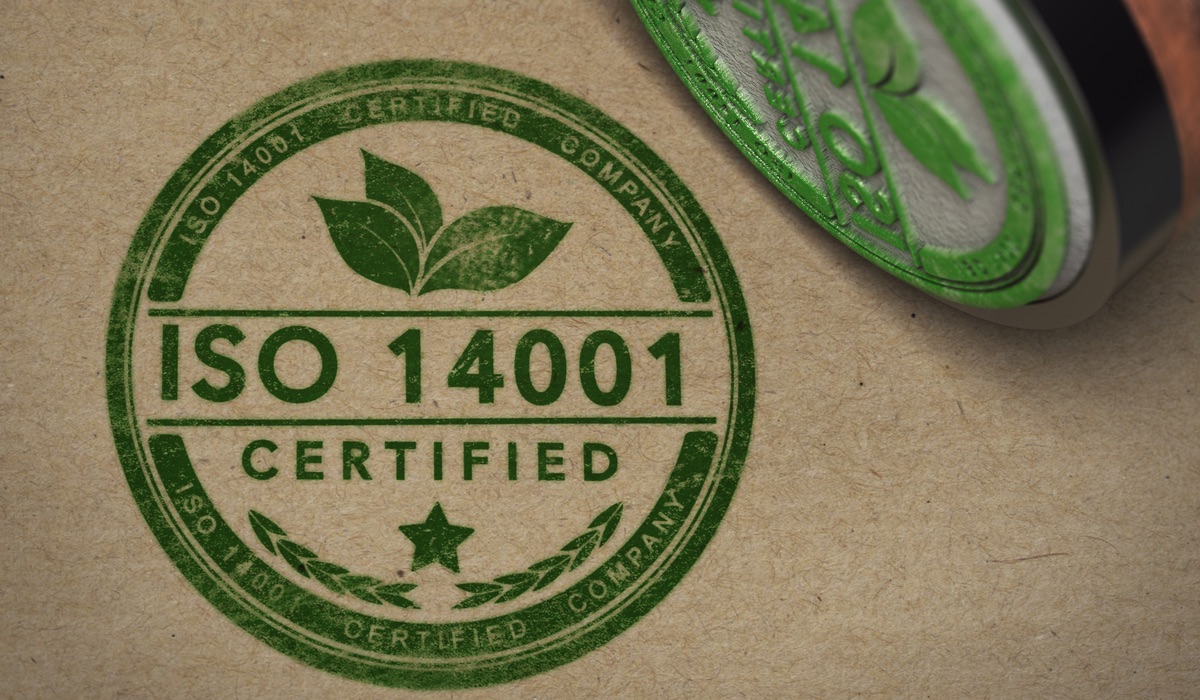
Let’s take a bit of a deeper dive in… A QMS framework is just that: A framework that has been created to ensure quality in all areas from management to products, to customers, to factory processes and environmental impact. The ISO 14001:15 is the international standard used to navigate environmental impact and innovations. What are the key benefits of complying with ISO 14001:15? 
  • It demonstrates compliance with current regulatory requirements. Toy quality management system - ISO 14001
  • It increases leadership involvement and engagement of employees.
  • Mejora la reputación de la empresa y la confianza de las partes interesadas mediante la comunicación estratégica.
  • It achieves strategic business aims by incorporating environmental issues into its business management.
  • It provides a competitive and financial advantage through improved efficiencies and reduced costs.
  • It encourages better environmental performance of suppliers by integrating them into the organization’s business systems.
This system provides accountability and creates a platform for building sustainable relationships with your suppliers, as you work together to meet a set of global standards for your toy production.

How can your toy brand go about implementing ISO today?

We have outlined a stepped process which will help you prepare for compliance according to the environmental ISO 14001 framework for your brand;
  • You will need to identify all aspects and environmental impacts of your organization’s activities
  • If you have not established an environmental policy for your organization, you will need to go ahead and do this.
  • You will need to formalize your environmental procedures and publish them in company manuals and company policy.
  • You will need to bring the company into compliance with all legal requirements and mandatory regulations.
  • You will need to get the confirmation of compliance by all stakeholders such as clients and legal authorities.
  • Lastly, you will need to obtain a certification of your environmental management system by a registered third party.
ISO developed these frameworks in which brands are able to optimize their quality systems according to a set of international standards, by international standards it means that consumers can have confidence that their products are safe, reliable and of good quality. The ISO’s standards on road safety and toy safety regulations are just a few of those that help make the world a safer place. As consumers today become increasingly aware of how their favorite brands are attaining goals that closely align with a global value system, it will be important to adopt a toy quality management system that increases your competitive position in the market place. Do you have any questions around environmental auditing solutions? We will be pleased to answer them and help where we can.

¿SUPONE EL CUMPLIMIENTO DE LA NORMATIVA UN RETO PARA TI?

CONTÁCTANOS PARA CONSTRUIR HOY MISMO UN PROGRAMA DE CUMPLIMIENTO ÚNICO PARA TUS NECESIDADES

Categorías
Blogs

Mejores prácticas de inspección de mobiliario para importadores

¿Cómo evitar retrasos prolongados, retiradas de productos y posibles daños a la reputación de la marca debido a problemas de calidad en muebles antes de que sea demasiado tarde? Importar muebles desde el Sudeste Asiático es tan atractivo, si no más, que cualquier otro mercado del mundo, pero la logística, el cumplimiento normativo y los posibles desafíos de comunicación hacen que no siempre esté garantizado que los estándares de calidad del mercado de destino se cumplan. En esta entrada, vamos a explicar qué puedes hacer para asegurar que tus muebles lleguen con el más alto nivel de calidad y, en última instancia, dar a tu marca la ventaja competitiva que merece.

¿Has definido tu DCL (lista de clasificación de defectos)?

Este es a menudo un paso que se deja para el final, pero clasificarlo desde el principio ayuda a clarificar el significado de tu informe de inspección de mobiliario. Esta es la categoría de defectos más utilizada:
  • Defecto crítico - Un defecto crítico es aquel que el juicio y la experiencia indican que es probable que:
    • Provoque condiciones peligrosas o inseguras para las personas que utilicen, mantengan o dependan de los productos; o
    • Impida el desempeño de la función táctica de un artículo final importante. Un defectuoso crítico es una unidad de producto que contiene uno o más defectos críticos.
  • Defecto importante — Un defecto que probablemente resulte en fallo o reduzca la capacidad de uso del producto para su propósito previsto.
  • Defecto menor — Un defecto que no es probable que reduzca la capacidad de uso del producto para su propósito previsto, o una desviación de los estándares establecidos con poco impacto en el funcionamiento efectivo del producto.
Si no existe una DCL establecida, API dispone de una lista de verificación de inspección detallada que se pondrá a disposición para poder proceder con la inspección.

DUPRO (inspección durante la producción) para resolver problemas de calidad en muebles lo antes posible

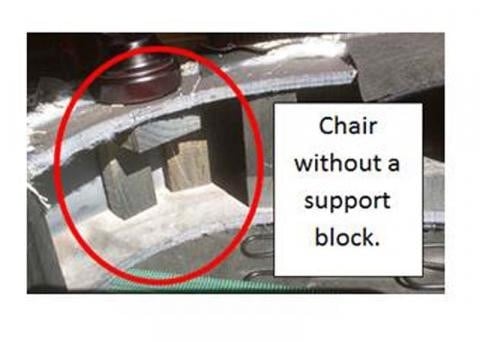
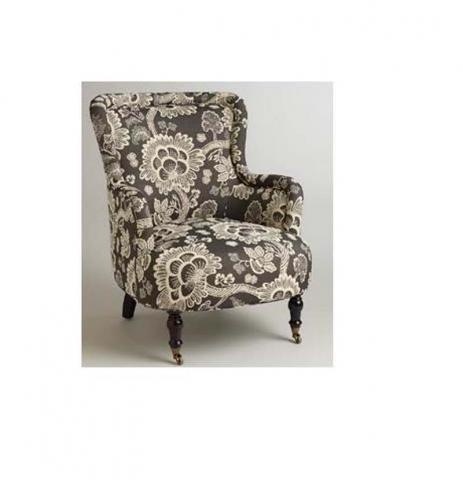
Esta suele ser una etapa crítica para garantizar que el mueble final alcance el nivel de calidad esperado. Como referencia, 2.700 sillas fueron retiradas del mercado debido a riesgos de caída causados por la rotura o flexión de las patas. La CPSC determinó que la estructura de las sillas tapizadas carecía de un bloque de soporte en la pata, lo cual iba en contra del diseño original. Furniture inspection - DUPRO furniture inspection - DUPRO check
Como en el caso de esta silla tapizada, nunca podrías verificar visualmente la estructura interna una vez que ha sido recubierta con tela tras finalizar la producción.
Furniture inspection complete productUna inspección DUPRO puede evaluar algunos de estos puntos críticos en el momento adecuado, antes de que finalice la producción. La DUPRO puede centrarse en productos terminados, evaluar el estado de la producción y el sistema de calidad implementado en la línea de producción. En muchos casos, un sofá o mueble se inspecciona antes de que todo el pedido haya sido completado. Este tipo de inspección permite identificar cualquier problema de forma temprana y, por tanto, corregirlo in situ. Tu informe de inspección DUPRO debe incluir todos los problemas de calidad detectados durante el proceso de producción. Ningún problema es demasiado pequeño como para no ser incluido.

Update your furniture specifications, based on the DUPRO feedback

Upon receiving your DUPRO furniture inspection report, you will need to go through every step of the report thoroughly. Look at what “pending” results there may be. You should have a strategy in place on how you address these “pending” quality issues. Furniture inspection - redefining product specifications It is at this point that you will need to re-communicate your products specifications to begin addressing those furniture items with “pending” status. Sourcing in Asia is not without communication and language barriers. You can look to overcome these barriers by using a neutral third party quality provider who has the expertise in your sourcing area. Having boots on the ground will ensure that your product specifications are communicated correctly and clearly.

Actualiza las especificaciones de tus muebles con base en los resultados de la inspección DUPRO.

Es importante tener en cuenta que un análisis de causa raíz (RCA) no debe ser algo puntual que se implemente únicamente en casos aislados de defectos graves en producción. Debes contar con una estrategia de RCA clara sobre cómo gestionarás los productos de mobiliario defectuosos con tu proveedor. ¿No tienes una estrategia de RCA? Sigue los pasos que se describen a continuación:
  • Reconocimiento y definición del problema — Reconoce y define cuál es el problema en la producción de tus muebles.
  • Identificación de las causas — Lleva a cabo el proceso de identificación de causas. La clave aquí es no dedicar demasiado tiempo a lluvias de ideas o esquemas mentales; no es necesario que sea un proceso largo.
  • Identificación de soluciones — Basándote en las causas identificadas, debes determinar las mejores soluciones para evitar que el problema vuelva a ocurrir.
  • Implementación de las soluciones — Si la calidad de tus muebles se ha visto comprometida en la línea de producción, debes empezar a aplicar las soluciones identificadas para prevenir futuras incidencias. La solución debe optimizar y mejorar tus procesos operativos. Si no lo hace, puede que necesites repetir los pasos anteriores hasta encontrar una solución adecuada.
Un RCA no tiene por qué ser un proceso largo. Pero sí debe identificar los problemas y facilitar la optimización de los procesos.

A Una FRI (Inspección Final Aleatoria, por sus siglas en inglés) se basa en inspecciones por muestreo.

Una FRI es una inspección previa al envío de una pequeña muestra de tus muebles. Este tipo de inspección se utiliza para identificar posibles defectos de calidad derivados del proceso de producción. preventing product defects - Sample test.jpg En esta etapa se selecciona una muestra aleatoria de muebles, que se revisan uno por uno para comprobar si cumplen con lo siguiente:
  • ¿Cumple con todas las especificaciones del producto que han sido definidas?
  • ¿Cuántos defectos visuales presenta?
  • ¿Qué pruebas in situ deben realizarse?

Puntos Clave

Los pasos descritos anteriormente deben planificarse y definirse estratégicamente para cada categoría de producto que adquieras. Los beneficios de estos tipos de inspección son:
  • Permiten detectar problemas de calidad en una fase temprana.
  • Facilitan un análisis paso a paso de la causa raíz del problema, lo que te ayuda a evitar que vuelva a producirse.
  • Ofrecen la posibilidad de reajustar y volver a comunicar las especificaciones del producto.
Analiza cada informe de cada tipo de inspección. Si no estás satisfecho, comunícalo claramente e indica qué debe hacerse de forma diferente para cumplir con tus especificaciones. Este tipo de planificación y estrategia te permitirá lograr una producción de muebles de alta calidad y posicionar positivamente tu marca en el mercado. ¿Has intentado optimizar o personalizar tus soluciones de inspección? Cuéntanos en los comentarios cómo estas soluciones han beneficiado a tu organización. Si tienes alguna pregunta relacionada con inspecciones, no dudes en ponerte en contacto con nosotros.

¿SUPONE EL CUMPLIMIENTO DE LA NORMATIVA UN RETO PARA TI?

HAZ CLIC AQUÍ PARA CREAR UN PROGRAMA DE CUMPLIMIENTO

Contacta con nosotros

Categorías
Blogs

Toy Testing: How To Comply With En 71 & ASTM F963

With the strict safety and quality standards of children’s toys, there is absolutely no room for non-compliance. Compliance issues can cause potential health hazards and in some cases fatalities. Here we discuss the importance of toy testing and provide you with an exact outline of toy safety regulations and all of the most recent updates to help you avoid compliance issues, so that you can continue to produce toys of the highest quality. The toy industry is a lucrative one with “toy sales in 2015 increasing by 4% over 2014 to $87.4billion…with estimated growth expected to exceed $90 billion in sales in 2016.”

There is surely continued opportunities for economic growth and sustainable innovation in this massive industry going into 2017 and beyond.

But, the toy market, and product safety specifically, makes it a volatile one.

What happens when due diligence is left by the wayside?

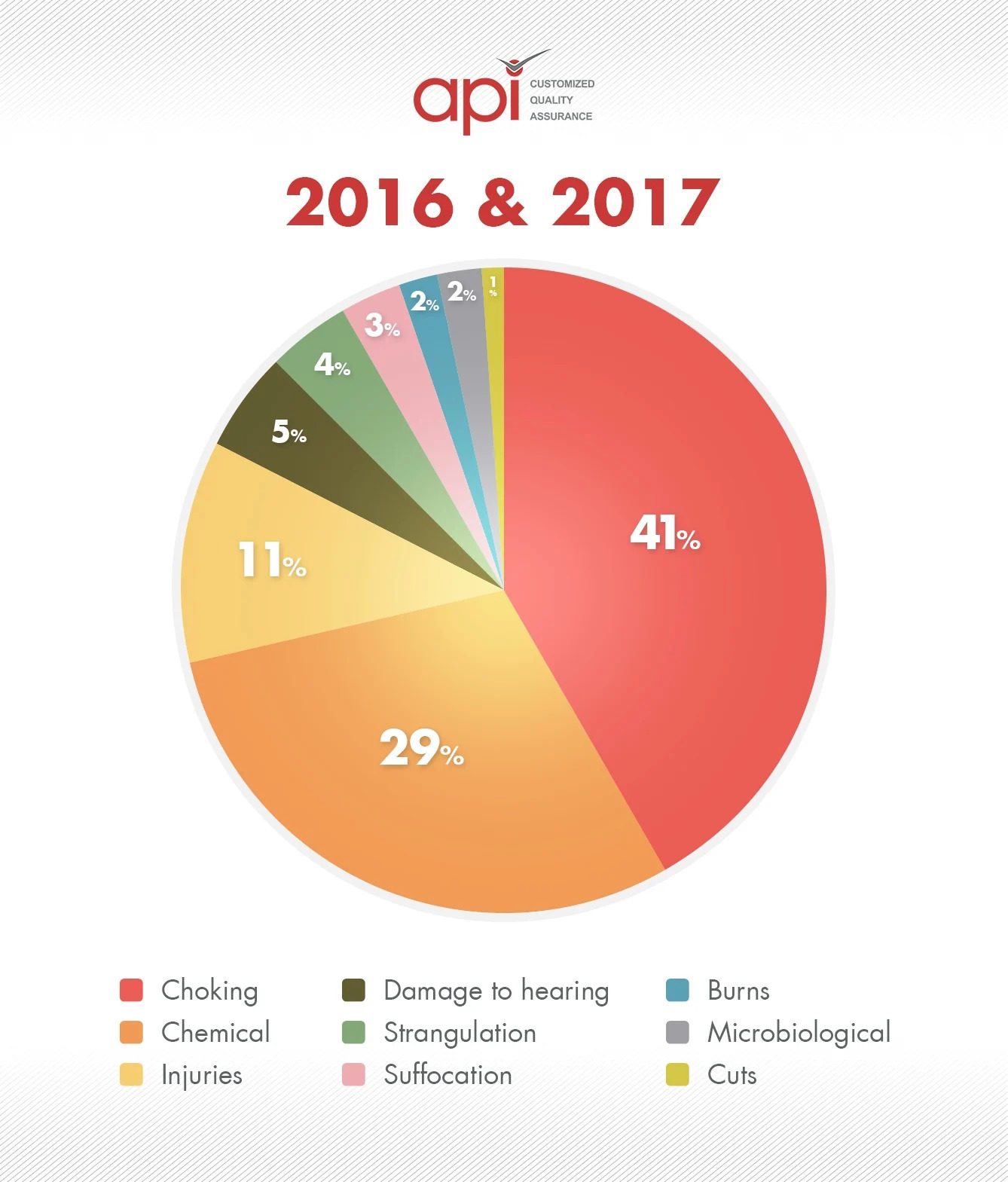
41% of toys that were recalled in the EU alone were due to choking hazards, whilst chemical compositions makes the second largest recall between January 2016 and July 2017.

By looking at the graph below, you will see the breakdown of recalls over this period of time:

Toy testing regulations and compliance issues

The stats above paint a clear picture for importers to abide by toy safety compliance standards, for it is not only in your best economic interest, but also for your brand’s protection and growth.

Today, children’s toys are subject to some of the strictest safety and quality standards in the retail marketplace due to the sensitive nature of their consumer base.

The question is…

How do importers keep up with the latest news in toy safety regulations to avoid potential disasters and recalls as reflected above?

In this blog post, I seek to highlight the EU EN71 safety standards that your imported toys need to comply with. I will also highlight the latest updates of this standard, to ensure you are up to date with the latest in toy compliance.

We also look at the US standard, ASTM F963, where we will highlight the latest updates to ensure that your products are in compliance. Lastly, I seek to provide you with actionable steps to achieving compliance according to these standards and what you can do to continue producing children’s toys of the highest quality.

EN 71

The EN71 is a set of European Product Safety standards that apply to all toys, sold in the European Union. The EN 71 also forms a part of the CE directive. As an importer of children’s toys you will need to ensure that the toys you are importing into Europe are labelled with this CE mark.

This mark basically stipulates that a particular toy is compliant with the safety regulations as laid out by the European Union and its safety standard.

Here is a table of what this standard is inclusive of, but I will also highlight the ones that have been updated recently so that you, know exactly what your products need to be compliant with;

TABLE of EN71

Toy testing & safety regulations - En 71

The latest EN71 update includes

The latest children’s toy update and revision of the above table is as follows;
The CEN has published Toy safety standard EN 71-12:2016 for n-nitrosamines and n-nitrosatable substances. This standard is expected to be harmonized under Toy Safety Directive 2009/48/EC by publication in the Official Journal of the European Union (OJEU).
Major change of the new version includes this;

  • More stringent limits of n-nitrosamines and n-nitrosatable substances for toys intended for use by children under 36 months and intended or likely to be placed into the mouth of the child.
  • a modified definition for ‘elastomer’ from ISO 472:2013 (Plastics – Vocabulary, for better clarity)
  • a new procedure for the extraction process for toys and parts of toys other than balloons
  • use of porous graphitic carbon (PGC) reversed phase (C18) high performance liquid chromatography (HLPC) columns as an additional option for analysis
  • an additional set of multiple reaction monitoring-transitions (MRM-transitions) for quantification and identification

What this revision should mean for your sourcing and production strategies

This standard is applicable to the following products;

  • Toys and parts of toys made from elastomers and intended for use by children under 36 months
  • Toys and parts of toys made from elastomers and intended to be placed in the mouth
  • Finger paints for children under 36 months

Manufacturers will need to provide evidence of compliance from the supplier of these materials, before the manufacturing of these items can proceed. There may also be a random sampling after mass production for post production testing to ensure you are not in violation of the above safety regulations.

ASTM F963-16

Una ASTM F 963-16, The Standard Consumer Safety Specification for Toy Safety, is a comprehensive standard that addresses numerous hazards that have been identified with toys.

Toy testing & safety regulations ASTM F963-16


The latest ASTM F963 update includes

  • Among the changes, the 2016 revision addresses ride-on toys with: a new curb impact requirement, a clarification of overload and stability requirements, and a strap exemption.
  • new labelling requirements for toys that have certain small coins or button batteries,
  • temperature and current-limiting requirements for lithium-ion batteries, and
  • new requirements for materials and toys that could expand if accidentally swallowed.
  • Other revisions include:

– new soaking and compression tests for magnets

– new requirements and clarifications related to microbiological safety;

– clarifications to heavy elements requirements for toy substrate materials

– revised requirements for toys involving projectiles; and,

– clarification of requirements and supplemental guidance for impact hazards.

What this revision should mean for your sourcing and production strategies

You will have noticed that all children’s toys that have been produced after 30 April 2017 needed to be tested according to ASTM F963-16.

According to ASTM F963-16 all toys that are intended for children of 12 years old and under need to be tested by a registered CPC third party testing and quality provider, who will then furnish you with the appropriate product specific CPC which declares that your product complies with the federal toy safety standard.

Suggestions for complying with these toy testing regulations

As an importer you may be feeling overwhelmed about adhering to the regulations as laid out above and while you should be doing everything you can to adhere to them, here we lay out a few suggestions of how to go about doing this;

  • You need to work towards improving quality control procedures by strictly monitoring the quality of raw materials. Do not fall into the trap of using cheaper, substandard materials. Whilst this may be appealing for cost reduction, you will be putting your brand at unnecessary risks.
  • Improving your products quality always needs to be a primary goal. Many of the new updates in regulation also stipulate the use of a third party quality provider as mandatory for your products compliance.
  • Ensure you use a third party company that is up to date with the latest in toy testing and safety regulations. This will reduce the risks of potential product recalls resulting in a bad image for your brand, but also a loss in revenue.
  • Seek new non-toxic environmentally-friendly raw materials. How do you go about sourcing your raw materials? This may step may be a little more difficult to pursue, but let’s take a look at Lego. Their blocks are made of plastic, but currently, they are investing loads of money and time into finding alternatives to plastic for their famous building blocks. It’s this kind of commitment that ensures a positive and innovative position in the market place.

Understanding the regulations and what they mean for your current sourcing strategy for children’s toys will help give appropriate direction and guidelines to your current competitive positioning in the market place.

By understanding these regulations and ensuring compliance according to them, you are able to guard yourself against potential product recalls and even potential lawsuits that could come from health and safety violations that are sadly too often found within children’s toys.

“API is equipped to meet the above product testing and safety requirements accordingly to ensure your brand’s safety and protection.”


Categorías
Blogs

Social Compliance Audit For Consumer Electronics

How should importers of consumer electronics avoid a supply chain which includes suppliers who use child labour, have dirty and unsafe conditions, or who don’t follow labour rules? Here we endeavour to outline how a social compliance audit for consumer electronics can positively position your brand in the market place. Conditions as mentioned above have made themselves all too familiar within the retail supply chain, and the worst part is that many retailers claim that they didn’t even know about this right up until before these tragedies became global news. So how can we prevent this? A social compliance audit. This audit can go a long way in preventing some of the damaging issues many brands of consumer electronic products, and indeed other items, are all too familiar with. Social Compliance Audit For Consumer Electronics A social compliance audit can be difficult to attain, but is an absolute necessity for that transparent supply chain your consumers today are demanding. A social compliance audit ensures that a factory and its practices are abiding by all local laws and that you meet all of the social obligations as set out by the guidelines of the audit, from fair wages to no instances of child labor in a factory. In this blog post, I will outline the exact procedure of this audit, the benefits it offers to your consumer electronics brand and how you can go about conducting this audit for yourself. So, let’s dive in…

What can consumer electronic importers can expect from a social compliance audit?

Consumer electronic brands endeavour toward social compliance for these main reasons;
  • Brand protection
  • To ensure your factory is clean and meets high levels of standards
I have gone on to create a list of what can be expected of a social compliance audit of your electronics factory, to help you better prepare for this; Onsite inspection – The auditors go around and inspect your factory for health and safety violations, this can also be inclusive of any sleeping quarters that may be on site, which will be relevant to the factory being audited. In the case of consumer electronics, which is less labour intensive, but has more machinery which may cause potential mechanical and electrical hazards. Therefore your auditor will spend more time assessing the safety and working environment, from sufficient fire exits to clear instructions of how to exit the building in the case of an emergency. They will also spend time assessing whether sufficient personal protective equipment (PPE) has been made available to each worker. Social Compliance Audit For Consumer Electronics - Document review Document reviews – Auditors will check all the documentation of the supplier to determine the presence of any possible child labour, an all too common violation within the consumer electronics industry. They also assess whether there are any violations of extended working hours and wages. They will also look into what types of social insurance are available to workers and review any fire and safety documentation, which will help to determine whether or not any safety precautions or plans are in place. They will also inspect whether or not there is any environmental monitoring being done and, if so, how it is conducted. Employee interviews – The auditors conduct interviews with the factory in question staff, where they ask them about their working hours, overtime, and about their holiday/leave time. Auditors also like to cross check these statements by interviewing factory management to ensure there are no discrepancies. This helps to clarify whether there are any instances of abuse or misconduct between staff and management. In the case of a re-audit these interviews will then be conducted again to ensure improvement plans are being implemented properly. Closing meeting with audit status – This meeting reveals the audit results of your CE factory and also makes suggestion for improvements. If you use a qualified third party quality management provider to conduct this audit, they will provide you with an improvement plan and customize it according to your needs. Continuous improvement – A reputable third party quality assurance solution provider will provide you with a plan of execution to rectify the shortcomings of a factory. To ensure the factory is executing the suggested improvements there are also unannounced visits by auditors to evaluate the factory’s improvement progress. Factories that attain a clean audit, will only be audited on an annual basis. In factories that achieve marginal results, they are often dropped in on unannounced and also receive audits on an annual basis. Factories that fail will then have a follow up audit again in a few months.
Protecting your electronics brand through a social compliance audit

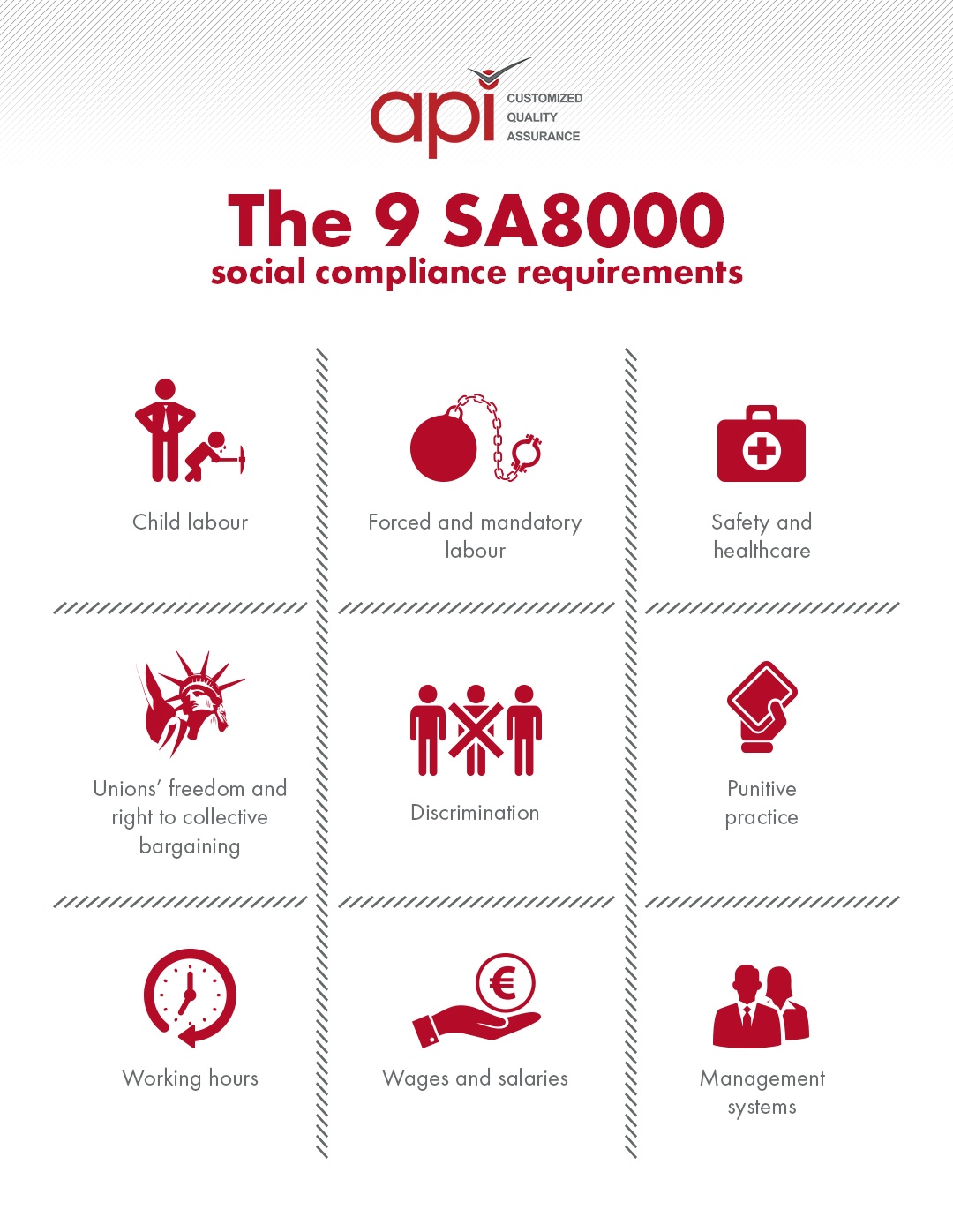
Attaining a pass on your social compliance audit report is a commitment that your organization makes to ensuring that you are socially responsible and that you are committed to treating your factory’s staff ethically and in compliance with global ethical standards. So the question is… Is your consumer electronics brand committed to achieving an ethically responsible supply chain? Let’s take a look at the standards as laid out by SA8000: The 9 SA8000 social compliance requirements are:
  • Child labour – No children younger than 15 years of age may be employed by any factory.
  • Forced labour – No person may be employed by a factory if they haven’t offered to do so voluntarily or be forced to work under the threat of punishment or retaliation.
  • Health and safety – A safe and healthy workplace environment must be provided by the factory, who should also prevent any potential health and safety incidents and work related injury or illness from occurring. In the case of consumer electronics you would need to ensure that there is sufficient personal protective equipment within factories.
  • Freedom of association and collective bargaining – All staff have the right to form, join and organize trade unions and to bargain collectively on their behalf.
  • Discrimination – A factory is prohibited from engaging in discrimination in hiring, remuneration, access to training, promotion, termination or retirement.
  • Disciplinary practices – A factory is prohibited from engaging in or tolerating the use of corporal punishment, mental or physical coercion or verbal abuse of employees.
  • Working hours – A factory must comply with applicable laws, collective bargaining agreements and industry standards on working hours, breaks and public holidays.
  • Remuneration – The right of staff to a living wage must be respected by the factory.
  • Management systems – Compliance must be reviewed and implemented to the SA8000 standard through developed policies and procedures.
Social Compliance Audit For Consumer Electronics - SA8000 In understanding the ethical compliance standards as laid out above, you are able to make informed decisions about the suppliers you choose to use in the manufacturing of your electrical products. Panasonic and Sony have been caught in supply chain scandals, that have created immense amounts of bad media coverage for the global electronic brands. Accused of unfair labor practices in factories, with vastly underpaid staff and electrical components that are said to be sourced from parts of the world known to be inclusive of child slave labour. With this in the media, consumers will begin to think twice about purchasing your product as they do not want to be affiliated with brands who are not achieving progress toward a transparent, sustainable retail supply chain as laid out by SA8000 guideline. Can your consumer electronics brand afford publicity like this? Achieving your social compliance audit will reduce any potential risks relating to the violations of global ethical standards, which puts your brand in a risky position and can cost your organization public shaming and embarrassment, scarring your brand. Dependent on the severity of the violation it could also cost you millions in lawsuits too. This type of audit provides the desired transparency many consumers are looking for within the retail supply chain. Today’s consumers are becoming more concerned with the way in which products are sourced and manufactured, and rightly so. So what are you doing to maintain consumer trust in your brand?

Who should conduct your factory’s social audit?

Many suppliers choose to conduct their own audits with in house teams, this method is untrustworthy which can produce bias results of the supplier.

Unless you have an extremely good relationship with the supplier in question and know for a fact that they are not going to lie on your audit report, then this way of passing a factory social audit is not our recommendation. Hiring an impartial third party quality management provider may be the answer They are viewed as independent parties with all the technical expertise to be able to produce unbiased reports and provide you with actionable improvement plans for you to progress forward in achieving your factory’s social compliance. auditoría social de la fábrica

Independent audits are also taken into higher consideration by NGO’s and the media to be a truer and an honest reflection of the findings within the factory.

By outsourcing this service you not only are able to protect your brand’s image, but you minimize any potential risks you might face by not having a social audit, that can prove to be costly for your brand in many more ways than just revenue loss. Many consumer electronic factories are still found in violation of unfair labor practices or extensive work hours. This doesn’t have to be… Let’s take a look at what Apple has implemented when underage labor is found within their factories; “If we find underage workers in our suppliers’ factories, we make the suppliers return the children to their homes, pay for their education at a school of their family’s choice, and continue to provide income for basic needs until they reach the legal working age. We also enlist a third-party organization to monitor the children’s progress and report back to us. After they complete their education, suppliers must offer them reemployment. In 2015, we found three cases of underage labor — and we will continue to look for it.” Apple has shown that ethical and fair practice within your factory is not impossible to attain. It will be up to you to implement an appropriate strategy to deal with the social challenges felt within consumer electronic factories. Apple is a global leader for consumer electronics, but is also innovating in the way that they say no to injustices in a supply chain and go above and beyond to achieve an ethical and fair supply chain to produce the high quality electronics that they offer. Are you willing to do what it takes to achieve that transparent supply chain? API can help you attain this goal as your third party auditing partner. Have you undertaken SC audits across your CE supply chain?  If you have any question about factory social audits, feel free to Contacto and we will be pleased to answer them and help where we can.
Categorías
Blogs

Compliance Issues & Product recalls: 4 Lessons To Learn From!

Product recalls are a veritable nightmare! There is no other way to express the dread and that sinking feeling when the customer complaints start rolling in, and you begin considering whether or not to announce a recall. A recall will spell significant damage to your brand image, and thousands, if not millions of loss in revenue. Yes, you may argue that retailers are insured against recalls, but building trust with your customers is a difficult task at the best of times. The digital age has also made it more difficult to hide the smallest of quality problems from your customers, and rebuilding trust from slip-ups that could have been prevented just adds fuel to a fire that won’t stop burning. But it’s not all doom and gloom… Product recalls can be prevented through best practice QC procedures, through due diligence, through strategic planning and implementation, through proper inspection reports and appropriate product testing to ensure that  your compliance issues are a thing of the past. In this blog post, we take a look at four product recalls from household goods and electronic giants in recent history, that could have been prevented through a bit of due diligence, through proper testing procedures and reliable quality management service providers.

1. Keurig Coffee Makers To Pay $5.8 Million In Civil Penalties

Keurig is a well-known coffee machine brand in the United States, with many corporate offices around the country being dotted with these machines, where it fast became an office staple. But, imagine this. Waking up to make that quick cup of coffee before work, or even offering an important investor a cup of coffee before heading into a meeting, and your machine begins to steam and spit out boiling water, causing a potential burn injury. Not an ideal situation… This left Keurig in some seriously ‘hot water’! Compliance issues and product recallsOn 23rd December 2014, the Consumer Product Safety Commission (CPSC) announced the recall of over 7 million coffee machines.Between 2010-2014, there were over 200 complaints of boiling water spraying out of the machine and approximately 90 burn injuries reported.It has been recently announced that Keurig has agreed to pay over $5.8 million in civil penalties to the government. This penalty is to settle the charges against Keurig as they knew about the product’s defect, but failed to report it and continued to export the product despite the fact that it can and did cause major injuries. What should have been done differently? Keurig appealed to consumers to request a repair kit that was able to fit onto the product free of charge. In reviewing the repair kit installation guidelines, it consisted of a new basket with a rubber seal to ensure that no hot water or steam would escape during use causing potential for burn injuries. There was also an extra handle that slides over the original one to avoid direct contact with the hot water or steam that may be released when the handle is in position, or if hot water or steam is released during use, it would be pushed in the downward or upward position. This kind of repair kit tells us that problem was related to product design more than any manufacturing or quality control issues. This story also tells us how that at times it may not be enough to be in compliance with just the testing regulation. There may be times when specific tests need to be developed to beyond the standard testing criteria, simulation tests are often a good example here; where a quality control team can simulate the kind of tough operating environment that a specific product may need. This can often be done through a thorough risk assessment that should be completed during the product design stage. The CPSC has not been able to disclose any more information as to what caused the defects, but that Keurig has agreed to build and implement a compliance program to ensure that they comply with the Consumer Product Safety Act. Adopting a compliance program stands as the rules, standards, regulations and requirements your organization sets for its suppliers, as this will grant you full transparency into supply chain operations. A compliance program should not just be another program that importers tick off on an annual basis. It should become a key outcome and a reflection of an effective and efficient organization. The key to a successful compliance program will be how well you can integrate compliance procedures into every facet of your brand.

2. Hasbro Recalls 1 Million Easy Bake Ovens

You have found that perfect Christmas gift for your little ones. One that will create all those cute little memories that you will hold onto for a lifetime. Then, a cry for help as their hand is stuck inside the toy under the element, causing some serious injury. Quite far from a ‘Merry’ Christmas… Hasbro was in deep with over 1 million easy bake ovens that were recalled and over 77 reports of injury, and a report of one five year old being burnt so terribly that a partial finger amputation was needed.

What should have been done differently?

There was a finger entrapment test that was developed under the ASTM F963 as an industrial standard, but which only came into regulation in 2013 under the Consumer Product Safety Improvement Act (CPSIA). Currently, all toys and children’s products need to be designed to comply with this ASTM F963 standard. Retailers should be requesting that their manufacturers and suppliers need to be testing in compliance with this regulation, and have to be passed through an accredited third party lab before mass production can begin. In meeting this criteria, there will also have to be a double check; either during inspection or through the lab with a random sample that is picked during the inspection process. Procedures like this help to minimize potential risk and recall of a noncompliant product.

3. Sony To Pay $19 Million Dollars in Battery Recall

Exploding Dell notebooks with non-compliant Sony batteries. A match made in retail hell. 4.1 million batteries in Dell notebooks needed to be recalled for overheating and potentially catching fire. Research says that this was due to metallic particles being present in the critical parts of the batteries, at certain times causing instability in the battery. These batteries were not only used in Dell computers, but other brands like Apple as well, so they recalled over 10 million batteries in total. Sony has recently agreed to pay $19 million dollars as settlements to this ongoing lawsuit.

What could have been done differently?

It has been said that the reason for this potential hazard was due to the presence of metallic particles, in the battery, in particular; nickel was found in these batteries. It unexpectedly got into the battery during the manufacturing process during two stages of the production process. Here we can assess that the factory’s quality systems should have been reviewed and as to whether or not their QC team followed best practice in identifying potential defects. There may have been bad storage practices causing a mix up between defective products and good one’s. Compliance issues - Sony battery recall A root-cause analysis would have been needed to adjust the production line to fix the problem. Once this analysis is completed and amendments made by the retailer, a third party representative would need to validate the preventative and corrective action for the defect. Factory audits can be an essential to safeguarding against product defects and recalls. Practice due diligence here, ensure your quality control team is on top form and up to date with the latest in testing and regulation.

4. Fidget Spinners – Over 200 000 Have Been Recalled!

The latest craze amongst children all over the world. The invention was originally intended to improve fine motor skills in children with learning disabilities, but grew in its popularity faster than what one could even blink. Compliane issues - Fidget spinner.jpg In fact, the inventor today does not get a dime out of the sales of this popular children’s toy, as she was told her idea was not good enough and wouldn’t sell. Needless to say, millions of these toys are sold the world over. But, she could count that as somewhat of a blessing… Recently, over 200, 000 of them had to be recalled as they caused major harm to many children, with fingers getting stuck in the outer bearings to smaller parts being swallowed, where surgery was needed.

What could have been done differently?

This toy is specific in the types of international regulation and compliance that it needs to meet, but not many retailers can provide the necessary compliance documentation for this product. It has been urged to rather seek out the compliant toys with all the necessary risk and warning labels on them. As per international standard for general toys, it is required to drop this toy a few times only. This dropping of the toy often does not take into consideration just how often children drop these spinners. These spinners are dropped multiple times a day by end users, so this test in fact may not represent an adequate simulation. A factory should be creating tough testing procedures to simulate the type of environment this toy will likely be exposed to. These tests need to go beyond the standard testing criteria to ensure a durable, safe spinner is found in your children’s hands. Apart from the strict QC procedures that should have been conducted, the correct lab tests should have been followed, as some spinners (the ones with batteries) were found to have high levels of lead present, posing a threat to its end consumers. The appropriate chemical tests should have been performed to identify these chemical risks early on, giving your supplier time to rework the product to meet its compliance standards.

Conclusion

Strict quality control procedures need to be followed. By ensuring you follow QC best practices for your product you begin to safeguard your brand, your product and even your end-consumer from a potentially bad quality product that can injure them, and cost you millions in revenue. If you are not using a third party quality provider for all your testing and compliance procedures conducting things like; pre-purchase testing and inline inspections can be key to identifying these defects early on. A bit of due diligence and strict QC procedures can go a long way in saving you the terrifying reality of product recalls and persistant compliance issues.

There are More Lessons To Be Learnt In This Case Study!

Are you ready to begin optimizing your processes?

Simply click here to get your case study today!

Categorías
Blogs

Auditoría de calidad de terceros frente a auditoría de calidad interna

Mantener la eficiencia de su cadena de suministro y la calidad general de sus productos puede ser algo que puede gestionar a través de un auditoría interna de calidadpero las preguntas son; - ¿Realmente puede dedicar el tiempo y los recursos necesarios para medir y gestionar eficazmente sus sistemas? - ¿Es capaz de realizar un análisis objetivo del estado de sus sistemas? - ¿Cómo garantiza esto su posición en el mercado a los ojos de sus clientes? Si conoce los pros y los contras de realizar tanto una auditoría de calidad interna como una auditoría de calidad de terceros, podrá asegurarse no sólo de que sus productos superan los requisitos mínimos de conformidad, sino de que tienen el máximo nivel de calidad posible, al tiempo que garantiza que está racionalizando sus operaciones de producción para que sean de la máxima calidad. ¿Le parece algo de lo que su organización puede beneficiarse? Siga leyendo para descubrir las ventajas de realizar una auditoría de calidad por terceros en lugar de recurrir a un equipo interno de auditoría de calidad.

¿Está al día de las últimas normativas sobre productos?

La oferta y la demanda de nuestro actual panorama minorista mundial hacen que siempre sea necesario estar al día de los cambios en la normativa sobre productos.

Auditoría de calidad por terceros

Un proveedor de calidad externo tiene acceso a recursos a través de asociaciones y una red de sistemas en línea basados en la nube que les permiten estar al día de las últimas normativas sobre productos. El acceso a una red como ésta es una parte clave de su oferta de servicios, esto es lo que distinguirá a un proveedor de servicios externos de buena calidad. Capacidades como esta son capaces de racionalizar sus operaciones, lo que puede ayudarle a sacar su producto al mercado con mayor rapidez, permitiéndole mantenerse a la cabeza de las presiones de la oferta y la demanda que se sienten en el mercado. Sin embargo, al realizar una auditoría de calidad por terceros, deberá asegurarse de que los auditores que elija estén especializados en su categoría de producto específica; de este modo, se asegurará de que estén al día de la información más relevante sobre productos y normativas. Tomemos como ejemplo la moda mundial de los fidget spinners; este juguete infantil llegó a las estanterías más rápido de lo que el mercado podía parpadear. Servicios de inspección de calidad por terceros - fidget spinner Resulta que más de 200 000 tuvieron que ser retirados debido al incumplimiento de los procedimientos, así como a que el producto presenta defectos críticos, lo que significa que este producto puede causar lesiones o daños a su consumidor final. Un auditor de calidad externo podría proporcionarle un informe de inspección imparcialIncluya la información anterior, protegiendo así su marca de daños y retiradas de productos que pueden llegar a ser extremadamente costosos.

Auditoría interna de calidad

La fiabilidad es clave. ¿Su personal interno puede dedicar el tiempo necesario a asegurarse de que comprende toda la información relevante sobre el producto que usted necesita? Aunque su organización tenga los conocimientos necesarios, es probable que no disponga de los recursos o la capacidad para dedicar a alguien que se asegure de que está bien documentado sobre las últimas normativas que se exigen. servicios de inspección de calidad de terceros - redes geográficasMuchas organizaciones no disponen de las amplias redes geográficas que tienen los grandes minoristas. Por lo tanto, su personal interno acaba dedicando mucho tiempo a viajar para realizar inspecciones de control de calidad, sin dedicar suficiente tiempo a centrarse en la calidad de un producto. Esto suele ralentizar los procesos de producción, con un tiempo eventual de comercialización más largo. Si tomamos en consideración el ejemplo del Fidget Spinner, ¿cuál es la probabilidad de que su equipo interno sea consciente de esa no conformidad antes de que salga al mercado? Piense en ello. Un suceso como el anterior pone a su marca en un riesgo innecesario, con el potencial de una mala publicidad y una importante pérdida de ventas. Puede ¿Se lo puede permitir su organización?

¿Dispone de todos los conocimientos técnicos?

Los conocimientos técnicos sobre productos y la amplia experiencia en pruebas e inspecciones son un bien infravalorado en la cadena de suministro minorista, ¿cómo puede empezar a aprovecharlos en su beneficio?

Terceros

Un proveedor de calidad externo puede poner a su disposición una amplia red de conocimientos técnicos relacionados con su producto y sus sistemas de calidad, desde auditorías de fábrica hasta equipos de inspección y ensayo y cualquier técnica específica que pueda ser necesaria para garantizar el cumplimiento de su producto. servicios de inspección de calidad de terceros - red tecnológicaAlgunos equipos de ensayo pueden ser exclusivos de un producto específico o si hay una actualización de los procedimientos de ensayo para incluir los cambios recientes en la normativa. A menudo, los proveedores externos pueden ofrecer soluciones técnicas basadas en las especificaciones anteriores, junto con equipos que conocen bien los nuevos procedimientos de ensayo. Los proveedores externos suelen enviar a sus inspectores a cursos de formación para que se familiaricen con los nuevos equipos y procedimientos de ensayo, a fin de garantizar un servicio de alta calidad con un índice mínimo de retirada de productos. Para los proveedores de calidad externos es prioritario estar al día de las últimas tendencias y novedades de su sector, junto con las mejores prácticas que deben seguir. Este tipo de conocimiento y experiencia puede aprovecharse para obtener una ventaja competitiva.

Calidad interna

Aunque su equipo interno puede tener conocimientos sobre el funcionamiento interno de su producto y sus procedimientos de calidad ideales, la realidad es que no siempre es suficiente. Mantenerse al día y supervisar lo último en normas y reglamentos requiere muchos recursos, a lo que se añade el reto de mantener y garantizar que toda la documentación se actualiza correctamente, lo que a menudo no ocurre. Esta cantidad limitada de recursos puede crear procedimientos innecesariamente complejos, que se amontonan hasta el cielo, pero que podrían haberse evitado con mucha planificación estratégica y estructura. Esto no suele ser el fuerte de muchas organizaciones pequeñas. La clave está en conocer tus puntos fuertes y centrarte en ellos para el crecimiento de tu organización.

Tecnología adecuada para procedimientos de alta calidad

El uso de una tecnología adecuada que le permita hacer un seguimiento de su progreso operativo y de aspectos como los informes de inspección de sus productos es esencial para agilizar sus operaciones de calidad.

Terceros

Es esencial que los proveedores de calidad externos dispongan de plataformas adecuadas y apropiadas para gestionar eficazmente los sistemas de calidad de sus clientes. Estas plataformas también deben ser capaces de registrar y hacer un seguimiento adecuado de todos los datos, así como de gestionar determinados aspectos de la documentación y la comunicación. Esta tecnología proporciona datos exhaustivos que permiten conocer mejor la cadena de suministro, algo que de otro modo no estaría disponible. Estos datos pueden aprovecharse en estrategias para su marca, desde la mitigación de riesgos a la gestión de inventarios, pasando por la forma en que realiza las pruebas de producto en su laboratorio y los tipos de informes de inspección que se están elaborando. Tiene que proporcionar información valiosa y práctica para que pueda optimizar sus sistemas de calidad y lograr una mayor eficiencia, lo que debería llevarle a una mayor tasa de producción y a una comercialización más rápida de sus productos. inspección de calidad por terceros - solución TCFsu producto. Si sumamos todo esto, empezaremos a ver márgenes de beneficio más altos y también habrá aumentado la capacidad de satisfacer la oferta y la demanda de nuestros productos, creando esa deseada ventaja competitiva. Veamos brevemente la solución del Expediente de Conformidad Técnica; Se trata de una solución de conformidad que le permite obtener información fiable y precisa sobre sus procesos de conformidad. Se ofrece a través de una plataforma basada en web y es una una ventanilla única para todos sus documentos de conformidadcon actualizaciones en tiempo real y acceso y perspectiva 24 horas al día, 7 días a la semana. Este tipo de tecnología permite a su organización una mayor concentración, control y conocimiento.
Calidad interna

Disponer de tecnologías o sistemas actualizados puede suponer un reto porque los equipos de calidad internos siguen dependiendo en gran medida de hojas de cálculo de entrada manual, lo que crea demasiado margen para el error humano. Los datos sesgados pueden tener implicaciones de largo alcance para sus sistemas de calidad, que a menudo pueden desembocar en retiradas de productos y pérdidas económicas para su marca. A menudo se debate sobre el coste del software. Aunque se trata de un argumento válido, sobre todo para las PYME que intentan mantener la cabeza fuera del agua, que suele ser su única prioridad, se recomienda considerar la posibilidad de integrar poco a poco la tecnología en los sistemas de calidad para empezar a racionalizar los procedimientos y aumentar la eficacia. Uno de los mayores retos es la gestión sistemática de toda la documentación técnica. Es importante recordar que las autoridades tienen derecho a acceder al expediente técnico, que debe contener toda la documentación técnica. Algunos minoristas intentan recopilar esta documentación técnica a través de un equipo interno, pero a menudo es un poco lioso debido a diversas normas industriales como;
  • El fabricante cambia los materiales de vez en cuando porque ha encontrado un precio más barato en otro sitio
  • El comprador personalizará los productos solicitados para que sean únicos y tengan un mayor valor de mercado.
  • La mayoría de los informes de ensayo caducan un año después, por lo que a menudo la documentación está caducada o no existe.
Por lo tanto, un equipo interno tendrá que seguir persiguiendo a los proveedores para que proporcionen toda la documentación válida y, al mismo tiempo, estará sometido a la presión interna del equipo de merchandising para liberar el envío.

agilizar el proceso de liberación de envíos

Navegar por las aguas de la logística internacional es poco menos que un pequeño milagro que hay que superar sin el efecto dominó de las pesadillas que se producen por el camino. Sus envíos se atascan en la aduana debido a una documentación incorrecta crea una serie de retrasos para el resto de su operación.

Terceros

Trabajar con un proveedor de calidad externo que pueda desempeñar un papel clave en el proceso de liberación de envíos puede ayudar a evitar tener que navegar solo por esta compleja red logística. servicios de inspección de calidad por tercerosLos informes de inspección son esenciales para obtener el despacho de aduana de los envíos. Corresponderá al minorista, junto con su proveedor de calidad, establecer una pauta de calificación de los informes. Esta pauta de calificación de informes constituye una base de automatización que reduce la cantidad de cambios manuales tras la revisión de los informes. La revisión manual de estos informes ralentiza enormemente los procesos de autoenvío y todo este proceso pierde sentido. Un proveedor de calidad externo podrá proporcionarle los conocimientos del sector y las mejores prácticas relativas a los informes de calificación. También podrá personalizar sus informes de calificación en función de las necesidades de su producto. Una vez creado este informe de calificación, su proveedor de calidad puede utilizar sus sistemas técnicos para enviar informes diarios tanto al cliente como a la empresa de carga que haya elegido. Esto crea un proceso de liberación mucho más claro y rápido tanto para usted como para la empresa de carga. La montaña de papeleo, desde las licencias de importación hasta los informes de inspección completos, ellos lo tienen todo bajo control, lo que permite un proceso racionalizado y eficiente para su organización.

Calidad interna

¿Cuántas veces se le ha atascado un envío sólo para que le digan que no tiene la documentación correcta? Servicios de inspección de calidad de terceros - trámites aduanerosTradicionalmente, un equipo interno suele publicar los informes de inspección a medida que los recibe, lo que provoca retrasos importantes. Esto suele deberse a que los equipos internos de control de calidad tienen que viajar mucho, lo que significa que no tienen tiempo suficiente para realizar las aprobaciones necesarias para que los envíos se publiquen a tiempo. No quiero parecer repetitivo, pero tener un equipo interno capaz de gestionar la logística de los envíos sería un sueño, sin duda, pero pasar la aduana con seguridad depende de ser eficiente en todos los demás puntos que he mencionado antes. Los equipos internos que no dispongan del tiempo, los recursos y los conocimientos técnicos adecuados tendrán dificultades para hacer frente a problemas que, de otro modo, podrían haberse evitado. Así que este es el trato... La gestión de la calidad es un sistema complejo que requiere 100% de su atención y concentración. Es usted capaz de dedicar tanto tiempo y recursos a garantizarlo? Esta es una pregunta que muchos no quieren responder, pero la realidad es que a menudo no puede permitirse el tiempo y los recursos necesarios para crear sistemas de calidad totalmente optimizados que puedan producir productos de alta calidad para su marca y a tiempo. Entonces, ¿qué? Puede que merezca la pena considerar la posibilidad de contratar a un proveedor de calidad externo que pueda dedicarle el tiempo y los recursos que necesita para racionalizar las operaciones de su cadena de suministro. Un proveedor externo de calidad puede proporcionarle; * Lo último en regulación de productos * Experiencia técnica * Disponen de la tecnología adecuada para agilizar sus operaciones * Tienen los conocimientos sobre cómo navegar por las aguas de la logística internacional para su marca. Esto le dará margen para empezar a centrarse en lo que se le da bien: fabricar productos de alta calidad y crear un nivel de confianza con su consumidor que sea competitivo a escala mundial. ¿Tiene experiencia trabajando con servicios de inspección de calidad de terceros?

Categorías
Blogs

7 Pasos para Prevenir Defectos en Productos de Bienes para el Hogar

Encontrar una forma infalible de prevenir los defectos de los productos y reducirlos a cero es un sueño, pero, lamentablemente, la realidad suele ser más una pesadilla para la mayoría de los importadores. La dura verdad es que, sin adoptar un enfoque sistemático para abordar el aspecto de la producción de su cadena de suministro desde el principio, pondrá en riesgo toda su operación. En esta publicación, buscamos ayudar a delinear 7 pasos específicos que puede tomar para minimizar la cantidad de defectos del producto que experimenta durante todo su proceso de producción, con la esperanza de prevenir los defectos del producto, pero también ayudándole a adoptar un enfoque más colaborativo para tratar con sus proveedores. Cuando las cosas empiezan a ir mal Puede suceder que recibas un lote de productos con las dimensiones incorrectas, el color de costura equivocado en un sofá o te des cuenta de que se realizaron pruebas incorrectas, lo que resulta en incumplimiento y que no se cumplan las normativas. Mientras tanto… Su envío ahora está retrasado (o peor), posiblemente atascado en la aduana y la montaña de problemas y papeleo no deja de acumularse, un efecto dominó de problemas de producción sin ver la luz al final del túnel. Entonces, ¿qué puedes hacer para prevenir los defectos del producto por completo? Todo comienza con estos 7 pasos:
  1. Comunicando los requisitos del producto con su personal de control de calidad y proveedores
  2. Comunicar tus requisitos específicos para el embalaje
  3. Definición de pruebas in situ y pruebas en línea con su proveedor y fábrica
  4. Definir la terminología de clasificación con tu proveedor
  5. Estableciendo una muestra perfecta
  6. Realizar control de calidad DUPRO
  7. Control de calidad posterior a la producción

Comunicar los requisitos de tu producto al personal de control de calidad y a los proveedores puede ayudar a prevenir defectos de calidad.

Comunicar las especificaciones de su producto a su proveedor es esencial para protegerse contra defectos del producto. Pasos para ayudar a prevenir defectos del productoLa especificación del producto puede parecerse a las dimensiones de sus productos, el volumen, su peso, el color y cualquier etiquetado específico que pueda necesitar para cumplir con la normativa. En sus especificaciones debe asegurarse de ser lo más específico posible, desde paletas de colores específicas hasta el peso máximo de una batidora eléctrica. Cuanto más específico sea, más fácil será para su proveedor cumplir sus especificaciones. Estas especificaciones también proporcionarán al equipo de control de calidad de su proveedor un estándar/guía para supervisar adecuadamente la producción del artículo. Aquí es donde inspección interna vs. inspección externalizada Surgen argumentos. Debes establecer si un equipo interno es plenamente capaz de realizar todas las pruebas y la presentación de informes necesarios para tu producto, o si será de mayor beneficio externalizar la experiencia profesional a un proveedor de calidad externo. Como importador, debes asegurarte de estar al día con todas las últimas regulaciones específicas de tu producto. ¿Eres tú? {{cta(‘37580c78-0398-44e8-8f88-7682a9c94777′,’justifycenter’)}}
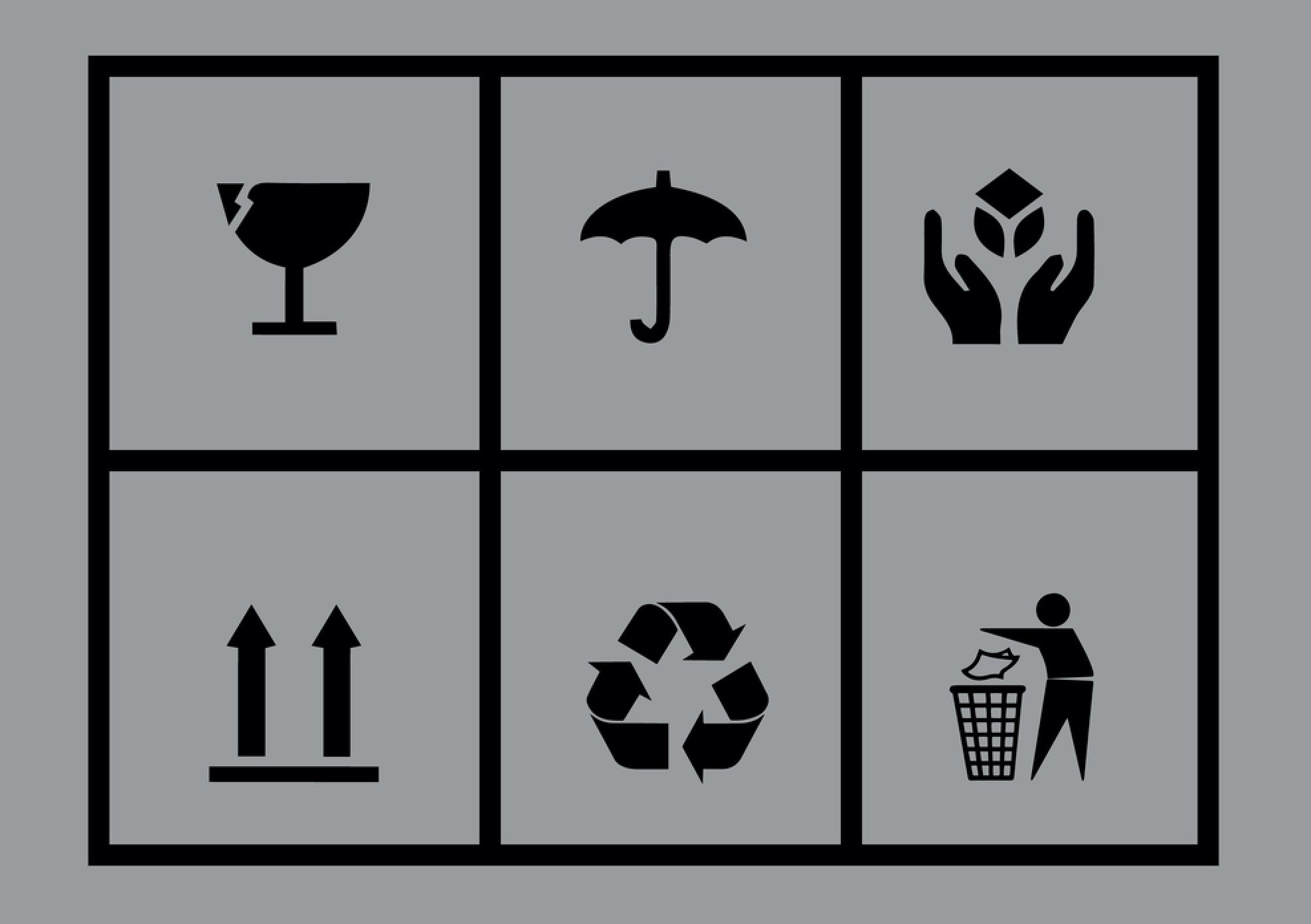
Comunica tus requisitos de embalaje para prevenir defectos del producto

Su producto debe cumplir con los requisitos de embalaje al ser enviado. Esto a menudo significará que toda la documentación necesaria estará presente y/o visible en el paquete durante el proceso aduanero de importación y exportación. Debe especificar los requisitos de embalaje y qué es exactamente lo que debe estar presente en el exterior de la caja. Esto protegerá contra posibles daños durante el envío, asegurando su llegada en buen estado. Requisitos de embalaje para prevenir defectos del producto

¿Qué pruebas y comprobaciones realizará in situ?

Tu equipo de control de calidad, ya sea interno o externo, debe estar informado sobre los tipos de pruebas de calidad que se deben realizar en el sitio. Una vez que confirmes qué pruebas se necesitan, tu equipo de inspección deberá saber qué equipo de prueba se requiere por producto. Un exprimidor eléctrico, por ejemplo, se probará de manera diferente a las pruebas que se necesitarán para otras categorías de productos. Si eliges usar un proveedor experimentado de calidad de terceros podrá aprovechar su experiencia técnica, por ejemplo, el tipo exacto de prueba de carga que puede ser necesaria para un sofá destinado al mercado europeo. Un proveedor externo experimentado también dispondrá de laboratorios con entornos controlados y todo el equipamiento adecuado para probar su producto, además del seguimiento constante de cualquier actualización en la regulación de la que necesite estar al tanto.  

¿Se ha acordado la terminología de clasificación de defectos?

Muchos importadores optan por usar la siguiente terminología de clasificación cuando tratan con sus proveedores:

Un defecto crítico – Esto se define cuando el producto puede causar posibles lesiones o daños al usuario final. La seguridad de este producto está comprometida.

Prevención de defectos del producto - pruebas de laboratorioUn defecto crítico sería el sobrecalentamiento de la batería de un portátil que, si se deja desatendida mientras se carga, puede provocar incendios.
Donde el producto en cuestión pueda causar lesiones al usuario final, esto da lugar a retiradas de productos y es enormemente perjudicial para su marca.

Un defecto importante – Esto se define cuando su condición afectará la venta del producto en el mercado, lo que probablemente resultará en que el usuario final lo devuelva con insatisfacción.

Una cafetera que no calienta el agua adecuadamente para hacer una taza de café decente y bebible se considera un defecto importante.

Este producto ha causado insatisfacción entre sus usuarios finales y estos lo devuelven a la tienda, probablemente reseñándolo en línea, lo que tendrá un impacto en las ventas futuras de ese artículo.

Un defecto menor – Esto se define cuando su defecto es pequeño, no afectará su comercialización en el mercado y no representa ningún daño o lesión al usuario final.

Tomemos como ejemplo una mesa de centro de madera. Su equipo de control de calidad somete el producto a sus pruebas y se encuentra con un rasguño debajo de la mesa.

Esto es un rasguño que su usuario final no verá en el uso normal del producto, o es posible que ni siquiera lo vea. Esto lo clasificaríamos como un defecto menor por el cual este producto saldrá al mercado, ya que no causará ningún daño ni perjuicio al usuario final.

Pero eso no es todo…

¿Qué tal una muestra? He dejado la obtención de una muestra para el final… ya que algunos importadores no requieren una muestra antes de la producción. Si bien esto no es una necesidad, al agregar esto a su procedimiento de producción puede ayudarle a reducir significativamente los defectos del producto que provienen de tu proveedor y fábrica seleccionados. Una vez que hayas establecido los requisitos adecuados del producto, podrás solicitar una muestra a tu proveedor. Una vez que recibas tu muestra, deberás analizarla y asegurarte de que cumpla con todos tus requisitos, y luego enviársela de vuelta a tu proveedor con una confirmación para proceder con tu producción, o con una lista de especificaciones adicionales que deben cumplir. Y si no cumple tus requisitos? Las muestras no siempre cumplirán con los requisitos de su producto especificados. A menudo se puede detectar esto simplemente sosteniendo o mirando el producto. Pero, la mayoría de las veces, un producto substandard llegará al consumidor final, exponiendo su marca a daños y riesgos graves. Prevención de defectos del producto - herramientas de prueba Por lo tanto, una pregunta importante que deberías hacerle a tu proveedor antes de todo esto es, ¿cómo evitarán cualquier problema de calidad que pueda surgir durante tu operación? Comprender cómo tu proveedor maneja las presiones de calidad y los procedimientos de cumplimiento te ayudará a definir qué tipo de relación tienes con ellos. Antes de la producción en masa, tu proveedor debe proporcionarte un carpeta de cumplimiento técnico (TCF) que deben contener informes completos de cumplimiento, desde seguridad física hasta seguridad química y eléctrica. Para cualquier informe faltante, su producto de muestra deberá pasar por todos los procedimientos de prueba requeridos para cumplir con los niveles de cumplimiento específicos de su país de destino. Si después de ser probado y analizado no cumple con los requisitos mínimos necesarios para el producto, su fábrica debería poder proporcionarle un análisis de causa raíz para abordar lo que salió mal y luego asesorar sobre cualquier plan de acción correctiva o preventiva. Desde aquí podrán hacer los ajustes necesarios y también querrás que te envíen otra muestra después de que hayan hecho los ajustes que especificaste.  

Cómo gestionar la calidad durante su proceso de producción en masa

Durante el proceso de producción, a menudo existe una variación en la calidad de los productos. Es por eso que debe emplear un equipo de control de calidad de fábrica para minimizar este alcance de variación. Este equipo lo hace a través de comprobaciones de producción en línea que identificarán cualquier defecto que pueda ser enmendado en la línea de producción. Durante la fase de selección de proveedores, habrá realizado un análisis de la tasa de éxito de su fábrica. Esto le ayudará a determinar si debe o no subcontratar sus inspecciones en línea a un proveedor de calidad externo calificado. Su experiencia en la línea de producción ayudará a elevar el nivel del sistema de calidad general de la fábrica, minimizando así el número de defectos del producto que salen de la fábrica.  

También puede asegurar la calidad de su producción mediante controles de inspección final

prevención de defectos del producto - Prueba de muestra La gestión de defectos del producto también puede abordarse después de la producción en masa a través de un Inspección aleatoria final para verificar y eliminar cualquier defecto final en sus productos. A menudo, las muestras se extraen después de la producción en masa para realizar pruebas químicas, nuevamente durante su primer envío y también en caso de un envío de reposición. Realizar pruebas químicas en muestras durante estas tres etapas es una forma de asegurar que sus productos sigan cumpliendo, ya que la contaminación puede haber ocurrido en la línea de producción o durante su proceso de envío.

Puntos Clave

Los defectos del producto no son ideales, los proveedores los odian tanto, si no más que tú. Siguiendo la guía descrita anteriormente, sentarás una base sólida sobre la cual comenzar a minimizar la cantidad de defectos del producto que experimentas. Así que resumamos:
  • Comunica los requisitos de tu producto
  • Comunique sus requisitos de empaque
  • Definición de pruebas in situ y pruebas en línea
  • Definición de su terminología de clasificación
  • Establecer una muestra perfecta
  • Durante la producción, el proceso de control de calidad debe definirse.
  • Después del proceso de control de calidad de producción, se necesita definir
Siguiendo los pasos descritos anteriormente, obtendrá productos de la más alta calidad cada vez. ¡Un consejo de experto! Construye una relación colaborativa con tu proveedorUn elemento a menudo subestimado en la prevención de defectos de producto es la construcción de una buena relación de colaboración con su proveedor. Esfuércese por desarrollar esto y puede tener beneficios a largo plazo para su organización y los productos que se fabrican.

¿SUPONE EL CUMPLIMIENTO DE LA NORMATIVA UN RETO PARA TI?

CONTÁCTANOS PARA CONSTRUIR HOY MISMO UN PROGRAMA DE CUMPLIMIENTO ÚNICO PARA TUS NECESIDADES