Kennen Sie die Ziele Ihres Qualitätsaudits im Unternehmen?

Kategorien
Blogs

Kennen Sie die Ziele Ihres Qualitätsaudits im Unternehmen?

Der Zustand des Einzelhandels hat in letzter Zeit eine Zunahme des Drucks in der Lieferkette von Einzelhandelsriesen wie Amazon, die das Tempo, mit dem die Lieferketten arbeiten müssen, erhöhen. Diese Zunahme des Drucks und des Tempos bedeutet, dass Ihr Produkt schneller in den Regalen sein muss, was Ihre Qualitätsverfahren stark belastet, was dazu führen kann, dass Produkte von geringerer Qualität auf den Markt kommen. Das ist riskant. Qualität ist in den besten Zeiten ein komplexes Thema, und während Sie mit dem erhöhten Tempo jonglieren, kann es schwierig sein, den Überblick über die kleineren Rädchen der Qualitätsmaschine zu behalten. Was tun die Einzelhändler also, um potenziell minderwertige Produkte zu vermeiden? Sie haben begonnen Auslagerung ihrer Qualitätssysteme auf qualifizierte Drittanbieter zurückgreifen, um den Druck in der Lieferkette zu mindern. Eine der wichtigsten Lösungen, für die sich Einzelhändler entscheiden, ist ein Qualitätsaudit - um die Schwachstellen in Ihrer Lieferkette aufzuzeigen und einen Aktionsplan zu erstellen, wie Sie diese beheben können. In diesem Blogbeitrag werfen wir einen Blick auf den Zweck von ein Qualitätsaudit für Ihre HaushaltswarenmarkeIm Folgenden werden die Vorteile des Outsourcings Ihrer Qualitätsverfahren kurz erläutert und was diese Vorteile für Ihr Unternehmen bedeuten können.

Drei Wege zur Durchführung eines Audits

Audits sind zu einem wichtigen Instrument für die Verwaltung und Überwachung der Umsetzung von Qualitätssystemen in vielen Betrieben geworden. Werfen wir einen Blick auf die drei Arten, wie diese Audits durchgeführt werden können;
  • Interne Prüfung - Dies wird intern von einem internen Team durchgeführt. Sie messen die Stärken und Schwächen von Qualitäts- und Produktionssystemen anhand internationaler/externer Normen und Vorschriften. Diese Form des Audits kann Ihrem Unternehmen keine Zertifizierung verschaffen.
  • Prüfung durch eine zweite Partei - Dabei führt ein Unternehmen ein Audit bei seinem potenziellen Lieferanten durch, um sicherzustellen, dass dieser Ihre Produktionsanforderungen erfüllen kann. Häufig können diese Audits vor Ort durchgeführt werden, um die internen technischen Prozesse des Lieferanten zu überprüfen, aber dieses Audit kann auch außerhalb des Unternehmens in Form von Dokumentationsprüfungen durchgeführt werden. Es hängt von Ihrem Unternehmen ab, was genau Sie prüfen wollen, um eine fundierte Entscheidung über Ihren Lieferanten zu treffen. Diese Art von Audit hat nichts mit einer QMS-Zertifizierung zu tun, da diese nur von einer registrierten, unabhängigen Prüforganisation durchgeführt werden kann.
  • Prüfung durch Dritte - Dies wird von einer qualifizierten Prüforganisation durchgeführt, die in keiner Weise mit dem Lieferanten oder der Marke verbunden ist. MQualitätsaudit durch Dritte.jpgOrganisationen ziehen Audits durch Dritte aus vielen Gründen in Betracht, vor allem aber, weil sie beschlossen haben, ein Qualitätsmanagementsystem (QMS) wie ISO 9001 einzuführen. Ein unabhängiger Prüfer kommt und bewertet, ob die Organisation die Anforderungen des oben genannten QMS erfüllt oder nicht. Ein unabhängiger Prüfer wird Ihrer Organisation dann eine Zertifizierung ausstellen, die besagt, dass Sie die festgelegten Anforderungen erfüllen. Dies ist häufig eine bevorzugte Auditoption, da die Ergebnisse unvoreingenommen sind und die Zertifizierung zu einem Unterscheidungsmerkmal im Wettbewerb geworden ist.
Wenn wir Sie bei der Definition der oben genannten Begriffe nicht ins Grübeln gebracht haben, welcher davon besser ist, dann haben wir unsere Aufgabe nicht erfüllt... Die große alte Debatte "Intern" gegen "Dritte". Debatte über Dritte; Sie denken vielleicht, dass Sie in der Lage sind, mit Ihren internen Qualitätsteams ein hohes Maß an Produktqualität aufrechtzuerhalten, und das mag im Moment auch noch stimmen, aber Sie müssen sich fragen, ob Sie die Anforderungen der immer stärker werdenden Verbraucher aufrechterhalten und erfüllen können oder nicht. Ich denke, es lohnt sich, die Debatte mit Blick auf Ihr Endergebnis, Ihre Ressourcen und Ihre Zeit neu zu betrachten...

Die Ziele eines Qualitätsaudits für Ihre Marke

Bei der Definition der Zweck einer Prüfung für Ihre Marke, können Sie verstehen, wer Ihr Audit durchführen sollte. Die wichtigsten Ziele sind die folgenden;
  • Zertifizierung - Viele Haushaltswarenhändler, die Produkte mit hohem Risikopotenzial herstellen, wie z. B. Spielzeug und Elektrogeräte, und die in Europa tätig werden wollen, müssen die CE-Richtlinie der Europäischen Kommission einhalten. Das Managementsystem Ihres Lieferanten muss nach einer der ISO-Normen bewertet und entsprechend zertifiziert werden. Bedenken Sie, dass das von Ihnen gewählte Prüfungsunternehmen von einer Aufsichtsbehörde zertifiziert sein muss, um Sie zu zertifizieren.
  • Wirtschaftlichkeitsprüfungen im Gegensatz zu Konformitäts- und Regelmäßigkeitsprüfungen - Viele Audits haben unterschiedliche Ziele. Wenn Sie ein internes Audit durchführen, sollten Sie darauf achten, dass Sie es so ganzheitlich wie möglich gestalten. Bei Ihrem Audit müssen Sie die Einhaltung der Vorschriften und die Leistung bewerten. Im Auditbericht müssen die Lieferanten nach diesen beiden Kategorien eingestuft werden.
  • Follow-up-Audit - Bei einer Prüfung werden häufig Feststellungen gemacht, die erst nach einer gewissen Zeit behoben werden können. In diesem Fall ist ein Follow-up erforderlich, um sicherzustellen, dass Abhilfemaßnahmen ergriffen wurden.
Sind Sie in der Lage, mit Blick auf Ihr Ziel herauszufinden, wer Ihr Projekt durchführen sollte? Qualitätsaudits im Werk?

Die fünf Vorteile des Einsatzes eines externen Qualitätsprüfers

Wenn Sie sich nicht sicher sind, welche Vorteile Ihnen ein externer Qualitätsanbieter bieten kann, werfen Sie einen kurzen Blick auf diese Seite;
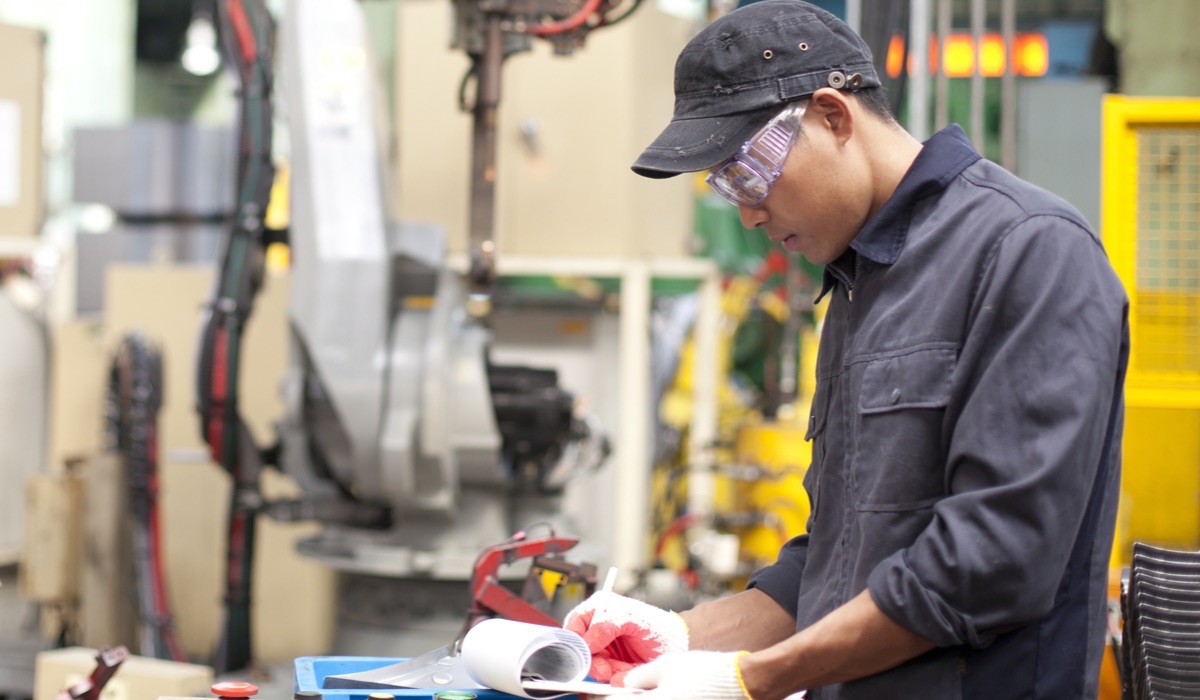
  • Fachwissen - Die externen Prüfer haben eine formale Prüfungsausbildung und Erfahrung, um Verstöße und unethische Situationen zu erkennen. Dieser Wissens- und Erfahrungsschatz wird Ihrer Organisation von Nutzen sein. Innovation - Qualitätsaudit durch Dritte.jpg

  • Effizienz -  Ein externer Prüfer verfügt über die nötige Infrastruktur, um die Prüfungsanforderungen Ihres Unternehmens zu erfüllen.
  • Technik - Sie verfügen über die geeigneten Instrumente und Technologien, um ein erfolgreiches Audit bei Ihrem Lieferanten zu gewährleisten.
  • Rechenschaftspflicht - Ein externer Prüfer hat sich verpflichtet, einen bestimmten ethischen Verhaltenskodex einzuhalten, und ist für die Einhaltung der übergeordneten Unternehmensrichtlinien, Regeln und Vorschriften verantwortlich.
  • Risikominderung - Ein unabhängiger Prüfer ist darin geschult, Missstände in den Qualitätssystemen eines potenziellen Lieferanten zu erkennen. Dieser Einblick ermöglicht es Ihnen, Risiken frühzeitig zu steuern.

Wichtigste Erkenntnisse

Die Herstellung hochwertiger Produkte ohne Mängel, die zu Rückrufen führen könnten, hat für Sie und Ihre Marke wahrscheinlich höchste Priorität. Sind Sie in der Lage, Ihre Zeit und mehr Ressourcen zu investieren, um sicherzustellen, dass Ihre internen Audits von höchster Qualität, unvoreingenommen und gemäß den Anforderungen eines QMS wie ISO 9001 sind? Vielleicht sollten Sie Folgendes in Betracht ziehen Auslagerung Ihrer Audits an zertifizierte Drittprüfer. Sie sind in der Lage, Ihnen eine QMS-Zertifizierung, eine Leistungs- und Konformitätsbewertung zu bieten, sie können Folgeaudits anbieten und auch Einblicke in Verbesserungsstrategien geben, die für eine erfolgreiche Lieferantenbeziehung von Nutzen wären. All dies sind Dinge, die Ihre Kunden sehr schätzen, die sich positiv auf Ihr Endergebnis auswirken und Ihre Marke auf dem Markt strategisch positionieren.

WÜRDE IHR UNTERNEHMEN PROFITIEREN VON

PRÄVENTIVES QUALITÄTSMANAGEMENT?

Kategorien
Blogs

Warum jedes Unternehmen ein Umweltaudit durchführen sollte

Die Herstellung im 21. Jahrhundert hat einige unangenehme Wahrheiten über die Art und Weise zutage gefördert, in der viele Einzelhandelsmarken ihre Produkte herstellen, angefangen bei der Menge der freigesetzten CO2-Emissionen bis hin zu der Art und Weise, in der Hersteller entsorgen Abfälle. Heutzutage ist die Umweltprüfung für Einzelhandelsmarken nicht obligatorisch, ist sie also überhaupt notwendig? 

Wir bei API sind der Meinung, dass ethische Marken am besten positioniert sind, um die steigenden Anforderungen der bewussten Verbraucher von heute zu erfüllen.

Das soziale und ökologische Ansehen Ihrer Marke spielt in den Herzen der Verbraucher auf der ganzen Welt eine größere Rolle als je zuvor. Wir haben einen visuellen Leitfaden erstellt, der Sie dabei unterstützt:

  • Was eine Umweltprüfung ist
  • Warum Sie ein UMS einführen sollten
  • Einhaltung der ISO 14001-Norm
  • Arten und Umfang von Umweltbetriebsprüfungen
  • Wesentliche Aktivitäten vor und nach der Prüfung 
  • Die wichtigsten Vorteile für Ihre Marke 

 Sehen Sie, warum eine Umwelt Qualitätsprüfung ist für Ihre Marke im Folgenden unerlässlich:

Umweltauditierung

Warum braucht Ihre Marke also ein Umweltaudit?

  • Sie gewährleistet die Einhaltung der Rechtsvorschriften
  • Es reduziert Ihre Umweltbelastung.
  • Es reduziert Ihren Wasser- und Energieverbrauch
  • Es hat positive Auswirkungen auf das Image Ihrer Marke und Ihr Endergebnis

Eine Prüfung wie diese hat folgende Auswirkungen Langfristige Vorteile für Ihre Einzelhandelsmarke sowie die Sicherung eines wettbewerbsfähigen Platzes auf dem Markt.

 Klicken Sie unten um mehr darüber zu erfahren, wie Sie noch heute mit Ihrer Prüfung beginnen können! 

Kategorien
Blogs

A Factory Quality Audit Checklist To Assess Your Suppliers

Household goods manufacturing and supply chain operations are often vulnerable to compliance and regulation violations. With the pace at which the many complex parts of a supply chain can move, it’s no wonder that retailers who trust too willingly in their suppliers can land up in hot water when things don’t go according to plan. The only way to address these challenges head on is by conducting a quality audit. Discover our factory quality audit checklist that touches on quality management, social and environmental compliance here. An audit of your supplier’s factory is conducted to ensure that your supplier and their factory’s operations are able to produce your product to your expected levels of quality, as well as ensure compliance in your product’s destination market. This is not the only reason though… Carrying out audits also help to assess the risks that may be present with a particular supplier and provide direction on how you can go about managing that risk. Ultimately, the decision to work with a particularly supplier will be up to you, but your decision will at least be based on a trusted risk assessment with a presented improvement strategy. Our checklist takes you through a what a brief assessment of your supplier’s quality systems would/should look like. We will cover 3 main sections in this checklist:
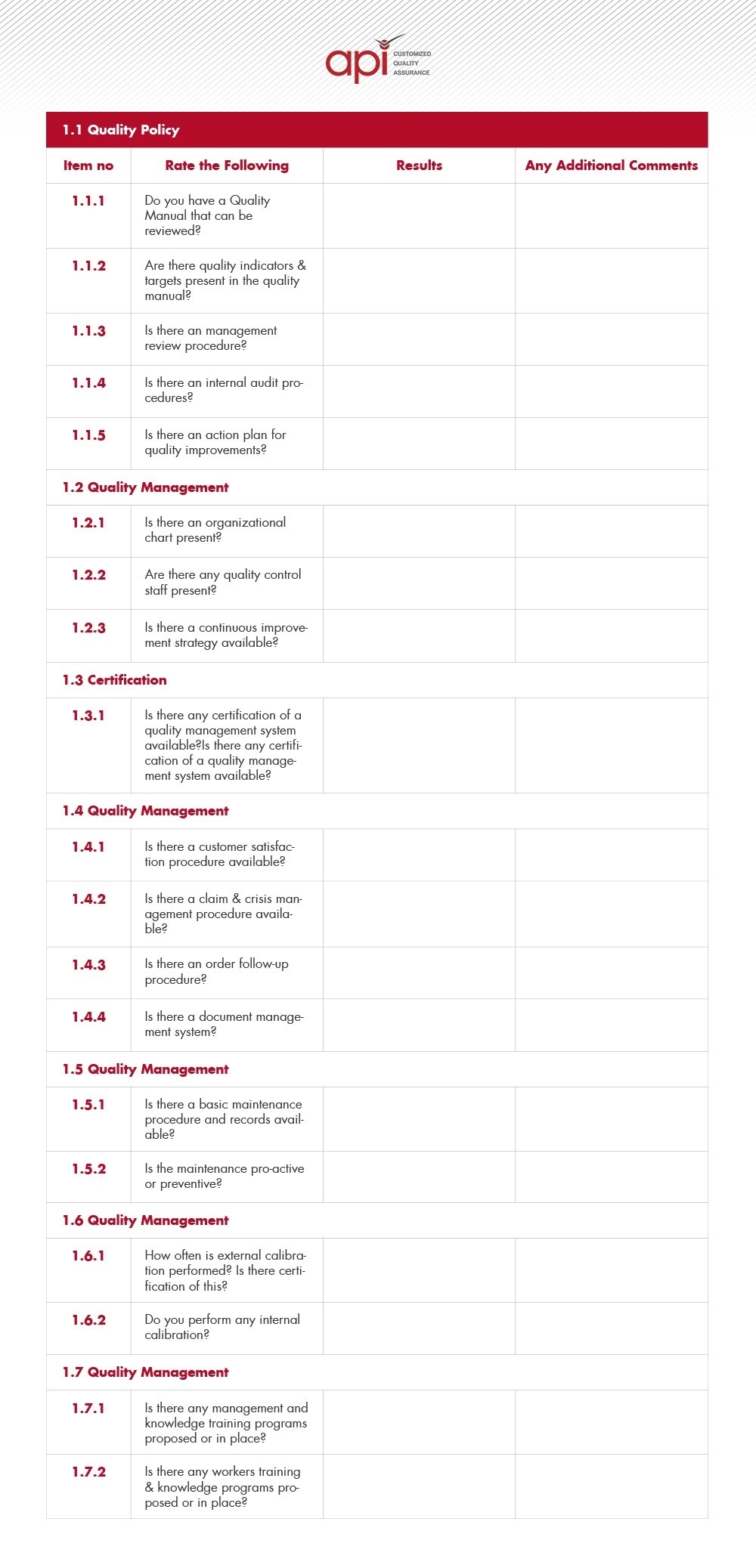
  1. Quality Assurance & Technical Questions
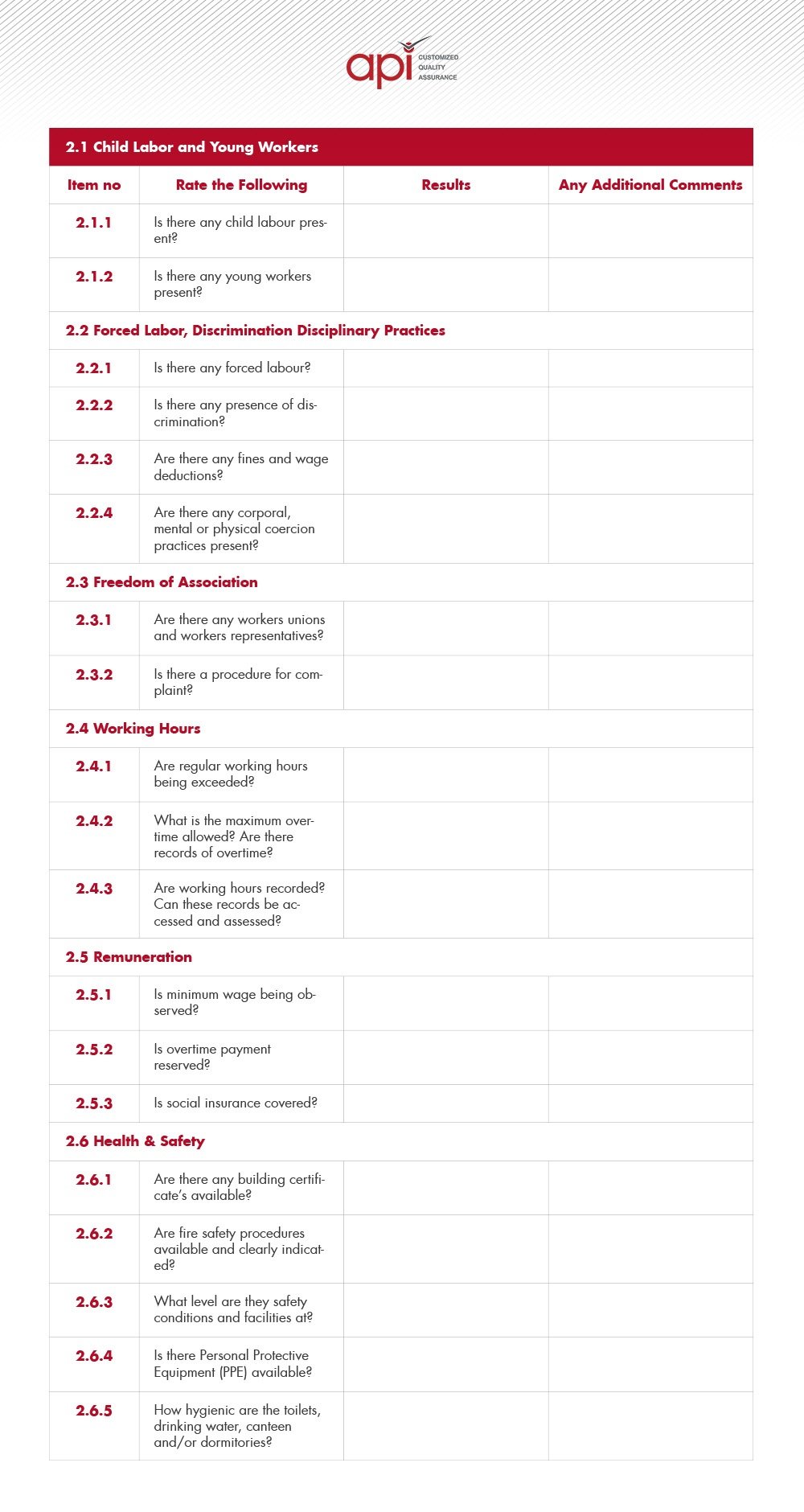
  2. Social / Health & Safety Questions
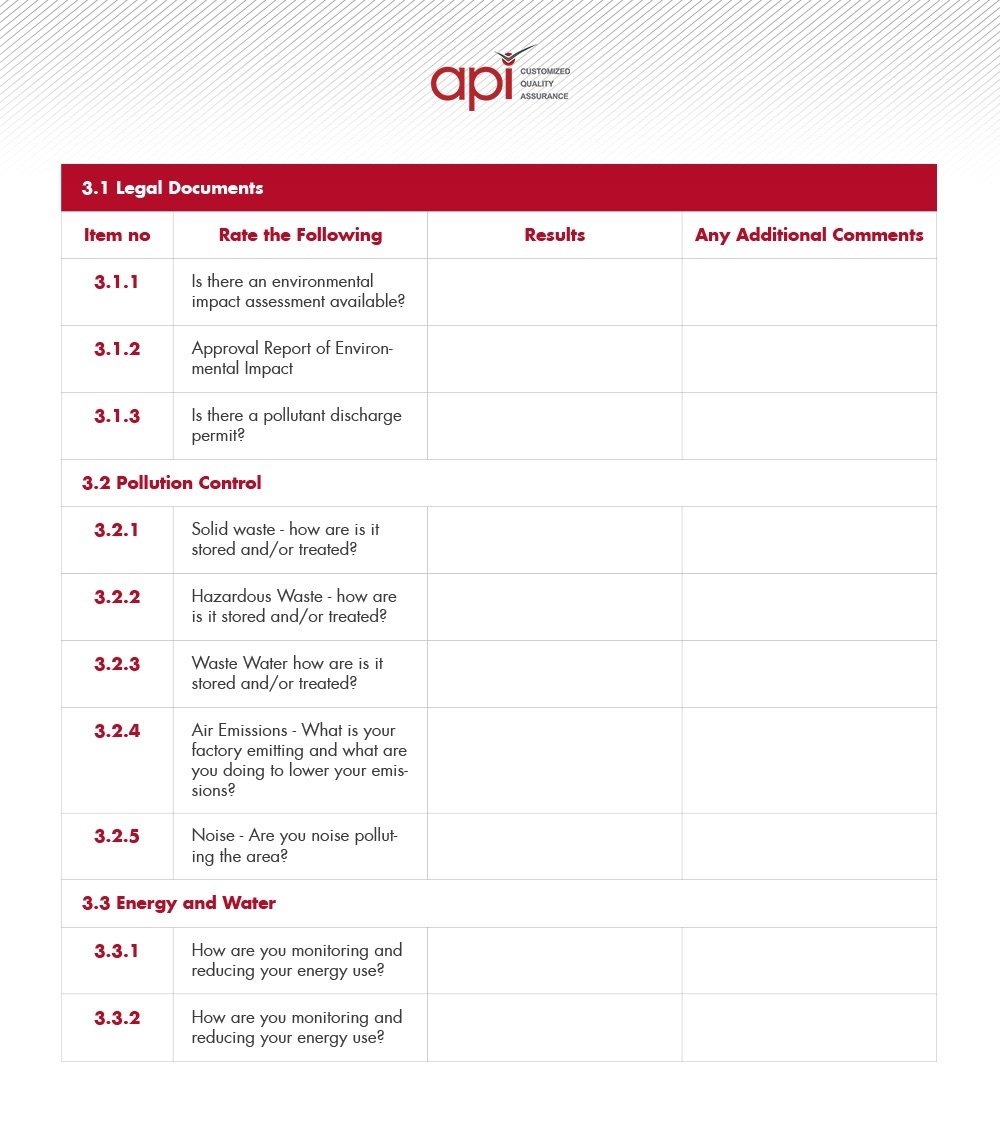
  3. Environmental Audit Questions

How Does A Quality Audit Grading System work?

For each checkpoint, the following guideline should be used; N/A – Checkpoint not available or not evaluated. 0 – Major non-conformity – absence of procedure or proof of big discrepancies in implementation – a corrective action will be designed for this checkpoint. 1 – Minor non-conformity –  incomplete procedure or proof of discrepancies in implementation – a corrective action will be designed for this checkpoint. 2 – Acceptable –  procedures are available and implementation is acceptable, however opportunities for improvement exist – an opportunity for improvement can be designed for this checkpoint. 3 – Good – procedure and implementation acceptable, no opportunity for improvement identified. 4 – Best Practice – factory has designed and implemented best practice of industry.

Quality Assurance & Technical Questions

a factory quality audit checklist 1WHAT TO LOOK OUT FOR:
  • Quality manual and all procedures show revision control (sign-offs & dates), history of changes
  • Product quality yield data, problems and corresponding improvement actions, status of preventive/ corrective/audit results
  • Strategic and tactical objectives, goals, action plans, etc.
  • Analysis of field failures, inspection yields, resource needs, internal audit results, corrective action status, etc.
  • Management review meetings, goal setting, performance measurement, internal audits, action plans, customer surveys
  • Employee involvement/recognition program, Lean, Six Sigma, kaizen, SPC, 5-S, cost reduction programme
  • Corrective actions, trend charts, meeting minutes, non-conformance frequency & cost analysis
  • Management review meetings and corrective actions
  • Look for use of training aids and work instructions at work stations
  • Qualification records, certification history
  • Records of testing, production quality records, audit records, interview workers to validate training records
  • Job descriptions, job skills assessment, training records, training manuals

What if my quality assurance score is below standard?

API is able to customize its QA solutions based on your specific needs and requirements. API will provide the supplier information on how they can go about improving various things within a factory. This information will be relayed back you, the retailer, where you will gain insight into your potential supplier and their factory operations to ensure compliance across the board.

SOCIAL / HEALTH & SAFETY QUESTIONS

A factory quality audit checklist 2

What to look out for:

  • Procedure for training and communication and participation
  • Emergency preparedness and response plan, monitoring and performance measurements
  • Policies and procedures, health and safety trend charts, accident rate improvement history
  • Safety committee or group meeting minutes, accident investigation reports, safety audit reports
The social audit assesses the social systems and structures that your supplier has in place and is normally based on the standards as laid out by the SA8000. As a professional third party auditing company, API is able to provide their industry expertise and long time experience to aid you in achieving your social compliance certification.

Environmental Audit Questions

a factory quality audit checklist 3

What to look out for:

  • Environmental policy statement document
  • Records of agency/government inspection, procedures for measuring and monitoring environmentally sensitive activities
  • Record of purchases, waste stream and consumption; inventory control procedures
  • Records/use of; non-hazardous (RoHS/WEEE compliant) materials in production, biodegradable materials, returnable containers or packaging, recycling program, packaging materials made of recycled materials

Wichtigste Erkenntnisse

A factory quality audit checklist allows you insight into your suppliers quality control processes and manufacturing capabilities, their strengths and weaknesses. This empowers you to strengthen those weaker processes where needed. A quality audit checklist will help ensure:
  • your factory’s quality systems are up to date, organized and well recorded.
  • confidence in the selection of your supplier based on checklist insights.
  • confidence in the quality of the product that is manufactured.
  • confidence that compliance standards are actively being met by your supplier.
This approach allows you to build a more collaborative relationship with your supplier, where you supplier has a more invested approach to your brand and its product. It helps to ensure top class quality systems and a mutually beneficial relationship between supplier and retailer.
Kategorien
Blogs

What Are The Common Reasons For Quality Audit Failure?

Unethical or morally gray manufacturing practices are not uncommon for many factories across the globe, most commonly situated in third world or developing countries, for their cheaper manufacturing options. The figures, from the UN’s International Labour Organisation (ILO) and the Walk Free Foundation, show 24.9 million people across the world were trapped in forced labour for 2016. These cheaper conditions translate into unregulated conditions with little to no regulation and monitoring of working conditions, most of them horrific. These situations have lead to an increase in monitoring and auditing solutions to try and regulate the some of the terrible working conditions that many retail brands have been susceptible to over the years. Despite this, there are still many that fail to meet certain international standards and regulations put forth, making it absolutely necessary to know just what you need to avoid! In this blog post, we dive into some of the most common reasons that households goods suppliers fail their quality audits and what you can do to make sure your retail brand doesn’t fall into this pool.

Technical Failures

A technical audit is used to evaluate and assess a factory’s existing quality systems from policies and organizational structures, to the defined roles and responsibilities of the factory’s staff. So what are some of those common reasons a supplier may fail their technical audit? Disorganised documentation – As mentioned above, your supplier’s quality policies, records, reports and all documentation will be reviewed. Many factories often run on outdated systems like old excel spreadsheets, which opens your brand up to human error and potential risks that can be avoided. Without adequate reporting procedures or quality policies, the likelihood that your production requirements will be met, according to specification and in compliance with its destination market, will often not be the case if you choose to work with a supplier that has undefined and disorganized systems. Calibration and Upkeep of Machinery and Equipment – Many factories are dotted between third world and developing countries. There is a reason why Europe and U.S.A prefer to source abroad. It is often a lot cheaper than what they can find within their own borders, but that does not come without its own set of challenges.   Calibration of machinery in quality audit Many factories struggle with resources and finances, which means their money will often go into sourcing raw materials for the next production before putting money into the servicing of their machinery and equipment. This will mean that when an auditor comes to inspect the factory and its layout that the machinery is often out of calibration or filled with too much oil, which can contaminate your product and potentially places your brand in a risky position. Not ideal.

Social Failures

A social audit assesses the social systems and structures that your supplier has in place. Social compliance audits are always in line with the standards as laid out by SA8000; Kinderarbeit – Many social audit failures arise from being socially non-compliant with child labour causing an immediate “zero tolerance” failure. This is a serious violSocial Compliance in a quality auditation. If this is discovered during your audit process, it is recommended to rather find a different supplier. There are no grounds where this is acceptable. Hazardous working conditions – Hazardous and unsafe working conditions are not unheard of in many third world factory’s across the globe and are often the cause of factory technical audit failure. Things like faulty Personal Protective Equipment (PPE), expired fire extinguishers, no clearly marked exit signs, exits not in working order, machinery that is in need of calibration or lack of safety gear found on heavy machinery can lead to audit failure. These safety violations are easy enough for your supplier to address and solve, so bear this in mind upon receiving audit results as you will often need to factor in corrective time for your supplier. Panasonic and Sony have been caught in supply chain scandals, which have created immense amounts of bad media coverage for the global electronic brands. They have been accused of unfair labor practices in factories, vastly underpaid staff and electrical components that are said to be sourced from parts of the world known to be inclusive of child slave labour.
Environmental Failures  

With regards to ISO 14001, while it’s not a mandatory compliance standard, it is a little more complex to navigate because of this. But as the rules of engagement in retail have shifted into the hands of the consumer, retail brands are forced to rethink the application of this standard within their supply chain. Consumers today, are interested in reducing their environmental impact on the planet and your brand should help them do just that. How you ask? By complying with the guidelines of ISO 14001:15 – In saying that what are some of the common reasons many factories fail environmental audits? Incorrect methods of waste storage or disposal – This is often a problem as many factories do not have the capability or facility to dispose of their waste correctly. If your factory disposes fumes into the atmosphere or disposes untreated water into sewerage systems, it is considered to be an environmental risk and grounds for audit failure. Often a certified third-party waste disposal company will need to come and collect your waste to ensure that is disposed of correctly; your supplier can receive certificates, stating correct disposal as well. Environmental Quality Audit Let’s take a look at how this could play out; Wal-Mart paid a criminal fine of $11 million and another $3 million to the Missouri Department of Natural Resources, for violating the Clean Water Act by illegally disposing of hazardous waste materials. This is a serious violation and a costly one at that, environmental violations are not taken lightly so bear that in mind as you proceed.  

Schlussfolgerung

Understanding the most common reasons for quality audit failure allows you insight into the kind of supplier your brand should be aligning itself with. These audits are complex (especially the social and environmental audits), and it is up to the observation skills of your chosen auditor that will determine the level of compliance that a supplier meets. The audit report that your retail brand receives will present you with a full picture of all the risks a third-party auditing company is trained to see. It will be up to you to make a final decision, bearing in mind the authoritative position consumer’s today are in, by putting your customers first and producing products in an ethical manner, you automatically put your brand first.

Let us know in the comments section if this has been helpful information for you.


Ever wondered whether environmental auditing was for you? Check out our visual guide to help you on your way!

de_DEGerman