API Audit: Accredited to perform ICS audits

Kategorien
Blogs

API Audit: Accredited to perform ICS audits

API-Audit, API’s division responsible for auditing operations, is accredited by ICS to perform social and environmental audits that comply with the ICS Code of Conduct. ICS - Initiative für Compliance und Nachhaltigkeit – is an international sectorial initiative that aims to enhance working conditions among the global supply chains of its member retailers and brands. ICS is composed of 43 multinational retailers and brands in the sectors of textile, retail, footwear, electronics, and furniture. ICS members collaborate with common tools to mutualize audits, contributing to the reduction of ‘audit fatigue’ while sharing knowledge and best practices*.

https://campaign-image.com/zohocampaigns/180659000003436046_zc_v52_ics_logo.png

As specialists in our field, drawing from our vast hands-on industry experience, we are ready to accompany ICS members and factories in the process of improvement. Our solutions adhering to ICS methodology include:

  • ICS social and environmental audits
  • Follow up and solutions

Interested in our ICS audit solutions?

*ICS-Logo und Beschreibung sind Eigentum von ICS

Kategorien
Blogs

Improve Your Social Compliance

Corporate Social Responsibility (CSR) has evolved in recent years from being a ‘beneficial asset’ to a compliance requirement that’s also gaining influence in the buyers’ decision-making process. In 2018, 69% of consumers said they were influenced by brands’ ethical values and authenticity*. An adequate social compliance plan can support your brand in going one step beyond with associated benefits such an increased productivity. These benefits include, for example, an end to duplicated work processes or the implementation of better time management within your workforce.

At API, we offer tailor-made social audit assessments utilizing our experts’ knowledge in developing programs adapted to your needs, and implement ad-hoc plans based on the specific requirements that matter the most to you. We can help you meet your social compliance objectives and challenges that follow:

  • Global industry initiatives & local labor laws: Our experience, expertise and specialization ensure fast and comprehensive results
  • Your own code(s) of conduct: Our industry knowledge and on-the-ground know-how will evaluate and reinforce your objectives – because CSR could be a key asset for brand reputation and differentiation
  • API’s standard: We help you from scratch through personalized service specific to these areas

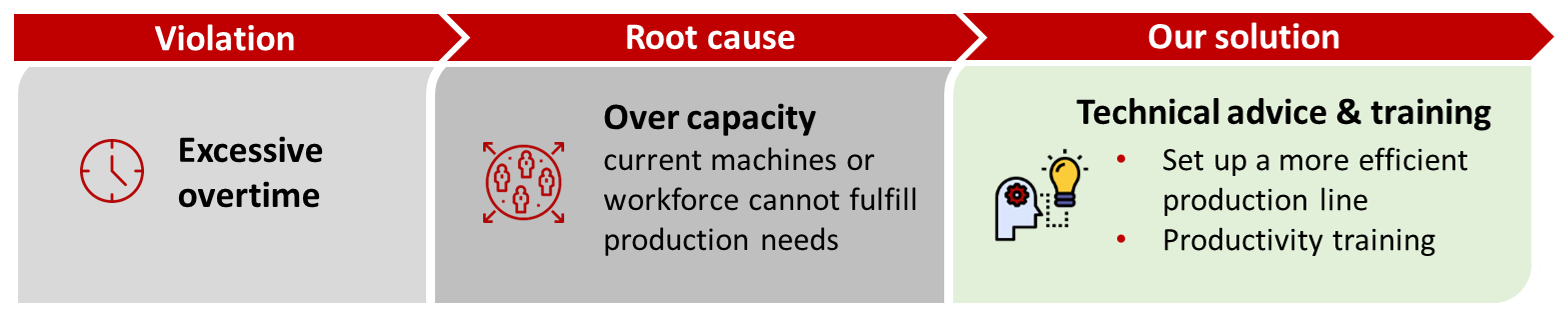
Looking to implement an effective corrective action plan after completion of a social compliance audit? You can benefit from API’s manufacturing experience and deep industry expertise that enables us to suggest informed and productive technical improvements. API’s technical experts will help you identify main factory issues and their root causes with a professional follow-up. You can increase your factory’s productivity with its available resources thanks to our experts’ recommendations on optimum corrective strategies.

Example: Increased supplier’s productivity based on its resources

Improved Social Compliance: Enhanced Brand Reputation and Supplier Productivity

Interested in our social audit solutions?

*Survey of 30,000 consumers in 35 countries, 2018 (Accenture)

Kategorien
Blogs

Fit for Use & Performance Testing

Fit for Use & Performance Testing: Meeting Consumer Expectations by Going Beyond Simple Standardized and Regulatory Tests


In the increasingly competitive global marketplace, retailers face numerous issues when sourcing products. Their greatest challenge is to live up to — and even exceed — growing consumer expectations in a market saturated with products.

Since consumers have a wealth of options to choose from, they are no longer satisfied with products that merely meet their basic needs. They consider the minutest of details in regards to quality, construction, features, and price of products.

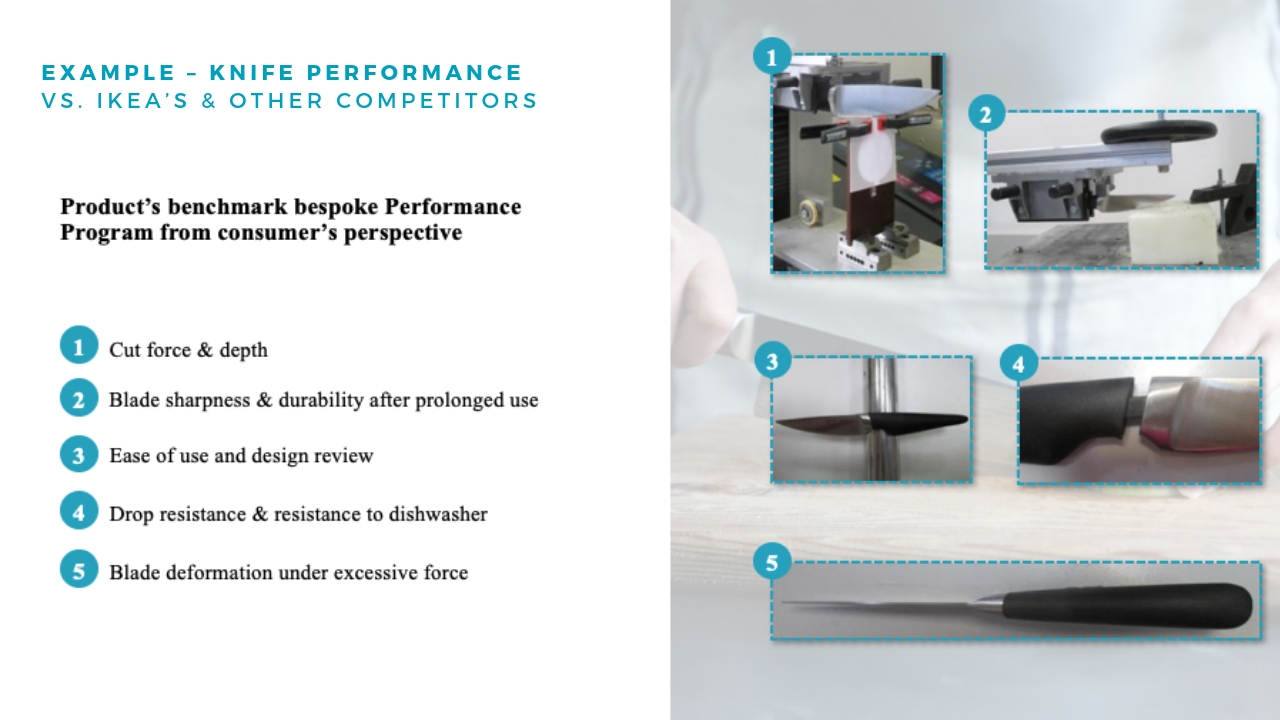
In considering knives, for example, consumers are no longer satisfied with a product that can simply slice their vegetables and meat. They look for knives with ergonomic handles that retain their edge for an extended period and meet a dozen other additional expectations.

In this competitive and demanding landscape, the necessity of Fit for Use and Performance Testing should not be underestimated.

Knives Sourcing Case Study

The following is a case study on sourcing knives. The purpose of this case study is to give a brief example of the various tests that will be conducted during a Fit for Use & Performance and about how a knife’s performance can be compared to that of IKEA knives and other competitors.

Add a heading


Benefits to the Client

  • Help you  source knives that can pass a wide range of advanced performance tests. This can establish a benchmark for the product based on your brand current products and other similar products on the market. This standard can be used as a basis on which to make future products and improvements.
  • Come up with technical ad-hoc solutions for product performance.
  • Get an edge on the competitors by sourcing the most advanced knives possible.
  • Weeding out products that miss the mark on quality in terms of performance.

As you can see, in this global consumer-driven age, the necessity of Fit for Use & Performance Testing is absolutely crucial.

At API, we offer our clients a host of tailored solutions powered by our sister company AXIS to help your products stand out and go beyond the regulatory requirements of your destination markets. Our common objective? Your products fit their purpose and provide outstanding technical grounds to be chosen by your customers.

With 300+ product categories covered, 3,000+ tests performed, and +1,800 ad-hoc tests developed, AXIS – technological resource center of WORMS SAFETY – is able to provide tailor-made fit-for-use performance assessments of all household goods. AXIS has 20+ years’ experience in mechanical properties and performance, climatic aging, colorimetry and dimensional measurement.

Interested in learning more about how performance testing can bring competitive advantages to your products? Contact us today to receive a professional consultation and find out more about our Fit for Use and Performance solutions.

Kategorien
Blogs

Sustainable Practices For Manufacturing Hard Goods

Implementing sustainable business strategies is getting increasingly popular in the manufacturing industry as more prominent international and local industry players of all sizes acknowledge the long-term value of sustainable management for business growth and resilience.

Sustainable manufacturing starts with building a sustainability team for effective collaboration between managers, material experts, process engineers, product designers, production, procurement specialists, and environmental, health, and safety officers.

Engaging representatives from every department helps organizations to evaluate all the key sustainability aspects of the manufacturing process and understand how to work more effectively to save resources, time, and money.

Sustainable manufacturing has a lot to offer:

  • Integrating sustainability across business functions improves production processes and profitability
  • Using innovation, scenario planning, and strategic analysis reduces environmental, health, and safety risks and associated financial losses
  • Improving environmental performance helps ensure compliance with increasingly stringent regulatory constraints
  • Optimizing operational efficiencies reduces resource costs and industrial waste from production
  • Introducing stakeholder engagement policies helps train and retain qualified employees, builds long-term business viability and resilience
  • Strengthening brand reputation and public trust with a visible commitment to sustainability enhances sales and competitiveness on the market attracting new customers, partners, and investors.

Sustainable/Recycled Raw Materials

Choosing sustainable raw or recycled materials improves the resource efficiency and safety of the manufacturing, prevents eco-toxicity, extends the lifespan of many instruments and equipment, minimizing the risks and need for repairs.

Recycling materials preserves their embodied energy, so the amount of energy required for the recycling process is usually far less than the energy used for the primary production. The largest energy savings can be achieved by recycling metals and thus avoiding the energy-intensive mining and processing of ore. For example, recycling aluminium from scrap uses 88-95% less energy than primary aluminium production, secondary copper results in 15-65% energy savings. Lead can be effectively recycled multiple times without losing its properties with 60-75% energy savings compared to the primary lead production. Energy savings from recycling iron and steel can be up to 72%, beryllium recycling saves 80%, and 50% for recycling cadmium. An estimated 40% of the nickel used in the production of stainless steel comes from post-consumer stainless steel scrap resulting in 90% energy savings for the secondary nickel production. However, when it comes to recycling paper, although the secondary production requires 40% less energy than the primary production, more fossil fuels can actually be required for paper recycling.

Smart solutions like using antimicrobial copper alloys to protect solid surfaces from microbial contamination instead of using enhanced chemical cleaning protocols can prevent the spread of bacterial infections and reduce human exposure to toxic substances from the cleaning products. The EPA has registered 500 copper alloys including brass and bronze as capable of killing 99.9% of disease-causing, potentially deadly bacteria within two hours even after recontamination.

ECO Design

Sustainable product design strategies allow manufacturers to evaluate and address the environmental impacts throughout the entire life cycle of the product, optimize resource consumption, minimize energy use and waste during production and transportation of the products.

Incorporating sustainability considerations into product development ensures the long-term availability of materials and resources, helps achieve compliance with product quality and safety regulations, and avoid using harmful materials that can be restricted in some countries or highly likely to be banned in the future. Material choices and product design should incorporate the recycling capability and publish the specifications in their product declarations.

Sustainable Packaging 

Sustainable packaging logistics help develop integrated packaging, product, and supply chain systems to ensure safe, efficient, and effective handling, transportation, distribution, storage, retail, use, reuse, recovery, and disposal of goods, minimizing the negative environmental impacts and risks, while maximizing the social and consumer value, sales, and profits. For example, replacing wasteful single-use containers, plastic, Styrofoam, cardboard, and pallets with reusable, recycled, and recyclable packaging like collapsible bulk boxes helps optimize the shipping, storage, and handling of hard goods.

The Sustainable Packaging Coalition defines the following criteria for sustainable packaging:

  • Designed to optimize the material and energy use
  • Sourced, manufactured, transported, and recycled using clean production technologies and best practices, renewable energy sources
  • Maximum use of renewable and recycled materials
  • Satisfying the market demand for performance and cost.
  • Healthy, safe, and beneficial for individuals and communities throughout the entire life cycle and in all probable end of life scenarios
  • Effectively recovered and utilized in biological and/or industrial cradle to cradle cycles.

Analysis of sustainable packaging logistics strategies shows that an upfront investment in sustainability actually accelerates the economic growth and profitability due to significant savings from multiple reuses, easier handling, less labor for assembling boxes and crates, smaller floor space use during storage and shipping, and reduced packaging costs per piece. Sustainable packaging gives a strategic competitive advantage to manufacturers, as it shows their commitment to implement the best industry practices, improves public trust, and strengthens their brand reputation.

Recycling Programs

Manufacturers are the primary consumers of recycled materials obtained from end-of-life products and industrial scrap, and they can also contribute to closed-loop material recycling. Incorporating waste recovery and recycling in-house as part of the manufacturing process or supplying scrap materials from production to other companies for recycling can reduce your company’s waste and associated costs. Utilizing scrap processing solutions and including post-consumer recycled materials like metal, plastic, paper, glass, rubber, electronics, or textiles as part of your manufacturing process can bring significant savings of energy, raw materials, and reduction in emissions from production.   

It is important to remember that recycling is not the ultimate sustainable solution as it also consumes energy and water contributing to resource depletion and pollution. An efficient recycling program for manufacturing requires a detailed analysis of the environmental footprint including energy use at each phase of the recycling processes to determine the most sustainable recycling routes. To optimize the recycling processes, manufacturers must carefully develop their sustainable recycling strategies and the supporting structures, systems, performance goals, key performance indicators, measurements, and performance monitoring protocols.

Sustainable Factories

Incorporating diverse business intelligence tools, specialized sustainability software, artificial intelligence, and the Internet of Things (IoT) into your factory operations can help you predict, model, plan, monitor, and evaluate the efficiency of factory operations, adapt manufacturing workflows, conduct preventative maintenance, coordinate, and implement robust environmental, health, safety, and quality control systems to ensure continual performance improvement. The International Organization for Standardization has just released a new voluntary standard ISO/IEC 30141, Internet of Things (IoT)Reference architecture that provides a framework with reusable designs and industry best practices that can help establish reliable, safe, secure systems for smart, sustainable manufacturing by gathering the key performance data, protecting the privacy, and preventing disruptions from cyber attacks and natural disasters

Sustainable Energy

The carbon footprint from manufacturing operations can be reduced through various energy-efficient solutions, and not all of them require much capital investment. The International Renewable Energy Agency (IRENA) estimates that renewables could reach up to 27% of the total manufacturing energy consumption by 2030 with the availability of affordable sustainable, biomass sources, and can further grow up to 34% due to carbon emissions trading. IRENA’s analysis shows that energy efficiency and renewable energy production are the most cost-effective methods for reducing the energy-related industrial CO2 emissions, but to achieve the climate objectives of the Paris Agreement renewables deployment must accelerate six times faster than today.

Investing in green energy production systems to support the manufacturing process like using biomethane obtained from renewable resources instead of the natural gas can make manufacturing self-sufficient and carbon-neutral. Rethinking the lighting positions, schedule, and intensity of lights to target work areas more effectively helps avoid wasting energy, reduce electricity bills, and improve the working conditions for employees.

Hazardous Waste

Manufacturing waste often contains elements classified as hazardous, which may accumulate in production areas that are difficult to access, posing health and safety risks to employees. Using non-toxic materials for production, finding sustainable alternatives to traditional chemical solutions, and extending the life cycle of the chemistry, can significantly reduce the quantity of waste production, prevent employee exposure to toxic solvents and fumes, reduce costs for hazardous material disposal, and ease the environmental regulatory burden on the company.

API Sustainability Services

Our team unites experts in sustainable manufacturing practices with extensive experience in environmental management, material assessment, and recycling.

API Recycling Verification Services will help verify and validate the authenticity of your recycled products, processes, and raw material sources.

Supply chain traceability and verification

  • Tracking your products back to the source and authenticating the raw material sources.
  • Assessment and validation of the percentage of post-consumer recycled content, post-industrial recycled content or total recycled content contained in a product

Recycled product footprint – calculating the sustainability impacts of your recycled products

Aufbereitung und Validierung recycelter Inhalte – consulting service to help you ensure a recycled product has the right percentage of recycled content

Contact us today to receive a professional consultation on introducing effective sustainability strategies, incorporating recycling programs into your manufacturing process, developing supporting protocols, systems, performance goals, indicators, measurements, and more.

For more information about sustainability in manufacturing, click here.

All data is quoted from and belongs to published literature. API does not hold any responsibility for the accuracy, timeliness or validity of any data or information.

Kategorien
Blogs

Complement Your Own Team

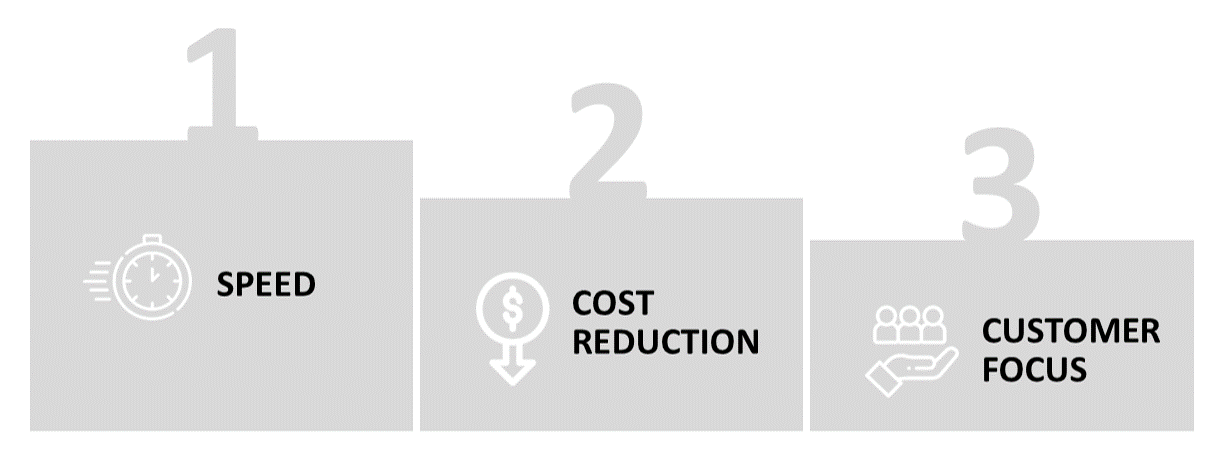
The uncertain ‘new normal’ we’re facing is forcing companies around the world to adopt strategies and contingency plans that address new practical challenges, such as the reduction of workforces and international travel restrictions. However, companies need to think about the effects these changes will have on their consumers and minimize any potential negative impacts on these important relationships. Ensuring the same levels of safety and quality while guaranteeing an efficient time-to-market is critical. The consumer products and retail industry is already changing to align with these issues through speed, cost reduction, and customer focus.


Most commonly cited reasons for changes due to COVID-19 in ‘Consumer Products and Retail’ industry

3 reasons_COVID19

Source: McKinsey & Company, ‘The need for speed in the post-COVID-19 era – and how to achieve it’ survey, September 2020


But how to achieve a customer-centered strategy with an enhanced time-to-market while considering cost-reduction needs at the same time? Some of the elements required when workforces are limited and travel is restricted are:

  • Increased flexibility
  • Faster response
  • Complementary know-how


An Extension of Your Own Team

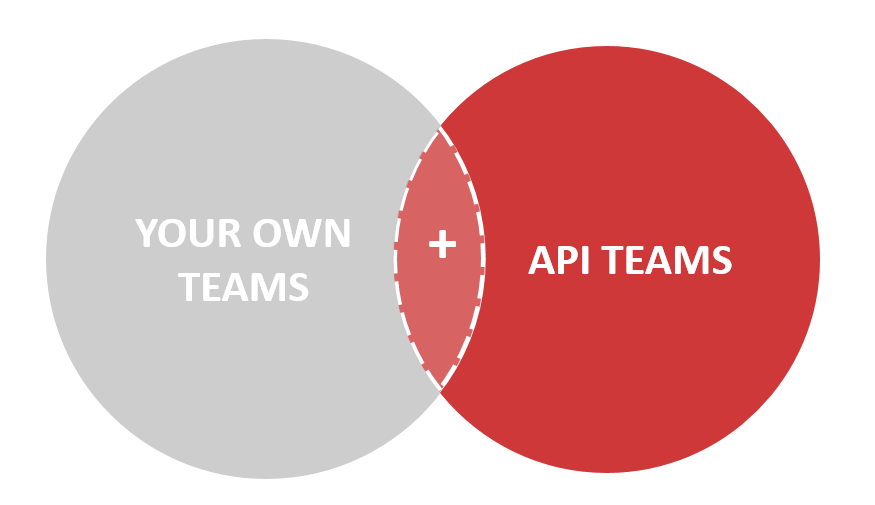
To support companies in their path toward the new normal, API is cooperating with brands and retailers’ internal quality and audit teams to complement them on-demand with a 360° approach to quality that provides optional solutions.


Our complementary technical support

API’s complementary technical support allows companies to benefit from additional support only when and where it’s needed with the flexibility to adapt as required. Some of the added value of our solutions include:

  • Complementary technical solutions related to quality management: larger capabilities + deeper and upstream support (eg., remote golden sample validation with techno-visualization to assist locally during the product development stage).
  • Extended geo coverage: delivering ‘A to Z’ services with dedicated support in areas where clients are not present and that are not easy not easy to travel to. 
  • Additional expertise in specific product categories: complementary knowledge and additional areas of expertise

Interested in learning more about our specific solutions?

Kategorien
Blogs

Remote Support: An On-site Extension of Your Teams

In the current context of travel disruption, the ‘normal practices’ adopted by many companies until now need to be reassessed. Brands and retailers must be present in factories in many cases to oversee requirements, including the evaluation of prototypes, the review of samples at the pre-production or production stage, and the selection of items for new collections. But how can companies achieve this given the current travel restrictions and without teams on-site? Occasionally, factories can send samples to the quality teams closest to them or even to the head office. However, in most circumstances, this solution would be too costly and time-consuming. To facilitate a quick decision process and speedy time-to-market, API has harnessed the latest video technology to develop a series of remote solutions. Chair_W
Assess and approve your pre-production samples live or utilize a critical eye on-site during product selection, guided by the latest technology by our team of experts

Our solutions AT THE INITIAL PRODUCT LEVEL include:

Product sample review and validation
  • Full and precise evaluation of prototype sample, engineering sample or golden sample
  • Quality check at early stage to allow further corrections and improvement
Collection review in showroom via video call at the moment of product selection:
  • Sample review
  • Conformity / non-conformity identification on mechanical issues
  • Risks & issues anticipation
  • Recommendations for amelioration
Some of the benefits of our remote solutions are:
  • Guidance by a team of experts on-site
  • Possibility to follow live, real-time events at factory / showroom through the latest technology
  • Quality and compliant products
  • Faster time-to-market vs. international shipments for approval
  • Support though all manufacturing stages
Thanks to our in-depth manufacturing knowledge and boots-on-the-ground experience, we guide you through the most critical decision processes and support you remotely with the latest technology. API puts our teams of experts at your disposal who specialize in different product categories to support all your needs remotely. Interested in learning more about how we can support you remotely with these or other solutions?
Kategorien
Blogs

The rise of sustainability in the furniture industry

Attitudes toward sustainability are shifting, and it has become increasingly important for brands and retailers to participate in green initiatives and develop more sustainable products and processes.

Consumers worldwide are demanding more and more sustainable products across many segments, and industries are working quickly to adapt. It is no different in the furniture sector, where growing numbers of consumers are looking for sustainable equipment for their homes and offices.

According to the 2021 Green Home Furnishings Consumer Study by the Sustainable Furnishings Council, many consumers are concerned about environmental issues such as global warming, indoor air quality, and deforestation. Practicing eco-friendly habits has become nearly universal, and purchases of environmentally safe furnishings are on the rise.

The three most important attributes respondents said they look for when purchasing furniture were unchanged from previous years, but sustainability concerns entered in the fourth position for the first time:

  • Style (100%)
  • Quality (98%)
  • Fair price (95%)
  • Made with materials and processes that do not harm the environment (86%)

According to the report, over 96% of home furnishings purchasers would choose eco-friendly home furnishings if they liked the style and the price was within their budget.

Source: 2021 Green Home Furnishings Consumer Study by the Sustainable Furnishings Council

This change in consumer preferences confirms that we are at a stage in which integrating sustainability into a company’s strategy will help it achieve a competitive advantage in the long term. There are additional reasons to shift toward a more environmentally sustainable process, including ensuring environmental compliance, corporate responsibility and transparency, saving costs with better use of natural resources, and improving the positive impact on the planet.

One of the issues the sector faces in the journey toward a more sustainable supply chain is a lack of knowledge not only from consumers but also from the different players along the product’s lifecycle. Although there has been significant improvement in recent years, sustainability remains an overwhelming topic for many furniture industry players.

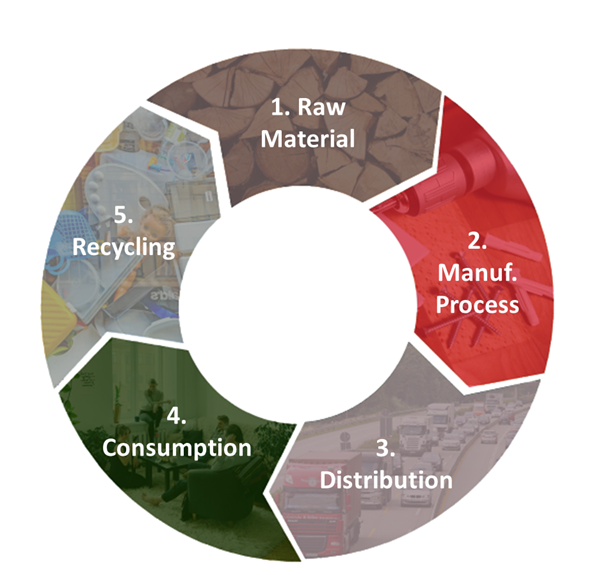
Becoming more sustainable can start with small steps in any stage of the product lifecycle, such as more sustainable materials, manufacturing practices, or transportation.

Seven of the key areas that apply to environmental sustainability are:

     1.  Environmental management systems
     2.  Energy and GHG emissions
     3.  Water use
     4.  Wastewater management
     5.  Emissions to air
     6.  Waste management
     7.  Chemical management

Where is the best place to begin? The importance of a good start is to have a solid understanding of the supply chain and its different suppliers from the outset until the finished product. It will then be possible to define realistic objectives and a clear road map at both the brand and the supply chain level.


Five steps to begin your journey

    1.  Understand your supply chain
    2. Define your objectives
    3. Supply chain assessment (environmental & chemical management)
    4. Product level sustainability
    5. Traceability assessment

API’s SUSTAINABILITY SOLUTIONS

At API, we help our customers in their sustainability journey, no matter their level of maturity in the topic. Our sustainability experts can help evaluate, verify, and improve the environmental impact of your products and processes with our strategic and tailor-made solutions. We can adapt our services to your needs using a global framework, your own framework, or by helping you from scratch with API’s bespoke framework.

Our solutions cover:

  • Environmental management solutions
  • Chemical management solutions
  • Product sustainability and traceability solutions
  • Leather sustainability solutions
  • Hardgoods training resource center

You can find out more about our solutions hier.

Interested in learning how we can help your brand with a tailored sustainability assessment?

Kategorien
Blogs

Identify assembly line issues to improve final products

Conducting final quality checks at the end of production remains very popular; however, it loses its effectiveness and efficiency when used as the only criteria for identifying risk. Because the ultimate goal is not to find a faulty part but to avoid it occurring in the first place, waiting until the end of the manufacturing process to check for quality issues can cost you more.

Defects can vary in severity from minor appearance flaws to those critical to safety. Regardless, identifying these issues when the products are already complete will, on many occasions, require the production to be reworked, wasting time and materials. This can also lead to shipment delays and additional freight costs while impacting product reliability.

Instead of relying solely on Final Random Inspections, assessing the entire manufacturing process can significantly improve finished products. Common scenarios that impact final product outcomes include:

    1.  Incoming materials are not properly stored or inspected.
    2.  Workstations are not arranged well or correctly set up.
    3.  Operators perform processes against instructions.
    4.  Station workloads are unbalanced.
    5.  Parameters of test equipment and tools are incorrect.
    6.  The operator does not understand the product quality requirements. 
    7.  The inspection plans for outgoing goods or sample sizes are insufficient. 
    8.  Not enough quality controls during the inspection process.

Three examples of common assembly line issues

It is important to understand that the complexity of the manufacturing process will vary based on the type of product – and so will the risk. A more complicated product such as an automatic coffee machine or a steam oven, or a more complex assembly process, will most likely present a higher risk level. Other contributing elements include the maturity and knowledge of the factory, the actual capabilities of the production line, familiarity of the workers with the product requirements, and more.

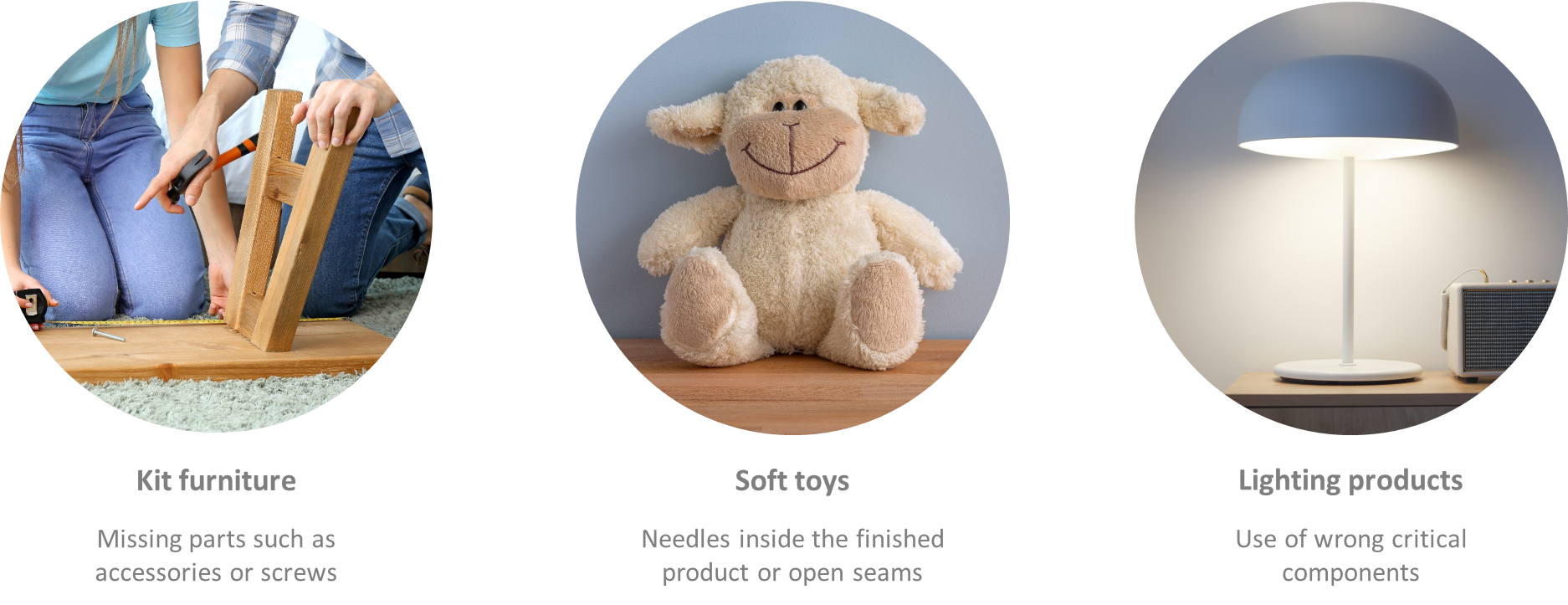
Issues in the assembly line can lead to faulty products, which, in some instances, can be anticipated depending on the product’s nature. Examples include: 

Examples_AL_M

Identifying the root cause of an issue can be challenging, but it is critical to detect and prevent mistakes as soon as possible in the manufacturing process. Consider implementing this five-step practice internally:

  • Build a team to address the issue.
  • Identify the risks of the mistake.
  • Find the root cause.
  • Redesign the process based on the root cause.
  • Track the solution’s performance.

 At API, we can provide support to identify, assess, and improve manufacturing processes. Our dedicated In Production Process Assessment program takes an in-depth look at in-house procedures, from outsourced materials to final assembly. Some of the program’s benefits include:

  • Identification of good practices and opportunities for improvement
  • Improved critical processes
  • Improved customer satisfaction and reduced returns. 

Interested in learning more about how we can help your brand with a tailored assessment?

Kategorien
Blogs

Tips to alleviate disruption when shifting sourcing location

Reshoring, offshoring, and nearshoring: these were some of the most used terms in 2020 in numerous industries, including furniture. China continues to reign as the world’s manufacturing superpower and primary supplier of all varieties of goods, but companies have begun diversifying their supply chains in recent years and pursuing alternative manufacturing hubs. COVID-19 disruptions and the US–China trade war have acted as an accelerator in many cases, urging brands to look for manufacturing sources outside China.

China is the world’s manufacturing superpower

 Source: Statista ‘Top 10 Countries by share of global manufacturing output 2018’

The global furniture industry has been seeking sourcing alternatives to China for several years already, with some manufacturing countries outside China reinforcing their position and becoming a bigger part of manufacturing production volume for some brands. Some of the countries preferred by brands and retailers include Vietnam, Cambodia, Malaysia, India, and Indonesia in Asia, Poland in Central Europe, and Mexico in Latin America. New countries mean new opportunities, but they also come with new risks. When relocating parts of production out of China, the risks include:
  • Unzureichende Produktionsplanung und -status: When working with new suppliers, some factories may not operate at their full capacity or might have inadequate planning, making it difficult to meet production targets. It is important to check your factory records to see how many actual people are in the production line, as well as daily output and quality control reports.
  • Rushing production: With relation to the above and to ensure correct timing, some suppliers may rush to make up for lost time, tempting them to cut corners and speed up processes. This can lead to mistakes and skipping quality control measures that put the entire production at risk.
  • Mangel an Rohstoffen: New manufacturing countries do not always benefit from the same access to raw materials as China. This may result in a shortage of some materials such as specific types of wood, stone, or components, or longer delivery times.
  • Lack of quality control to ensure safety and quality: A lack of local teams onsite or experienced factory employees may decrease the level of quality control, putting product safety and production quality at risk.

How can these risks be mitigated?

The concept of shifting production to areas outside China was already on the table before the US–China trade war and COVID-19-related pressures. However, these recent issues have broadened and escalated the topic’s relevance, with many companies now considering moving ‘out of China.’ Diversifying production areas and pursuing alternative locations can help secure additional inventory and capacity. However, launching production in a new area can be challenging without the right experience or teams in that specific area. A third-party company can support brands and retailers with adapted solutions that facilitate a smooth transition that protects production quality. The crises and disruptions experienced by supply chains in recent months may be the catalyst for revisiting a more global supply chain strategy and accelerating the adoption of new models and capabilities. However, in the meantime, short-term actions are needed to respond to these challenges.

3 tips to alleviate disruption when shifting sourcing locations

Tips from a manufacturing perspective include:
  1. Increasing workforce visibility and labor planning: Having stronger visibility over actual factories and suppliers is vital to ensure production is completed on time and with the expected quality of goods.
  2. Understanding the key suppliers: Whether the orders only represent a small portion of one factory’s production lines or are flooding the lines with goods makes a significant difference in how to best interact with that factory.
  3. Increasing supply chain transparency and carefully selecting the right suppliers: It is essential that you work only with the most suitable suppliers for your production needs.

Supporting our customers with our manufacturing expertise

At API, we are putting our manufacturing experience and product expertise at the disposal of our clients to help them adjust during this challenging time. Thanks to the agility and flexibility of our teams and our local infrastructure, we speedily implement onsite solutions that respond to each clients’ particular needs. Our dedicated technician program will act as an extension of your teams onsite to ensure your products meet your safety and quality requirements. We provide support through all stages of the supply chain, from initial development and supplier selection, through the manufacturing phases, and across production safety and quality control. For example: Interested in learning more about how we can support you in new sourcing locations?
Kategorien
Blogs

Toy compliance: best practices to save time and stress

In the current landscape, uncertainty is still impacting many companies worldwide and the toy industry is no different. While some brands are thriving, many are facing unprecedented disruption levels, suffering from the effects of a reduced qualified workforce, delayed shipments, unsteady demand, and increased pressure to accelerate their time to market. One of the primary concerns these companies share is ensuring their products’ compliance, with chemical risks remaining one of the most problematic areas.

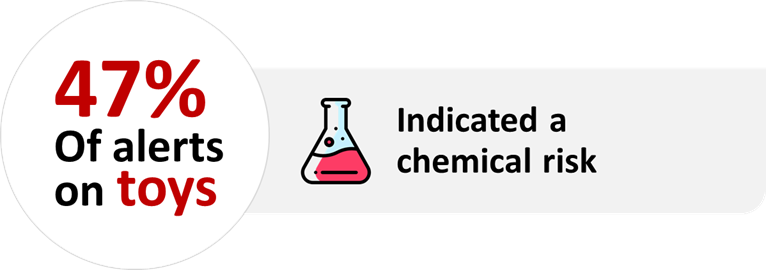
Chemical risk alerts on toys continue to be prominent each year, with the identification of many banned chemicals that pose serious risks to children’s health. Similar to previous years, in 2019, 47% of alerts about toys in Europe (RAPEX) indicated a chemical risk. One of the more common risks observed for the past few years has been the presence of phthalates in the plastics used to make dolls.

image-png-Mar-30-2021-04-11-17-08-AM

Source: RAPEX 2019

In this challenging context, where compliance challenges meet time to market pressures, anticipating and preventing these risks is crucial.

How can we ensure compliance while improving time to market?
Travel restrictions and numerous logistical and production uncertainties are adding additional pressure to supply chains and slowing down some of their processes. Validating samples has become a lengthier process in many cases. With many brands’ in-house teams unable to be onsite due to travel restrictions, a great deal of time is being spent in back-and-forth exchanges between factories and brands.

One of the most feared – and too-common – moments is being surprised with a ‘FAIL’ result in a pre-shipment test at the last minute, when timelines are tight.

Continuing the plastic dolls example, how can a brand anticipate risks and avoid this significant issue right before the shipment? The answer is simple: to anticipate risks as early as possible.

Instead of testing the PVC doll, brands and retailers can move upstream to, for example, track and test the PVC input and ensure it’s coming from an approved source. Where do the pellets originate? Who is the plastic supplier? This means taking a step back to evaluate the supplier’s performance based on the finished product and their processes and materials.

At API, we can help brands and retailers shorten their time to market with our onsite support and remote solutions, acting on behalf of brands onsite and guiding in-house teams remotely with our technical expertise. Our experts in Asia and Europe act as bridges between brand teams and factories, connecting your unique requirements with technical teams in the local language.

Einige unserer fachkundigen Lösungen für Spielwaren entlang der gesamten Lieferkette umfassen:

Interested in learning more about our toy solutions?

de_DEGerman