10 Schritte, die Hersteller von Hartwaren unternehmen können, um Energie zu sparen

Kategorien
Blogs

10 Schritte, die Hersteller von Hartwaren unternehmen können, um Energie zu sparen

In den letzten Jahren wurden Unternehmen und Gemeinden in ganz Asien immer wieder von schweren Unwettern erschüttert, die aufgrund der zerstörerischen Kraft des sich beschleunigenden Klimawandels die größten Schäden seit Jahrzehnten verursachten. Die Wirtschafts- und Sozialkommission für Asien und den Pazifik (ESCAP) ist zu dem Schluss gekommen, dass der Klimawandel die Risiken von Naturkatastrophen vergrößert und die Kosten für den Schutz der Menschen vor negativen Auswirkungen erhöht.

Die Asiatische Entwicklungsbank (ADB) schätzt dass die heftigen Regenfälle, die zu massiven Überschwemmungen in Indien, Bangladesch und Nepal führen, den Volkswirtschaften der Region jedes Jahr finanzielle Verluste in Höhe von bis zu $215 Milliarden bringen. Die Super-Taifune, die auf den Philippinen, in China und Hongkong wüten, stören nicht nur den lokalen Geschäftsbetrieb, sondern auch die weltweiten Lieferketten für ihre Produkte. Die ADB geht davon aus, dass bis 2025 410 Millionen Asiaten von Überschwemmungen an den Küsten bedroht sein werden, während mehr als 60% der Bevölkerung der Region derzeit in Wirtschaftszweigen beschäftigt sind, die stark von den Auswirkungen des Klimawandels bedroht sind.

Die rasch expandierende Fertigungsindustrie in Asien ist ein bedeutender Verursacher der Treibhausgasverschmutzung aufgrund des hohen Energieverbrauchs, und der Anteil der Region wird bis 2030 voraussichtlich 43% der weltweiten Stromnachfrage erreichen. Die Wohlfahrtsverluste aufgrund der zunehmenden Belastung durch Industrieemissionen werden Süd- und Südostasien schätzungsweise 7,5 % des regionalen Bruttoinlandsprodukts kosten. Ohne radikale Änderungen in der Wirtschaftstätigkeit könnten Asien und der pazifische Raum im nächsten Jahrzehnt 48% der weltweiten Treibhausgase ausstoßen. China gilt heute als der weltweit größte Verursacher von Treibhausgasen und produziert 28% der globalen Kohlenstoffemissionen, mehr als die Vereinigten Staaten und Europa zusammen. Die verarbeitende Industrie ist der größte Energieverbraucher in China, auf sie entfallen derzeit 56,7% des gesamten jährlichen Energieverbrauchs des Landes. Die Energieintensität des chinesischen verarbeitenden Gewerbes liegt weit über dem weltweiten Durchschnitt, und die Regierungsdaten zeigen, dass der Stromverbrauch in China um 6,6 Prozent im Jahr 2017 gestiegenmit einem Großteil der zusätzlichen Energieversorgung aus der Verbrennung von Kohleund erzeugen drastische Mengen an Treibhausgasen.

Der internationale Energieausblick 2018 die von der U.S. Energy Information Administration veröffentlicht wurde, prognostiziert, dass China der bei weitem führende Produzent energieintensiver Güter bleiben wird, wobei der prognostizierte Energieverbrauch bis zum Jahr 2040 auf 25% ansteigen wird, wenn die Industrie ihre Energiemanagementpraktiken nicht ändert. Die daraus resultierenden Treibhausgasemissionen würden den Klimawandel beschleunigen und erhebliche Risiken für lokale Gemeinschaften und Ökosysteme mit sich bringen, indem sie zu extremen Wetterlagen mit stärkeren Dürren, Winden und Regenfällen, einem höheren Meeresspiegel und wärmeren Ozeanen führen, die wiederum stärkere Stürme und Küstenschäden verursachen. Die verarbeitende Industrie würde schwerwiegende Verluste erleiden, da ihre Betriebe empfindlich auf hohe Temperaturen, extreme Wetterbedingungen und Süßwasserknappheit reagieren. Eine Datenanalyse von einer halben Million chinesischer Produktionsbetriebe zeigt, dass eine Beschleunigung der Klimawandel würde die Produktion des chinesischen verarbeitenden Gewerbes drastisch senken jährlich um 12% sinken, was einem Verlust von $39,5 Milliarden in 2007 Dollar entspricht. Da das chinesische verarbeitende Gewerbe 32% des nationalen BIP ausmacht und 12% der weltweiten Exporte liefert, wären die Auswirkungen auf die lokale und globale Wirtschaft erheblich.

Im Pariser Abkommen von 2015, einem von fast 200 Ländern unterzeichneten internationalen Vertrag über den Klimawandel, hat sich China offiziell verpflichtet, die Kohlenstoffemissionen um das Jahr 2030 zu beenden. In seiner Nationalen Strategie zur Revolution der Energieerzeugung und des Energieverbrauchs (2016-2030) hat China ein ehrgeiziges Energieverbrauchsziel von maximal 6 Milliarden Tonnen Steinkohleeinheiten im Jahr 2030 festgelegt.

Die Einhaltung der nationalen Strategie und die Wahrung der langfristigen Interessen des verarbeitenden Gewerbes erfordern die Entkopplung des Energieverbrauchs vom Wirtschaftswachstum, die Umsetzung von Strategien für ein nachhaltiges Energiemanagement auf lokaler Ebene und Investitionen in die Verbesserung der Energieeffizienz in der Industrie. Nachhaltiges Energiemanagement beinhaltet systematische und kontinuierliche Anstrengungen zur Verbesserung der Energieeffizienz durch Verhaltensänderungen, intelligente Management- und Technologielösungen zur Optimierung der Unternehmensabläufe. Glücklicherweise zahlen sich diese Bemühungen in der Regel aus und stärken die Ressourcensicherheit, das öffentliche Image und die langfristige wirtschaftliche Widerstandsfähigkeit des Unternehmens. Der Carbon Trust schätzt, dass eine Senkung der Energiekosten in der Produktion um 20% den gleichen Nutzen bringt wie eine Umsatzsteigerung um 5%.

API-Nachhaltigkeitsexperten haben diesen Schritt-für-Schritt-Leitfaden entwickelt, um Herstellern dabei zu helfen, ihre Energieleistung, Risiken und Chancen besser zu verstehen, bewährte Verfahren zur Energieeffizienz umzusetzen und eine nachhaltige Investitionsrendite zu erzielen.

1. Bewertung Ihres Energieverbrauchs 

Durchführung einer detaillierten, dokumentierten Energiebewertung der Einrichtungen und Betriebsabläufe Ihres Unternehmens, Analyse der Energienutzung und der Verbrauchsdaten, Ermittlung von Bereichen mit hohem Energieverbrauch, Identifizierung von Möglichkeiten zur Verbesserung der Energieeffizienz. Die Energiebewertung umfasst die Analyse der historischen Versorgungsdaten über einen Zeitraum von 12 bis 24 Monaten mit einer detaillierten Lastaufschlüsselung und einer Vor-Ort-Analyse der wesentlichen Energieverwendungen, ihrer relevanten Variablen, Risiken, der aktuellen Energieleistung und der Identifizierung von Mitarbeitern, die diese beeinflussen oder beeinträchtigen, um Funktionsstörungen und Energieverschwendung zu vermeiden.  

Einrichtung eines zentralisierten Energiemanagement-Informationssystems (EMIS) unter Verwendung einer speziellen Softwareplattform mit sofortigem Online-Zugang zu Energieinformationen, Messdaten und Kosten, Einzelheiten über Energiesparmaßnahmen und Aufzeichnungen über die daraus resultierenden Einsparungen. Die Energieinformationen können entweder in Echtzeit erfasst oder täglich gemeldet werden, um die aktuelle Energieleistung zu ermitteln, Faktoren mit hohem Energieverbrauch zu identifizieren und die Energieleistung im Vergleich zu den gesetzten Zielen zu bewerten. EMIS erleichtert rechtzeitige, fundierte Entscheidungen für ein effektives Betriebsmanagement auf der entsprechenden Ebene Ihrer Organisation.

2. DEFINIEREN SIE IHRE ENERGIE-BASISLINIE

Verwenden Sie die bei der ersten Energieprüfung gesammelten Informationen, um anhand der historischen Daten der Versorgungsunternehmen, der aufgezeichneten Energieverbrauchstrends und des Benchmarking eine Energie-Basislinie zu erstellen. Identifizieren Sie die geeigneten Energieleistungsindikatoren zur Überwachung und Messung der Energieleistung im Vergleich zur Energie-Basislinie. Verwenden Sie spezialisierte Softwareportale für Energie und Nachhaltigkeit, um die Berechnungsmethoden, die Datenverwaltungsprozesse, die Verfahren zur Änderungsverwaltung, die Verzeichnisse der Treibhausgasemissionen sowie die zugehörigen Rollen, Verantwortlichkeiten und den Zeitrahmen zu dokumentieren.  

Messung aller Veränderungen der Energieleistung im Vergleich zum ermittelten Ausgangswert, jährliche Neubewertung und Aktualisierung des Ausgangswertes oder bei größeren Veränderungen der statischen Faktoren. Die gewonnenen Daten können zur Berichterstattung über die laufende Energie- und Umweltleistung des Unternehmens verwendet werden.

3. ENERGIEAUDITS EINLEITEN 

Nutzen Sie die aus der Energiebilanz gewonnenen Informationen, um Standorte und Prozesse auszuwählen, die übermäßig viel Energie verbrauchen und das Potenzial für Verbesserungen der Energieeffizienz haben. Beauftragen Sie einen Energieexperten mit der Durchführung eines umfassenden Vor-Ort-Audits der Anlagen und des Betriebs. Der Auditor sollte einen maßgeschneiderten Aktionsplan erstellen, in dem kostenlose, kostengünstige und mittelfristige Lösungen zur Senkung des Energieverbrauchs sowie Bereiche aufgeführt sind, die kapitalintensive Investitionen in die Energieeffizienz erfordern.

Einführung eines fortlaufenden Programms von Audits und Bewertungen mit regelmäßigen internen Audits in geplanten Abständen, um die Dynamik des Energieverbrauchs im Vergleich zu den Energiezielen und -vorgaben zu bewerten, die Wirksamkeit der Umsetzung von Energiesparmaßnahmen zu beurteilen und Korrektur- und Präventivmaßnahmen zu entwickeln. Nutzen Sie ein Energie- und Nachhaltigkeitsportal, um einheitliche Auditpläne zu entwickeln und die Auditergebnisse und Empfehlungen zu dokumentieren. Energieaudits sollten den Anteil des Energieverbrauchs einzelner Geräte ermitteln, vorrangige Bereiche für Energie- und Kostensenkungen vorschlagen und Empfehlungen für weitere Maßnahmen für das Personal vor Ort und andere Nachhaltigkeitsakteure des Unternehmens aussprechen.

4. IHRE STRATEGIE FÜR DAS ENERGIEMANAGEMENT ENTWICKELN

Erstellen Sie in Zusammenarbeit mit Energieexperten eine wirksame Energiepolitik, die Ihren Ansatz für ein nachhaltiges Energiemanagement und Ihr Engagement für eine kontinuierliche Verbesserung der Energieeinsparung hervorhebt und Indikatoren für die Energieleistung sowie Zielvorgaben enthält. Die Energiepolitik sollte von einem Plan für das Dokumentenmanagement begleitet werden, der den Umfang, den Prozess und die Methoden für die Berichterstattung über Daten, einschließlich Berechnungsmethoden, Grenzen, Audit- und Überprüfungsverfahren, beschreibt.

Führen Sie einen Plan für die Erhebung von Energiedaten ein, in dem angegeben wird, welche Daten für eine wirksame Überwachung der wichtigsten Merkmale im Zusammenhang mit dem wesentlichen Energieverbrauch erforderlich sind, wie z. B. relevante Variablen, Betriebsmerkmale und statische Faktoren. Legen Sie fest, auf welche Weise und in welchen Abständen die Daten gesammelt und dokumentiert werden sollen.

5. EINEN AKTIONSPLAN FÜR DAS ENERGIEMANAGEMENT AUFSTELLEN

Der Aktionsplan für das Energiemanagement legt die Zuständigkeiten, Ressourcen, den Zeitrahmen und die Methoden für die Messung, Überwachung, Bewertung, Überprüfung und Berichterstattung der Energieleistung fest. Der Plan sollte Methoden und Instrumente zur Kommunikation der Energiestrategie für das Management, die Mitarbeiter und die Endnutzer sowie Sensibilisierungsschulungen enthalten, die sicherstellen, dass alle Mitarbeiter in der Lage sind, ihre Aufgaben zu erfüllen und die entsprechenden Informationen und Schulungen erhalten.

6. REGELMÄSSIGE ENERGIEÜBERWACHUNG DURCHFÜHREN 

Führen Sie fortlaufende Energiebewertungen durch, um Ihre Betriebseffizienz zu optimieren: Überwachen, messen und analysieren Sie die entscheidenden Aspekte Ihrer Betriebsabläufe, die wesentlichen Energieverbräuche, deren Variablen, Energieleistungsindikatoren, die Dynamik bei der Erreichung von Energieeinsparungszielen und -vorgaben unter Verwendung von Echtzeit-Messinstrumenten zur Erfassung, Protokollierung, Auswertung und Analyse von Energiedaten. Führen Sie zugängliche, detaillierte Aufzeichnungen über die Überwachungsergebnisse, die zu den relevanten Aktivitäten zurückverfolgt werden können.

Richten Sie ein gemeinsames automatisiertes System ein, das die gewonnenen Datensätze verarbeiten und den Fortschritt identifizieren, modellieren, visualisieren und bewerten kann, um die praktikabelsten Kontrollmaßnahmen zu ermitteln und umzusetzen. Durch die Konsolidierung von Energiedaten, die Modellierung des Energieverbrauchs in der Produktion und die fachkundige Energieanalyse der tatsächlichen Leistung im Vergleich zu den erwarteten Energieverbrauchsprognosen können Sie bis zu 30% der Energiekosten in der Produktion einsparen. Die regelmäßige Überwachung liefert Ihnen wertvolle Statistiken über den Energiebedarf der Anlage, erleichtert die Vorhersage und die Zusammenführung von Lasten, optimiert die Betriebsleistung, sagt die Energielasten voraus, ändert die Produktionspläne entsprechend dem Energiebedarf, steuert die Leistungsfähigkeit, nutzt Schwachlastzeiten, erkennt Probleme mit der Stromqualität, die den Betrieb gefährden können, und schützt Ihre Anlagen, prognostiziert, bewertet und reduziert die damit verbundenen Umweltauswirkungen.

7. BERECHNUNG VON ENERGIEREDUZIERUNGEN UND KOSTENEINSPARUNGEN 

Überwachen und berichten Sie über die Betriebskosten und die Beschaffung von Energielieferungen, Dienstleistungen und Anlagen, um fundierte Entscheidungen für die weitere Geschäftsentwicklung zu treffen. Verwenden Sie Finanzbewertungsinstrumente wie einfache Amortisationszeitberechnungen oder Discounted-Cashflow-Techniken, um den Kapitalwert und den internen Zinsfuß zu bewerten. Berechnen Sie bei kapitalintensiven Projekten mit Hilfe der Lebenszykluskostenanalyse die Kosten und finanziellen Einsparungen, die während der gesamten Projektlaufzeit anfallen können, um zu beurteilen, ob die Investition langfristig rentabel ist.   

Entwickeln Sie auf der Grundlage der Berechnungen der voraussichtlichen Kosteneinsparungen eine nachhaltige Beschaffungsstrategie. Die Berechnungen der potenziellen Energieeinsparungen durch Energieeffizienzprojekte müssen überprüft werden, um die Angemessenheit der ausgewählten Maßnahmen und die Fähigkeit, die gewünschten Ergebnisse zu erzielen, zu belegen. Führen Sie einen Mess- und Überprüfungsprozess ein, um die Glaubwürdigkeit des Energiemanagements in Ihrer Organisation zu erhöhen und die künftige Zuweisung von Ressourcen für die Durchführung von Energieeffizienzprojekten sicherzustellen. Das internationale Protokoll zur Leistungsmessung und -überprüfung bietet anerkannte Methoden und Techniken für die Bestimmung verschiedener Arten von Einsparungen in industriellen Prozessen und Anlagen und beschreibt bewährte Verfahren für die Erfassung von Einsparungen, die genaue Schätzung und die überprüfbare Berichterstattung über Energieeinsparungen.

8. VERWENDUNG VON ENERGIEMANAGEMENTMATRIZEN ZUR KONTROLLE DER ENERGIELEISTUNG

Nutzen Sie leistungsbasierte Energiemanagement-Matrizen, um die bestehenden Energiemanagement-Praktiken in Ihrem Unternehmen zu überprüfen und Ihre Abläufe in Bezug auf Energiemanagement, Finanzzuweisung, Bewusstsein und Organisation sowie technische Fragen zu analysieren. Definieren Sie klare Ziele für alle Aktivitäten und setzen Sie Prioritäten bei den Energiemanagementmaßnahmen.

Die Hersteller verwenden in der Regel drei Ebenen von Matrizen: eine Top-Level-Matrix, die die Ergebnisse für eine Organisation zusammenfasst, organisatorische Matrizen, die die Aktivitätsebenen in jedem der oben genannten Bereiche abbilden und dann die Ergebnisse in die Top-Level-Matrix einspeisen, und detaillierte Matrizen, die alle Technologien innerhalb der bebauten Umwelt abdecken und die Ergebnisse in die technische Matrix der zweiten Ebene einspeisen.

9. Lassen Sie sich klimaneutral zertifizieren

Die Einführung von Kohlenstoffmanagementprogrammen für Ihr Unternehmen kann Ihnen dabei helfen, Ihre Treibhausgasemissionen zu bewerten, zu überwachen, zu reduzieren, zu verhindern oder zu kompensieren, indem Sie die Dynamik Ihres Kohlenstoff-Fußabdrucks verfolgen und geeignete Maßnahmen zur Kohlenstoffreduzierung umsetzen. Zertifizierungen als klimaneutrales Unternehmen können den ökologischen Fußabdruck Ihres Unternehmens erheblich verringern und Ihr Markenimage stärken, indem sie Ihren Kunden, Partnern und Investoren zeigen, dass Ihre Produkte umweltverträglich und nachhaltig sind.

Die proaktive Einführung von Praktiken für das Kohlenstoffmanagement hilft Unternehmen, die immer strengeren nationalen und internationalen Umweltvorschriften einzuhalten. Bezug von anerkannte Zertifizierungen und Labels für die Haushaltswarenindustrie trägt dazu bei, die Ressourcennutzung zu optimieren, den Energiebedarf während des gesamten Lebenszyklus eines Produkts zu senken, Umweltschäden zu vermeiden und langfristig Risiken, finanzielle Verluste und Produktionskosten zu minimieren.

10. ZUSAMMENARBEIT MIT EXPERTEN FÜR NACHHALTIGES ENERGIEMANAGEMENT

Holen Sie sich professionelle Hilfe von Energieexperten, die sich mit den besten Praktiken der nachhaltigen Produktion auskennen, um ein effektives Energiemanagement für Ihr Unternehmen aufzubauen.

API ist ein anerkannter Experte auf dem Gebiet der Energieeinsparung und der nachhaltigen Herstellung von Haushaltsgütern mit einer reichen praktischen Erfahrung im strategischen Energiemanagement und der Vorbereitung auf die CO2-neutrale Zertifizierung. Unsere Nachhaltigkeitsexperten und Haushaltswarenspezialisten helfen Ihnen bei der Entwicklung und Umsetzung von Strategien, Richtlinien und Aktionsplänen für nachhaltiges Management, bei der Einhaltung von Umweltgesetzen, bei der Umsetzung langfristiger Initiativen zur Kohlenstoffreduzierung, bei der Überprüfung Ihrer Energieleistung und bei der Umsetzung internationaler Standards.

Wir sind spezialisiert auf Nachhaltigkeitsdienstleistungen, die Bewertung von Herstellungsprozessen, die Berechnung des CO2-Fußabdrucks, Lebenszyklusanalysen, unabhängige Leistungsüberprüfung und -validierung, nachhaltiges Lieferkettenmanagement und professionelle Nachhaltigkeitsschulungen.

Für weitere Informationen und Beratung, buchen Sie bitte eine API-Beratung.

Alle Daten sind aus der veröffentlichten Literatur zitiert und gehören zu dieser. API übernimmt keine Verantwortung für die Richtigkeit, Aktualität oder Gültigkeit der Daten oder Informationen. 

Kategorien
Blogs

Hardgoods Industry: Environmental Legislation & Standards

The global expansion of the hardgoods industry is creating incredible opportunities for business growth and an unprecedented pressure on communities and ecosystems across all continents.

The hardgoods production has significant impacts on the environment and human health causing extensive pollution, increasing land degradation, destructing wildlife habitats, over-exploiting natural resources, contaminating water, and accumulating hazardous waste. Life cycle assessment (LCA) is a recognized tool for assessing all the direct and indirect impacts of goods production, consumption, and utilization that must be accounted for to evaluate the environmental performance of your business.

The industry impacts include:

  • Emissions of greenhouse gas (GHG) that accelerate global climate change
  • Pollution with eutrophying substances like nitrogen and phosphorus
  • Contamination with toxic waste dangerous to human health and ecosystems
  • Depletion of nonrenewable resources including fossils and metals
  • Exploitation of biotic resources such as wood leading to deforestation and ecosystem degradation
  • Industrial use of land leading to erosion and natural habitat destruction
  • High freshwater demand for production resulting in water scarcity, and contamination of waterways.

Intensive energy demand is a significant factor, as the household consumption accounts for 60% or more of the product life cycle impacts,  reaching up to 70% for industrialized countries. Manufactured products, particularly electrical appliances, are among top three contributors to the carbon footprint of rich countries due to their high energy use. As the products are traded globally through complex supply chains, it can be difficult to assess their total impact contribution. Emerging economies across Asia are exporting large amounts of products, so a substantial share of the environmental burden from their consumption by the Western countries is translocated to the Asian countries where the products are being manufactured.

The human health impacts are related to the emissions of greenhouse gases, chemical air pollutants, ozone-depleting, and radioactive emissions. The environmental health risk factors are associated with the production emissions of carbon dioxide, nitrous oxide, methane, fine particulate matter, Nitrogen oxides, Sulphur dioxide, and ammonia that are dangerous to human health. Unsafe water, sanitation, and hygiene contribute 3.7% of the global burden of disease, lead exposure accounts for 0.9%, urban air pollution 0.4%, climate change 0.4%, occupational exposure to particulates 0.3%, and carcinogens 0.06%.

International Legislation

As the nations grow more aware of these ecotoxic effects on their economies and wellbeing, the environmental legislation is becoming ever more stringent. To make the industry safer and sustainable in the long run, the governments are introducing strict mandatory restrictions and industry regulations. The European Union has successfully adopted Ecodesign and energy labeling to improve the resource efficiency of goods production. Product life cycle analysis is applied to identify and eliminate the least efficient products from the market, driving environmental innovation, stimulating industrial competitiveness, and sustainable investment. The Ecodesign Directive provides rules for all member states aimed at improving the environmental performance and energy efficiency of products including household appliances, electronic goods, information and communication technologies. National market surveillance authorities verify that products sold in the EU follow the requirements of Ecodesign and Energy Labelling Regulations.

Such a holistic approach removes barriers to sustainable trade, boosts product quality, and ensures environmental protection. A number of countries outside the EU have developed similar legislation including the USA, Australia, Japan, China, and Brazil. Hong Kong, which annually generates 70,000 tonnes of waste electrical and electronic equipment, has now introduced the Producer responsibility scheme (PRS) as a key policy tool for sustainable waste management. The concept is based on the principle of “polluter pays” and “eco-responsibility” requiring manufacturers, importers, wholesalers, retailers, and consumers to share the responsibility for collecting, recycling, treatment, and disposal of end-of-life products to avoid and reduce their environmental impacts at the post-consumer stage. Starting from August 2018, suppliers of regulated electrical equipment (REE) including computers, televisions, printers, scanners, monitors, as well as washing machines, air-conditioners, and refrigerators, must be registered by the Environmental Protection Department of Hong Kong before distributing REE. Registered suppliers must fulfill a set of statutory obligations such as submitting returns to Department, providing recycling labels, and paying recycling levies. Sellers must further provide their consumers with recycling labels, a receipt for recycling levies, and arrange a free equipment disposal service.

National and international environmental certifications provide various useful tools for the hardgoods industry players to identify, evaluate, improve, and verify their environmental performance and help fulfill their legal obligations. TCO Certified, an international sustainability certification for IT products, sets out sustainability criteria for to ensure safety, environmental and social responsibility during the whole life cycle of the IT product from design, to manufacturing, use, and recycling. This certification requires detailed verification of the key aspects of sustainability performance.

The Green Electronics Council has developed a global rating system known as the Electronic Product Environmental Assessment Tool (EPEAT) that rates electronic products on a life cycle basis. EPEAT allows evaluating, comparing, and choosing electronics based on their environmental attributes specified for different categories including PCs, displays, televisions, printers, copiers, scanners, multifunction devices, fax machines, and more. The system aims to eliminate toxic substances from the manufacturing, promote use of recycled and recyclable materials, facilitate product design for recycling, extend product longevity, improve energy efficiency, boost corporate performance, and implement sustainable product packaging strategies.

Mandatory Product Labeling In China

The General Administration of Quality, Supervision, Inspection and Quarantine (AQSIQ) is the main body in China regulating all aspects of product quality including energy efficiency standards and environmental compliance. All manufacturers must submit energy efficiency information for their products to the China Energy Label Center before putting those products on the market. The Energy Label currently applies to four products including air conditioners, household refrigerators, washing machines, and unitary air conditioners.

The Certification and Accreditation Commission of China (CNCA) gives accreditations to testing laboratories and overseeing any certification schemes including the voluntary energy efficiency endorsement labeling program operated by the China Quality Certification Center (CQC).

The National Energy Conservation Law requires all enterprises manufacturing, importing, or selling energy-using products which fail to meet MEPS to stop production. The products that fail compliance and any associated gains are considered illegal and get confiscated, and the responsible persons are fined 1-5 times of money equal to the illegal gains. The Industrial and Commercial Administrative Department can also revoke the enterprise’s business license. High penalties are imposed for products covered by mandatory label requirements in cases when the labeling is irregular or missing, or the record product energy efficiency parameters have not been registered under the China National Institute of Standardization (CNIS) database before labeling, or if the labeling is misleading or false. These programs proved to be successful significantly reducing the energy consumption of appliances in China.

Voluntary Standards

Customers all over the world tend to have more trust in products with environmental labels or recognized certifications. Manufacturers, distributors, and retailers can attract more clients and gain a strong competitive advantage on the modern market by implementing international voluntary standards for environmental management.

Die ISO 14040 Standard utilizes the product life cycle assessment (LCA) methods for developing the life cycle inventory analysis (LCI), the life cycle impact assessment (LCIA), the life cycle interpretation, reporting, critical review, and intended application. LCA is a remarkable tool for strategic planning that allows companies to identify opportunities for improving the product design and environmental performance throughout their life cycle. It also helps to market their achievements using ecolabelling schemes, environmental claims, and environmental product declarations (EPD).

EPD is a useful tool compliant with the ISO 14025 Standard for Environmental labels and declarations that verifies information about the environmental impacts associated with a product, enables objective communication, and product comparison based on the LCA. EPD includes product and company information covering raw material acquisition, energy use and efficiency, material and chemical content, emissions to air, soil, and water, as well as waste generation. ISO 14044 provides guidelines and specifies requirements for all stages of the LCA, establishes the relationship between the LCA phases, and conditions for use of value choices and optional elements.

ECOLOGO certifies products, services, and packaging for reduced environmental impacts based on their LCA. ECOLOGO Certifications are voluntary and multi-attribute, indicating that a product has undergone adequate scientific testing, exhaustive auditing, or both, in order to prove compliance with third-party environmental performance standards. These standards set metrics for a wide variety of criteria for environmental health and safety, materials management, energy efficiency, manufacturing, operations, product performance and use, product stewardship, and innovation.

Die Cradle to Cradle Certified™ Product Standard provides guidance for designers and manufacturers for establishing a continual improvement process addressing key product quality categories including renewable energy and carbon management, material health and reutilization, water stewardship, and social fairness. The assessment allows choosing the safest materials by evaluating the potential hazards of chemicals used in production, maximize the percentage of renewable and recycled content and ensure the materials can be safely reused, recycled, or composted at the product’s end of life. The Standard also promotes renewable sources of energy and offsetting carbon emissions from the manufacturing, addresses industrial water impacts and chemicals in the wastewater. Additionally, the certification verifies fair conditions for employees, supply chain and the local communities.

Complying with voluntary environmental standards and obtaining certifications like ECOLOGO can bring multiple benefits for any business. Demonstrating your commitment and leadership in sustainability will attract new clients and elevate your customer perception using smart sustainable branding and marketing strategies. It will also reduce your production costs, facilitate sustainable procurement, and establish a green supply chain.

Professional Help

API household goods specialists can help you prove your customers, partners, and investors that your products meet world-class environmental, social, and quality standards. Our experts will help you assess, improve the environmental performance of your manufacturing activities, identify and verify the production impacts, conduct product life cycle assessment, calculate carbon footprint, prepare your business for environmental certification, and ensure legal compliance.

Contact us today to discuss how we can help you make your business more sustainable.

For more information about sustainability in the household industry, please visit our page.

Kategorien
Blogs

Getting Carbon Neutral Certified: A 2018 Guide

Climate leadership is the key to business success in the modern market of household goods, and the long-term economic growth largely depends on how well the companies understand the climate-related risks and implement appropriate mitigation strategies.

Climate change already has visible measurable impacts on our society: air pollution causes over 7 million premature deaths worldwide each year, and if we do not change our business practices urgently, the resulting health costs could amount to $4 billion per year by 2030. Any further increase in temperatures will pose major risks to human health, security, well-being, assets, economy, and ecosystems. Climate scientists predict that global warming of 1.5°C – 2°C will significantly disrupt human and ecological systems accelerating extreme weather events such as heat waves, heavy rains, floods, droughts, and wildfires, amplifying human morbidity and mortality, increasing the spread of vector-borne diseases, causing water and food supply shortages due to reduced crop yields and livestock.

Unabated climate change will also have devastating economic effects: the World Bank estimates the equivalent cost of extreme natural disasters globally as $520 billion loss in annual consumption, projecting that 26 million people would be pushed into poverty each year, and as many as 143 million people from developing regions could become climate migrants by 2050, especially communities that strongly depend on agricultural and coastal livelihoods.

Carbon Neutrality

Carbon neutrality implies achieving net zero carbon emissions by compensating the equivalent amount of greenhouse gases released during all the processes associated with energy consumption, industrial production, and transportation. Greenhouse gases (GHG) are measured in terms of their carbon dioxide equivalence reflecting the impact each GHG has on the atmosphere including methane (CH4), nitrous oxide (N2O), hydrofluorocarbons (HFC), perfluorocarbons (PFC), and sulphur hexafluoride (SF6).

To achieve carbon neutrality, we must adopt a new business approach using sustainable investment to develop adequate infrastructure and implement technological innovations that increase the resource productivity allowing lasting, balanced, sustainable, inclusive, and carbon neutral economic growth. Companies must reduce and avoid carbon emissions as much as possible by improving their resource efficiency and implementing energy conservation measures. The unavoidable emissions released from using fossil fuels can be balanced with producing a similar amount of renewable energy or switching entirely to renewable energy sources. Emissions can also be offset by paying other companies to remove or sequester the equivalent carbon dioxide, funding carbon projects that help prevent future greenhouse gas emissions, or buying carbon credits from recognised carbon trading schemes.

The 2018 Report of the Commission on the Economy and Climate concludes that limiting the cumulative global anthropogenic emissions of greenhouse gases will require an investment of US$90 trillion for developing climate neutral solutions and resilient infrastructure in the period up to 2030 in order to stay in a secure total global carbon budget. A big share of this investment will be programmed in the next few years, and the International Finance Corporation estimates that the climate investment opportunities will total $23 trillion in emerging markets by 2030.

Carbon Policies And Regulations

As the regulators are placing increasingly stringent restrictions on the industrial emissions and hazardous material use, companies have a higher risk of legal liability and litigation. are becoming more vulnerable to litigation and liability risks. To ensure compliance and stay competitive on the market, businesses must implement proactive strategies and sustainable work practices to make their products carbon neutral.

Die 1997 Kyoto Protocol signed by 192 parties became the first legally binding intergovernmental agreement under the United Nations Framework Convention on Climate Change (UNFCCC) that obliged industrialised countries to reduce their collective emissions of greenhouse gases. Countries that ratified the Kyoto Protocol were assigned maximum carbon emission levels and could participate in the Clean development mechanism (CDM), Joint implementation (JI), and Emissions Trading  designed to help stimulate green investment and meet emission targets in a cost-effective way.

In 2016, Kyoto Protocol was officially replaced by the Paris Agreement ratified by 183 Parties (174 countries and the European Union) with the aim  to reduce greenhouse gas emissions and limit the global temperature increase to below 2 degrees Celsius (3.6 F) above pre-industrial levels by the year 2100. The Agreement acknowledges the urgent need for governments, cities, regions, businesses, and investors to scale up the global response to climate change and provides an international framework to reach a net-zero carbon market obliging countries to set ambitious goals for driving GHG emissions reductions and implementing national decarbonisation plans.

In 2015, China has declared an official commitment to the greenhouse gas reduction accord under a plan submitted to the United Nations in support of the Paris Agreement aiming to cut its greenhouse gas emissions per unit of gross domestic product by 60-65% from 2005 levels. The Chinese government is now introducing strong national policies, action plans, and regulations to combat climate change and minimise environmental degradation. The objectives for reducing the carbon emission intensity have been specified individually for different provinces and cities across China ranging from 12% to 20.5% by 2020. The long-term goal is to lower the carbon intensity of GDP by 60%–65%, increase the share of non-fossil energy carriers up to 20% and grow the forest stock volume by 4.5 billion cubic metres compared to 2005 levels by 2030.

China plans to launch a national carbon emission trading market this year aiming to lower the cost of achieving GHG reduction goals using a total carbon emission cap and quota for enterprises with annual energy consumption of at least 10,000 tons of coal equivalent. The Chinese carbon market is estimated to become the largest in the world, double the size of the current EU Emissions Trading System. The new rules will cover eight industrial sectors including electric power generation, aviation, chemicals, petrochemicals, construction materials, iron and steel, non-ferrous metals, and paper production. Based in Shanghai, trading will involve 1,700 power companies covering over 3 billion tonnes of carbon dioxide annually.

Additionally, 13th Five-Year Eco-environmental Protection Plan has been adopted to promote a cleaner and greener economy by improving the air, water and soil quality, expanding forest reserve and coverage, and reducing key pollutant emissions. The main goal is to reach more than 292 days a year of excellent and good air quality by 2020 in major cities across China.

The Central People’s Government has confirmed that the Paris Agreement also applies to the Hong Kong Special Administrative Region. An ambitious carbon intensity target was set to achieve 65%-70% reduction by 2030 against the baseline from 2005. This is equivalent to 26%-36% absolute reduction and a decrease to 3.3-3.8 tonnes per capita. Meanwhile, Singapore has pledged to reduce emissions intensity by 16% from business-as-usual levels by 2020 and by 36% from 2005 levels by 2030.  

Sunset Wind Farm (1)

Recognized Certifications And Labels For Household Goods

China Environmental Label is a governmental approval symbol that establishes environmental standards for electronics, cosmetics, textiles, vehicles, construction materials, packaging, and more. The Label is awarded to products that maintain high-quality standards and meet the environmental protection requirements during the production, use, and disposal phases. The labelled products are considered less harmful, less energy intensive, and more resource-efficient when compared with the same type of products on the market. Product categories for labelling include electronics and electric appliances, building products, cleaning products, cosmetics, and personal care.

Hong Kong Eco-label is a product certification that validates whether the environmental performance of the product conforms to the relevant technical environmental standards.

It has been developed by the Hong Kong Federation of Environmental Protection to mark products and their packaging that comply with the quality standards, conform to the certain environmental requirements in the process of producing, use and recycle, and are proven to have superior environmental performance compared to similar products on the market in terms of energy conservation, contamination, and damage to the environment. The categories of household goods eligible for the certification include household furniture, toys, television sets, air coolers, and more.

Hongkong Eco-label integrates China National Standards and international standards for eco-labelling including ISO 14021, ISO 14024 and ISO 14025 aiming to establish technical requirements for products, lift the technical barriers to trade, and promote the certification business in accordance with the international best practices. The requirements to conform with Hong Kong Eco-label standard vary depending on the standard following ISO 17025 Testing and Calibration Laboratories, ISO / IEC Guide 65 Product Certification.

Die Hong Kong Green Label Scheme (HKGLS) is an independent voluntary scheme for the certification of environmentally preferable products launched by the Green Council. The Scheme sets out environmental standards and awards “Green Label” to products that qualify in terms of environmental performance. “Green Label” encourages manufacturers to supply eco-friendly products and promotes sustainable consumption, offering a convenient way for consumers to recognise environmentally responsible products. Applicants are certified against the standard’s criteria before using the label. Conformity is verified by an independent organisation following ISO 17025 Testing and Calibration Laboratories, ISO / IEC Guide 65 Product Certification. HKGLS is an ISO 14024 Type 1 label that requires compliance with applicable legislation and a third-party certification with considerations of life cycle impacts.

Products eligible for HKGLS certification include computers, monitors, fax machines, printers, electronic and electrical appliances, refrigeration appliances, air-conditioners, air cleaners, and small home appliances. HKGLS certification has been granted to various new green label products including  the ECO Toner Cartridge developed by Print-Rite.Unicorn Image Products Co., Ltd. of ZhuHai), bizhub C220, C280, C360, Multifunction Devices by Konica Minolta Business Solutions (H.K.) Ltd., EC CLEAN by Green Concept Limited, 288 Liquid Biological Multi-function Micro-organism Additive (Pro-Digest) by Champion Chemicals Limited, verifying that these products are recognised as safe and environmentally friendly.

Business Benefits Of Carbon Neutral Labelling

Manufacturers, distributors, and marketers selling certified environmentally sustainable products enjoy significant benefits from reducing their carbon footprint and contributing towards sustainable development goals.

Improved customer perception: a credible and independent ecolabel allows consumers to easily identify and distinguish your products among your competitors, highlighting your commitment to the highest environmental and quality standards.

Effective branding and marketing tool: an ecolabel improves your corporate image, brand recognition and reputation, demonstrates your social responsibility, confirms the product’s safety and superior environmental performance, giving your brand a strong competitive advantage.

Reduced production cost: commitment to improving environmental performance during manufacturing typically leads to significant financial savings resulting from more efficient resource use, waste minimisation, material recycling, reduced risks, and legal compliance.

Sustainable procurement: greening the production process and establishing a sustainable supply chain uncovers new opportunities for business expansion and partnership with governments, commercial organisations, and industry associations. 

Industry Leaders In Sustainability

The household goods industry is experiencing an increasing demand for eco-friendly products and smart home solutions. Successful companies strive to stand out through smart brand management, sustainable innovation, improved product quality, and environmental safety. Leading companies proactively implement sustainable business models focusing on climate stewardship, operational eco-efficiency, sustainable material sourcing, enhanced transparency, environmental certifications and product labelling, as well as implementing end-of-life solutions for waste management.

In 2018, Electrolux AB und Essity AB have become the global sustainability leaders in the Household Products and Durables category of the RobecoSAM’s Corporate Sustainability Assessment based on their Total Sustainability Score. The Assessment identifies companies that create the most long-term sustainable shareholder value, evaluating crucial factors that impact a company’s value drivers, competitive position, and long-term financial performance, such as capabilities for innovation, environmental management, product stewardship in social dimension, and operational eco-efficiency improvements.

How To Make Your Business Carbon Neutral 

Adopting a carbon neutral business strategy will send a powerful message to your customers, investors, employees, and other stakeholders about your commitment to environmental protection and industry best practices.

Start by introducing a carbon management strategy with clear measurable goals and action plans to assess, reduce, avoid, or compensate your GHG emissions. This involves calculating and tracking the total carbon footprint from your business activities, implementing a cost-effective carbon reduction program, conducting ongoing monitoring and evaluation of your environmental performance, and obtaining environmental product labels and certifications. You will also need to educate your managers and employees about sustainable business practices, and incorporate sustainability aspects into your marketing and communications strategy to promote your environmental achievements.

To learn more about the implementation of environmental regulations and best practices in the household goods industry, please see our sustainability section.

Expert Sustainability Services

API is a leading specialist in quality assurance for household goods with profound knowledge of sustainable manufacturing processes and a rich practical experience in environmental management and certification preparation. Our sustainability experts and specialists in household goods can help you develop and implement carbon reduction strategies, ensure legal compliance with environmental legislation, obtain recognised certifications, and implement long-term carbon management strategies.

We provide a comprehensive range of sustainability services focused on the evaluation of manufacturing processes, product life cycle assessment and carbon footprint calculation, independent verification and validation for environmental certification, sustainable supply chain management, and professional environmental training.

Contact us any time to discuss your business challenges and find the best solutions for your sustainable growth.

Kategorien
Blogs

Mold: The Unspoken Supply Chain Issue

Managing supply chain risk and disruption is currently one of the key priorities globally. In addition, many companies are rethinking their entire supply chain model, from raw materials to finished products. In that context, mold remains one of the issues that, while sometimes overlooked, may have an irreversible impact on different product types such as furniture made out of wood or natural materials, leather furniture and decorative items or soft and stuffed toys.  

Mold is not a new problem for suppliers, brands, and retailers, yet it has been accentuated since the ban on chemicals and anti-mold agents such as 2-Naphthol, P-Nitrophenol, pentachlorophenol, sodium arsenite, copper arsenite, chromate, dimethyl fumarate, etc. Additionally, there remains a lack of preventive measures in many factories, leading to the identification of the issue when it is too late.

In the current context of uncertainty, factories and brands are increasing their stocks of materials, components, and finished products and storing them for longer, leaving them ill-prepared to tackle mold prevention. The level of risk varies depending on the area and factory, but it remains a topic worth addressing when working with a new supplier. One additional variable to take into account is the type of product. Some materials need the right balance between dryness and humidity; for example, wood and bamboo require a certain humidity to avoid cracks. If the level becomes too high, it might lead to mold generation and potentially ruin the entire production.

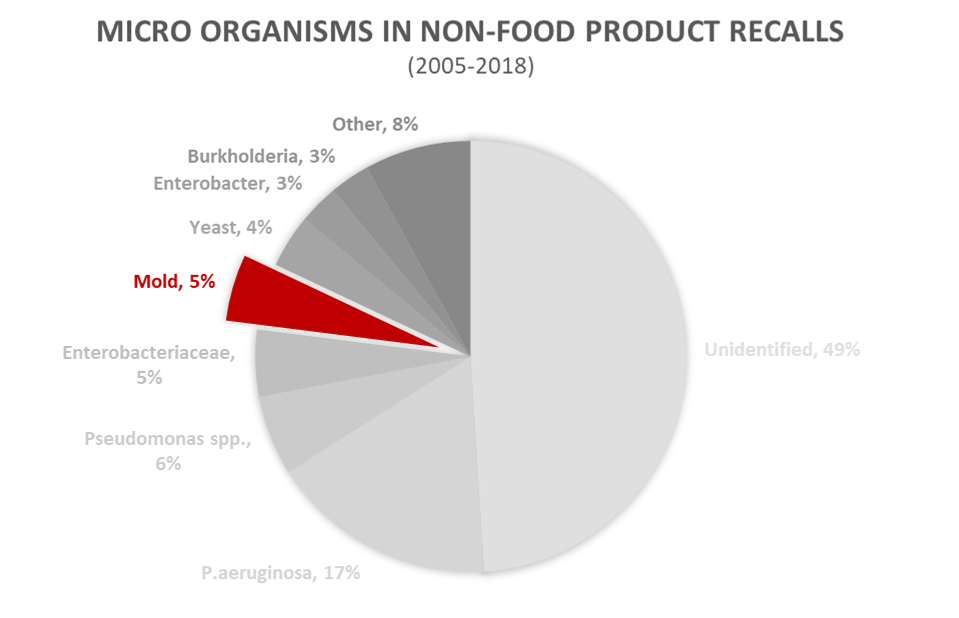
Micro-organisms_W

Mold was among the top 10 most common microorganisms in non-food product recalls between 2005 and 2018
Source: FEMS Microbiology Letters, Dec 2019, Oxford Academic

Mold Formation: A close-up What is mold?

Mold is a destructive fungus that can grow in a high number of materials and be highly damaging if not adequately treated. Mold is reproduced by spores that can travel great distances and affect products from the early stages of development or even during shipping.

What are the main categories affected in the hardlines industry?

  • Leather items
  • Wood and natural materials
  • Soft toys
  • Packaging

What are the main associated risks?
Depending on the degree and the stage at which mold is identified, it can lead to:

  • Product damage (bad smell, stains, material damage…)
  • Product recalls
  • Negative brand impact

What are the main reasons for mold formation?

  • Process (ex. finishing line cooling units malfunctioning or non-existing)
  • Lack of environmental control in factory or warehouse
  • Raw materials / finished goods subjected to hot and humid conditions
  • Transportation conditions
  • Climatic conditions (ex. countries with high temperature and humidity are ideal for mold growth)

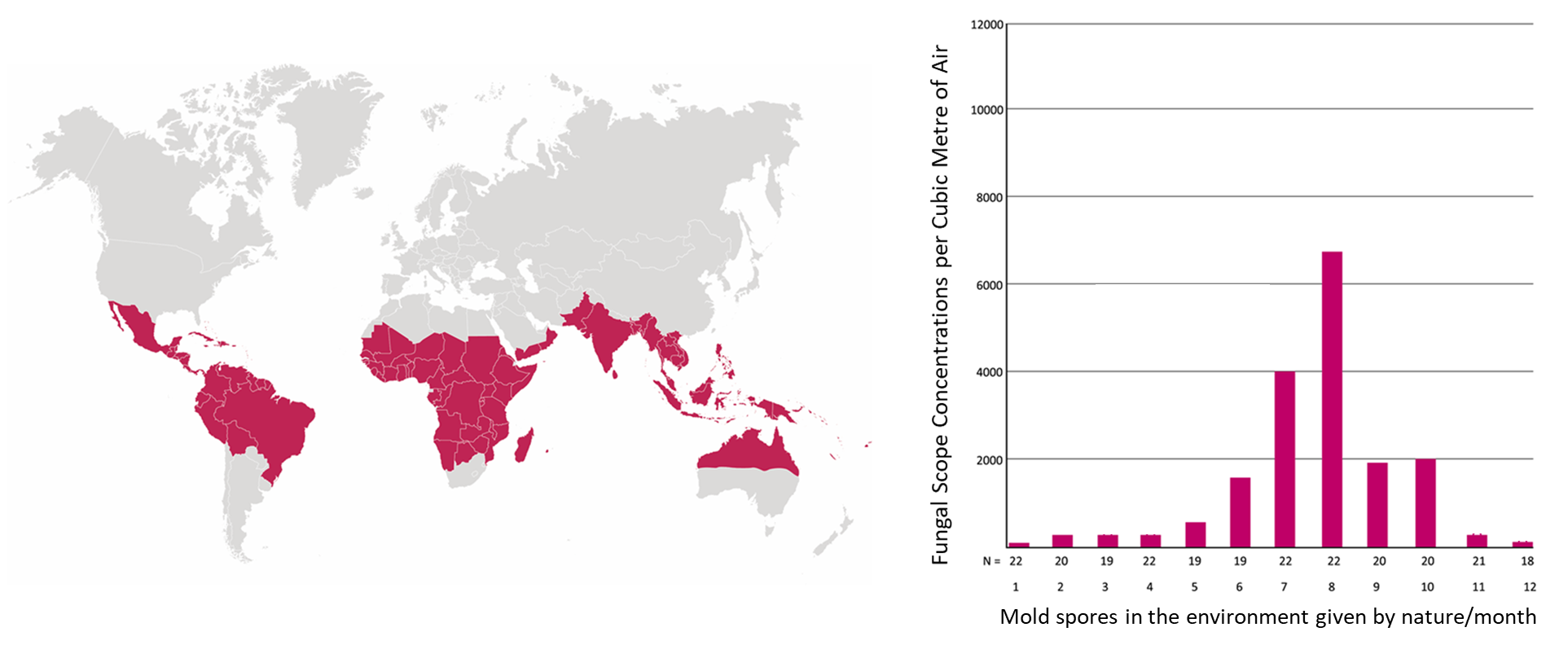
Climatic Conditions in Some Countries Favor Mold Formation

Mold_conditions

Ideal conditions for mold formation: pH 5, Temperature (25 – 37 degrees), humidity (56 – 90% RH), 3-7 days growth period. Environmental conditions combined with mold spores naturally occurring  have a big impact on mold generation, making June to October critical months

Mold remains one of the unspoken issues of the supply chain. There are many factors to consider, but is mold an issue that can be prevented? The answer is yes. There are many solutions available to tackle the problem, and the earlier in the supply chain the problem can be addressed, the lower your chances of affecting your production.

API can support you in your mold prevention from the early stages of development. Our solutions include:

  • Technical audit: review of the whole factory at system level to evaluate general conditions leading to mold formation
  • Warehouse assessment: visual control and humidity measurements of warehouse conditions, storage and dispatch of goods, etc.
  • Training on mold formation: tailor-made training based on actual factory and warehouse processes
  • Testing and risk evaluation
  • Re-inspection of long-term stored raw materials, components or finished goods


Interested in learning more about how our mold prevention solutions can help prepare factories and suppliers avoid mold generation, even in the critical monsoon season?

Kategorien
Blogs

Sourcing Diversification: New Countries, New Risks

With the outbreak of COVID-19, it became clear for many companies that there was a need for diversification in their supply chain-sourcing base. Businesses worldwide have become dependent on China, but leaving the country is not an option for all of them. The trend of avoiding trade war-related tariffs that had already started a few months earlier is persisting and brings new options to the table.

Sourcing_overview

China’s advanced role in global manufacturing makes it almost irreplaceable in the short term. Although the diversification of manufacturing options mitigates the risk of one central point of production, the challenges of new developing sourcing locations are to be assessed within the development of a new sourcing strategy. Vietnam, India and Indonesia seem to be some of the preferred destinations for upper-end furniture goods, while Malaysia is typically targeted for promotional to lower-middle price wood and upholstery items. Other industries, such as toys and DIY, are also changing their focus to other sourcing locations, with India a top destination followed by other SEA countries such as Vietnam.

what are some of the challenges to keep in mind?

China has been an industrial superpower for the last decade, accounting in 2018 for 28% of global manufacturing output. The mature industrial setup developed by the manufacturing powerhouse is yet to be replicated by some of the new manufacturing countries. In many occasions, a shift or sourcing diversification is not supported with the addition of local teams on-site, which combined with the current travel restrictions, lack of knowledge of the local manufacturing practices, and the impossibility to replicate the systems already functioning in China due to its inadequacy with the local situation, increases the risk of compromising the production’s safety and quality.


68% of companies considering sourcing out of China think of product quality as the greater risk
(Source: PwC ‘Global Sourcing Shifting Strategies’ report)

Some of the main challenges of the new sourcing destinations include:

Lack of parts and components locally
As an example, the furniture industry may face shortages of some metals and stone when producing in Vietnam, limited access to some wood species and components in Indonesia, or inadequate access in India to some hardware.

Less globally qualified workforce
Although some areas benefit from a highly skilled workforce, some countries present challenges when compared with China’s mature market, such as more limited finishing capabilities or limitations when working with some materials.

Lack of traceability of process and engineering changes
Reduced visibility in terms of product development and adjustments in the manufacturing process increases the need for a more accurate and standardized manufacturing process when compared with China.

New setups and lack of previous experience
The new processes make it difficult for the local workforce to prevent inadequate factory practices and anticipate risks.

Systems not adjusted to real risks of quality and safety
Limited risk mitigation before design and production results in products of potentially lower quality, and longer lead times.


Specialized solutions, such as technical audits, can help mitigate these risks in addition to assessing new suppliers when shifting sourcing locations and helping to secure production.

A technical audit will allow you to identify whether the factory can correctly manage the supply chain and has an adequate setup to mitigate risks. A factory with good procedures, instructions, and a clear record will be more likely to run properly – even with a less experienced workforce – thus reducing the risk of product quality and safety.

Some of the common points checked during a technical audit will cover:

  • Qualitätsmanagement
  • Produktentwicklung
  • Eingehende Qualitätskontrolle
  • Kontrolle des Produktionsprozesses
  • Qualitätskontrolle der Fertigerzeugnisse
  • Resource management
  • Measuring and testing equipment control


Our Technical Solutions

At API, we support our clients in their relocation to new destinations, helping them assess their suppliers’ risk.

Our proven experience has strengthened our customers’ ‘out of China’ strategies, benefiting from our expertise and supply chain knowledge. For example, we supported one of our customers in the relocation of some of their furniture lines to India with a tailor-made program with eight key steps that allowed the brand to shift a significant part of its orders in less than six months.


“A tailor-made program with eight key steps allowed the brand to shift a significant part of its orders in less than six months”

Some of the critical points addressed were:

  • Identification of the local manufacturing specificities and inadequate factory practices
  • Product risk and quality improvement
  • Lead time improvement

Some of our solutions to support brands, retailers and manufacturers in their relocation to a new sourcing location include:

  • Technical Audits: Unser technical audit solutions cover the critical points addressed by industry standards, and our expert approach combines product expertise and manufacturing knowledge.
  • Dedicated Local Support: A lack of local support from your own teams in a new sourcing location can be remedied with API’s Dedicated Local Technical Support Program. Benefiting from our experts’ support on-site will allow a smoother relocation and help maintain quality during production thanks to an adequate risk assessment, resulting in process amelioration and improved product quality.

Interested in learning more about how we can support you in shifting sourcing locations?

Kategorien
Blogs

Antizipation von Spielzeugrisiken in den frühen Entwicklungsstadien

Die Spielzeug- und Kinderspielzeugindustrie ist dafür verantwortlich, die Sicherheit ihrer Produktkategorien zu gewährleisten, damit die Kleinen im Haus sicher spielen können. Die Herausforderung besteht darin, strenge Vorschriften einzuhalten und gleichzeitig die rechtzeitige Lieferung von Fertigwaren zu gewährleisten, die den Erwartungen der Verbraucher entsprechen. Die meisten Akteure in der Branche, darunter Hersteller, Importeure und Einzelhändler, konzentrieren sich bereits verstärkt auf die Sicherheit und die Einhaltung von Vorschriften. 

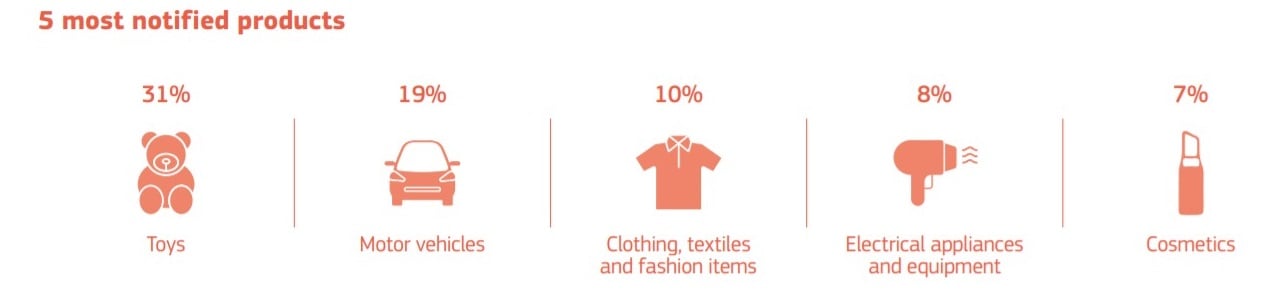
Obwohl Behörden und Verbraucherverbände weltweit die Sicherheit gefährdeter junger Verbraucher an erste Stelle setzen, werden immer noch viele Risiken und Verstöße aufgedeckt. Allein in Europa gehörte Spielzeug 2018 zu den am häufigsten gemeldeten Produkten, die 31% der RAPEX-Warnungen ausmachten.

RAPEX_2018_Kategorien
Quelle: RAPEX-Jahresbericht 2018

Es können viele Vorkehrungen getroffen werden, um die Lieferkette zu sichern und die Risiken während des gesamten Produktionsprozesses zu verringern, z. B. durch Fabrikaudits, Inline-Inspektionen oder Bewertungen während der Produktion. Es gibt jedoch einige Maßnahmen, die bereits vor Beginn der Produktion ergriffen werden können und es den Marken ermöglichen, Risiken zu antizipieren, darunter:  

Klassifizierung Spielzeug/Nicht-Spielzeug 

Obwohl die Spielzeugverordnungen in verschiedenen Ländern klare Vorgaben für die Einstufung eines Produkts als Spielzeug machen, gibt es einige Grenzprodukte, deren Einstufung gelegentlich schwierig ist. In einigen speziellen Fällen ist es notwendig, zusätzliche Kriterien zu bewerten, um ein Produkt als Spielzeug einzustufen. In Europa sieht die Richtlinie über die Sicherheit von Spielzeug beispielsweise die folgenden Kriterien vor: "Jedes Produkt, das dafür konzipiert oder bestimmt ist, von Kindern unter 14 Jahren zum Spielen verwendet zu werden, unabhängig davon, ob dies ausschließlich geschieht". Eine ähnliche Definition findet sich in den USA in der Norm ASTM F963: "Spielzeug - jeder Gegenstand, der als Spielzeug für Kinder unter 14 Jahren entworfen, hergestellt oder vermarktet wird".

Die Hauptschwierigkeit liegt hier im Begriff des "Spielgebrauchs" oder "Spielzeugs". Die meisten Gegenstände haben einen Spielwert für Kinder, aber das bedeutet nicht, dass sie unter die Kategorie Spielzeug fallen. Der "Spielwert" muss vom Hersteller beabsichtigt sein und darf sich nicht aus der Vorliebe des Kindes für einen Gegenstand ergeben. Wenn der Hersteller das Produkt als "Nicht-Spielzeug" bezeichnet, muss er diese Behauptung auch belegen können.

Angemessene Altersempfehlung und entsprechende Kennzeichnung

Dies zeigt die Sicherheit eines Spielzeugs auf der Grundlage der folgenden Fähigkeiten an:

  • Körperliche Fähigkeit des Kindes, mit dem Spielzeug zu spielen
  • Geistige Fähigkeit des Kindes, mit dem Spielzeug umzugehen
  • Spielbedürfnisse und Interessen auf verschiedenen Ebenen der kindlichen Entwicklung
  • Sicherheitsaspekte eines bestimmten Spielzeugs

Die Verbraucher verlassen sich bei der Auswahl eines Produkts, das den Interessen und Fähigkeiten des Kindes entspricht, auf die Altersempfehlung des Herstellers auf der Verpackung des Spielzeugs. Die Altersempfehlung spielt auch eine wichtige Rolle bei der Gewährleistung der Sicherheit des Kindes, da sie sicherstellt, dass es nicht mit zu kleinem Spielzeug konfrontiert wird, an dem es sich verschlucken kann.

Ein in der Branche häufig auftretendes Problem ist eine unzureichende Altersempfehlung, die in der Regel vor dem Versand bei einem Pre-Shipment-Test festgestellt wird. Wird dieses Problem am Ende der Produktion festgestellt, nachdem alle Verpackungen gedruckt wurden, müssen entweder alle Verpackungen neu gedruckt oder die entsprechende Kennzeichnung auf allen vorhandenen Verpackungen neu aufgeklebt werden. Dies führt zu zusätzlichen Kosten und zu einer Verzögerung des Versands.

Risikomanagement bei Entwurf oder Prototyp

Identifizierung der möglichen Risiken in Bezug auf:

  • Ersticken
  • Sturz oder Ertrinken
  • Erstickung und Strangulation
  • Andere Verletzungen


Zusätzlicher Mehrwert: Leistung und Spieltauglichkeit

Wenn ein Spielzeug auf den Markt gebracht wird, ist es nicht nur wichtig, die erwartete Nutzung zu berücksichtigen, sondern auch die tatsächliche und mögliche Nutzung durch das Kind zu simulieren. Auch wenn die gesetzlichen Vorschriften die Einhaltung von Sicherheitsstandards gewährleisten, besteht dennoch die Gefahr, dass kleine Kinder das Spielzeug missbrauchen. Solche Risiken können erkannt werden, wenn das Produkt unter Leistungsgesichtspunkten anhand angepasster, geprüfter Protokolle bewertet wird, die die Sicherheit noch einen Schritt weiter bringen.

So kann ein Produkt, das nicht an die Größe des Kindes angepasst ist, zusätzliche Risiken mit sich bringen, auch wenn der Artikel den Vorschriften entspricht. Wenn beispielsweise eine Maske zu groß für das Kind ist, kann sie die Sicht des Kindes beim Tragen behindern, was zu einem erhöhten Unfallrisiko führt.

Maske


Wie können diese Risiken antizipiert werden?

Wenn Sie sich auf das Fachwissen Dritter verlassen, können Sie diese Risiken durch Unterstützung in den frühen Entwicklungsphasen vorhersehen. Eine angemessene Risikobewertung bereits in den Phasen des Produktdesigns und des Prototyps kann Ihnen helfen, "misslungene" Ergebnisse bei Tests vor der Produktion oder, noch schlimmer, bei Tests vor der Auslieferung zu vermeiden. Dieses frühzeitige Eingreifen spart Ihnen Zeit und Geld.  

Dank unserer Produkt- und Fertigungsexpertise, die wir uns täglich vor Ort aneignen, können wir bei API Risiken erkennen und vorhersehen, bevor sie die Produktionslinie erreichen. Unsere Spielzeugexperten können Ihre Teams bereits in der Entwurfs- und Prototypenphase anleiten und bewerten und Ihnen dabei helfen, Risiken zu bewältigen und Ihre Produkte sicherer zu machen. Wir arbeiten eng mit Spielzeugausschüssen zusammen, halten uns über Änderungen von Normen und Vorschriften auf dem Laufenden und erhalten die neuesten Informationen über aktuelle Problembereiche und heiße Branchenthemen.

Einige unserer präventiven Lösungen für Spielzeug sind:

  • Produktvalidierungsbericht: Ausführlicher Bericht, der die Spezifikationen der goldenen Probe hervorhebt und kritische Punkte aufzeigt, die ein Sicherheits- oder Qualitätsrisiko darstellen könnten. Er umfasst eine Bewertung der Funktionalität und Leistung aus Sicht des Endnutzers sowie eine eingehende Bewertung der Spielzeugkennzeichnung.
  • Überprüfung der Kollektion: Produktüberprüfung im Ausstellungsraum, um Risiken und Nichtkonformität mechanischer Probleme zu erkennen, sowie Beratung durch unsere Experten und Empfehlungen zur Produktverbesserung.
  • Risikobewertung des Entwurfs oder des Prototyps: Risikobewertung in den ersten Phasen der Entwicklung. Sie ermöglicht es, kritische Punkte für Verbesserungen zu identifizieren und von unseren Experten Empfehlungen für eine erhöhte Produktsicherheit zu erhalten.
  • Überprüfung der Markierung: Überprüfung der vorschriftsmäßigen Kennzeichnung und der an die entsprechende Altersstufe angepassten Gebrauchsanweisung.
  • Empfehlungen zu Leistung und Spielfähigkeit: Angepasste, maßgeschneiderte Protokolle, die die Nutzung des Spielzeugs durch ein Kind simulieren.
  • Vorproduktionsprüfung

Sprechen Sie mit unseren Experten, um die richtige Lösung für Ihre Bedürfnisse zu finden und die Risiken in Ihrer Spielzeugproduktion zu antizipieren.

Kategorien
Blogs

Technical Compliance – API’s I-TCF solution

An end to spending hours gathering technical compliance documents, thanks to API’s I-TCF solution

Brands around the globe have an obligation to ensure their product’s compliance with its market destination standards and regulations. But guaranteeing the accuracy and validity of all documents proving your product’s conformity is an arduous task. Many factors weigh in the complex job of ensuring compliance:

  • Stricter regulation and increased picking in stores
  • Need for improved traceability and records
  • Large number of product references requiring time and technical staff…

Authorities scrutinize the non-compliance and associated risks of the products entering their markets, where stricter penalties have been imposed on products with incomplete and invalid documentation. In Europe alone, 2,257 alerts were sent in 2018 through the Rapid Alert System, with 4,050 follow-up actions.

The 5 most notified products were:

Rapid Alert System - Technical Compliance - API's I-TCF solution

The 5 most notified risks:

Raid Alert System Technical Compliance - API's I-TCF solution

Quelle: EU Rapid Alert System for dangerous non-food products 2018 results

API can help your company comply with strict requirements and gather documentation demonstrating that compliance with our +15 years’ experience developing Product Integrity Technical Compliance File (I-TCF) solutions that:

  • Define the relevant scope of compliance
  • Collect and quickly validate high volume of documents
  • Have a proven track record of starting a program of 1,500 items in 8 weeks – average close time of 36 days

The I-TCF is a digital ID of your product and its proven compliance with the latest applicable standards and regulations, showing:

  • Anwendbare Protokolle
  • Validierung/Ablehnung von Dokumenten
  • Gültigkeit im Laufe der Zeit

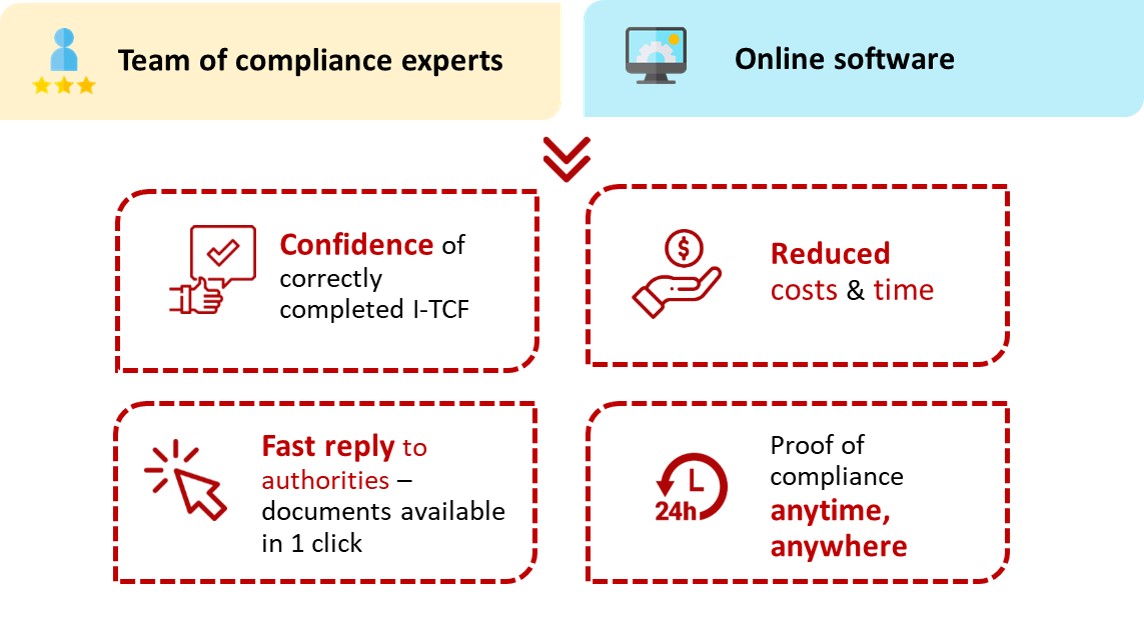
The benefits for your brand of API’s I-TCF solution?

Technical Compliance - API's I-TCF solution

Interested in finding our more about how our I-TCF solutions can help your brand?

Kategorien
Blogs

Share your Quality Challenges With Us at ICPHSO Dublin

We’ll be exhibiting at ICPHSO’s International Symposium 2019 in Dublin on 24-25 October, a two-day symposium for product safety stakeholders to learn, network and share information.

Are you also attending the event? Come and discuss your unsolved quality challenges with our team and gain insights from our customers’ technical success stories!

A client’s example:

Icphso 2019 Share your Unsolved Quality Challenges With Our Team

Buchen Sie einen Termin für ein Gespräch mit unserem Team!

Kategorien
Blogs

DIY & Home Improvement: Our 20+ Years’ Expertise

While the DIY and home improvement segment is growing at a considerable speed, brands and retailers face an increasing number of challenges. In addition to greater competition, diversification and the rise of e-commerce, market players must deal with the risks associated with production for a very large product range that still lacks harmonized and mandatory global standards. On the other side, consumers are expecting higher levels of product functionality and performance while maintaining the durability and safety of the products purchased.

With these factors in mind, at API we put at your disposal our 20+ years’ experience working with some of the industry’s top players. We can help you minimize risks and meet your consumers’ expectations with our in-depth quality solutions for DIY and tools covering all the stages of your supply chain.

Our solutions include:

https://campaign-image.com/zohocampaigns/180659000003544031_zc_v34_diy_solutions_api_aug.png

Interested in discussing your challenges with our experts?

Kategorien
Blogs

Audits for Supply Chain Sustainability and Transparency

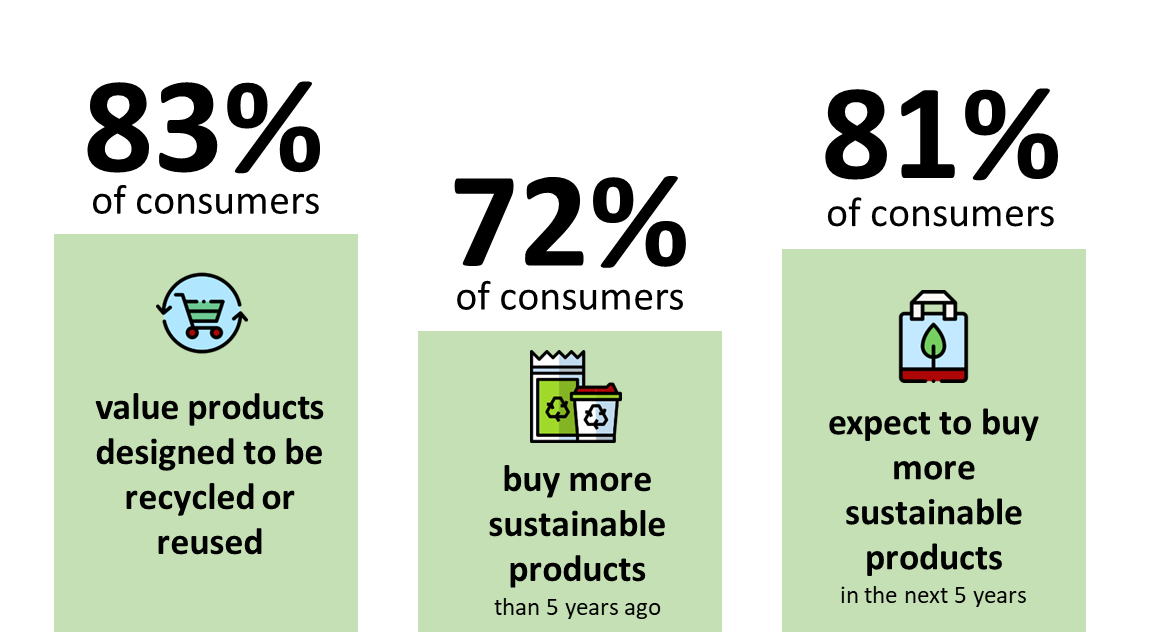
The supply chain is changing, with increasing consumer demand for sustainable products. Many large and small brands are struggling to adapt to this new demand for transparency at every stage of the product’s lifecycle: from the raw materials to the disposal or recycling at the end of the product’s life.

Sustainability is a key consideration influencing buying decisions together with quality, price, and health and safety:

Source: Accenture Survey April 2019 on 6,000 consumers in 11 countriesacross North America, Europe and AsiaSource: Accenture Survey April 2019 on 6,000 consumers in 11 countries across North America, Europe and Asia

Source: Accenture Survey April 2019 on 6,000 consumers in 11 countries
across North America, Europe and Asia

At API we can help you truly evaluate, verify and improve the environmental impact of your factories and processes to allow you to provide additional transparency to your consumers. Our team has more than a decade of experience in supply chain environmental sustainability across various products categories and a deep understanding of the different industry initiatives. We are, for example, one of the companies able to refer to the Higg Index* to provide verification and training solutions. We are uniquely positioned to understand the manufacturing process and its challenges thanks to our specialists being on the ground at the factories in real time.

We can support you from scratch in evaluating your supply chain with globally accredited assessment audit checklists or API’s tailor-made environmental audits checklists. Our personalized service, which follows API’s comprehensive environmental checklist and adapted corrective action plans, includes wide-ranging areas of assessment:

  • Environmental Management Systems (EMS)
  • Energy & Green House Gas Emissions (GHG)
  • Water consumption
  • Waste Water / Effluent Treatment
  • Emissions to air
  • Hazardous waste management
  • Hazardous chemical management

Interested in learning more about our environmental audit solutions?

de_DEGerman