4 Supply Chain Best Practices for Regional Brands

Kategorien
Blogs

4 Supply Chain Best Practices for Regional Brands

We live in a fast-paced environment with trends coming and going, before there’s even been a moment to catch up. As a regional quality director with increased supply challenges, one may need to begin looking to how global brands are managing their supply chains to start transforming local operations to remain a strong competitor at the top of current trends. In this blog, we look at what supply chain best practices you can begin implementing from a regional context.

Collaborative Strategic Sourcing 

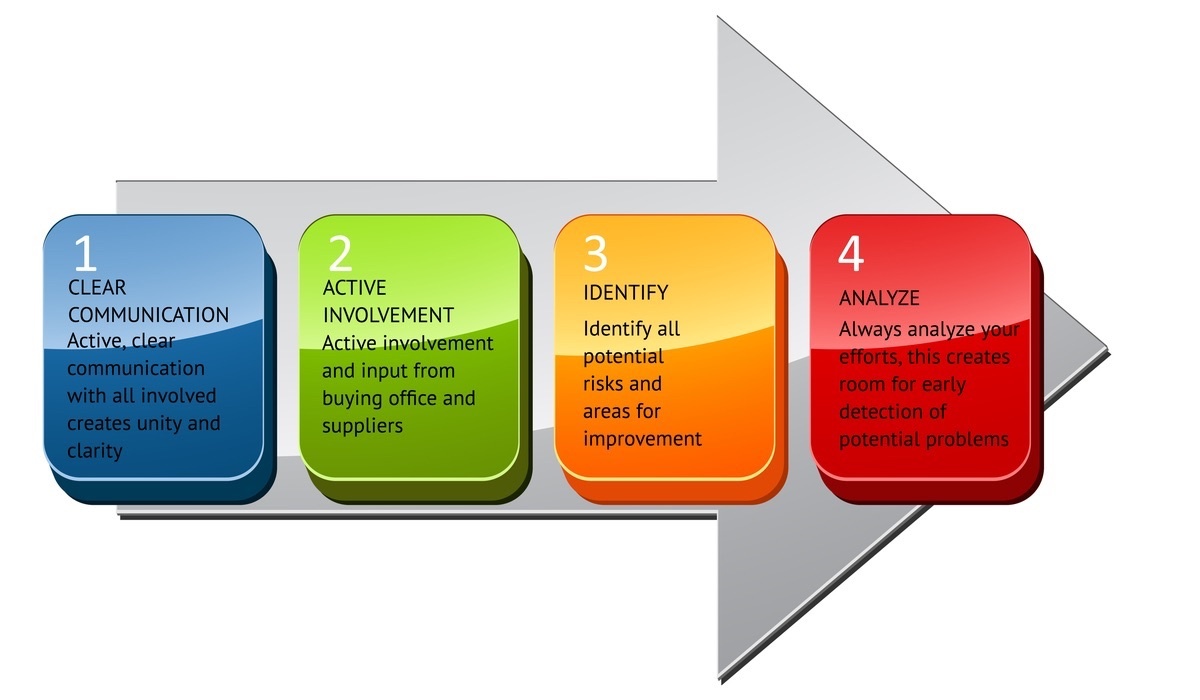
This approach highlights the collaborative approach of engaging suppliers in long-term partnerships with active involvement in the decision-making process which allows room for feedback and information sharing from your suppliers. This creates an investment in the end product or outcome which ensures full client satisfaction. This, in turn, can lead to constant improvements along the supply chain. The more strategic you are with the optimization of your supply chain the more you are then able to reduce various risks that come up along the way. Decision Making supply chain solutions.jpg
Corporate Social Responsibility

Corporate social responsibility (CSR) is becoming essential for all supply chains to adopt. Suppliers who adopt CSR are taken into stronger consideration over and above those who do not. Brands increasingly want to partner with suppliers who can provide them with environmental compliances and want to know what green initiatives they run to partner with. One of the best ways to begin understanding how to implement these solutions regionally is to look at a global brand that has had its fair share of supply struggles. Herman Miller is a good example to do this with. Supply chain solutions - CSR.jpg Miller is seen as instrumental in paving the way with greening the supply chain from using a green design for their products, to ensuring they use less harmful chemicals within the products. The only way they were able to do this was through gaining supplier buy-in. They asked their suppliers to begin complying with the zero-waste policies within their procedures.

Herman Miller has used greening their supply chain as an opportunity for innovation. They have been able to create new uses for material and product that were otherwise disposed of to the benefit of their product and brand. These kinds of innovations have huge benefits as they continue to pave the way as a strong globally competitive brand with green initiatives at the fore of every process they follow.

As consumers increasingly dictate what manufacturers make, the power of adopting CSR and green initiatives as part of your strategy can have global results for your brand.

Check out our comprehensive guide on optimizing your quality assurance systems.  

Third Party Quality Assurance

Your supply chain is directly linked to your brand image; it is, therefore, imperative that you have an efficient supply chain management strategy. You may find that your brand could benefit from adopting third party QA. The challenges experienced along your supply chain are often full of complexities, through outsourcing all of your procedures to a compliant QA company your brand’s image is taken care of. The QA solutions that are offered are tailored specific to your needs and the ever-evolving changes.

Technology

Global brands are known to adopt various technological solutions to Supply chain solutions for regional brands .jpgeffectively manage their supply chains. Regionally there is the thought that this may be too expensive to apply. When it comes to technology, it is too easy to jump to the first software you find.  It is essential to understand what you need technology to do for you, so that you may select the type of technology that is best suited to your needs. By doing this, you are ensuring that this is not overly costly for you and maximizes its efficiency for you.

These are only a few of the supply chain best practices that can be implemented regionally. Always review your procedures to work out what will work best for you, don’t find yourself in a position where you have adopted the first solution you’ve come across with no noticeable evidence of the benefits it has for you and your quality procedures. The point is to optimize your supply chain for the best possible outcomes for your brand. What solutions do you use to optimize your supply chain?

click below to learn how you can help your company optimize your qa systems today!

Kategorien
Blogs

4 Supply Chain Solutions For Global Brands

Supply chain managers often read supply chain news and yearly trends in order to remain competitive and to determine how they can implement best practices. As we analyze these trends we often look towards global brands and to the way in which they manage their supply chains to achieve their goals. It can be hard and expensive for larger companies and organizations to quickly implement new strategies and adopt new processes in order to stay on top. To remain globally competitive there are particular strategies that are implemented to achieve those successes. In this blog post, we look at what supply chain solutions can be used to create more transparency, collaboration, and efficiency.

Supply Chain Management Challenges

Supply chain managers face a host of challenges and pressures to constantly keep up with all the moving and evolving parts. Here we list three of the biggest challenges that brands currently face that without being able to manage these effectively can have detrimental effects for you and your brand.
  • Managing Suppliers – As a supply chain manager you are responsible for knowing all there is to know about your suppliers, from how many suppliers you have to how many are needed specific to your brand. As with any supplier-related problems you need to be able to handle delays, this goes with the territory. Every interaction you have with the supplier needs to be effectively planned thought out in order to create consistency and a smooth running procedure.Supply Chain Solutions Supply Management .jpg
This can be done through clear communication, a set of agreed upon objectives to work towards, ensure that regular meetings are held in order to address any complications and progresses that are being made. Following these steps may seem obvious, but this can also be a time consuming until you are able to integrate this effectively into your strategy. This helps to build a stronger supplier relationship and will have long-term benefits for all involved.

Check out our comprehensive guide to learn more about implementing a global quality assurance system.

  • Risk Mitigation – Adopting a supply chain risk mitigation strategy may be the way to go to avoid the risks that arise. Risk mitigation strategies can include anything from supply chain flexibility to requesting internal supplier related processes to ensure all systems, procedures, and potential risks may be flagged with ample time to rectify if needs are.

Supply Chain Solutions Risk Mitigation .jpgIf we take a look at Targets mistake of launching the toddler sized Barbie SUV country-wide, the problem they faced was that their distribution centers were receiving inventory faster than they were distributing it to stores across the country. This meant that there were Target stores that had empty shelves with none of the promised items in store. They attributed this to inconsistencies between actual inventory and the computer records. A mistake like this will have cost millions in revenue loss, but also detrimental to both Target and Barbie. As a supply chain manager, it is up to you to ensure you suppliers and distribution centers operate on the same system to mitigate risks like this occurring.


  • Supplier relationship management– (SRM) works on a set of processes that drive consistent, clear interactions between the supplier and buyer, SRM programs build new capabilities that enable strategic sourcing and procurement to make the most of the supplier relationships. Effectively applying SRM as a part of your strategy can help achieve greater quality in your product, faster time to market and results for your bottom line, this owing to the successful implementation of an SRM system.
  • Management Inventory – Managing inventory is all about balance, always ensuring you have enough inventory on hand to be able to account for any unforeseen delays so that you do not go “out of stock”. On the other hand, you also do not want to have too much inventory, whether your product is perishable or your product goes out of style, a mismanaged inventory can have vast implications for both brand and supplier. Therefore an efficient inventory control system is crucial.Supply Chain Solutions managing inventory .jpg
If we take a look at Walmart, despite the precision and technologically advanced supply chain management system, they are continuously failing to restock popular products creating a disruption between the customer and their brand, also resulting in revenue loss. They have attributed this to a shortage of staff within their distribution centers, with not enough people to manage the vast amounts of inventory coming and needing to go. Implementing these supply chain solutions effectively will assist in alleviating some of the challenges and pressures that are experienced on a daily basis. These solutions should enable you to keep up with global trends and remain a strong competitor within the industry. Do you have any thoughts or experience on specific supply chain solutions that have had impact on your supplier relationships?

Need more help?

Check out our comprehensive guide to learn more about implementing a global quality assurance system. Simply click on the image below to download your FREE copy.

Kategorien
Blogs

5 Top Tips to Motivating Your Quality Control Team

Building cohesion with your buying office and quality team may seem overly obvious or a task that may not even seem absolutely necessary in achieving your supply chain goals, but the benefits of this task are often under-estimated. Working within a team is an inevitable part of the tasks you are involved in. The supply chain key performance indicators will be what your quality control team is measured against, and this will outline whether you and your team have achieved your objectives effectively and efficiently. The intended objectives are to achieve high-quality outcomes owing to the effective and innovative functionality of the team. There are various attributes of high-performance teams and in this blog post we will take a deeper look into what the essentials are in effectively managing this team, through instilling a productive ethos within your supply chain. Learn how to cultivate a well-functioning and highly motivated quality control team by following these 5 top tips!

1. Lead from the front

quality control team needs strong leadershipA team that is led by someone who has a strong sense of leadership can drive the team towards the finish line in a successful manner and ensure that they are achieving the supply chain goals. A strong leader needs to be able to ensure that everyone is on track to achieving the goals as set out. They need to build confidence within the team. The leader is also responsible for managing all relationships and removing any issues that may hinder the effective functioning of the team. Lastly, the team needs to see you in the trenches, alongside them, digging deep. This creates a sense of solidarity and unity with your team. “Which business leaders do you look up to? Let me know in the comments below…”

Check out our comprehensive guide to learn more about implementing a global quality assurance system.

2. Create a list of goals and objectives that need to be achieved

This is something that comes up regularly, and something that can not be stressed enough. Defining clear objectives and goals that are expressed and communicated from the top on down can have significant effects on building cohesion between you and your buying office. Clear objectives and guidance will help to manage your team’s expectations and will give your team a united way of working towards achieving those goals. This will also assist as a way of measuring their success or understanding where they may be failing and where to begin fixing it. This also provides a solid grounding of why and how they should be working together in order to ultimately achieve that.  

3. Use reporting as a form of accountability

A quality control team for accountability Regular, daily reports are important for tracking team progress. The data collected and presented in your weekly meetings should align with your quality control plan and should make recommendations and adjustments where necessary. This will help you and your team understand what goals are on track to being achieved, what problems may need to be addressed and what things need a more strategic focus. The more accurate and concise your reporting is, the more focused your quality team can be in fixing potential problems and even avoiding potential risks. If your supply chain key performance indicators are not aligned with all departments of your supply chain, failure may be inevitable as each department is working to achieve fundamentally different things. One misaligned objective has far-reaching implications for the success or failure of the entire supply chain operation.  

4. Internal Conflicts should always be resolved quickly

Any team will at some point hit a spot of conflict when there is a misunderstanding or your goals aren’t aligned. As the team leader, you need to be able to manage this and resolve any conflict that may arise in a timely manner, so they do not become lingering problems that begin to infiltrate into the ethos of your team and quality of the work that is produced.  

5. trust your team

Quality Control team Creating a sense of trust and motivation within your team may sound too emotive for you, but everyone has a desire to be motivated. This creates a sense of ownership and a deeper sense of responsibility and control over their work. Improved team trust leads to an energized team, an energized team can lead to procedural innovation within your buying office which is exactly what you envision as a Quality Assurance director. Following these 5 tips will help you to nurture a highly motivated quality control team that are aligned with your supply chain strategy, guaranteeing increased operational efficiency for your brand! “Have you been able to implement any of these tips within your supply chain?” “How have they helped you?”  “What else is important for team building and motivation in your organization?” Get in touch with our API quality experts!

Kategorien
Blogs

Build Stronger Supplier Relationships 

As a quality assurance professional, you are likely to have noted some of the major changes in the industry and how they have related to your job specifically. The move from a simple transactional approach that did not require any amount of fostering to a more supplier-oriented relationship that requires commitment, buy-in, and collaboration between you and your buying office. It also can not go unnoted that there are also much more stringent guidelines and compliance criteria to adhere to.  With this in mind, it is important to note these changes and make adjustments where necessary. As this will keep you at the forefront of global trends and keep you competing in a global market. In this blog post, we will explore some of the historic global sourcing trends and what the changes in these trends can mean for you and your supplier relationships. Through the years the technological revolution has optimized every sector on the planet, the shift from a transactional approach to procurement to a more strategic, holistic approach to the entire supply chain, with an emphasis on stronger supplier relationships to fully optimize the entire supply chain.  

The Evolution of Global Sourcing

how to build long term supplier relationships .jpgLet’s take a dive into some of the historical trends with regards to global sourcing. A brief overview will provide us with why we keep up with these trends and what these trends mean for today. They underpin the way in which we currently view and conduct sourcing, so it is important to understand how sourcing has evolved. In the early 60’s there was a great focus on purchasing although this was still a clerical based position, as we moved through to the 70’s there was an acknowledgement of the enormity of the task so it became its own department, a department solely focused on purchasing and all the procedures that go into that. As history goes, politics, the environment, and government affect every element of the economy and the manner in which it functions, shifts and changes. The oil embargo in the late 70’s pushed the agenda of purchasing into the hands of businesses, this made purchasing in the 80’s take a more strategic look into quality, quantity, timing, reliability, and strategy. As I am sure you are aware, the 90’s was all about reducing costs, sometimes at the expense of quality. Although there was also a greater emphasis on developing long-term supplier relationships, with long-term contracts. This era also birthed good supplier relationship management. The progression of technology felt its way through each decade making the systems of sourcing that much easier and a more efficient procedure, not to say that the complexities of sourcing did not grow alongside that. Today we see technology at the forefront of our sourcing strategies, allowing room for efficiency, transparency, accountability in order to work towards a more unified,  productive and strategic approach to sourcing.

Check out our comprehensive guide to learn more about implementing a global quality assurance system.

What do these changes in sourcing mean for you?

Global Sourcing Long term supplier relationship.jpgGlobal sourcing as a whole has made it essential for companies to improve their internal processes in order to continue being successful and at the forefront of global trends. This is not always possible with the speed at which technology evolves. You might find that it may be beneficial for you to adopt specific strategies to become more adaptable and dedicate time to continuously research changes that occur in order to keep on top of this ever-changing industry. Below is a list of sourcing strategy patterns that may resonate with you:
  • Technology oriented sourcing: Technology can have a transformational impact on your supply chain and your management systems, allowing for technical innovations to your sourcing strategy, will assist in keeping you ahead of global trends.
  • Cost oriented global sourcing: The goal here is to save costs. This strategy can be useful for standardized products with easily accessible suppliers.
  • Competition oriented global sourcing: A strategic competitive strategy with the goal being to gain new product ideas by looking for a broad range of good suppliers to increase competition.
  • Partnership oriented global sourcing: This approach highlights the collaborative approach of engaging suppliers in long-term partnerships allowing room for information sharing, there is also investment in the end product or outcome this ensures full client satisfaction. This, in turn, leads to constant improvements along your supply chain.
The above-mentioned strategy patterns to global sourcing assist in defining a clear vision for you and your sourcing strategies. IKEA faced a local supplier ban, which meant that local suppliers were unable to supply to them which forced them to source product outside of their country of origin, Sweden. The key thing to note here is how they fostered and took advantage of creating long term, strong supplier relationships during this time which allowed them to sustain their low-cost home furnishing position in the market. There is now more of a collaborative approach between suppliers and buying offices, there are mutual benefits, thus the emphasis on creating long-term sustainable and stronger supplier relationships to increase productivity and alleviate some of the supplier related pressures. How have these changes affected you specifically? How have you adjusted the way in which you operate to adopt these kinds of strategies?  

Check out our comprehensive guide to learn more about implementing a global quality assurance system.

Simply click here to download your FREE copy.

Kategorien
Blogs

Supply Chain Management Best Practices To Implement

Quality practices are essential to the success of your entire supply chain operation, knowing exactly what these practices are will help inform the steps you need to take in order to ensure success in your buying office. There are a number of factors that affect the successful implementation of quality practices in buying offices. In this blog post, we list seven supply chain management best practices that are critical success factors in ensuring successful operational efficiency.

1. A committed organization, from the board down

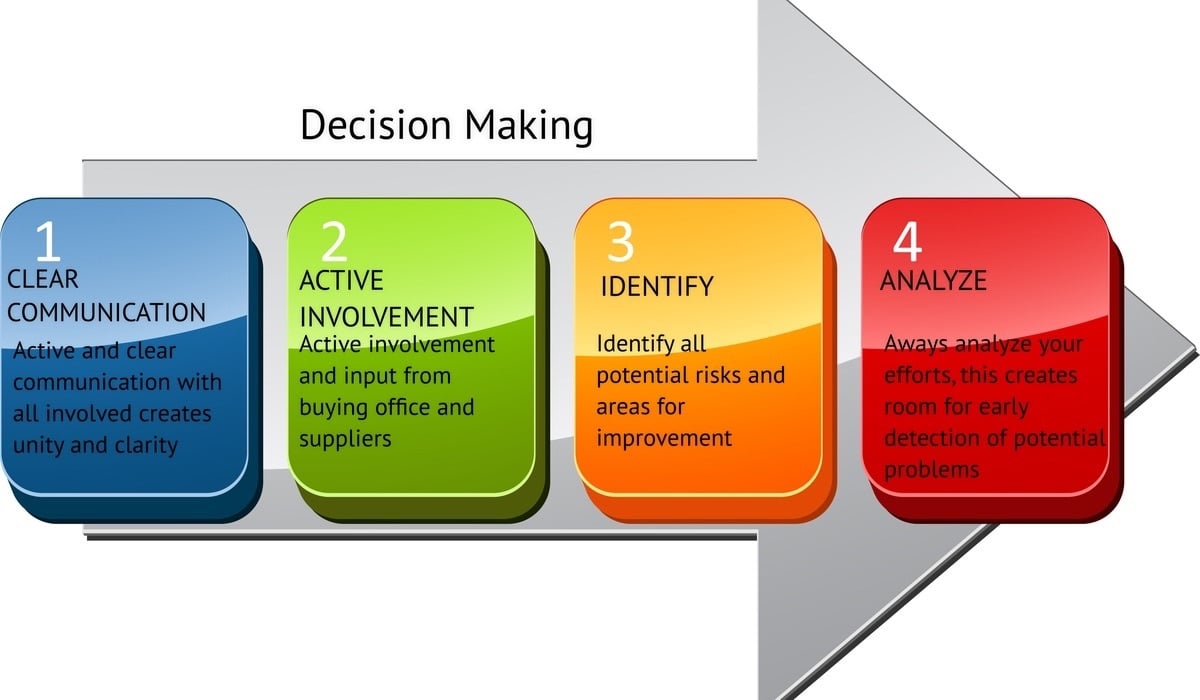
Organizations that actively encourage the involvement of buying offices in decision making and welcomes input from suppliers to identify areas for potential productivity improvements have the best chance of successful implementation. IKEA as a world renown furniture retailer is a great example of involving buying offices in the decision-making process. They have tried to create an integrated system where there is clear communication through the entire operation. We know that this method of organizational commitment has had incredible amounts of success and to always keep this in mind as you conduct your organizational operations. Supply Chain Management Decision Making.jpg There is evidence that supply chains are often managed functionally with metrics, systems, and behaviors geared to managing the performance of a specific area. Whilst detailed functional knowledge and understanding are essential to delivering a quality product, a narrow view can lead to a potential misalignment of the different elements of the chain towards the end goal. Senior management needs to ensure that decisions which are taken at the top are not sub-optimised in the operational execution. In practical terms, this means a real transformation in how measurement systems are designed and implemented to ensure that there is a full understanding of how the business interlinks. Individual incentives and success need to be aligned for the achievement of overarching goals, not purely functional excellence.

2. Effective program management

In order to successfully implement a quality management system there are three key lessons to keep in mind:
  1. Do not be too ambitious with the timing and expectations of rapid results. New process and systems need time to mature and the flexibility to adapt and change in order to achieve the required results.
  2. It becomes easy to set lofty targets but in order to see results, it is important to align the strategic requirements with the quality system functionality.
  3. Data accuracy is critically important. It is impossible to improve what isn’t measured so understanding which measures are helping improve quality and which aren’t are essential to helping buying office achieve the standards required.
Let’s take a look at LEGO, they underwent a full restructuring of their supply chain in order to begin optimizing their functions to remain a strong global competitor. They experienced excessive supply chain challenges that resulted in millions in revenue loss. They were aware that something needed to be done. With rapid globalization, adopting a flexible and integrated supply chain and network is essential to remain a strong competitor.

Check out our comprehensive guide to learn more about implementing a global quality assurance system.

3. Consistent, pre-emptive communications.

We have already discussed the importance of data and effectively communicating it with buying offices. Below are factors to consider:
  • Supply Chain Management .jpgBe clear – This may sound like an obvious basic principle, but it’s vital to make sure the ‘narrative’ of the information comes across so that it is understood easier and its relevance and context are clear. Use a brief headline, to sum up, the information being communicated and focus on the key aspects of the data as well as why it is important and how it can be used.

  • Tailor it – When getting across the key benefits of the project, don’t just focus on general benefits and costs. Consider the context of the buying office you are addressing and tailor it to show how to address their concerns.
  • Be personal and pragmatic – It’s often more beneficial to convey information or communicate through direct channels, either in person or via the phone as opposed to less direct communication such as emails. A personal and pragmatic approach will get faster and better results when aiming to implement change.
The above factors create transparency throughout the supply chain, more and more retailers are are beginning to harness the true power of effective and strong communication throughout the entire supply chain, from communication with material suppliers to actual manufacturers. Transparency and effective, clear communication creates a sense of trust through the supply chain which will essentially have effects throughout the entire operation.

4. Take positive action to identify and manage key risks before they become issues.

Supply chain risk management .jpgRetailers can protect themselves from potential supply chain interruptions or delays associated with suppliers’ human rights, labor, environmental, and governance practices by ensuring buying offices have effective compliance programs and robust management systems. Here are steps to manage risk:

  • Align the buying office – Ensure that there is visibility and alignment of the value chain towards the ultimate goal of supplying the customer;
  • Creating ownership beyond silos – There needs to be ownership of the whole chain, not just the buying office, in such a way which allows the risks along the chain to be tackled;
  • Skills and capabilities to execute – The skills and competencies in each buying office must be secured. This starts with the functional skills in each area to provide the depth of executing a process.
Supply chains have become increasingly stretched not leaving much room for fault, therefore a successful risk management strategy can increase the effectiveness of your operation and minimize any identified or perceived risks.

5. Develop a framework with baseline targets, adapted as necessary.

Supply Chain Management in Buying Office.jpgInaccurate data, existing systems infrastructure, and entrenched business practices are common barriers to the implementation of quality management systems. The importance of getting existing processes in line with new technologies and methodologies serves to highlight the role of planning, as well as supporting the use of standardized frameworks for implementation. SCOR – The supply chain operations reference model, is a management tool that is used to address, improve, and communicate supply chain management decisions within a company and with suppliers and customers of a company. This model also helps to explain the processes along the entire supply chain and provides a basis for how to improve those processes. Let’s look at an example from Apple: The technology producer developed a set of standards which is implemented across its supply chain. The result was a supply chain more in tune with its organizational goals to reduce waste and create more sustainable products which in turn create value for its customers. In the end, they diverted more than 73,000 metric tons of waste from landfills, saved more than 3.8 billion gallons of freshwater and prevented more than 13,800 metric tons of carbon emissions.

6. Create a succession of manageable delivery milestones to maintain momentum and build confidence.

Realistic expectations are important to ensure the successful implementation of quality initiatives. Overreaching in time or scope could mean failing to implement measures that otherwise would have worked. It is important to be SMART:
  • Specific,
  • Measurable,
  • Achievable,
  • Realistic,
  • Timely.
Well defined goals, with consistent and measurable outputs, that are agreed to and attainable, that have the required resources to be successfully completed, and have specified timelines are a way to ensure the implementation plan has manageable deliverables. This process ensures that expectations are managed and that buying offices have a clear understanding of how to achieve success. Every individual needs to be made aware of the overall goals, but also the goals that relate specifically to his/her involvement in the process.

7. An actionable, owned, manageable and measurable set of business benefits

Before the WHAT comes to the WHY. It is important for buying offices to understand WHY the quality initiatives are being put in place. Getting their buy-in helps to ensure that everyone is “pulling the cart in the same direction”.  Working for a specific cause creates a banner under which the value chain can unite. Once buying offices know WHY they are doing something they are more likely to support WHAT needs to be done. It is also important to ensure that the benefits are tangible. Buying offices should be able to quantify the benefits so that they stay motivated and focused on the initiatives they are implementing. These quality practices are essential to the success of your entire supply chain operation, begin by analyzing whether any of these are currently being implemented. Analyze to what extent they are being integrated and begin optimizing these practices to ensure successful implementation of best practices. Have you implemented any of these? How have the been of benefit to you?

Need more help?

Check out our comprehensive guide to learn more about implementing a global quality assurance system.

Simply click here to download your FREE copy.

Kategorien
Blogs

5 Reasons Why Your QA Procedures Are Not Implemented- Part 2

Acknowledging that quality assurance is an integrated process; here we endevour to delve into some more best practices to help empower you and your company with the ability to achieve its goals and objectives.

3. There is often no accountability

Quality assurance best practicesOnce you have done your best to involve all relevant parties in the quality assurance procedures, your next task is to keep your finger on the pulse. Management needs to make sure that the QA staff are accountable for success and failure. The deeds of the QA staff need to be monitored and made known. A report of the activities and outcomes of the QA staff’s work is a good way to make sure that they are made responsible for poor performance, or given the due credit for functioning well. With that said, do not fall into the trap of merely documenting success and failure. With accountability there need to be consequences for whatever results the QA team produces. Be sure to actively intervene if QA is consistently not meeting desired standards, and reward good performance to highlight the value of QA to the company. If QA staff are doing their job properly that might go unnoticed, do not make the mistake of undervaluing their role! Once again, it is important to maintain open transfer of information, so that the effectiveness of QA practices can be monitored, and adjustments made as they are needed. On that note, do not be too quick to blame personnel. When people are blamed they may become more likely to conceal problems, rather than attend to them by bringing them to light. First be sure that the details of the procedure are not at fault, and that clear communication channels are open to rectify mistakes. Only with constant feedback can future mistakes be mitigated. This is an area where assumptions are dangerous. Don’t assume that processes are being followed, or that the current way of doing things is always fine. Check in.

4. Not looking around you

Quality_Assurance_Management.jpgEven if your quality assurance procedures seem to be working fine, and you have integrated QA and open channels of communication, you may still be falling behind. Best practices are called that for a reason. They are tried and tested and shown to improve the success of companies. However, they are always progressing, and so should you. Do get complacent with what you have, or let hubris stand in the way of taking note of what works for others. Seeing what works for those in a similar field may greatly improve your business, through incorporating useful ideas, tools, or technologies they have that you would not necessarily have come up with. This is particularly pertinent in terms of technological advances and environmentally friendly practices, both of which are seeing rapid, astonishing developments around the world. Naturally, success is contextual – no best practice will fit perfectly for everyone. This creates space for molding best practices to suit your specific objectives. However, be wary that excessive experimentation, and both blindly following and completely ignoring outside advice, may be detrimental. Stay competitive by making sure that you have at least what your competitors have, and then add more and improve on existing ideas to give yourself the edge. To remain competitive you must remain vigilant of opportunities for innovation.

5. How often do we fail to pick our battles wisely? 

Team_Effort.jpgAll along I have emphasized that QA procedures are a team effort. You do not have the time to meet with everyone, answer all emails, and be everywhere at once. You also desire time off. The good news… You do not need to do everything on your own! You can pick your battles to optimize expenditure of time and money. When you do not have the requisite expertise, hiring a 3rd party company may be the way to go. This could free up time and some responsibility, allowing you to focus more on what you can manage. This will allow for all-round improvement in QA, generated by including more hands and minds to focus on doing and assessing the quality of specialized work. For QA, picking your battles may also mean critically assessing the whole process and deciding what most needs attention and monetary investment. This brings us back to those important trade-offs… Determining the priority level of each part of the quality assurance process will allow the optimum allocation of time and resources. This will rely on clear objectives for QA, and the standards set for each step of the process;

  • Carefully consider which parts of the QA process are the most vital, and label them.
  • Generate feedback from the differential investment, and tweak the investment as needed.
  • Be flexible, and cut your losses.
  • Meet acceptable, achievable standards – you do not need to be perfect in every minor detail if the product is still successful.

Closing Tips

shutterstock_590654183-2.jpgWith these five (See part one) potential shortcomings of your buying office’s approach to QA in mind, you will hopefully be able to improve your quality assurance procedures to meet higher standards. As a final note; Remember that QA is not quality control. QA is a multi-tier concept, which needs involvement from the beginning: from management defining the desired outcomes of the product to the production team streamlining the production process, to assessing the final product is acceptable and distributed efficiently. QA is not just testing the product works, which would be the objective of quality control. Buying offices need to be concerned with more than just the final product. Build quality into the product up front by involving representatives from all vital levels of the product (design teams, funding agencies, production managers, and consumers), so that QA is preventative, not an afterthought. Do not make QA about putting out fires, make it a process that means that you can focus on solving problems before they arise. This is not only easier but more cost and time effective. We have spent some time delving into some of the basic quality assurance procedures and how applying these to your operations will help alleviate some of the internal challenges that you currently experience. What do you think? Have you applied any of these QA steps? Are there any more that we should add to this, if so what are they?

Dive even deeper with our complimentary ebook

available for download here!

Kategorien
Blogs

5 Gründe, warum Ihre QS-Verfahren nicht implementiert sind

Ist Ihr Einkaufsbüro im Einzelhandel mit Qualitätssicherungsverfahren im Rückstand, die als Best Practice übernommen werden sollten?

In diesem ersten Teil unseres Blog-Beitrags gehen wir auf die Gründe ein, warum Ihr Einkaufsbüro im Einzelhandel ins Hintertreffen geraten könnte und nicht die bewährten Qualitätssicherungsverfahren anwendet, die Ihre Marke auf dem globalen Markt konkurrenzfähig halten. 

Das Ziel der Qualitätssicherung (QA) war früher ganz einfach: Sicherstellen, dass ein Produkt so funktioniert, wie es soll.

Im Laufe der Zeit hat sich das Ziel weiterentwickelt, von der einfachen Beurteilung nach der Produktion hin zu einem mehrstufigen Prozess, der mit der Festlegung der Ergebnisse durch das Management beginnt und bis zur Verteilung reicht. Diese Entwicklung ist ungebrochen und hat dazu geführt, dass die Qualitätssicherung in modernen Unternehmen fast allgegenwärtig ist - von Hypothekenkreditgebern über Softwareentwickler bis hin zu Ingenieurbüros.

Der Grund, fragen Sie?

QA ist entscheidend für den Erfolg!

Um Ihr Unternehmen in einer schnelllebigen Welt wettbewerbsfähig zu halten, müssen Sie sicherstellen, dass Sie mit den besten Praktiken für die Qualitätssicherung Schritt halten. Bewährte Praktiken sind klare Prozesse, die in jede Facette des Produktdesigns, der Entwicklung und der Implementierung integriert sind und die höchste Wahrscheinlichkeit für das Erreichen Ihrer Ziele bieten.

Jetzt wissen Sie über QA Bescheid und wollen die besten Praktiken kennenlernen. Wir sind hier, um Ihnen zu helfen.

Aber zuerst...

Erkennen Sie Ihre Schwächen an. Das mag zwar schwierig sein, aber es ist sehr wertvoll, sich die Zeit zu nehmen, dies zu analysieren.

Im Folgenden finden Sie fünf Gründe, warum Ihr Einkaufsbüro ins Hintertreffen geraten könnte und nicht die besten Praktiken für die Qualitätssicherung anwendet, mit denen Sie auf dem globalen Markt wettbewerbsfähig bleiben: 


1. Vergessen, dass es eine Teamleistung ist

Qualitätssicherung.jpg

Da die Qualitätssicherung ein zunehmend integrativer Prozess ist, im Gegensatz zur Endkontrolle des Produkts, ist es wichtig zu erkennen, dass die Qualitätssicherung zu einer Teamleistung geworden ist.

Die Verantwortung beginnt hier bei der Geschäftsleitung

Die Auswahl des Personals, das die Geschäftsleitung für die Qualitätssicherung einsetzt, zeigt, wie ernst die Geschäftsleitung diese Aufgabe nimmt. Diese Auswahl ist wichtig, da die QS-Mitarbeiter über einschlägige Erfahrungen verfügen müssen, um die Ziele zu erreichen und die von der Leitung geforderten Prozesse genau zu befolgen.

Dieser Teil mag offensichtlich erscheinen, aber entscheidend ist, dass die Mitarbeiter in der Lage sein müssen, mit der Unternehmensleitung zusammenzuarbeiten. 

Gegenseitiger Respekt ist der Schlüssel

Ein voll funktionsfähiges QS-Team braucht einen offenen, reaktionsschnellen Kanal mit der Unternehmensleitung, um seine Aufgaben ordnungsgemäß erfüllen zu können. Sie möchten nicht in eine Lage geraten, in der es an Kommunikation mangelt von Managementund anschließend das QA-Team beschuldigen, nicht zu wissen, was es tun soll.

Andererseits möchten Sie auch nicht, dass das QA-Team Schwierigkeiten hat, ein Problem zu lösen, weil es nicht mit der Geschäftsleitung darüber kommunizieren kann. Die Rolle des QS-Teams ist entscheidend für den Erfolg des Produkts. Stellen Sie daher sicher, dass es mit angesehenen Personen besetzt ist, auf die man zugehen und mit denen man zusammenarbeiten kann.

Neben der Auswahl des QS-Personals ist auch die frühzeitige Einbeziehung von Lieferanten, Designern, Entwicklern, Verbrauchern und allen anderen am Prozess Beteiligten von entscheidender Bedeutung. 

Je mehr Interaktion mit den Lieferanten besteht, desto genauer kann die Qualität des Materials und der Produkte überwacht werden.

Die Einbeziehung von Designern und Entwicklern wird spätere Konflikte über das, was erwartet wird und was möglich ist, minimieren. Und die Einbeziehung potenzieller Verbraucher ist entscheidend für die Beurteilung der voraussichtlichen Rentabilität des Produkts.

All dies ermöglicht einen effizienten Qualitätssicherungsprozess, der den Bedarf an Endkontrollen/Tests minimiert, die kostspielig sein oder Probleme aufdecken könnten, die in diesem späten Stadium nur schwer zu beheben sind. Es ermöglicht auch die frühzeitige Beendigung unrentabler Unternehmen, ohne die massiven finanziellen Verluste, die sich aus der Erkenntnis dieser Tatsache nach der Produktion/dem Kauf ergeben würden. 

QA_Best_Practises.png

Abbildung 1. Durch die frühzeitige Einbeziehung aller relevanten Parteien in den Prozess können Design, Produktionsprotokoll und Verbraucherinteresse geprüft werden, bevor das Produkt tatsächlich hergestellt wird. Dies ermöglicht eine integrierte Qualitätssicherung, die den Bedarf an Inspektionen/Tests in der Nachproduktions- und Endphase verringert und in einigen Fällen die rechtzeitige Einstellung unrentabler Projekte ermöglicht. (Angepasst von Hinckley 1997).

2. Eine unzureichende Definition Ihrer QS-Ziele kann zu einer falschen Ausrichtung der Ziele führen

shutterstock_587443550.jpg

Die Einbeziehung von mehr Menschen in den Qualitätssicherungsprozess von der Konzeption bis zum Kauf ist der nächste wichtige Schritt zur Verbesserung der Qualitätssicherung.

Damit die Qualitätssicherung richtig funktioniert, müssen die Ziele klar definiert werden.

Denken Sie daran, dass es bei jedem Produkt Kompromisse zwischen der angestrebten Qualität, dem Veröffentlichungsdatum, dem Budget und der Kundenzufriedenheit geben wird. Die relative Bedeutung jedes dieser Faktoren ist situationsabhängig und muss im Detail festgelegt und formalisiert werden.

Ein übergreifendes, vages Ziel für die Qualitätssicherung, wie z. B. "Eine bessere Qualitätssicherung erreichen", kann schwer zu erreichen sein, wenn dem QS-Personal keine klaren Ziele vorgegeben werden, die Kompromisse beinhalten. Wenn Sie bereit sind, Zeit für eine höhere Qualität zu opfern, sollten Sie dies in den Zielvorgaben deutlich machen, damit die QS-Inspektoren wissen, was sie vorrangig behandeln müssen.

Klarheit ist das A und O.

Bei der Festlegung von Zielen, denken Sie daran, nicht zu vermuten. Je detaillierter die Ziele sind, desto leichter sind sie zu verfolgen. Hüten Sie sich jedoch davor, dem Qualitätssicherungsprozess jegliche Autonomie zu nehmen, da dies die Rolle derjenigen, die ihn durchführen, unterminieren würde. Sorgen Sie für ein Gleichgewicht, das klar verständlich ist, aber den Mitarbeitern die Möglichkeit gibt, ihre Erfahrungen und Fähigkeiten zu schätzen. Stellen Sie außerdem sicher, dass sich alle Beteiligten über die von Ihnen festgelegten Qualitätsstandards/Benchmarks einig sind.

Halten Sie die Qualitätskontrollen einheitlich, mit klar definierten Checklisten für jede Teameinheit im Prozess, die keine unterschiedliche Interpretation durch das QS-Personal, die Produzenten und die Einkäufer zulassen.

Die Qualitätssicherung als Verfahren hat sich im Laufe der Jahre verändert, um den Erfolg von der Produktion bis zum Vertrieb zu gewährleisten.

Dies ist der erste Teil einer zweiteilige Serie über bewährte QA-Verfahren und wie Sie Ihr Unternehmen dabei unterstützen können, die von Ihnen gesetzten Ziele zu erreichen. 

Helfen Sie Ihrem Einkaufsbüro, diese und weitere bewährte Verfahren zu befolgen! 
Klicken Sie einfach hier, um Ihr kostenloses Exemplar herunterzuladen!

Kategorien
Blogs

Ein Blick auf Ihre Lieferkette in Zeiten von COVID-19

Trotz erheblicher Bemühungen, die Ausbreitung und die globalen Auswirkungen von COVID-19 einzudämmen, hat sich die Situation verschlimmert und betrifft Menschen und Unternehmen auf der ganzen Welt. Die vollständigen Auswirkungen von COVID-19 auf die Lieferkette sind nach wie vor schwer abzuschätzen, da in einigen Gebieten die Aktivität langsam wieder zunimmt, während andere nun durch das Virus in Mitleidenschaft gezogen werden. Zum jetzigen Zeitpunkt lässt sich jedoch feststellen, dass die Krise einen direkten Einfluss auf die Lieferkette hat, von den Rohstoffen bis zu den Endprodukten.

Als Unternehmen mit einer starken Präsenz vor Ort, das jeden Tag Fabriken besucht, haben wir bei API einige der Herausforderungen, mit denen Marken und Einzelhändler in ihrer Lieferkette konfrontiert sind, aus erster Hand gesehen. Wir helfen unseren Kunden und ihren Lieferanten, sich auf die Auswirkungen dieser außergewöhnlichen Krise auf ihre Lieferkette einzustellen und bieten ihnen kurzfristige Lösungen, die ihnen helfen, die hohe Qualität ihrer Prozesse und Waren aufrechtzuerhalten und gleichzeitig sicherzustellen, dass die Menschen vor Ort sicher bleiben.


Herausforderungen in der Lieferkette

Wir wurden mit der Schwere der Krise während des ersten Höhepunkts des Virus in China konfrontiert, wo einige Fabriken unerreichbar waren, die Produktion stillstand, Waren nicht versandt werden konnten usw. Jetzt, da die Aktivitäten in diesem Teil der Welt wieder aufgenommen werden, haben sich die Herausforderungen weiterentwickelt, was dazu führt, dass viele Unternehmen die Qualität ihrer Produkte aufs Spiel setzen. Es ist wichtig zu bedenken, dass diese Probleme bei Wiederaufnahme der Tätigkeit höchstwahrscheinlich auch in anderen Produktionsbereichen auftreten werden. Daher könnte ein fundiertes Verständnis dieser Probleme jetzt eine schnellere Reaktion an einigen Ihrer anderen Beschaffungsstandorte ermöglichen. Dazu gehören:

  • Mangel an Arbeitskräften/Arbeitskräften: Fabriken haben Schwierigkeiten, 100% ihrer Mitarbeiter aufgrund von Gesundheitsproblemen oder Reisebeschränkungen wieder auf die Baustelle zu bringen. Dies könnte die Fabriken dazu verleiten, neue Mitarbeiter einzustellen, denen es an Erfahrung mangelt, die keine Zeit für eine angemessene Schulung haben und bei denen die Gefahr besteht, dass sie nicht angemeldete Unteraufträge vergeben.
  • Unzureichende Produktionsplanung und -status: Bei der Wiederaufnahme der Tätigkeit sind einige Fabriken möglicherweise nicht voll ausgelastet, was es schwierig macht, die Produktionsziele zu erreichen. Es ist wichtig, dass Sie die Aufzeichnungen Ihrer Fabrik überprüfen, um zu sehen, wie viele Personen tatsächlich an der Produktionslinie arbeiten, wie hoch der tägliche Ausstoß ist und wie die Qualitätskontrolle aussieht.
  • Eile in der Produktion: Wenn die Fabriken ihre Arbeit wieder aufnehmen können, haben es einige von ihnen vielleicht eilig, die verlorene Zeit aufzuholen, und sind versucht, an der falschen Stelle zu sparen und die Prozesse zu beschleunigen. Einige Schritte werden überstürzt, was zu Fehlern führt, und einige Schritte werden direkt übersprungen, wie z. B. die Qualitätskontrolle, was Ihre gesamte Produktion gefährden kann.
  • Übermäßiger Bestand: Waren, die vor dem Ausbruch des Virus produziert wurden, wurden wahrscheinlich im Lager aufbewahrt, während sie auf den Versand warteten. In Lagern, in denen die Lagerung und die Bedingungen nicht zufriedenstellend sind, kann es zu Komplikationen wie Verderb oder Schimmelbildung gekommen sein. 
  • Mangel an Rohstoffen: Die Wiederaufnahme der Tätigkeit führt zu einer erhöhten Nachfrage nach Rohstoffen und Komponenten, was zu einer Verknappung führt. Marken und Einzelhändler können ihre Produktion in Gebiete verlagern, die weniger betroffen sind, z. B. in andere SEA-Länder, was ein Risiko darstellt, wenn die neuen Lieferanten und Fabriken nicht angemessen sind. 
  • Fehlende Qualitätskontrolle zur Gewährleistung der Sicherheit: Auf dem Höhepunkt der Epidemie in China schränkten Fabriken und Dritte den Personenverkehr auf dem Gelände ein, um die Mitarbeiter nicht zu gefährden. Dies bedeutete einen Rückgang der Qualitätskontrollen, was die Produktionsqualität gefährdete.

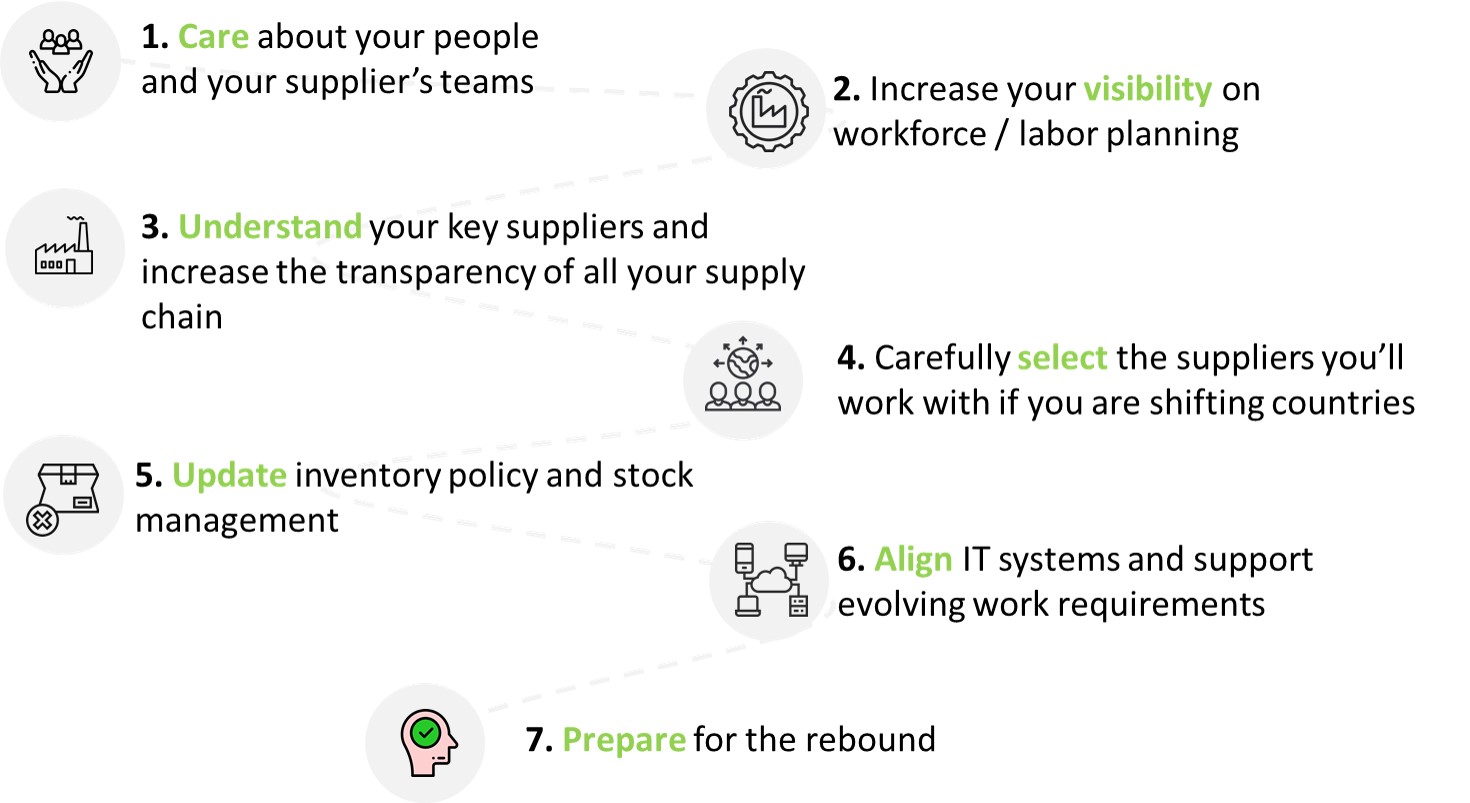
7 Tipps zur Vermeidung von Unterbrechungen in der Lieferkette

7 tips_pic

Diese Krise kann der Katalysator sein, um die Strategie der globalen Lieferkette zu überdenken und die Einführung neuer Modelle und Fähigkeiten zu beschleunigen, aber in der Zwischenzeit sind kurzfristige Maßnahmen erforderlich, um auf die Herausforderung zu reagieren.

Im Folgenden finden Sie einige Tipps aus Sicht der Fertigung, die Ihnen helfen, die Kontinuität Ihrer Lieferkette zu gewährleisten und gleichzeitig Qualitätsprodukte zu erhalten:

  1. Kümmern Sie sich um Ihre Mitarbeiter und die Teams Ihrer Lieferanten
  • Aufklärung der Mitarbeiter über COVID-19-Symptome und Prävention
  • Vergewissern Sie sich, dass Ihr Betrieb über Screening-Protokolle verfügt


Schulungen und spezifische Audits, die sich auf die in dieser Krise zu treffenden Maßnahmen konzentrieren, sind ein gutes Mittel, um die Gesundheit und Sicherheit der Teams zu gewährleisten.

  1. Erhöhen Sie Ihre Sichtbarkeit bei der Personal-/Arbeitsplatzplanung
  • Prüfen Sie die tatsächliche Kapazität Ihrer Fabriken
  • Bewertung der Auswirkungen auf die Produktionszeiten
  • Achten Sie verstärkt auf die Produktqualität, da die Betriebe mit weniger Mitarbeitern arbeiten und einige möglicherweise unqualifizierte Zeitarbeiter/neue Mitarbeiter einstellen.


Die Datenerfassung ist hier der Schlüssel: von der Erfassung der Aufzeichnungen der Fabriken für ein schnelles Screening bis hin zur Durchführung eingehenderer Maßnahmen wie technische Audits, Inspektionen in der Fertigungslinie oder Bewertungen in der Produktion ist ein besserer Einblick in die tatsächliche Situation Ihrer Fabriken in dieser Phase von entscheidender Bedeutung, um nicht nur die rechtzeitige Fertigstellung Ihrer Produktion, sondern auch die Qualität der gelieferten Waren zu gewährleisten.

  1. Verstehen Sie Ihre wichtigsten Lieferanten und erhöhen Sie die Transparenz in Ihrer gesamten Lieferkette
  • Verstehen Sie die Auswirkungen Ihrer Aufträge auf die Produktionslinien Ihres Unternehmens
  • Verstehen Sie die Flexibilität, die eine Fabrik in Bezug auf Produktions-/Einkaufsschichten hat

Ob Ihre Bestellungen nur einen kleinen Teil der Produktionslinien einer Fabrik ausmachen oder ob Sie dieselben Produktionslinien mit Ihren Waren überschwemmen, macht einen großen Unterschied in der Art und Weise, wie Sie mit dieser Fabrik umgehen. Wenn Sie kein Großkunde sind, müssen Sie sich vergewissern, dass Sie wissen, wie die Fabrik mit Ihrer Bestellung umgehen wird, wenn es dort zu Engpässen bei Personal oder Lagerbestand kommt. 

  1. Wählen Sie die Lieferanten, mit denen Sie zusammenarbeiten, sorgfältig aus, wenn Sie das Land wechseln
  • Stellen Sie sicher, dass Sie mit den richtigen Lieferanten für Ihre Produktionen zusammenarbeiten

Das Konzept der Verlagerung der Produktion in andere Gebiete war bereits vor dem Auftreten des Virus auf dem Tisch, wobei viele Unternehmen eine Verlagerung "aus China" in Betracht ziehen. Die Diversifizierung der Produktionsbereiche und die Suche nach alternativen Standorten können dazu beitragen, zusätzliche Bestände und Kapazitäten zu sichern. Die Aufnahme der Produktion in einem neuen Gebiet kann jedoch eine Herausforderung sein, wenn Sie nicht über die nötige Erfahrung oder die richtigen Teams in diesem speziellen Gebiet verfügen. Ein Drittunternehmen kann Sie mit angepassten Lösungen unterstützen, um den Übergang zu erleichtern und die Qualität Ihrer Produktion durch ein spezielles Technikerprogramm zu gewährleisten.

  1. Aktualisierung der Inventarpolitik und Bestandsverwaltung
  • Vorher = so wenig Bestand wie möglich
  • Jetzt = vorausschauend handeln und Sicherheitsbestand erhöhen

Dies kann zu Risiken wie Produktverschlechterung oder Schimmelbildung führen, die durch eine abschließende Inspektion festgestellt und mit einem Lagerzustandsaudit oder einem ausgefeilten Schimmelpräventionsprogramm angegangen werden können.

  1. Anpassung der IT-Systeme und Unterstützung der sich entwickelnden Arbeitsanforderungen
  • Qualität aus der Ferne managen
  • Einsatz neuer IT-Tools und -Lösungen

Wir sind gezwungen, von einer Kultur der "Vor-Ort-Arbeit" zur "Fernarbeit" überzugehen. Seien Sie bereit, sich auf Veränderungen einzulassen und Möglichkeiten in Betracht zu ziehen, die vor einigen Monaten noch nicht einmal in Erwägung gezogen wurden, wie etwa videoüberwachte Inspektionen.

Für die Qualitätsmanagementteams von Marken, Einzelhändlern und Importeuren können Online-Qualitätsmanagementlösungen dabei helfen, die Qualität ihrer Waren zu verwalten, selbst wenn sie von zu Hause aus arbeiten. Mit einem einfachen Mausklick ist es jetzt möglich, Ihre Qualitätsmaßnahmen zu verfolgen, Berichte zu lesen und Entscheidungen darüber zu treffen, ob die Ware versandt werden soll oder nicht. Fachkundige Techniker sind auch nur einen Video-/Telefonanruf entfernt, um Sie in diesen schwierigen Zeiten zu unterstützen und die bestmöglichen Lösungen zur Bewältigung der Krise zu finden.

  1. Auf den Rebound vorbereiten
  • Seien Sie bereit, sich schnell zu bewegen

Wir stehen zweifelsohne vor außergewöhnlichen Zeiten, und obwohl es unmöglich ist, vorauszusehen, wann und wie diese Epidemie vorübergehen wird, müssen wir zuversichtlich bleiben, unsere Anstrengungen aufeinander abstimmen und uns auf eine bessere Zukunft vorbereiten. Bleiben Sie wachsam und bereit für Veränderungen: Wer in der Lage ist, sich schnell anzupassen, hat eine größere Chance, sich wieder zu erholen und sich auf die kommenden Zeiten einzustellen.

Wir bei API stellen unseren Kunden unsere Erfahrung in der Produktion und unser Produkt-Know-how zur Verfügung, um sie in dieser schwierigen Zeit zu unterstützen. Dank der Agilität und Flexibilität unserer Teams und unserer lokalen Infrastruktur sind wir in der Lage, schnell Lösungen vor Ort und aus der Ferne zu implementieren, um auf die Bedürfnisse unserer Kunden zu reagieren.

Zögern Sie nicht, sich mit uns in Verbindung zu setzen, um Ihre Herausforderungen in der Lieferkette zu besprechen.

Kategorien
Blogs

The Ultimate Quality Inspection Guide: 9 Steps To Follow

Quality is what makes (or breaks) a brand and its products. Simple as that. How much time do you actually spend analyzing your quality control systems for focal points that could be the cause of the quality problems you are facing?
Product defects are a reality, for everyone!

Die CPSC recently recalled 29 million IKEA chests and dressers that do not comply with the performance requirements of the U.S. voluntary industry standard. This defect resulted in 3 deaths, costing IKEA an amount of $50million for each family in settlement.
Time constraints, lack of resources with ineffectual QMS systems and no guarantees of a perfect quality product often play a role in the number of product defects your supplier produces.

So, how does one avoid costly mistakes that harm their brand and reputation?

We have created a step-by-step guide on how a third party quality provider such as API can help with improved product quality by minimizing defects.
As a professional quality assurance company, we take pride in customizing our quality solutions to that of each of our client’s needs.
This guide addresses the importance of the quality inspection procedures you choose to use for your product and the benefits that they can have for your overall factory performance.

So what can you expect to learn from this?

We walk you through the moment that you touch base with API, to when and who contacts you and how they go about assessing, inspecting and addressing your quality needs and issues every step of the way.

Compliance for improved product quality

  • Tell us everything
    When we say tell us everything we mean it.
    We cover topics such as your exact needs and wants for inspection and testing, as well as discuss what your auditing needs may be. We also follow up on your progress with the Technical Compliance File (TCF) or introduce you to this compliance method.
    These topics help us define the types of questions we need to be answered to better position ourselves in understanding a client’s particular set of needs.
  • Specify everything
    We take you through the specification process and provide you with examples of how you can go about this.
    From dimensions of your product to the colour, to the raw materials, to your packaging requirements, we aim to improve the production process by making this step easy for your supplier to navigate.
    Communication and specification are key.
    An often underrated element of preventing product defects is building a good collaborative relationship with your supplier.
  • Know what your inspection needs are
    Each inspection type is different. This guide takes you through the step-by-step process of each inspection type and what you can expect from each with an outline of their key benefits for you and your end product.
  • Reducing product defects and raising the overall quality of your factory  
    Once all the work is complete, depending on how many inspections were performed,  API provides Key Performance Indicators based on data related insights that were identified through the various inspection reports.

Improved product quality through reportingThis data helps identify any problem areas that may need attention, through this API can then propose improvement strategies. Say, for example, a supplier repeatedly has below standard inspection results, we will then be able to propose a technical audit of the factory to identify root causes and based on that propose any corrective actions, which will, in turn, raise the overall quality of the factory.

**Bonus – We have added checklists to help assist you in improving your product quality.

Product defects are not great, they are what probably keeps you up at night, but in following the quality inspection guide you will begin to reduce the number of defects you experience and in turn will also raise the overall quality of the factory.

This guide is for any importer, retailer, and quality manager who is constantly looking to improve their quality control procedures through the use of an expert third party quality provider that can assist in the following;

  • Raw material inspection solutions
  • Inline, DUPRO and FRI inspection solutions
  • Technical and social auditing solutions
  • Data capturing from checklists and reporting
  • Improvement strategies based on data based insights

A third party quality provider with the appropriate expertise and experience will take you above and beyond in achieving high-quality products and placing you at a competitive position in the market place.

CLICK HERE AND TAKE A DIVE INTO OUR QUALITY INSPECTION GUIDE THAT WILL HELP with Improved PRODUCT QUALITY


Kategorien
Blogs

Why European Brands Should Invest In Turkish Toys

Lying partly in Asia and partly in Europe, Turkey is an ideally located hub with opportunities for growth and innovation, with special attention to those in the toy industry. Turkish toys are beginning to capture the attention of European importers, and the industry is set to flourish in the coming years.

Learn why Turkey is the place your brand should be setting its sights on for your toy manufacturing and the benefits of this sourcing opportunity.

Importers are becoming increasingly cautious when sourcing abroad due to the risk they take when it comes to the quality of the toy or the raw materials that were used in the process of production.

Turkey has recently started manufacturing toys with this in mind.

What do I mean?

Turkey has begun manufacturing toys according to the CE directive, which ensures that their toys are compliant and ready to be exported into Europe with all toy safety regulations being met. These new toy regulations became effective on April 4, 2017.

In this blog post, I seek to outline this trajectory for growth and highlight what this opportunity for growth can mean for your sourcing strategy.

The Turkish Toy Industry Is Set For Growth

The toy industry in Turkey is set on a continued trajectory for growth. The below graph indicates that 33% of the Turkish population are children. Its toy industry has grown 20 times over in the last five years, and is set to be worth around USD 1 billion.

turkish toys

Currently Turkey is the EU’s 4th largest export market and 5th largest provider of imported goods. The EU is by far Turkey’s number one import and export partner.

This level of industry growth provides an ideal platform in which many manufacturers and importers, both domestically and internationally, can leverage.

The challenges of sourcing in developing countries

Many sourcing countries are currently in third world or developing countries, which makes it harder to guarantee high levels product quality and supply chain compliance.

Some other challenges include:

  • Travel times – The time it takes to get to various factory for inspections
  • Expenses – Longer travel times means greater expenses.
  • Less hands on – Distance means that it is difficult for you to be hands on with the factory and your product.
  • Social compliance – This can be hard to achieve and monitor in sourcing countries as cheap and forced, or child labour, often go undetected.
  • Product compliance – Ensuring your children’s toy arrives in compliance with all European standards being met is likely one of the greatest challenges that importers face.

Turkey presents itself as a sourcing alternative to that of Asia as well as provides a sourcing opportunity that is closer for European retailers and importers.

What are the Key benefits of this sourcing opportunity

  • Faster time to market due to an ideal geographical location that provides a competitive position for your brand and product.
  • turkish toys marketYou can be more hands on in approach to factory and production monitoring and inspection.
  • You can meet trend demands faster – This can often be done through ordering smaller quantities at a time.
  • Manufacturing costs will continue to drop as the industry grows

If you are to remain a key competitor in the marketplace, it will be important for you to understand the global geographical opportunities that are out there.

Even though sourcing in Turkey may result in elevated manufacturing costs from the outset, the country has ensured their national toy safety regulations are matched with that of the EU regulations, which presents an opportunity for further growth and a uniquely competitive advantage for European toy brands.

Let us know if you have leveraged opportunities like this before and what some of your challenges were in the comments section below

API can assist with all of your sourcing and quality challenges, please reach out if we can help you in any way and we will be happy to assist.

{{cta(‘94176617-12fb-42a8-8089-045eac6d55ea’)}}

de_DEGerman